
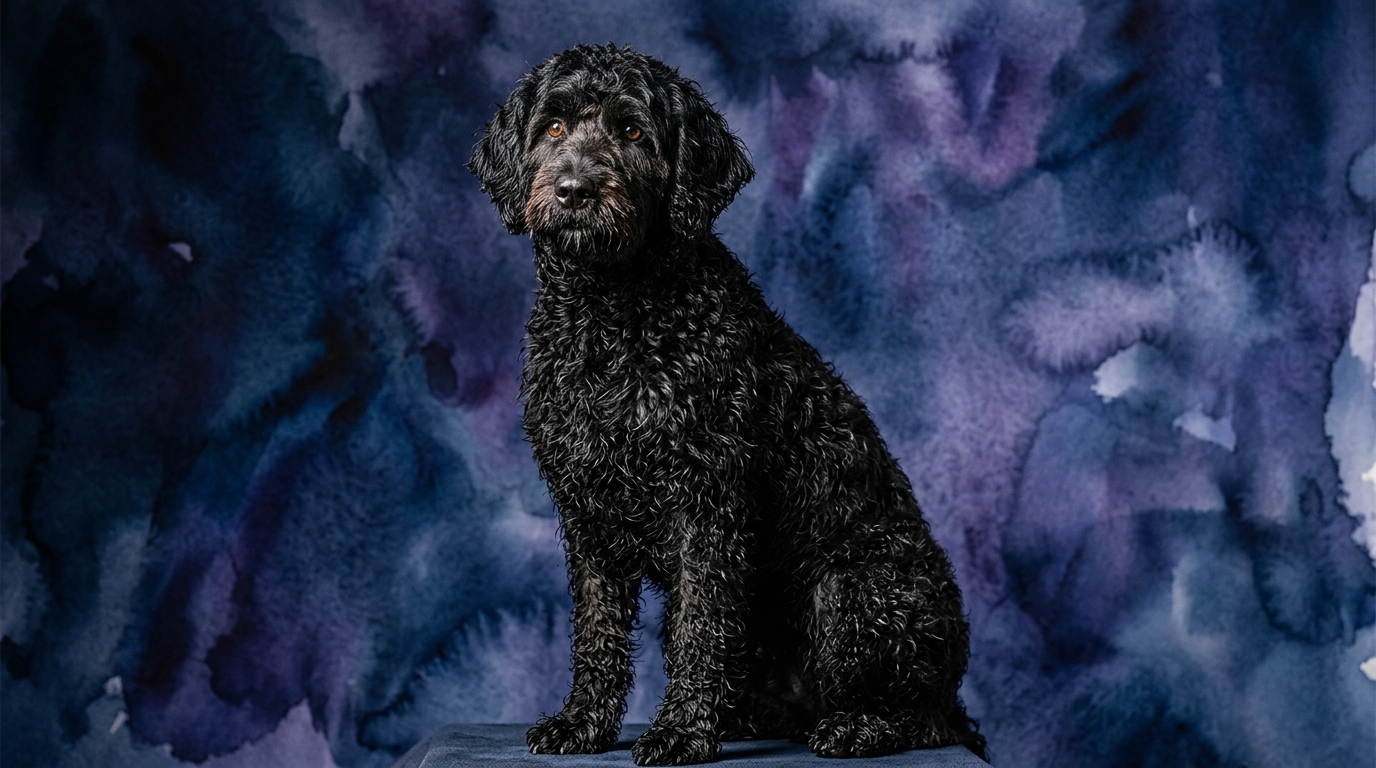
Side-by-Side Cognitive Profile: Golden Retriever vs. Portuguese Water Dog
Ranked #4 by Stanley Coren, the Golden Retriever exhibits a remarkable capacity across the board. Their problem-solving ability, rated 4/5, indicates a solid aptitude for navigating novel situations and understanding cause-and-effect. Where they truly shine is in training speed (5/5) and social intelligence (5/5), suggesting an exceptional eagerness to learn from human cues and a profound understanding of social dynamics. Their instinctive drive (4/5) for retrieving and companionship, coupled with a robust memory (4/5), makes them highly responsive and consistent learners within their Sporting group heritage.
The Portuguese Water Dog, while not appearing on Coren's top rankings, presents a distinct cognitive profile reflective of its Working group origins. Their problem-solving score of 3/5 suggests a moderate capacity for independent thought and navigating challenges, perhaps preferring clear direction over abstract reasoning. Training speed (3/5), social intelligence (3/5), instinctive drive (3/5), and memory (3/5) all sit at a balanced, solid level. This indicates a capable learner who requires more consistent, structured engagement than the Golden, with a focus on their inherent drive for aquatic work and companionship rather than broad social mimicry.
Where the Golden Retriever's Cognition Excels
The Golden Retriever's cognitive strengths are particularly evident in their rapid acquisition of new behaviors and their nuanced social understanding. A training speed of 5/5 means they grasp commands and routines with impressive alacrity, often requiring fewer repetitions than many other breeds. This quick uptake isn't just about rote memorization; it's deeply intertwined with their social intelligence (5/5), allowing them to keenly interpret human body language, tone, and intent. They excel at deciphering complex social cues, making them highly attuned to their family's emotional states and capable of adapting their behavior to maintain harmony. Their 4/5 problem-solving skill, combined with this social acumen, means they frequently attempt to “figure out” what a human wants, even before being explicitly taught.
Their memory, rated at 4/5, further enhances their training capabilities and reinforces their role as reliable companions. Once a behavior or rule is learned, it tends to stick, contributing to their consistent performance in tasks ranging from obedience to assistance work. This cognitive blend makes them exceptionally adaptable to various family structures and activities, always appearing eager to engage and understand. Their strong instinctive drive for retrieving (4/5) is channeled effectively through their social intelligence, transforming a natural inclination into a cooperative activity with their human partners.
Where the Portuguese Water Dog's Cognition Shines
While the Portuguese Water Dog's individual cognitive scores are generally lower than the Golden's, their distinct profile highlights a different kind of cognitive strength, deeply rooted in their working heritage. Their instinctive drive (3/5) is specifically geared towards purposeful tasks, particularly those involving water and interaction with their human “skipper.” This drive, though not as broadly adaptable as the Golden's social mimicry, provides a powerful engine for focused learning when the task aligns with their inherent purpose. Their problem-solving at 3/5, while not top-tier, reflects a capacity for independent thought and initiative when faced with a defined objective, such as navigating complex water environments or herd fishing.
Their memory (3/5) and training speed (3/5) suggest they are capable learners who benefit immensely from consistency and clear, task-oriented instruction. Unlike the Golden's broad social learning, the PWD often thrives on understanding the *purpose* behind a command, rather than simply mimicking. This leads to a thoughtful, if sometimes deliberate, approach to learning. Their social intelligence (3/5) is more focused on forming a strong, often singular bond with their primary handler, reflecting a partnership in work rather than a broad desire to please every human. This focused social connection, combined with their moderate problem-solving, makes them incredibly loyal and resourceful when engaged in tasks they deem meaningful.
Ease of Training: Behavioral Differences Unpacked
The Golden Retriever's superior training speed (5/5) and social intelligence (5/5) make them generally easier to train from an owner's perspective. They are remarkably eager to please and quick to pick up on human cues, often requiring fewer repetitions and responding well to positive reinforcement methods. Their strong desire for social connection means they find intrinsic reward in cooperative activities with their people, making obedience training feel more like a shared game. This translates into a dog that often anticipates commands and readily offers desired behaviors, simplifying the learning process for both novice and experienced owners. Their 4/5 memory ensures that once a lesson is learned, it's retained with high fidelity.
The Portuguese Water Dog, with its 3/5 scores across training speed, social intelligence, and memory, presents a different training dynamic. They are capable learners, but their independent nature and working drive mean they often require more consistency, clarity, and motivation tied to a purpose. While Goldens might learn a trick simply to please, a PWD might need to understand *why* they are performing a task, or find the activity inherently rewarding through play or a “job.” Their social intelligence is more focused, meaning they may be less universally eager to please and more discerning about who they choose to engage with during training. This necessitates a patient, consistent handler who can tap into their innate drive and provide engaging, structured sessions, making them potentially more challenging for first-time dog owners without prior training experience.
Activity Levels: Matching Cognitive Profiles to Lifestyles
For active owners seeking a highly engaged and adaptable companion, the Golden Retriever is an exceptional fit. Their cognitive profile — rapid training speed, strong social intelligence, and solid problem-solving — means they thrive on varied activities that involve human interaction. Whether it's obedience, agility, retrieving games, or simply long walks and hikes, they approach these with enthusiasm and a desire to participate alongside their family. Their instinctive drive (4/5) is broad and cooperative, making them adaptable to many forms of exercise and mental stimulation. They are generally content with a busy household where they can be involved in daily routines and receive consistent attention, making them ideal for families who enjoy integrating their dog into nearly every aspect of their active lives.
The Portuguese Water Dog, while also an active breed, suits owners who prefer a more task-oriented and perhaps less universally “people-pleasing” energy. Their working-dog heritage means they excel when given a specific job or a consistent outlet for their moderate instinctive drive (3/5), often involving water or rigorous physical exertion. Owners who enjoy structured training, dog sports like dock diving or advanced obedience, or even just long, purposeful walks will find the PWD a rewarding partner. Their moderate social intelligence (3/5) and problem-solving (3/5) mean they may not seek constant broad social engagement but thrive on deep, focused interaction with their primary handler. They are less suited for owners seeking a purely relaxed companion, as their mental and physical energy requires consistent, directed outlets to prevent boredom and potential undesirable behaviors.
The Verdict
Choose the Golden Retriever if you desire a highly responsive, socially intuitive companion who learns quickly and thrives on broad family engagement, adapting readily to various activities. They are an excellent choice for owners who value ease of training and a consistently cooperative temperament in a family setting.
Opt for the Portuguese Water Dog if you are an experienced, active owner seeking a loyal, task-oriented partner who excels with focused training and purposeful physical activity, particularly those involving water or structured challenges. They suit individuals prepared to consistently engage their specific working drives.
🧠 Find Your Pet's IQ Score
Our Pet IQ Lab assessment covers 25+ tests across 5 cognitive dimensions — personalized to your breed.
Take the Full IQ Test →Frequently Asked Questions
Do Golden Retrievers need a lot of mental stimulation?
Yes, Golden Retrievers thrive on mental engagement due to their high social intelligence and problem-solving abilities. Regular training sessions, puzzle toys, and interactive games are crucial to satisfy their cognitive needs and prevent boredom. Their quick learning speed means they can master new tasks frequently.
Is the Portuguese Water Dog suitable for a first-time dog owner?
The Portuguese Water Dog can be a challenge for first-time owners due to their independent nature and need for consistent, purposeful training. While capable learners, their moderate training speed and social intelligence mean they require a patient, clear, and experienced hand to guide their energy and focus their drives effectively.
Which breed is better with children, based on their cognitive profiles?
The Golden Retriever, with its 5/5 social intelligence, generally integrates more seamlessly into family dynamics, often showing a natural understanding of child behavior and a desire for cooperative interaction. The Portuguese Water Dog, while loyal, may require more supervision and structured introduction to ensure its moderate social intelligence translates into appropriate interactions with children.