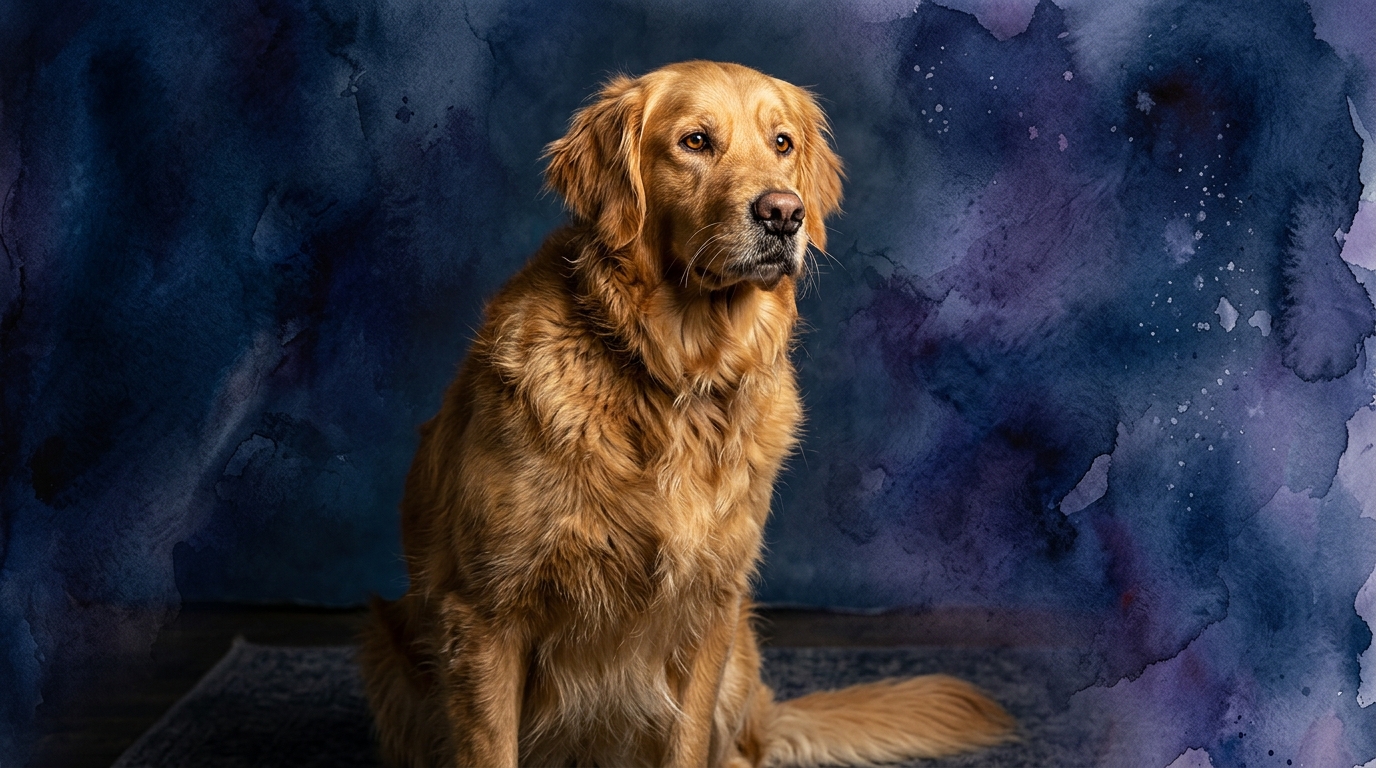
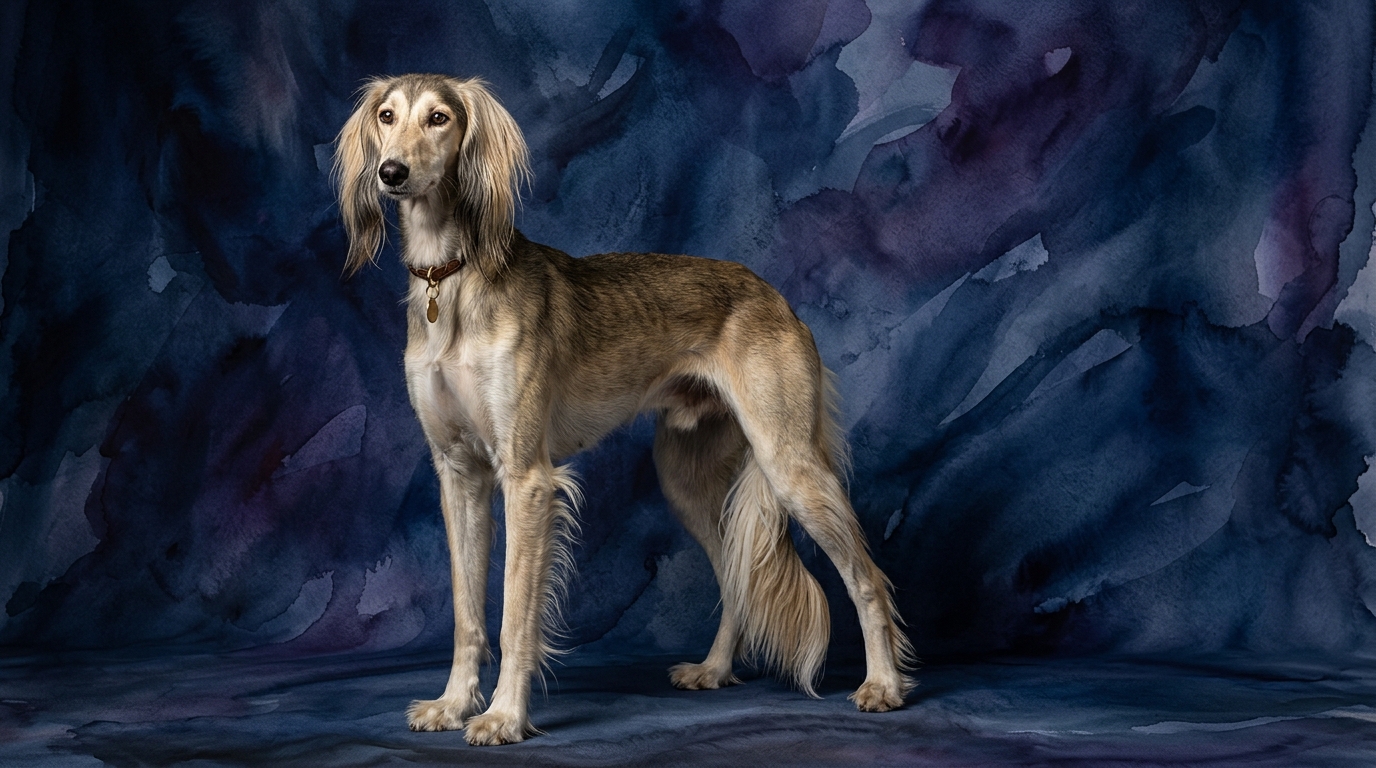
Side-by-side IQ profile
The Cosmic Pet Pet IQ Lab evaluates canine cognition across five crucial dimensions, providing a nuanced understanding of each breed's mental landscape. For the Golden Retriever, a Sporting group member, we observe a robust cognitive profile. Their Problem Solving score stands at 4/5, indicating a strong capacity for navigating novel challenges and understanding cause-and-effect relationships. Training Speed is exceptional at 5/5, reflecting their rapid acquisition of new commands and behaviors. Social Intelligence also rates 5/5, highlighting their adeptness at interpreting human cues and forming strong bonds. Their Instinctive Drive, deeply rooted in their retrieving heritage, scores 4/5, while their Memory, crucial for complex tasks and routines, is 4/5.
In contrast, the Saluki, a sighthound from the Hound group, presents a different cognitive architecture. Their Problem Solving ability is rated 3/5, suggesting they approach challenges with a more independent, often instinct-driven methodology rather than eager cooperation. Training Speed is 3/5, indicating a more deliberate learning pace and a need for patient, consistent methods. Social Intelligence also scores 3/5, reflecting their reserved nature and selective bonding, often preferring the company of their chosen few. Their Instinctive Drive, primarily focused on the chase and hunt, is 3/5, and their Memory, while functional, is rated 3/5, perhaps less geared towards complex sequential commands and more towards spatial awareness in pursuit.
Where Golden Retriever wins cognitively
The Golden Retriever consistently demonstrates cognitive strengths that make them remarkably adaptable and eager companions. Their exceptional Training Speed of 5/5 means they grasp new commands and routines with remarkable alacrity, often showing a keen desire to perform correctly. This rapid learning curve translates into efficient obedience training, trick learning, and even complex service dog tasks, where they excel at quickly associating actions with rewards and cues. Furthermore, their Social Intelligence at 5/5 signifies an unparalleled ability to read human emotions and intentions, fostering deep, empathetic connections. They are adept at understanding subtle body language and vocal tones, making them intuitive partners in various human-dog activities. Their Problem Solving (4/5) and Memory (4/5) scores further contribute to their success in tasks requiring sequential understanding and recall, from navigating agility courses to remembering complex retrieve patterns. This combination of traits allows them to thrive in structured environments where cooperation and understanding human directives are paramount.
Where Saluki wins cognitively
While the Saluki's scores in our standard metrics are generally lower than the Golden Retriever's, their cognitive strengths lie in areas distinct from typical obedience or social problem-solving, reflecting their ancient purpose. Their "wins" are in the realm of independent thought, specialized sensory processing, and sustained focus on a singular, instinctual goal. The Saluki's Instinctive Drive, while scoring 3/5 in our general metric, is profoundly specialized for sight hunting; this drive is not merely about retrieving but about autonomous pursuit, requiring rapid, on-the-spot decision-making in complex environments. Their Problem Solving (3/5) is geared towards the practicalities of the chase – assessing terrain, anticipating prey movement, and executing swift changes in direction without human intervention. This independent problem-solving is a hallmark of sighthound cognition. Their memory, while rated 3/5, is particularly acute for visual cues and spatial awareness across vast distances, essential for tracking fast-moving targets. They demonstrate a unique form of cognitive independence, where their decisions in the field are paramount, rather than waiting for human instruction. This autonomy, while sometimes perceived as stubbornness in a domestic setting, is a profound cognitive asset in their ancestral role.
Which is easier to train and why
Based on our Pet IQ Lab data, the Golden Retriever is unequivocally easier to train, primarily due to their stellar Training Speed (5/5) and high Social Intelligence (5/5). Golden Retrievers possess an intrinsic eagerness to please their human companions, a trait that significantly accelerates the learning process. They quickly form associations between commands, actions, and positive reinforcement, demonstrating a strong desire for interaction and approval. Their high social intelligence means they are constantly observing and attempting to understand human cues, making them highly receptive to instruction. This inherent cooperativeness translates into faster acquisition of basic obedience, advanced commands, and specialized tasks.
The Saluki, with a Training Speed of 3/5 and Social Intelligence of 3/5, presents a different training challenge. Their sighthound heritage imbues them with a strong sense of independence and a selective focus. They are not inherently driven by the same desire to please as a Golden; instead, their motivations often stem from their powerful prey drive and self-interest. Training a Saluki requires immense patience, creativity, and a deep understanding of their unique motivations. They learn best with positive reinforcement methods that appeal to their natural instincts, such as lure coursing or chase games, rather than repetitive drills. While capable of learning, their selective attention and independent decision-making mean they may choose *not* to comply if a more interesting sensory input (like a squirrel) presents itself. Their training is less about speed and more about building a strong, respectful relationship based on trust and mutual understanding.
Which suits active owners vs relaxed owners
Both breeds require significant physical exercise, but their cognitive and social needs dictate different styles of ownership. The Golden Retriever, with their high Social Intelligence (5/5) and Instinctive Drive (4/5) geared towards partnership, thrives with active owners who enjoy shared activities and consistent interaction. They are the quintessential companions for hiking, swimming, retrieving games, and participating in dog sports like agility or obedience. Their desire for engagement means they need an owner who is not just physically active but also mentally stimulating, eager to involve them in daily life and provide consistent training and social outlets. A relaxed owner might find a Golden Retriever's need for attention and activity overwhelming, potentially leading to boredom-induced behaviors.
The Saluki, while undeniably requiring an active owner to manage their profound physical needs, suits an owner who understands and respects their unique blend of independence and intense, focused bursts of energy. Their Instinctive Drive (3/5) is less about cooperative tasks and more about the thrill of the chase, meaning they need secure, expansive areas to run safely or dedicated activities like lure coursing. They are not typically "velcro dogs" and often prefer to observe rather than constantly engage, making them suitable for owners who appreciate a more self-contained companion after their exercise needs are met. A relaxed owner who cannot provide outlets for their running instinct would find a Saluki challenging, as their pent-up energy can manifest as anxiety or destructive behaviors. However, their reserved social intelligence (3/5) means they don't constantly demand human attention in the same way a Golden might, making them a good fit for active owners who also value quiet companionship.
The Verdict
Choose the Golden Retriever if you seek a highly trainable, socially perceptive companion eager to engage in cooperative activities and thrive on consistent human interaction.
Opt for the Saluki if you appreciate an independent, elegant sighthound with a profound need for open space to run, and you value a reserved yet devoted companion whose cognitive strengths lie in instinctual pursuit and autonomous decision-making.
🧠 Find Your Pet's IQ Score
Our Pet IQ Lab assessment covers 25+ tests across 5 cognitive dimensions — personalized to your breed.
Take the Full IQ Test →Frequently Asked Questions
Is a Saluki difficult to train for basic obedience?
Salukis can be more challenging for basic obedience due to their independent nature and lower training speed score (3/5) compared to many other breeds. They require patient, consistent, and reward-based training methods that appeal to their specific motivations, rather than expecting eager compliance.
Do Golden Retrievers need a lot of mental stimulation?
Yes, Golden Retrievers absolutely thrive on mental stimulation. With high scores in problem-solving (4/5), social intelligence (5/5), and memory (4/5), they need consistent engagement through training, puzzle toys, and interactive play to prevent boredom and maintain their cognitive sharpness.
How do their social intelligence scores impact their suitability for families with children?
A Golden Retriever's high social intelligence (5/5) typically makes them highly adaptable and patient with children, adept at understanding social cues. A Saluki's lower social intelligence (3/5) suggests they might be more reserved and require careful introductions and supervision with children, preferring a quieter, more predictable environment.