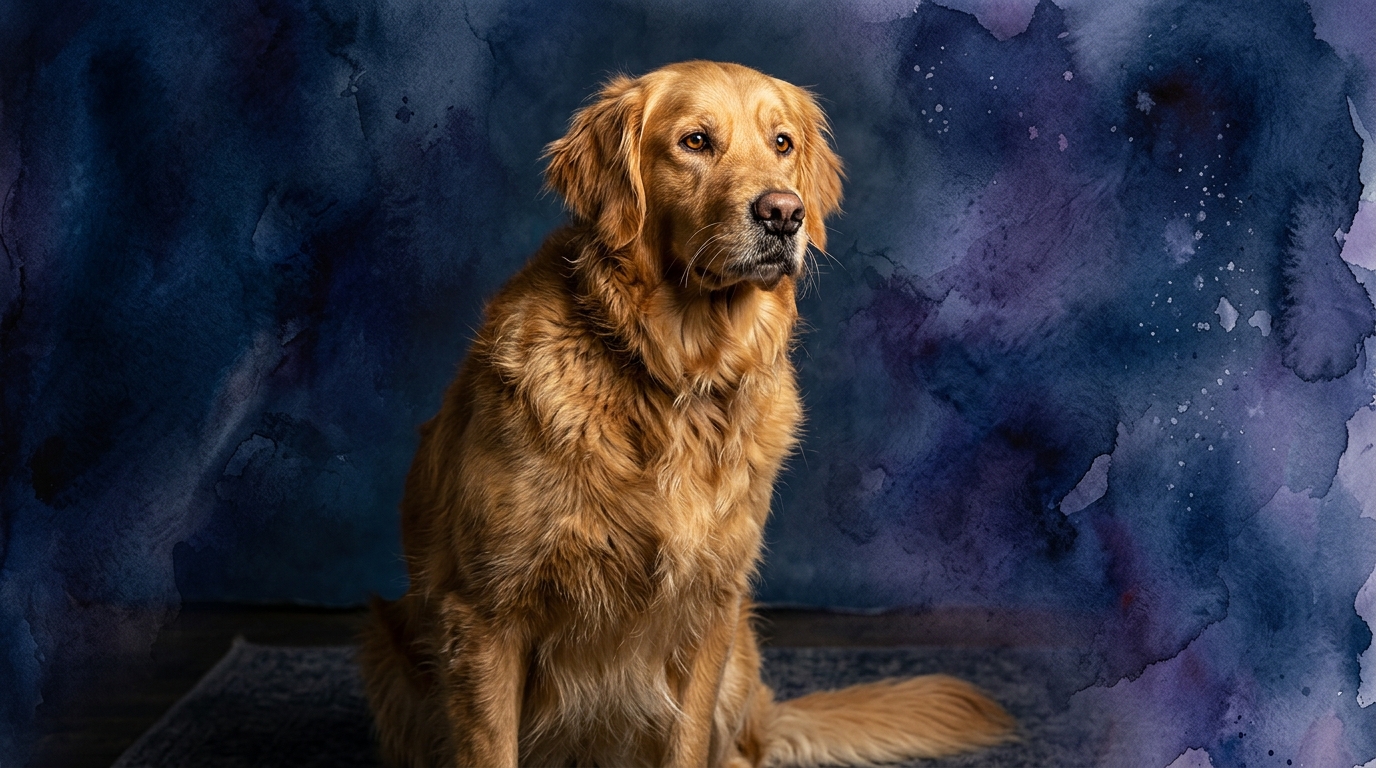

A Side-by-Side Cognitive Profile: Golden Retriever vs. Shih Tzu
The Cosmic Pet Pet IQ Lab employs a comprehensive framework to assess canine intelligence across five key dimensions, offering a nuanced understanding beyond simple 'smart' labels. These dimensions help us dissect the specific cognitive strengths and inclinations of each breed.
For the Golden Retriever, a dog from the Sporting group, their Coren ranking of #4 places them among breeds with a remarkable aptitude for learning and obedience. Their Problem Solving score of 4/5 indicates a strong capacity to independently figure out solutions to novel challenges, such as navigating complex environments or retrieving hidden objects. Training Speed, rated at 5/5, signifies an exceptional ability to grasp new commands and routines quickly, often requiring very few repetitions. Social Intelligence, also a perfect 5/5, means they are acutely perceptive of human cues, intentions, and emotions, fostering deep bonds and responsive interactions. Their Instinctive Drive, at 4/5, highlights a robust natural inclination for tasks like retrieving, tracking, or assisting, reflecting their working heritage. Finally, a Memory score of 4/5 suggests they retain learned information and experiences effectively over time.
In contrast, the Shih Tzu, a member of the Toy group, holds a Coren ranking of #70, placing them in a different tier of working and obedience intelligence. Their Problem Solving ability is rated at 3/5, indicating they can solve moderate challenges but might require more guidance or repetition than a Golden Retriever. Training Speed, at 2/5, suggests a more deliberate learning pace, where consistent and patient instruction is key to mastering new commands. However, their Social Intelligence mirrors the Golden Retriever's at 5/5, showcasing an innate talent for understanding and responding to human social signals, making them exceptionally attuned companions. Instinctive Drive, at 2/5, reflects their breeding as lapdogs rather than working dogs, meaning they typically have less inherent motivation for tasks requiring sustained effort or prey drive. Their Memory score of 3/5 indicates a solid, but not exceptional, ability to recall past lessons and experiences.
Where the Golden Retriever Excels Cognitively
The Golden Retriever's cognitive strengths are particularly evident in areas demanding quick comprehension, task execution, and a strong work ethic. Their 5/5 Training Speed means they absorb new commands like 'sit,' 'stay,' or 'fetch' with impressive rapidity, often understanding the expectation after just a few repetitions. This makes them exceptionally amenable to complex obedience work, agility, or even specialized service tasks, where precise and rapid learning is paramount.
Their 4/5 Problem Solving capacity allows them to navigate intricate situations with a degree of independent thought. For instance, if a toy rolls under furniture, a Golden Retriever is more likely to assess the situation, try different angles, or even nudge the furniture to retrieve it, rather than simply giving up. This ability extends to understanding multi-step routines, like an owner's morning schedule, and anticipating the next event.
Furthermore, the Golden Retriever's 4/5 Instinctive Drive fuels their engagement with activities that tap into their natural inclinations for retrieving and working alongside humans. This drive, combined with their strong memory, means they not only learn tasks but also retain the motivation and skill to perform them consistently, whether it’s retrieving game for a hunter or a dropped item for their owner. Their memory ensures that once a command or routine is learned, it tends to stick, minimizing the need for constant re-training.
Where the Shih Tzu Shines Cognitively
While the Shih Tzu's cognitive profile differs significantly from the Golden Retriever's in terms of working intelligence, they undeniably shine in the realm of social interaction and companionship. Their perfect 5/5 Social Intelligence score is not merely a match for the Golden Retriever but represents the core of their cognitive strength, making them masters of emotional connection and empathetic understanding.
This high social intelligence means a Shih Tzu is exceptionally adept at reading human moods, discerning subtle shifts in tone or body language, and responding with appropriate comfort or playful engagement. They excel at forming deep, intuitive bonds, often seeming to anticipate their owner's needs for affection or quiet companionship. This cognitive trait allows them to integrate seamlessly into family life, providing emotional support and a calming presence.
Their cognitive 'win' lies in their specialized aptitude for being a responsive, affectionate companion. While they may not be solving complex puzzles or mastering advanced obedience with the same speed, their ability to connect on an emotional level, offer comfort, and adapt to the social dynamics of a household is their primary cognitive contribution. They use their understanding of human social cues to foster harmonious relationships, making them exceptional emotional anchors for their families.
Training Ease: Golden Retriever's Responsiveness vs. Shih Tzu's Patience Requirement
When it comes to training, the Golden Retriever's cognitive makeup translates into a significantly easier and faster learning experience. Their 5/5 Training Speed means they often pick up basic commands in very few sessions, sometimes understanding a new cue after just a handful of repetitions. This rapid comprehension, combined with a strong desire to please (a facet of their high social intelligence and instinctive drive), makes them highly responsive to positive reinforcement and eager to participate in training exercises. They thrive on having a 'job' and the mental stimulation that training provides.
The Shih Tzu, with a Training Speed of 2/5, presents a different training journey that requires more patience and consistency. While they are capable of learning, they typically require more repetitions and a longer duration to solidify new commands. Their lower instinctive drive means they might not be as inherently motivated by task-oriented rewards or the 'work' itself. Instead, training often needs to be framed as a fun, bonding experience, leveraging their 5/5 Social Intelligence to keep them engaged and motivated by praise and affection rather than complex tasks. Behavioral differences often include a shorter attention span for repetitive drills and a greater tendency to follow their own independent thoughts if not consistently guided.
Matching Canine Cognition to Lifestyle: Active vs. Relaxed Owners
The distinct cognitive profiles of the Golden Retriever and Shih Tzu make them suited for very different owner lifestyles. An active owner, someone who enjoys outdoor adventures, structured activities, or even dog sports, would find a strong cognitive match in the Golden Retriever. Their 4/5 Problem Solving and 4/5 Instinctive Drive mean they excel in environments where they can engage their minds and bodies. These dogs thrive on learning new tricks, participating in agility, hiking, or even serving as therapy or assistance animals.
Their robust memory and rapid training speed enable them to keep up with dynamic routines and learn complex sequences of behavior required for active pursuits. A Golden Retriever requires consistent mental stimulation to prevent boredom, which can manifest as undesirable behaviors. Owners who can dedicate time to training, interactive play, and providing opportunities for their dog to 'think' will find the Golden Retriever to be an incredibly rewarding and engaged companion.
Conversely, the Shih Tzu's cognitive strengths align perfectly with relaxed owners seeking a devoted and low-key companion. Their 5/5 Social Intelligence makes them ideal lapdogs and affectionate family members who are content with gentle walks and ample cuddle time. While they still benefit from basic training and mental engagement, their lower instinctive drive and problem-solving scores mean they don't demand the same level of rigorous activity or complex mental tasks as a Golden Retriever.
A Shih Tzu is often happiest observing the world from a comfortable perch or nestled beside their owner, absorbing the social atmosphere of the home. Their primary cognitive function, in this context, is to be a responsive and emotionally attuned presence. Owners who appreciate a dog whose contentment stems from close companionship and less from strenuous activity will find the Shih Tzu to be an ideal, loving match.
The Verdict
Choose a Golden Retriever if you seek a highly trainable, task-oriented companion eager for mental challenges and physical activity, ready to learn complex commands and engage in structured pursuits.
Opt for a Shih Tzu if you desire a devoted, socially adept companion whose greatest cognitive strength lies in emotional connection and providing comfort within a relaxed, affectionate home environment.
🧠 Find Your Pet's IQ Score
Our Pet IQ Lab assessment covers 25+ tests across 5 cognitive dimensions — personalized to your breed.
Take the Full IQ Test →Frequently Asked Questions
Does a higher Coren rank mean a dog is 'smarter' in all aspects?
Not entirely; the Coren rank primarily assesses a dog's working and obedience intelligence, specifically how quickly they learn new commands and how consistently they obey them. It doesn't fully capture social intelligence or problem-solving in non-training contexts, where breeds can have different strengths.
How does 'Social Intelligence' differ between these two breeds, given both score 5/5?
While both score 5/5, their manifestation differs based on breed purpose. A Golden Retriever's social intelligence often drives their desire to work cooperatively with humans, while a Shih Tzu's social intelligence is typically geared towards forming deep emotional bonds and providing companionship, making them acutely sensitive to human moods and needs.
Can a Shih Tzu learn complex tricks or agility despite its lower training speed?
Yes, a Shih Tzu can certainly learn complex tricks and participate in activities like agility, but it will generally require more patience, consistent positive reinforcement, and a longer training period compared to a Golden Retriever. Their high social intelligence can be leveraged to motivate them through engaging, reward-based methods.