
Side-by-Side Cognitive Profiles
At The Cosmic Pet Pet IQ Lab, we evaluate canine cognition across five key dimensions, providing a granular look at what makes each breed unique. For the Golden Retriever, a Sporting group member, their profile is marked by broad cooperative abilities, while the Silky Terrier, from the Toy group, exhibits a more focused, independent set of skills.
The Golden Retriever demonstrates a Problem Solving score of 4/5, indicating an aptitude for deciphering complex tasks and navigating intricate environments. Their Training Speed is an exceptional 5/5, reflecting a rapid ability to grasp and execute new commands. Social Intelligence also scores 5/5, highlighting their nuanced understanding of human cues and harmonious interactions. An Instinctive Drive of 4/5 points to their strong retrieve instincts and keen scenting abilities, while their Memory at 4/5 ensures they retain learned behaviors and associations effectively over time.
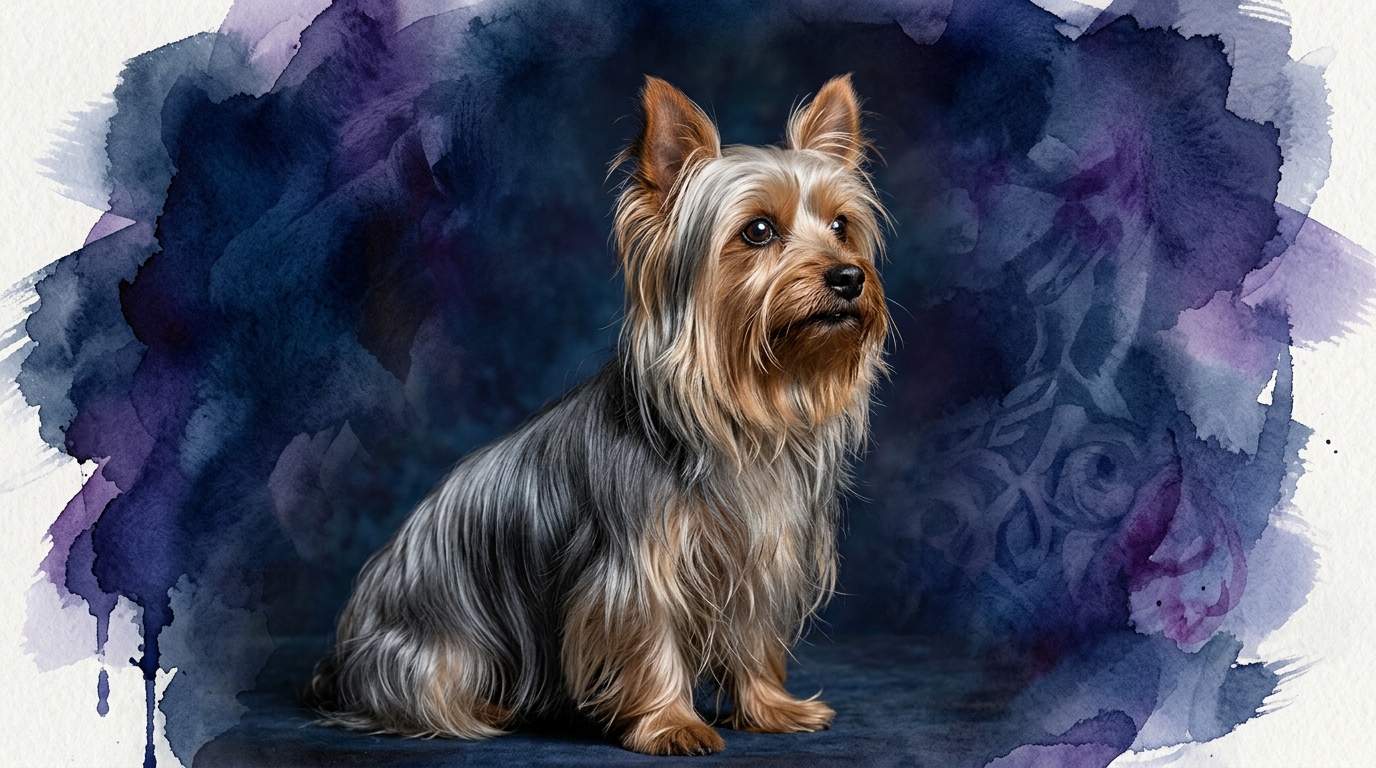
In contrast, the Silky Terrier presents a different cognitive signature. Their Problem Solving capability stands at 3/5, meaning they can tackle straightforward puzzles but might require more guidance for multi-step challenges. Training Speed is 3/5, suggesting that consistent, patient repetition is key for command retention. Social Intelligence at 3/5 indicates they are discerning, bonding deeply with their family but potentially less universally adaptable to novel social situations. Their Instinctive Drive is also 3/5, manifesting as a typical terrier prey drive, but less focused on cooperative, task-oriented work. Finally, their Memory score of 3/5 means they recall routines and basic commands, yet might benefit from periodic refreshers for less frequently practiced skills.
Where the Golden Retriever Cognitively Excels
The Golden Retriever’s cognitive strengths are particularly evident in scenarios demanding cooperative effort and intricate understanding. Their 4/5 problem-solving acumen allows them to excel in tasks requiring multi-step solutions, such as advanced agility courses where they must navigate obstacles in a specific sequence, or scent work where they identify and retrieve particular articles among many distractors. This capacity for complex thought makes them adept at roles like assistance work, where understanding nuanced commands and adapting to varied situations is paramount.
Their top-tier 5/5 Training Speed is a significant advantage, enabling them to acquire a vast repertoire of commands and behaviors with remarkable efficiency. This translates to quicker mastery of obedience routines, faster progression in dog sports, and a reduced learning curve for household manners. Coupled with their 5/5 Social Intelligence, Golden Retrievers demonstrate an exceptional ability to interpret human body language, vocal inflections, and emotional states, allowing them to respond appropriately and form deep, responsive bonds that facilitate effective communication and learning. Their robust memory further supports this, ensuring that once a lesson is learned, it is retained, building a substantial foundation of knowledge and skills.
Where the Silky Terrier Cognitively Shines
While the Silky Terrier's scores are generally lower than the Golden Retriever's, their cognitive profile reveals strengths perfectly suited to their heritage and role. Their 3/5 Problem Solving, though not as broad as the Golden's, is applied with a tenacious focus. This allows them to effectively solve smaller, more immediate problems, such as figuring out how to retrieve a toy stuck under furniture or navigating a complex indoor environment to find a favorite person. Their problem-solving is often driven by a spirited independence, rather than a desire for cooperative human direction.
The Silky Terrier's 3/5 Instinctive Drive, while not geared towards large-scale retrieval, is highly effective in its specific terrier context. This drive fuels their keen observation of their surroundings and makes them alert to small movements, a trait rooted in their vermin-hunting ancestry. This focused attention can be channeled into engaging games that mimic hunting, providing satisfying mental engagement. Their 3/5 Social Intelligence, though not broadly generalized, is intensely focused on their chosen family, making them acutely attuned to the moods and routines of their inner circle, often anticipating their preferred human’s next move within the home environment. This deep, selective bond translates into a profound understanding of their immediate social landscape, even if they are more reserved with outsiders.
Training: Ease and Behavioral Differences
When considering ease of training, the Golden Retriever clearly holds an advantage. Their 5/5 Training Speed combined with a 5/5 Social Intelligence means they are not only quick to grasp new concepts but also highly motivated to cooperate with human instruction. Golden Retrievers typically exhibit an eagerness to please, respond positively to praise, and are adept at understanding what is expected of them, making them highly receptive to a wide range of training methodologies. Their strong memory ensures that once a command is learned, it generally sticks, leading to reliable performance.
The Silky Terrier, with a 3/5 Training Speed and 3/5 Social Intelligence, requires a different approach. They possess an independent streak characteristic of many terrier breeds, meaning training sessions need to be engaging, consistent, and often shorter to maintain their interest. While capable of learning, they may not exhibit the same inherent drive to cooperate or generalize commands as readily as a Golden. Their social intelligence, being more selective, means they might be less inclined to perform for strangers or in unfamiliar environments without significant prior positive reinforcement. Behavioral differences include the Golden Retriever's natural inclination towards retrieving and working alongside humans, versus the Silky Terrier's tendency towards independent exploration and a more discerning approach to social interactions, which can sometimes be perceived as stubbornness if not understood properly during training.
Matching Breeds to Lifestyles: Active vs. Relaxed Owners
For owners with an active lifestyle, the Golden Retriever is an exceptional fit. Their high scores in Problem Solving, Training Speed, and Instinctive Drive mean they thrive on mental and physical engagement. These dogs excel in activities like agility, obedience, flyball, and extensive hiking, requiring owners who can provide consistent opportunities for learning and vigorous exercise. They flourish when given tasks to do, whether it's retrieving specific items, participating in scent work, or learning complex trick sequences. An owner who enjoys spending significant time outdoors and engaging in cooperative activities with their dog will find a Golden Retriever to be an unparalleled companion, eager to participate and quick to master new challenges.
Conversely, the Silky Terrier often suits owners who appreciate a spirited companion but might have a more relaxed, though still engaged, lifestyle. While they certainly need regular exercise and mental stimulation, their requirements are typically on a smaller scale than a Golden Retriever's. Indoor games, short walks, and puzzle toys can often satisfy their needs, especially if combined with dedicated one-on-one attention from their family. Their independent nature and discerning social intelligence mean they are content with a smaller, more intimate social circle and less demanding for extensive public outings. Owners who enjoy patient, consistent training and appreciate a dog with a confident, self-reliant personality, without needing a canine partner for extensive, high-energy sports, will find a Silky Terrier to be a rewarding and charming addition to their home.
The Verdict
Choose a Golden Retriever if you seek a highly cooperative companion for advanced training, intricate tasks, and extensive social engagement, thriving on an active, shared lifestyle.
Opt for a Silky Terrier if you appreciate a spirited, self-reliant companion in a smaller package, willing to invest in patient, consistent training tailored to a keen, independent spirit.
🧠 Find Your Pet's IQ Score
Our Pet IQ Lab assessment covers 25+ tests across 5 cognitive dimensions — personalized to your breed.
Take the Full IQ Test →Frequently Asked Questions
Are Silky Terriers difficult to train?
Silky Terriers are not inherently difficult to train, but their independent spirit and average training speed mean they require more patience and consistency than some other breeds. Training needs to be engaging and rewarding to capture their focus effectively, often benefiting from shorter, more frequent sessions.
Do Golden Retrievers need a lot of mental stimulation?
Absolutely. Their high problem-solving and social intelligence scores mean Golden Retrievers thrive on learning new tasks, participating in dog sports, and engaging in interactive play that significantly challenges their minds. Neglecting their mental needs can lead to boredom and undesirable behaviors.
How do their social intelligence differences manifest?
Golden Retrievers typically generalize their friendly demeanor and understanding of cues to a wider range of people and situations, making them excellent public companions and adaptable to various social settings. Silky Terriers, while loyal and affectionate with their family, tend to be more reserved or selective with strangers, focusing their social acumen on their inner circle and demonstrating a more discerning approach to new interactions.