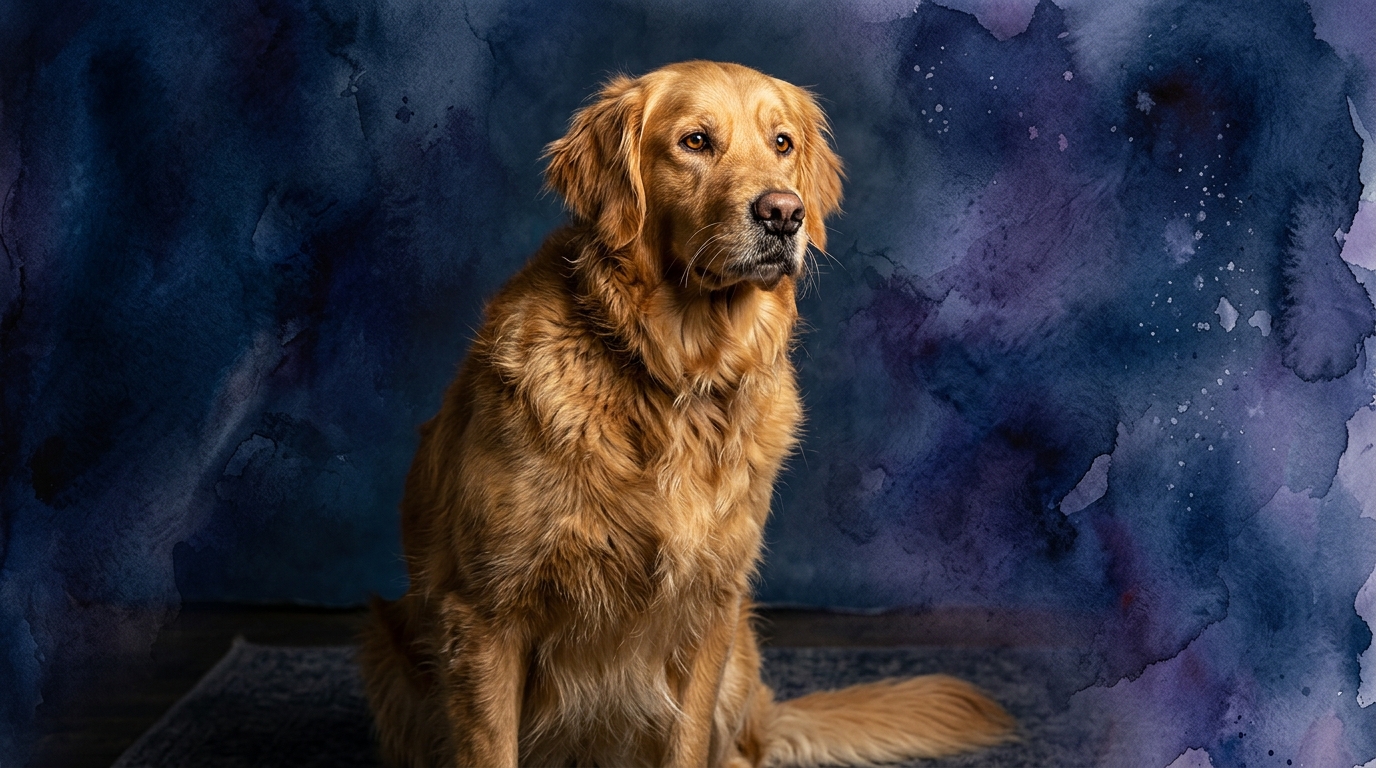
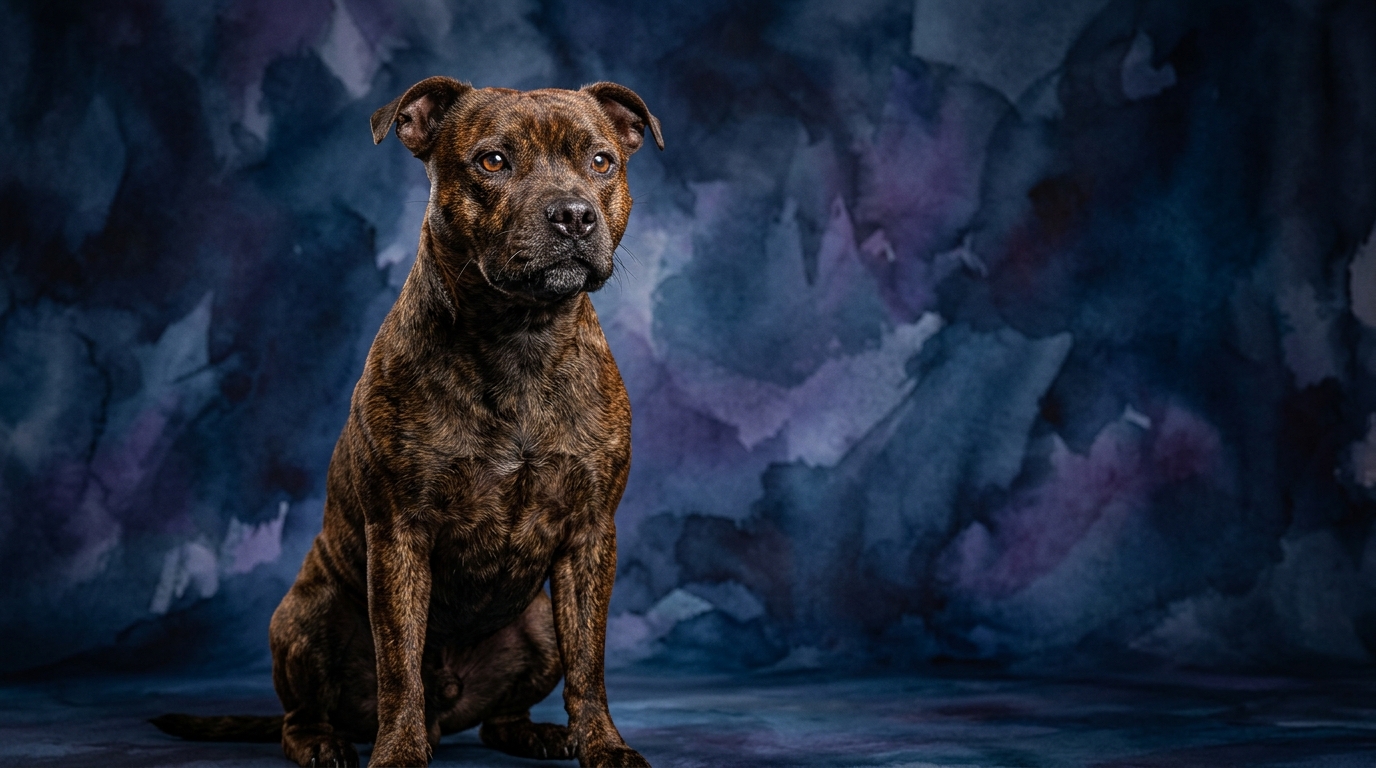
Side-by-Side IQ Profile: Golden Retriever vs. Staffordshire Bull Terrier
The Cosmic Pet Pet IQ Lab assesses canine intelligence across five key dimensions, providing a nuanced understanding of each breed's cognitive strengths. For the Golden Retriever, ranked #4 by Coren, and the Staffordshire Bull Terrier, a detailed breakdown illuminates their unique mental landscapes.
Golden Retriever (Sporting Group): Problem Solving 4/5, Training Speed 5/5, Social Intelligence 5/5, Instinctive Drive 4/5, Memory 4/5. These dogs often demonstrate a keen ability to navigate complex situations, figuring out how to open gates, retrieve hidden objects, or solve intricate puzzle toys with relative ease. Their cognitive flexibility allows them to adapt strategies when initial attempts fail. Golden Retrievers are renowned for their rapid acquisition of new commands and behaviors, often needing only a few repetitions to grasp a concept. This quick learning curve makes them highly responsive to various training methodologies and ideal for complex tasks. Their exceptional social acumen enables them to read human emotions and intentions with remarkable accuracy, fostering strong bonds and making them highly adaptable to diverse social environments and interactions with strangers. They often seek to please and readily integrate into family dynamics. Possessing a strong natural drive to retrieve, these dogs excel in tasks requiring focused attention on a goal, such as carrying items or participating in scent work. This drive is often channeled into cooperative activities, making them enthusiastic partners. Goldens exhibit a robust memory for commands, routines, and the location of objects or people. They can recall learned behaviors even after long breaks, making their training durable and reliable over time.
Staffordshire Bull Terrier (Terrier Group): Problem Solving 3/5, Training Speed 3/5, Social Intelligence 3/5, Instinctive Drive 3/5, Memory 3/5. Staffordshire Bull Terriers approach problems with determination, often relying on persistence and physical manipulation rather than abstract reasoning. While they can solve puzzles, they might require more direct guidance or simpler tasks to succeed, learning through trial and error with strong motivation. While capable of learning, Staffies typically require more repetition and consistent reinforcement compared to breeds with higher training speed scores. Their independent streak means trainers need patience and engaging methods, often leveraging their strong prey drive or love for play. Staffies form intensely strong bonds with their primary family members, exhibiting deep loyalty and affection. However, their social intelligence towards strangers or other animals can be more reserved, requiring careful socialization from a young age to ensure polite interactions. Their instinctive drives, rooted in their terrier heritage, often manifest as a strong desire to dig, chase, and engage in vigorous play. This drive, while powerful, requires consistent direction to prevent it from becoming misdirected or destructive. Staffies possess a good memory for routines and familiar commands, particularly those associated with positive experiences. However, they may take longer to solidify new information and might require refresher sessions to maintain proficiency, especially for less frequently practiced behaviors.
Where the Golden Retriever Wins Cognitively
Golden Retrievers demonstrably excel in areas requiring rapid learning and social adaptability. Their 5/5 Training Speed means they absorb new commands and complex sequences with remarkable quickness, making them prime candidates for advanced obedience, service work, or intricate dog sports where a fast learning curve is paramount. This cognitive agility allows them to progress through training stages far more efficiently than many other breeds.
Furthermore, their superior Social Intelligence (5/5) means they not only understand human cues but also proactively seek to engage and cooperate. This manifests as an innate ability to read subtle body language and emotional states, allowing them to adjust their behavior accordingly. This makes them exceptionally well-suited for roles requiring nuanced interaction, such as therapy work or assistance roles, where sensitivity to human need is critical. Their broad social comfort also allows them to integrate seamlessly into diverse family structures and public settings.
Their strong Problem Solving (4/5) combined with high Memory (4/5) also gives them an edge in tasks that require independent thought and recall. Goldens can often figure out how to manipulate objects, navigate multi-step challenges, and remember solutions long-term, making them highly effective at tasks requiring a degree of self-sufficiency once trained, such as retrieving specific items on command or navigating obstacle courses.
Where the Staffordshire Bull Terrier Wins Cognitively
While not always reflected in traditional “IQ” metrics, Staffordshire Bull Terriers possess a unique cognitive tenacity and focus that can be a significant advantage in specific contexts. Their 3/5 Problem Solving, though lower, is often paired with an unwavering determination. When motivated by a strong reward or a task they find engaging, a Staffy will approach a challenge with persistent physical effort, often trying multiple angles until they succeed. This isn't about abstract reasoning, but a resilient, hands-on approach to overcoming obstacles.
Their lower Social Intelligence (3/5) towards strangers can be reframed as a cognitive strength when it comes to forming intensely singular, devoted bonds with their immediate family. This concentrated loyalty means their cognitive resources are heavily invested in understanding and responding to their primary human companions, leading to a deep, intuitive connection that is profoundly rewarding for their owners. They may not be “people pleasers” in the broad sense, but they are exceptionally “family pleasers,” dedicating their observational and responsive capacities to their chosen pack.
The Staffy's Instinctive Drive (3/5), while requiring careful channeling, translates into a powerful capacity for sustained, focused effort once a task is understood and deemed worthwhile. Unlike some breeds that might lose interest quickly, a Staffy, when engaged, can exhibit remarkable single-mindedness in pursuits like tug-of-war, scent games, or focused agility work, demonstrating a cognitive endurance that, while slower to ignite, can be incredibly potent. Their memory (3/5) for these deeply engaging activities, once learned, can be robust, especially when tied to positive emotional experiences.
Which is Easier to Train and Why?
When evaluating ease of training, the Golden Retriever holds a clear advantage, primarily due to its 5/5 Training Speed and 5/5 Social Intelligence. Goldens are eager to please and possess a natural inclination to cooperate, making them highly receptive to commands. They quickly connect actions with consequences, requiring fewer repetitions to solidify new behaviors. Their strong social drive means they often find intrinsic reward in pleasing their handler, making positive reinforcement highly effective and speeding up the learning process significantly. This inherent willingness to work alongside humans, coupled with their cognitive quickness, means they typically progress rapidly through obedience levels and adapt easily to new training scenarios.
In contrast, the Staffordshire Bull Terrier, with a 3/5 Training Speed and 3/5 Social Intelligence, presents a different training dynamic. While capable of learning, Staffies often require more patience, consistency, and a highly motivating approach. Their terrier heritage imbues them with a degree of independence and a strong will, meaning they might question commands or choose to pursue their own interests if not adequately motivated. Training a Staffy often involves discovering what truly excites them – whether it's a favorite toy, a specific treat, or a vigorous play session – and leveraging that motivation consistently. Their learning curve is generally slower, and trainers must be prepared for more repetition and a creative approach to maintain engagement, overcoming their potential for stubbornness with firm but fair leadership and positive reinforcement. They learn best when the training is seen as a fun, collaborative game rather than a strict imposition.
Which Suits Active Owners vs. Relaxed Owners?
The Golden Retriever's cognitive profile, marked by high social intelligence, trainability, and a cooperative instinctive drive, makes them highly adaptable to a wide range of owner lifestyles, though they thrive with active engagement. Their need for mental stimulation and physical activity aligns well with owners who enjoy structured walks, hiking, swimming, or participating in dog sports like agility, obedience, or flyball. Their willingness to learn and please also makes them excellent companions for owners interested in therapy work or other community involvement. While they can adapt to a more relaxed household, they still require consistent mental enrichment to prevent boredom and potential behavioral issues. They are well-suited for families who can provide consistent interaction, training, and opportunities for social engagement.
The Staffordshire Bull Terrier, while physically robust, often suits owners who are active in a different, perhaps more focused, way. They thrive with owners who understand their need for vigorous physical outlets, such as intense play sessions, long walks, or structured training that channels their instinctive drives. Their deep loyalty and strong bonds mean they prefer to be close to their family, making them excellent companions for owners who are home often and can dedicate time to one-on-one interaction and consistent training. While they can be content to cuddle on the couch, their cognitive and physical needs demand regular, engaging activity to prevent boredom and potential destructive behaviors. They are less suited for owners seeking a low-maintenance companion or those who cannot provide consistent mental and physical challenges tailored to their specific drives and temperament. A relaxed owner who is still prepared for dedicated training and engaging play can find a deeply devoted companion in a Staffy.
The Verdict
Choose a Golden Retriever if you seek a highly adaptable, rapidly trainable companion eager to engage in diverse activities from service work to competitive sports, thriving on social interaction and quick to grasp complex concepts. Their cooperative nature and broad social comfort make them ideal for dynamic family environments and owners who value a quick-thinking, responsive partner.
Opt for a Staffordshire Bull Terrier if you are prepared for a devoted, tenacious companion who forms incredibly strong bonds and thrives on consistent, motivating training that channels their focused drives. They are best suited for owners who appreciate a resilient, physically capable dog and are committed to patient, engaging reinforcement to develop their potential.
🧠 Find Your Pet's IQ Score
Our Pet IQ Lab assessment covers 25+ tests across 5 cognitive dimensions — personalized to your breed.
Take the Full IQ Test →Frequently Asked Questions
Are Golden Retrievers better at learning tricks than Staffies?
Golden Retrievers typically learn tricks faster due to their higher Training Speed (5/5) and eagerness to please. They grasp new concepts quickly and enjoy the process of cooperative learning, often requiring fewer repetitions to master a new trick.
Do Staffordshire Bull Terriers need more mental stimulation than Golden Retrievers?
Both breeds benefit from mental stimulation, but it manifests differently. Golden Retrievers thrive on varied challenges and social engagement, while Staffordshire Bull Terriers often require focused, engaging activities that appeal to their instinctive drives, such as puzzle toys or scent games, to keep their minds occupied and prevent boredom.
Can a Staffy be a good therapy dog like a Golden Retriever?
While Golden Retrievers excel as therapy dogs due to their exceptional Social Intelligence (5/5) and adaptability, a well-socialized and trained Staffordshire Bull Terrier can also make a good therapy dog for specific contexts. Their deep loyalty and affectionate nature with their chosen people can be very comforting, though they may require more targeted socialization to be comfortable with a wide range of strangers.