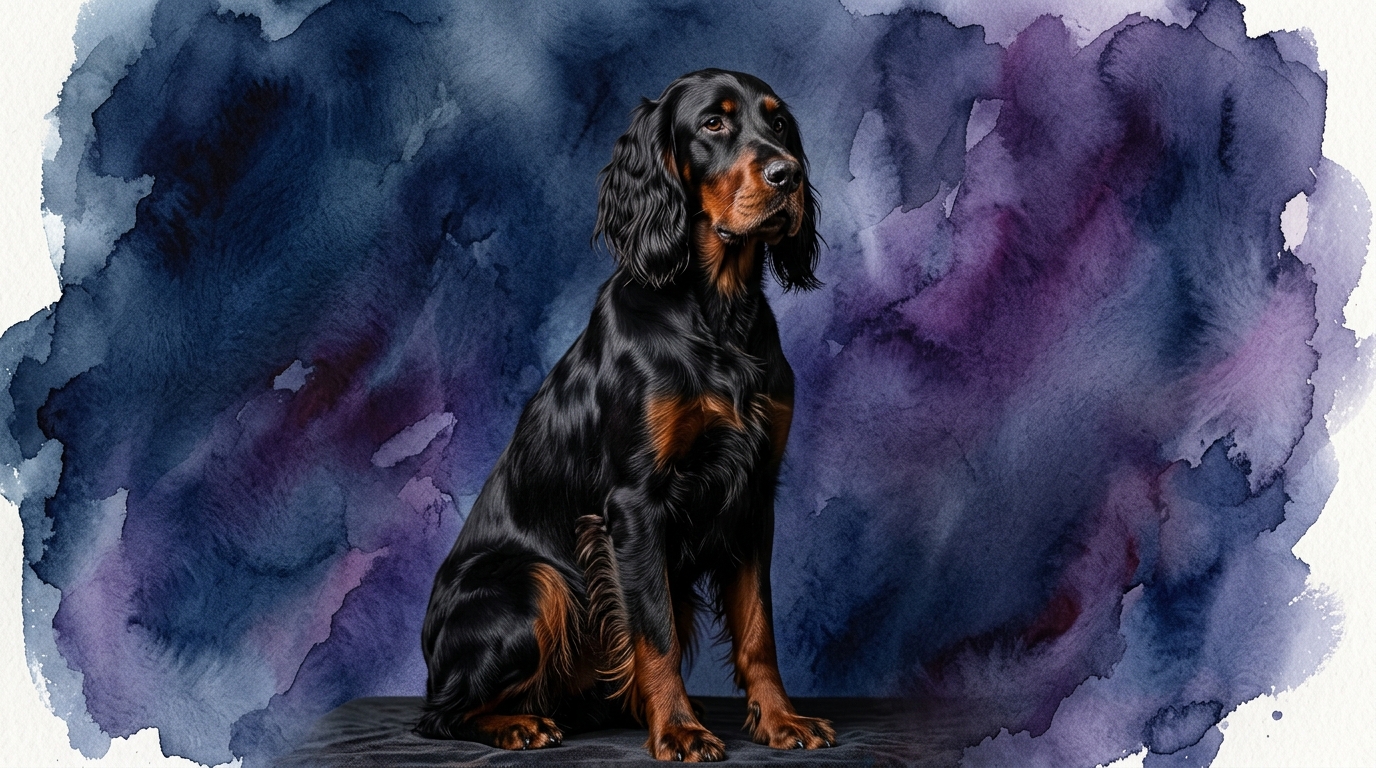
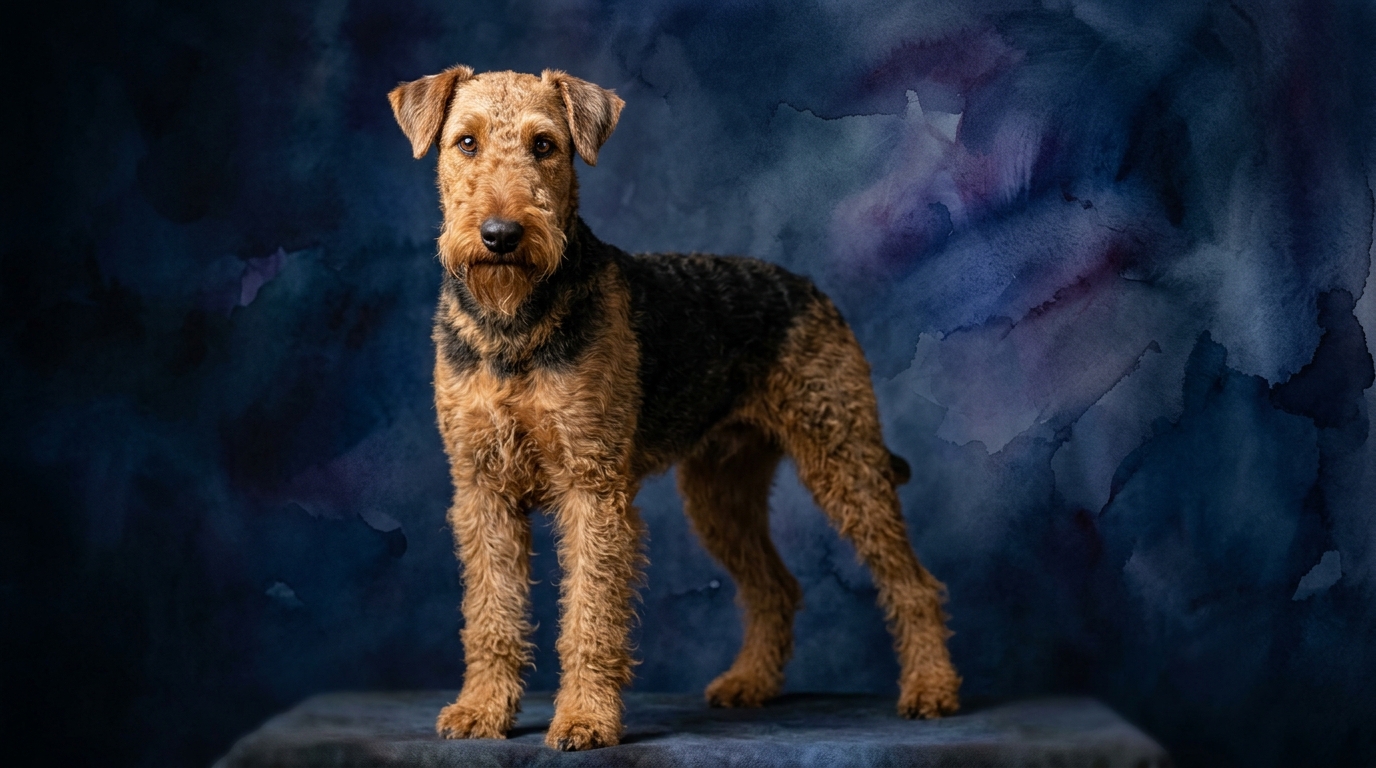
Side-by-Side Cognitive Profiles
The Cosmic Pet Pet IQ Lab employs a comprehensive five-dimensional framework to evaluate canine cognition, moving beyond simple notions of 'smartness' to pinpoint specific intellectual strengths. For the Gordon Setter, a Sporting group member with a Coren rank of 39, and the Airedale Terrier, a Terrier group stalwart ranked 29, a close examination reveals more commonalities than initial impressions might suggest, yet their application of these skills diverges significantly due to their breed histories.
**Gordon Setter Cognitive Profile:** In problem-solving, the Gordon Setter scores a solid 4 out of 5, indicating a strong capacity to navigate complex situations and devise effective solutions, often within a cooperative framework. Their training speed is equally impressive at 4 out of 5, reflecting a quick grasp of new commands and routines, a trait valuable in their traditional role as bird dogs. Social intelligence is rated at 3 out of 5, suggesting a moderate ability to interpret human cues and adapt to social dynamics. Their instinctive drive, at 3 out of 5, points to a moderate but focused natural inclination, particularly for scent work and retrieving. Memory is a notable strength, scoring 4 out of 5, allowing them to retain learned behaviors and recall complex sequences of actions with precision.
**Airedale Terrier Cognitive Profile:** The Airedale Terrier also achieves a 4 out of 5 in problem-solving, demonstrating a robust aptitude for independently assessing and overcoming obstacles, often with a tenacious spirit. Their training speed matches the Gordon Setter at 4 out of 5, indicating they too learn new tasks with considerable alacrity. Social intelligence is rated 3 out of 5, similar to the Gordon, suggesting a capable but perhaps more selective engagement with human interaction. Instinctive drive, also at 3 out of 5, reflects a persistent and purposeful natural inclination, characteristic of their terrier heritage in hunting vermin. Their memory, like the Gordon Setter, scores a strong 4 out of 5, enabling them to remember intricate tasks and past experiences effectively.
Where the Gordon Setter's Mind Shines
While their individual IQ scores appear identical across the board, the Gordon Setter's cognitive strengths are particularly pronounced in scenarios demanding sustained, collaborative effort and precise recall within a structured environment. Their 4/5 memory combined with a moderate instinctive drive makes them exceptional at remembering multi-step sequences for field work, such as marking fallen birds, following complex scent trails, and executing intricate retrieving patterns over varied terrains. This breed excels when asked to work *with* a handler as part of a team, leveraging their excellent recall to respond consistently to distant commands even amidst distractions.
Their problem-solving (4/5) often manifests in efficiently navigating hunting grounds, figuring out the best path to retrieve an object, or adapting their approach based on handler feedback. This isn't about independent invention as much as it is about effective execution within established parameters. The Gordon Setter’s cognitive profile is optimized for a partnership where their keen senses and reliable memory contribute to a shared goal, making them particularly adept at advanced obedience, scent work, and performance activities that require a strong handler-dog bond and consistent application of learned skills.
Where the Airedale Terrier's Mind Excels
The Airedale Terrier, despite sharing the same numerical cognitive scores, demonstrates its mental prowess in distinct ways, primarily through independent thought, tenacity, and a resourcefulness that aligns with its terrier heritage. Their 4/5 problem-solving ability often translates into creative, self-directed solutions, particularly when confronted with challenges that require a dog to figure things out on its own without constant human prompting. This might involve strategizing how to access a desired object or persistently working through a puzzle toy until it yields its reward.
Their moderate instinctive drive (3/5) combined with their problem-solving acumen gives them an edge in tasks requiring grit and a willingness to explore various approaches until success is achieved. This breed can be particularly adept at tasks where a certain amount of stubborn persistence is beneficial, such as tracking a difficult scent in varied conditions or guarding property with decisive action. The Airedale’s cognitive strengths are best showcased in environments where they are encouraged to utilize their initiative and intelligent independence, thriving on mental challenges that allow them to exercise their discerning judgment and robust spirit.
Ease of Training: Cooperation vs. Independence
Both the Gordon Setter and the Airedale Terrier score an impressive 4 out of 5 for training speed, indicating that both breeds possess the inherent capacity to learn new commands and behaviors quickly. However, the *application* of this learning and the overall training experience can differ significantly due to their behavioral predispositions. The Gordon Setter, as a Sporting dog, has been selectively bred for centuries to work in close cooperation with humans, making them generally more eager to please and responsive to handler cues.
Their social intelligence (3/5) facilitates a strong working relationship, meaning they are often more inclined to follow directions and maintain focus on the task at hand, especially when positive reinforcement is consistently applied. This cooperative nature can make the training process feel smoother and more intuitive for owners seeking a responsive partner. The Airedale Terrier, conversely, while learning just as fast, brings a strong sense of independence and self-direction typical of the Terrier group. Their problem-solving (4/5) can sometimes manifest as a desire to figure things out their own way, which, while valuable, can be perceived as stubbornness during training.
Training an Airedale often requires more creativity, variety, and a firm, consistent approach to keep them engaged and prevent boredom from leading to self-directed activities. They respond best to trainers who appreciate their discerning nature and can channel their independent streak into productive outlets. Therefore, while both learn quickly, the Gordon Setter generally presents as the 'easier' dog to train for most owners due to its inherent desire to collaborate, whereas the Airedale requires a trainer who can skillfully manage and motivate its intelligent, self-reliant personality.
Matching Breeds to Lifestyles: Active vs. Relaxed Owners
Neither the Gordon Setter nor the Airedale Terrier are ideal companions for truly relaxed, sedentary owners; both breeds possess significant energy levels and require substantial mental and physical engagement. However, the *type* of activity and interaction they thrive on can inform an owner's choice. The Gordon Setter, with its sporting background, requires consistent daily exercise that allows it to run and explore, often with a focus on scent work or retrieving games. They are excellent partners for active owners who enjoy long hikes, trail running, or participating in dog sports like obedience, agility, or field trials.
Their cooperative spirit means they are often content to engage in these activities alongside their owner, forming a strong bond through shared experiences. While they enjoy downtime, their need for structured activity to satisfy their moderate instinctive drive (3/5) is non-negotiable for their well-being. The Airedale Terrier, too, is a highly active dog that demands rigorous daily exercise. However, their terrier drive and problem-solving nature mean they often benefit from activities that challenge their intellect and allow for some independent exploration or 'work.'
They excel in dog sports that require agility, problem-solving, and a degree of self-reliance, such as earthdog trials, tracking, or advanced obedience. Airedales thrive with owners who can provide not just physical activity but also engaging mental puzzles, training challenges, and opportunities for them to use their discernment. For owners seeking a partner for varied, challenging activities and who appreciate a dog with a robust, independent spirit, the Airedale is an excellent match. For active owners who prefer a more consistently cooperative and task-oriented companion, the Gordon Setter may be a slightly better fit.
The Verdict
Choose a Gordon Setter if you seek a highly trainable, cooperative companion for consistent outdoor activities and performance sports that leverage excellent memory and a desire to work as part of a team.
Choose an Airedale Terrier if you desire a discerning, tenacious partner who thrives on independent problem-solving and challenging activities, and you are prepared to manage a robust, self-reliant personality with creative training.
🧠 Find Your Pet's IQ Score
Our Pet IQ Lab assessment covers 25+ tests across 5 cognitive dimensions — personalized to your breed.
Take the Full IQ Test →Frequently Asked Questions
Do Gordon Setters and Airedale Terriers learn at the same pace?
Based on our IQ data, both breeds score 4/5 for training speed, indicating they both have a strong capacity to learn new commands quickly. The difference lies more in their willingness to comply due to their inherent cooperative versus independent natures.
Which breed is better for complex problem-solving tasks?
Both breeds score 4/5 in problem-solving. Airedale Terriers often apply this in more independent, tenacious ways, devising their own solutions, while Gordon Setters tend to solve problems more collaboratively, working within a handler's framework for tasks.
Are these breeds suitable for first-time dog owners?
While both breeds possess desirable cognitive traits, their energy levels and specific behavioral needs, particularly the Airedale's independence, mean they are generally better suited for experienced owners who understand how to provide consistent training and ample mental and physical stimulation.