
Side-by-side IQ profile
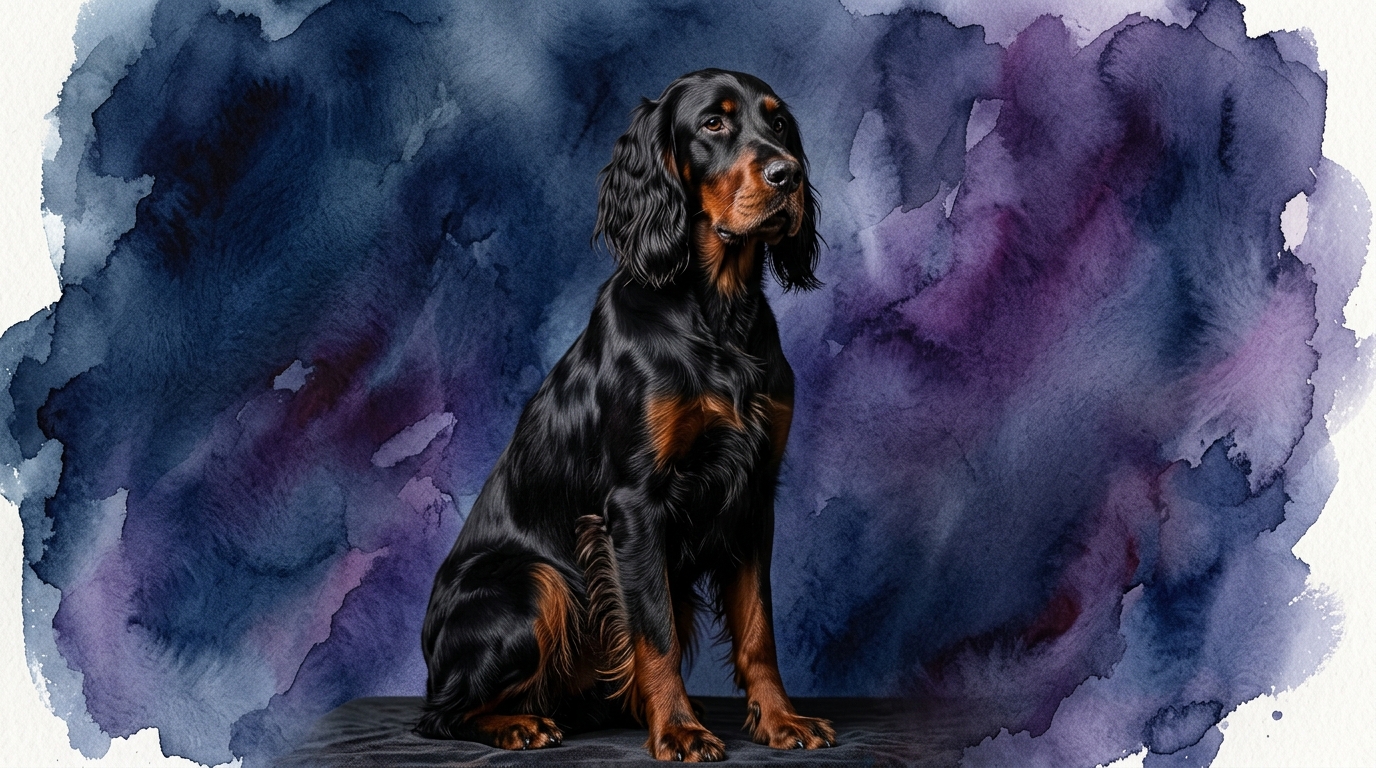
**Gordon Setter**: Standing at Coren rank #39, the Gordon Setter’s cognitive profile is characterized by notable strengths in learning and retention. Their Problem Solving score of 4/5 indicates a capacity for independent thought when encountering novel obstacles; for instance, they might quickly figure out how to retrieve a toy stuck under furniture or navigate a complex gate latch without much human intervention. A Training Speed of 4/5 highlights their quick uptake of new commands and routines, often requiring fewer repetitions to solidify a behavior, making them responsive students in various disciplines. Social Intelligence, rated at 3/5, suggests a generally good understanding of human cues and emotional states, allowing for effective communication, though perhaps without the extreme sensitivity seen in some other breeds. Their Instinctive Drive of 3/5 reflects a balanced but present prey drive and working instinct, typical of a gundog, which influences their natural behaviors in the field. Finally, a Memory score of 4/5 signifies a strong ability to recall learned commands, routines, and past experiences, ensuring consistent performance over time.
**American Staffordshire Terrier**: The American Staffordshire Terrier, with a Coren rank of #48, presents a cognitive profile built on tenacity and retention. Their Problem Solving score of 3/5 suggests they are capable of overcoming challenges but may rely more on learned strategies or persistent trial-and-error rather than immediate, innovative solutions. For example, they might methodically try different approaches to open a treat puzzle rather than quickly deducing the mechanism. A Training Speed of 3/5 means they learn at a steady, consistent pace, requiring clear and repetitive instruction to master new skills, yet their dedication can make them very reliable once a task is ingrained. Social Intelligence, also at 3/5, indicates a solid foundation for understanding human interactions and a capacity for deep bonds, although they might not always pick up on the most subtle human emotional shifts without explicit cues. Their Instinctive Drive of 3/5 points to a moderate drive, less focused on traditional bird retrieval but possessing an inherent tenacity and drive for engagement in activities that leverage their physical prowess. Mirroring the Setter, their Memory is rated at 4/5, enabling them to retain commands, routines, and past experiences effectively, contributing to their reputation for steadfast loyalty and consistent behavior.
Where Gordon Setter wins cognitively
The Gordon Setter’s cognitive edge primarily shines through its superior scores in Problem Solving and Training Speed. Their 4/5 in Problem Solving implies a greater aptitude for independent thought and adaptive thinking when confronted with novel situations. A Gordon Setter might more readily devise a solution to access a hidden treat or independently navigate a new, complex agility course setup without constant handler guidance, showcasing a capacity for self-directed learning and environmental manipulation. This ability makes them adept at tasks requiring analytical thought, such as figuring out escape routes from an enclosure or understanding the mechanics of a new toy. Furthermore, their 4/5 in Training Speed means they will likely pick up complex sequences of commands, such as those required in advanced obedience, competitive field trials, or intricate scent work, with fewer repetitions than an AmStaff. This quick uptake can make the acquisition of advanced skills a smoother, faster, and more rewarding process for both dog and owner, allowing for progression to higher levels of training more swiftly. Their combined cognitive strengths make them particularly adept at tasks demanding sequential learning, environmental awareness, and spontaneous adaptation.
Where American Staffordshire Terrier wins cognitively
While the American Staffordshire Terrier's specific IQ scores don't show a direct "win" in any single category over the Gordon Setter, their cognitive profile, particularly when combined with their inherent tenacity and physical fortitude, creates a distinct and powerful form of strength. Their 3/5 in Training Speed, though lower than the Setter's, is often complemented by a profound steadfastness that ensures once a command is thoroughly learned, it is performed with remarkable dedication and consistency. This reliability, though taking more initial repetitions to embed, can translate to highly dependable performance in known tasks, making them excellent candidates for roles requiring unwavering focus and execution. For example, in protection sports or weight pulling, where consistent application of learned behaviors under pressure is paramount, their mental resilience and commitment to a task are invaluable. Their Instinctive Drive (3/5), while not geared for bird retrieval, translates into a drive for engagement and a willingness to work collaboratively, often with a robust physical application. Coupled with their strong Memory (4/5), which ensures that once a pattern or command is ingrained, it’s not easily forgotten, the AmStaff offers a solid foundation for consistent, reliable behavioral responses, particularly important for safety, public manners, and long-term companionship.
Which is easier to train and why
When considering ease of training, the Gordon Setter generally holds an advantage due to its higher Training Speed score of 4/5. This indicates that they grasp new concepts and commands more rapidly, often requiring fewer repetitions before a behavior becomes ingrained. For instance, teaching a Gordon Setter a complex retrieve, a multi-step agility sequence, or an extended "stay" might progress relatively swiftly, allowing owners to move onto more advanced tasks sooner. Their natural inclination towards working with humans, combined with their problem-solving abilities, makes them responsive and eager students who often enjoy the mental challenge of learning.
The American Staffordshire Terrier, with its 3/5 in Training Speed, typically requires more repetition and consistent reinforcement during the initial learning phases. While they are certainly trainable and possess a strong desire to please their owners, their learning curve is generally more gradual. For example, perfecting a loose-leash walk in a distracting environment or achieving a rock-solid recall might demand more dedicated practice sessions and patience from the owner compared to a Gordon Setter. However, once an AmStaff masters a command, their adherence to it is often unwavering due to their strong memory and inherent tenacity. Therefore, "easier" depends on the owner's patience and preferred training style; the Gordon Setter offers faster acquisition, while the AmStaff offers profound consistency once trained.
Which suits active owners vs relaxed owners
Neither the Gordon Setter nor the American Staffordshire Terrier are suited for truly "relaxed" owners in the sense of minimal daily engagement; both require significant physical activity and mental stimulation to thrive.
**For Active Owners**: The Gordon Setter is an ideal match for individuals or families who embrace an energetic, outdoor-oriented lifestyle. Their heritage as a gundog means they thrive on activities that tap into their instinctive drive for scent work, tracking, and retrieving. Long, vigorous hikes in varied terrain, participation in field trials, competitive obedience, or even advanced agility courses where they can utilize their problem-solving skills on the fly would be profoundly stimulating for them. Their considerable energy levels demand consistent outlets to prevent boredom and potential behavioral issues. They are partners for adventure, always eager for the next exploration.
**For Owners Seeking Structured Engagement**: The American Staffordshire Terrier, while also requiring substantial physical exercise, might be a better fit for active owners who prefer more structured play sessions, brisk daily walks, and focused mental puzzles rather than extensive, free-ranging outdoor exploration. Their contentment often stems from close companionship and defined activities, making them potentially more adaptable to a home with a predictable routine, provided their need for physical and mental stimulation is met through consistent, focused interaction. They excel in activities like weight pulling, dock diving, or structured obedience where their strength, tenacity, and focus can be channeled. A truly "relaxed" owner, in the sense of one unwilling or unable to provide daily, purposeful interaction and exercise, would likely struggle to meet the needs of either breed, but the AmStaff's needs are often more about structured engagement than boundless, free-form activity.
The Verdict
Opt for a Gordon Setter if you seek a partner for dynamic outdoor activities, enjoy engaging in advanced obedience or field work, and appreciate a dog that picks up new skills with relative speed, offering a quicker path to complex training. Their independent problem-solving and rapid learning make them excellent for owners who enjoy consistent progression in diverse activities.
Select an American Staffordshire Terrier if you value unwavering loyalty, appreciate a dog that, once trained, performs with remarkable consistency, and are prepared to invest consistent effort in foundational training to build a strong, reliable companion. Their tenacity and dedication, once channeled, create a steadfast and devoted partner.
🧠 Find Your Pet's IQ Score
Our Pet IQ Lab assessment covers 25+ tests across 5 cognitive dimensions — personalized to your breed.
Take the Full IQ Test →Frequently Asked Questions
Are Gordon Setters good family dogs?
Gordon Setters can be excellent family dogs, especially with active families who understand their significant need for physical and mental exercise. They are generally gentle and affectionate with their human companions, though their energy levels mean they thrive best with consistent training and structured play to prevent restlessness.
Do American Staffordshire Terriers get along with other pets?
American Staffordshire Terriers can coexist peacefully with other pets, particularly if raised together from a young age and properly socialized. However, due to their terrier heritage and potential for strong prey drive, careful introductions and consistent supervision are always advisable, especially with smaller animals or new additions to the household.
What kind of mental stimulation do these breeds need?
Both breeds benefit from regular mental challenges tailored to their strengths. Gordon Setters enjoy scent games, puzzle toys, and complex obedience tasks that tap into their problem-solving skills and natural instincts. American Staffordshire Terriers thrive on structured training, interactive toys, and activities that allow them to focus their tenacity, like learning new tricks, advanced obedience, or engaging in safe, controlled tug games.