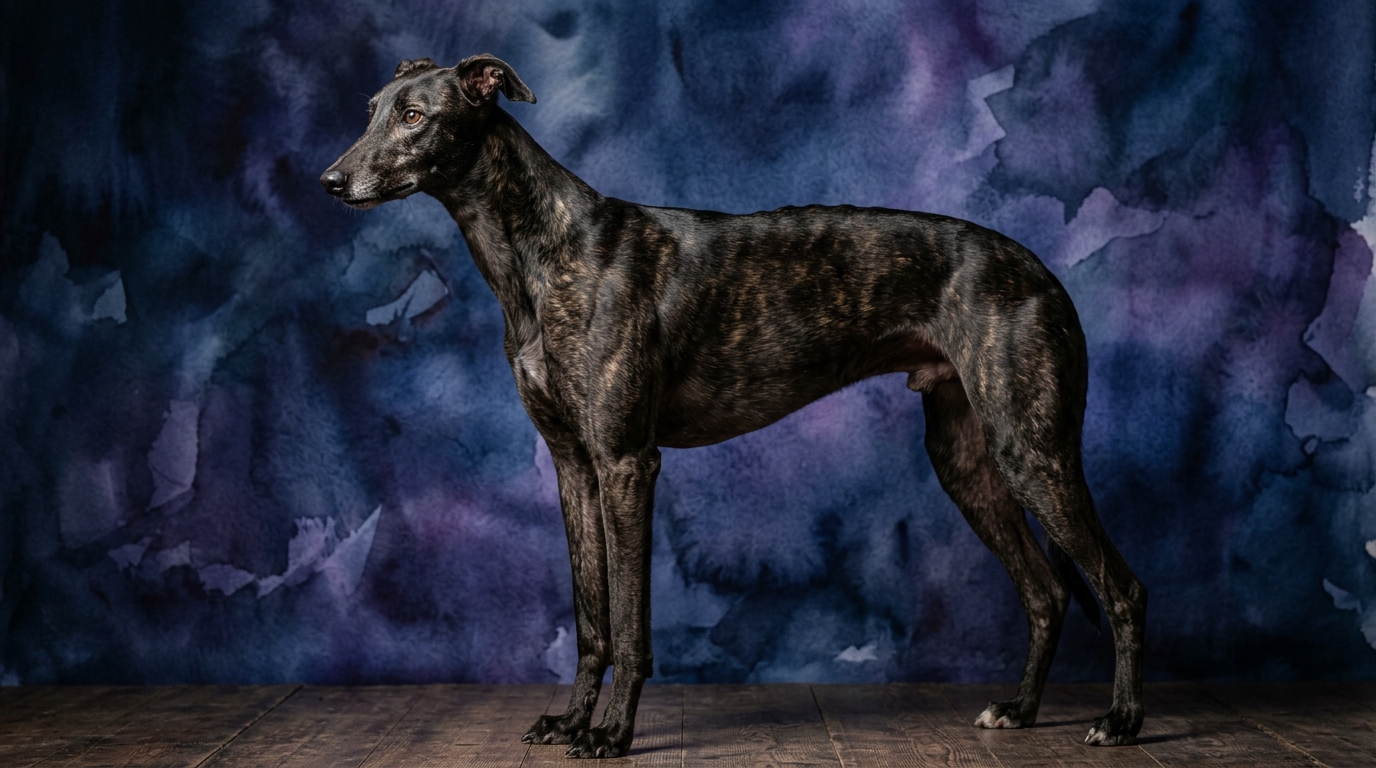

Side-by-Side Cognitive Profiles
At The Cosmic Pet Pet IQ Lab, we break down canine cognition into five measurable dimensions, revealing the unique mental makeup of each breed. For the Greyhound, ranked #46 by Coren, their profile reflects a specialized intelligence forged by centuries of pursuit.
**Greyhound (Coren Rank #46):** Problem Solving (3/5) indicates a functional, direct approach to challenges, often relying on speed and instinct rather than intricate strategizing, with solutions aimed at immediate objectives. Training Speed (2/5) suggests that while capable, their independent nature and strong prey drive may require more repetition and patience in formal obedience. Social Intelligence (3/5) shows they are perceptive of human moods and form deep bonds, often expressing connection with quiet dignity. Instinctive Drive (5/5) is their defining trait, an unparalleled innate urge for chase, visual acuity, and explosive speed that dictates much of their behavior. Memory (3/5) means they possess a functional recall for routines but might be less robust with complex sequences or infrequently reinforced commands.
The Brittany, with a higher Coren rank of #19, presents a different cognitive landscape, showcasing a mind geared for cooperative work and retention.
**Brittany (Coren Rank #19):** Problem Solving (4/5) signifies a more analytical and persistent approach to novel situations, employing various strategies to achieve goals, whether it's a puzzle or a scent trail. Training Speed (4/5) highlights their eagerness to engage and quick grasp of new commands, making them highly responsive partners. Social Intelligence (3/5) indicates a good understanding of social dynamics and emotions, often expressed with more effusive participation. Instinctive Drive (3/5) reveals a strong hunting instinct, particularly for birds, but one that is often channeled and cooperative rather than purely independent chase. Memory (5/5) is exceptional, allowing them to retain a vast repertoire of commands, scent patterns, and past experiences, contributing significantly to their proficiency in fieldwork and advanced training.
Where the Greyhound Excels Cognitively
The Greyhound's cognitive strengths are undeniably rooted in their unparalleled instinctive drive, scoring a perfect 5/5 in this dimension. Their mental architecture is finely tuned for speed and pursuit, a deep-seated neurological program that allows them to instantly process visual cues of movement, predict trajectories, and execute rapid, precise actions. Their problem-solving, while rated 3/5, is often an elegant, direct path to 'catch the moving thing,' a highly specialized form of cognitive efficiency that bypasses unnecessary deliberation. In scenarios demanding immediate, unhesitating response to a visual stimulus, their minds are uniquely adapted to excel, making them supreme specialists in their field.
Where the Brittany Excels Cognitively
Conversely, the Brittany's cognitive profile shines in areas demanding adaptability, retention, and cooperative reasoning. With a 4/5 in Problem Solving, they approach challenges with a more versatile and methodical mindset, capable of sustained mental effort to unravel puzzles or interpret complex environmental cues. Their exceptional 5/5 Memory allows them to build an extensive mental library of experiences, commands, and learned behaviors, making them adept at recalling intricate sequences over time. Furthermore, their 4/5 Training Speed indicates a mind that actively seeks to understand and comply, demonstrating a strong capacity for associative learning and applying past lessons to new situations. This blend of attributes fosters a highly trainable and mentally agile companion.
Ease of Training: Behavioral Differences
When assessing ease of training, the Brittany clearly holds an advantage, largely due to their superior Training Speed (4/5) and Memory (5/5). Their eagerness to engage and their capacity to quickly form associations between commands and actions mean they generally grasp new concepts with fewer repetitions. This breed's robust memory ensures that once a lesson is learned, it is retained for the long term, making proofing and advanced training less arduous. Furthermore, their problem-solving ability (4/5) allows them to generalize learned behaviors to new contexts effectively, making them responsive to varied training environments and tasks.
In contrast, the Greyhound's Training Speed (2/5) is influenced by their independent nature and powerful Instinctive Drive (5/5). While capable of learning, their primary motivation often isn't human affirmation but rather the satisfaction of their chase instinct. This means training requires more creative motivation, patience, and a deep understanding of their sighthound tendencies. Their 3/5 memory, while adequate for daily routines, might necessitate more consistent reinforcement for less frequently practiced commands, particularly when their environment presents competing, instinct-driven distractions. A Greyhound might 'choose' not to comply if a squirrel offers a more compelling mental exercise than a 'sit' command, highlighting a difference in intrinsic motivators rather than a lack of capacity.
Matching Canine Cognition to Owner Lifestyle
The choice between a Greyhound and a Brittany often hinges on an owner's lifestyle and their definition of 'activity.' For the active owner who enjoys cooperative outdoor pursuits like hiking, field trials, or dog sports requiring mental engagement and teamwork, the Brittany is an ideal match. Their balanced Instinctive Drive (3/5), combined with high Problem Solving (4/5) and Training Speed (4/5), means they thrive on structured activities that challenge both their body and mind, working alongside their human. They need consistent mental stimulation to prevent boredom and maintain their eager disposition, making them suitable for owners committed to an interactive lifestyle.
Conversely, the Greyhound, despite its athletic prowess, can suit a more relaxed owner, provided their specific needs are met. While they require bursts of intense exercise in a secure area to satisfy their 5/5 Instinctive Drive for running, they are often content to be couch potatoes indoors. Their lower Training Speed (2/5) and more independent social intelligence (3/5) mean they don't demand constant mental work or intricate training sessions. A relaxed owner who appreciates quiet companionship and can provide safe opportunities for their dog to express its natural running instinct will find a Greyhound to be a wonderfully serene yet occasionally explosive companion, requiring specific bursts of activity rather than sustained, interactive engagement.
The Verdict
Choose a Greyhound if you admire an independent spirit, appreciate bursts of intense physical activity followed by peaceful lounging, and are prepared to manage a profound chase instinct with understanding and secure environments.
Opt for a Brittany if you seek an eager, biddable partner for cooperative activities, value a dog with exceptional memory and problem-solving skills, and are ready to provide consistent mental and physical engagement.
🧠 Find Your Pet's IQ Score
Our Pet IQ Lab assessment covers 25+ tests across 5 cognitive dimensions — personalized to your breed.
Take the Full IQ Test →Frequently Asked Questions
How does the Greyhound's instinctive drive impact daily life?
The Greyhound's 5/5 instinctive drive means a powerful urge to chase anything that moves. This necessitates extremely secure fencing and leashed walks to prevent them from pursuing perceived prey, but it also means they revel in opportunities for safe, off-leash running in enclosed spaces to satisfy this core need.
What kind of mental stimulation does a Brittany typically require?
With high problem-solving and memory scores, Brittanys thrive on mental challenges like puzzle toys, scent work, and learning new tricks. They benefit greatly from consistent training, even beyond basic obedience, to keep their active minds engaged and prevent boredom, channeling their natural working intelligence.
Are Greyhounds difficult to train due to their lower training speed score?
Greyhounds are not difficult to train in the sense of being incapable, but their 2/5 training speed means they often require more patience and positive reinforcement. Their independent nature and strong prey drive mean trainers must be creative in making training rewarding and consistent, especially when competing with environmental distractions, focusing on motivation rather than sheer repetition.