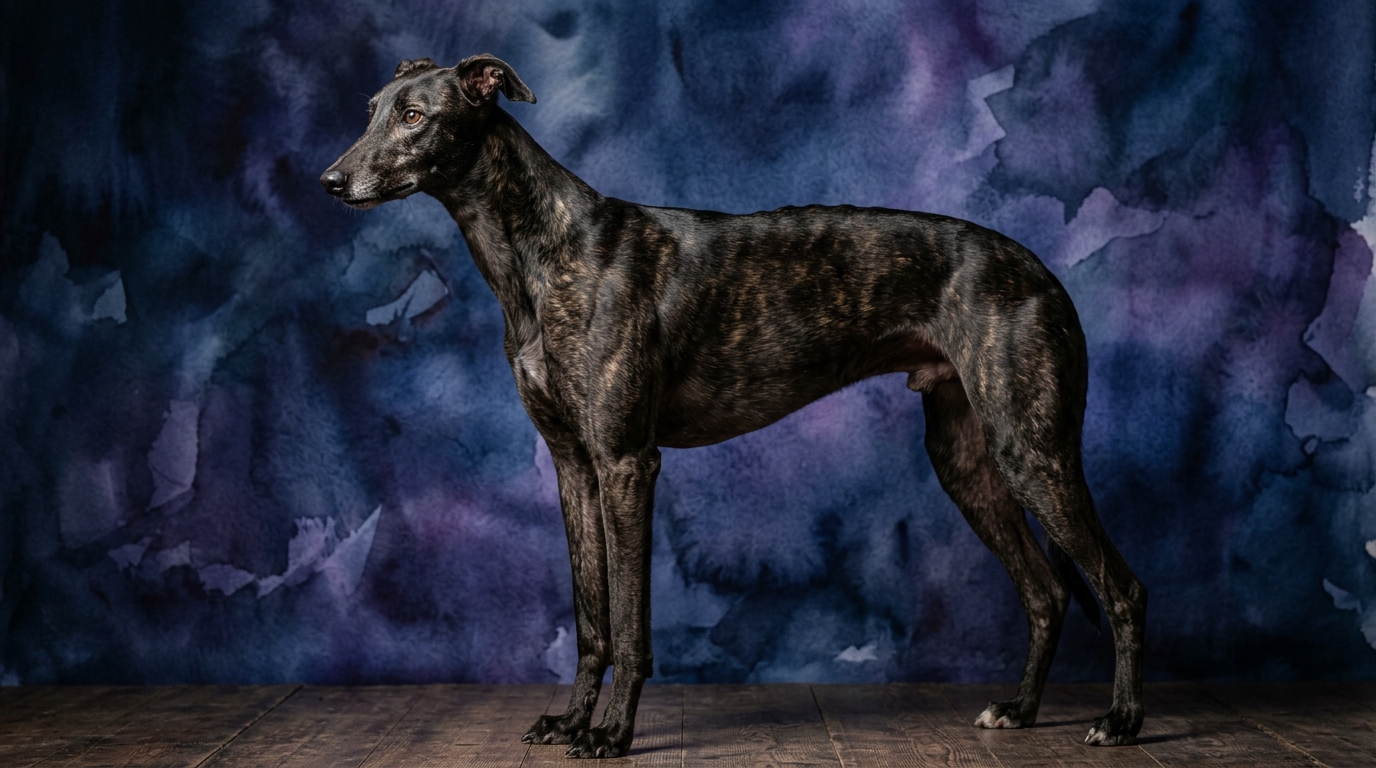
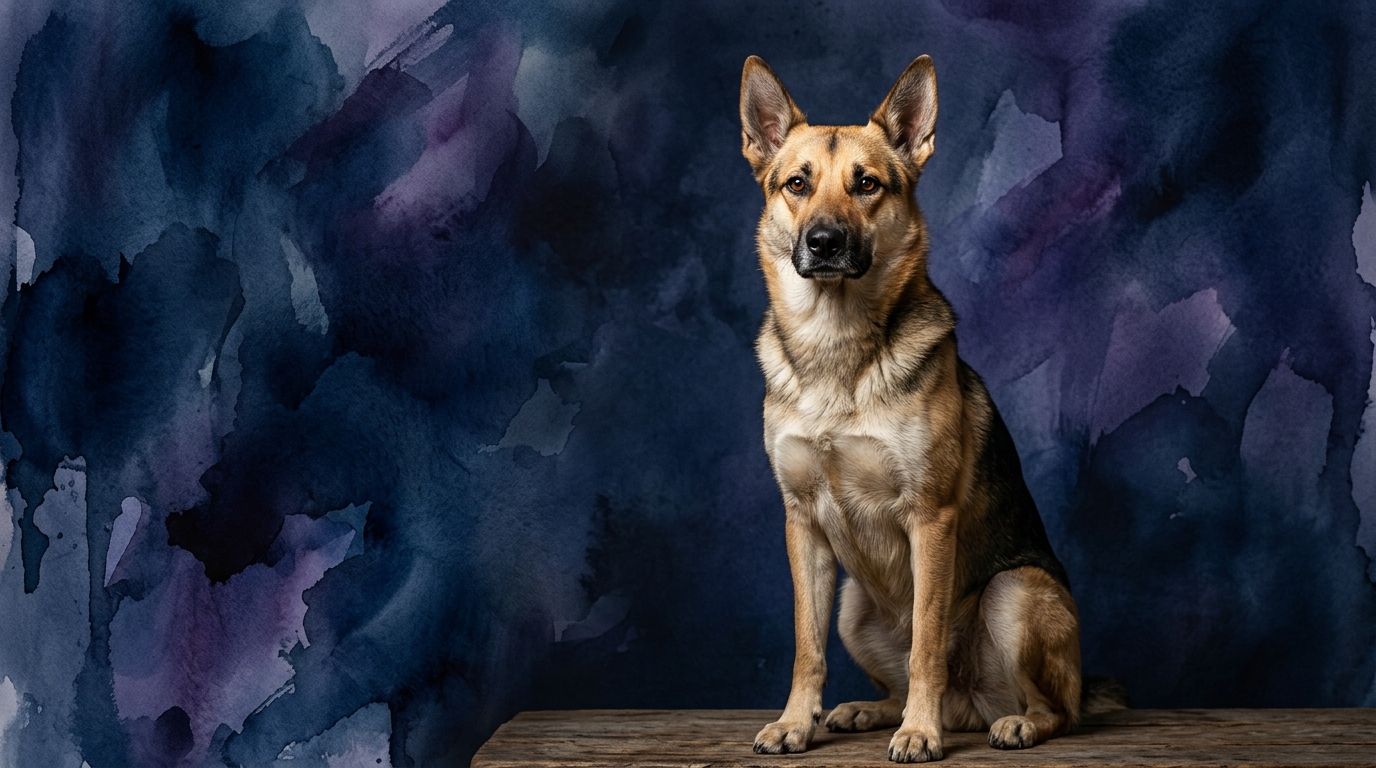
Side-by-Side IQ Profile
Greyhound (3/5) and Canaan Dog (3/5) both demonstrate moderate problem-solving abilities, yet their approaches diverge significantly. The Greyhound typically applies its intelligence to practical, immediate tasks, often related to efficiency of movement or comfort, rather than complex, abstract puzzles. Conversely, the Canaan Dog, with its ancient heritage as a pariah dog, exhibits a resourceful and independent problem-solving style, particularly adept at navigating and adapting to its environment without human direction.
Training Speed reveals a clearer distinction, with the Greyhound scoring 2/5 and the Canaan Dog 3/5. Greyhounds can be slower to grasp and consistently execute new commands, often due to their independent nature and a low intrinsic motivation for repetitive drills, especially if a more compelling stimulus like a moving object is present. The Canaan Dog, while quicker to learn, requires a highly engaging and fair approach; they can become stubborn or resistant if bored or if they perceive injustice in the training process.
Both breeds register a 3/5 in Social Intelligence, indicating a nuanced understanding of social cues, though expressed differently. The Greyhound is often described as polite and reserved, adept at navigating social situations without excessive engagement, forming deep but often quiet bonds with its select human family members. The Canaan Dog, conversely, is highly discerning, reading situations and individuals astutely; while deeply loyal to its family, it often maintains a wary or aloof stance with strangers, guarding its social circle carefully.
Instinctive Drive is where the breeds sharply contrast. The Greyhound scores a powerful 5/5, driven by an intense sighthound prey drive that makes it acutely attuned to movement and compelled to chase. This instinct is deeply ingrained and almost impossible to override once triggered. The Canaan Dog, with a 3/5, possesses a moderate prey drive but couples it with strong guarding and territorial instincts, making it highly alert to its surroundings and focused on assessing potential threats rather than solely on the chase.
Memory is another area of divergence, with the Greyhound at 3/5 and the Canaan Dog at 4/5. Greyhounds demonstrate a solid memory for routines, familiar places, and the people they bond with, but may require consistent reinforcement for complex command sequences. The Canaan Dog, however, possesses an exceptional memory for past experiences, people, and specific events, which contributes to its discerning nature and its ability to learn from both positive and negative interactions.
Where Greyhound Wins Cognitively
The Greyhound's cognitive strengths are intrinsically linked to its sighthound lineage, particularly its unparalleled focus and efficiency in tasks requiring explosive speed and visual acuity. Its instinctive drive (5/5) translates into an ability to lock onto and pursue a moving target with singular, unwavering determination, a cognitive feat of immense concentration in a specific domain. This specialized intelligence allows for peak performance in short, high-intensity activities, demonstrating a unique form of mental specialization.
Beyond the chase, Greyhounds excel in a different kind of cognitive efficiency: the ability to conserve mental and physical energy. Once their exercise needs are met, they are masters of relaxation, demonstrating a capacity to "switch off" and remain calm indoors. This mental flexibility, the ability to transition from intense focus to deep tranquility, can be seen as a cognitive advantage, reducing susceptibility to anxiety or overstimulation in varied environments compared to more constantly vigilant breeds.
Where Canaan Dog Wins Cognitively
The Canaan Dog's superior memory (4/5) grants it a distinct cognitive edge, allowing it to retain detailed information about past interactions, environmental changes, and social dynamics. This robust memory enhances its independent problem-solving (3/5), enabling it to learn from experience and adapt strategies in complex or novel situations, particularly those requiring resourcefulness and self-reliance in a less structured environment.
Furthermore, the Canaan Dog's cognitive profile is marked by an exceptional ability to assess and react to its surroundings, a legacy of its ancient role as a guardian and survivor. Its discerning social intelligence (3/5) combined with its memory allows it to quickly identify and remember potential threats or changes within its territory. This nuanced situational awareness and capacity for independent judgment contribute to its effectiveness as a vigilant protector, making it cognitively superior in detecting and responding to environmental shifts.
Which is Easier to Train and Why
Comparing trainability, the Canaan Dog (Training Speed 3/5) generally proves quicker to grasp new concepts than the Greyhound (Training Speed 2/5). However, "easier" is a nuanced term here, as both breeds present unique challenges. The Greyhound's lower training speed often stems from its independent nature and a disinterest in repetitive drills unless highly motivated by food or the promise of a chase. Their sighthound instincts mean they may mentally "check out" if a more stimulating visual target appears, making consistent focus difficult.
The Canaan Dog learns more rapidly but couples this with a strong, independent will and discerning nature. While they pick up commands quickly, they require a trainer who is consistent, fair, and engaging, as they are not inherently "people-pleasers." Their excellent memory (4/5) means they remember both positive and negative training experiences, and will resist if they perceive unfairness or a lack of purpose in the task. Therefore, while the Canaan Dog learns faster, its independent thinking can make consistent compliance more challenging without skilled, motivational handling.
Which Suits Active Owners vs. Relaxed Owners
For active owners, both breeds can be suitable, but with different demands. The Canaan Dog thrives on consistent mental and physical engagement, reflecting its heritage as a working and survivalist breed. Owners who enjoy long hikes, dog sports like agility or obedience, and can provide a sense of purpose will find a responsive and energetic partner in the Canaan Dog. Its cognitive makeup demands regular stimulation to prevent boredom or destructive behaviors.
The Greyhound, while requiring opportunities for short, intense bursts of running in a secure area, is surprisingly adaptable to a more relaxed indoor lifestyle. These "45 mph couch potatoes" are content to lounge for much of the day, making them excellent companions for owners who appreciate quiet companionship after a good sprint. Owners who lead a generally relaxed life but can commit to providing safe, vigorous exercise for 15-30 minutes daily will find the Greyhound to be a remarkably calm and low-maintenance housemate.
The Verdict
Choose the Greyhound if you seek a calm, elegant companion that thrives on comfort and requires short, intense bursts of physical activity, and you appreciate its independent, sighthound demeanor.
Opt for the Canaan Dog if you are an experienced owner seeking a resilient, discerning, and highly communicative partner, ready to engage in consistent mental and physical challenges.
🧠 Find Your Pet's IQ Score
Our Pet IQ Lab assessment covers 25+ tests across 5 cognitive dimensions — personalized to your breed.
Take the Full IQ Test →Frequently Asked Questions
Are Greyhounds good off-leash?
Generally, no. Their intense instinctive drive to chase (5/5) means a moving squirrel or plastic bag can trigger an immediate, unrecallable pursuit, making secure, fenced areas essential for off-leash exercise.
Do Canaan Dogs bark a lot?
Canaan Dogs are naturally alert and possess strong guarding instincts, which can lead to frequent barking at perceived threats or novelties in their environment. Early and consistent training is crucial to manage this tendency effectively.
Which breed is better for first-time dog owners?
Neither breed is typically recommended for first-time owners due to their distinct needs. Greyhounds require understanding of their unique exercise and prey drive, while Canaan Dogs demand experienced handling, consistent training, and substantial mental engagement.