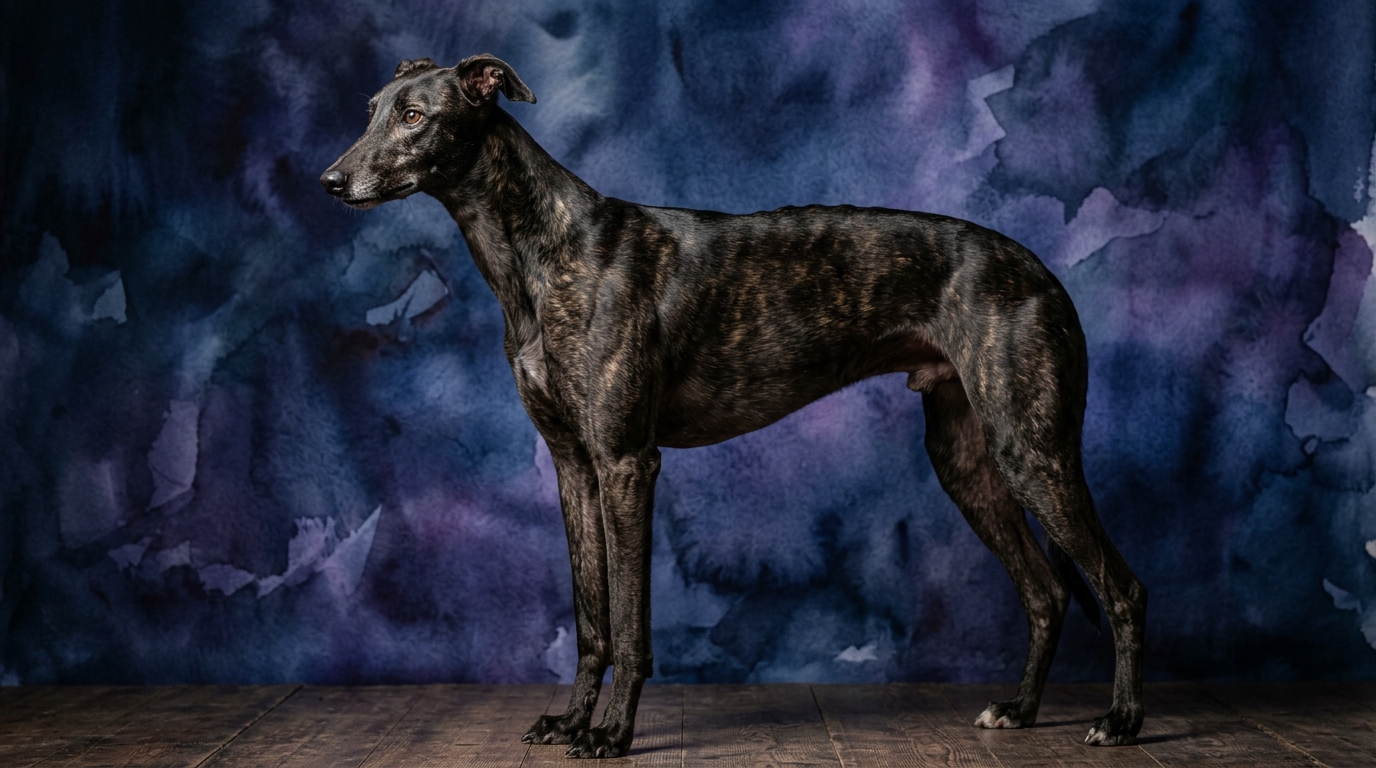

Side-by-Side IQ Profile: Greyhound
The Greyhound, often celebrated for its incredible speed, also possesses a distinct cognitive makeup. Its Problem Solving ability, rated at 3 out of 5, suggests a moderate capacity for navigating novel situations, often leaning on instinct rather than complex strategic thought. Training Speed, at 2 out of 5, indicates that Greyhounds can take a bit longer to grasp new commands or routines, requiring patience and consistent reinforcement from their human companions. Social Intelligence, scoring 3 out of 5, reflects a balanced capacity for understanding and responding to social cues, allowing them to integrate well within a family unit. A standout trait is their Instinctive Drive, a perfect 5 out of 5, which underscores their profound prey drive and innate desire to chase and pursue, a legacy of their sighthound heritage. Finally, their Memory, at 3 out of 5, suggests a solid ability to recall past experiences and learned behaviors, though perhaps not with exceptional detail or longevity.
Side-by-Side IQ Profile: Dogo Argentino
The Dogo Argentino, a powerful working breed, presents a different cognitive blueprint. Its Problem Solving score of 3 out of 5 mirrors the Greyhound, indicating a similar moderate aptitude for independent problem-solving, likely applied to tasks related to their protective instincts. Where the Dogo pulls ahead is in Training Speed, rated 3 out of 5. This suggests an average learning pace, making them generally more receptive to formal training sessions and quicker to pick up commands than the Greyhound. Social Intelligence, also at 3 out of 5, points to a comparable capacity for understanding human and canine social dynamics, enabling them to form strong bonds and navigate group interactions. Their Instinctive Drive, at 3 out of 5, is moderate compared to the Greyhound's intense drive, focusing more on guarding and protective behaviors than on chasing prey. Lastly, their Memory, at 3 out of 5, means they possess a reliable recall of learned experiences and associations.
Where the Greyhound Wins Cognitively
The Greyhound's primary cognitive advantage lies squarely in its unparalleled Instinctive Drive, rated 5 out of 5. This isn't merely about physical speed; it represents an acute sensory processing ability tuned for detecting movement and an unwavering focus on pursuit. While some might view this as a purely physical trait, it's deeply cognitive, involving rapid assessment of environmental cues, swift decision-making to initiate a chase, and an inherent understanding of spatial dynamics during high-speed maneuvers. Their entire being is wired for the hunt, making them exceptional at tasks requiring quick, reactive responses to visual stimuli, even if those stimuli are just a squirrel across the park. This intense drive translates into a breed that excels in activities that tap into their natural instinct to run and follow, demonstrating a specialized intelligence for open-field strategy and execution. Their problem-solving, though moderate overall, becomes highly specialized in the context of a chase, where they must constantly adapt their trajectory and speed to their quarry.
Where the Dogo Argentino Wins Cognitively
The Dogo Argentino's cognitive strengths shine most brightly in its more adaptable learning pace and its nuanced application of instinctive drives. With a Training Speed of 3 out of 5, the Dogo Argentino demonstrates a greater receptiveness to formal instruction compared to the Greyhound's 2 out of 5. This difference means they generally process and internalize new commands and routines more efficiently, making them more amenable to diverse training protocols. Their moderate Instinctive Drive (3/5), while not as extreme as the Greyhound's, is channeled differently, often manifesting as a strong protective instinct and a desire to work alongside their human companions. This drive isn't about chasing but about guarding, assessing threats, and making judgments about safety. Their problem-solving, also 3/5, likely leans towards scenario-based thinking related to their protective role, such as discerning friend from perceived foe or navigating complex terrain during a patrol. This allows for a broader application of their cognitive abilities beyond a singular, intense focus.
Which is Easier to Train and Why
When it comes to ease of training, the Dogo Argentino generally presents a more straightforward experience for owners. Their Training Speed, rated 3 out of 5, indicates an average learning curve, meaning they tend to pick up new commands and cues at a reasonable pace. This is significantly different from the Greyhound, which has a Training Speed of 2 out of 5. Greyhounds, as sighthounds, are often described as independent thinkers, prioritizing their keen visual instincts over human directives when a compelling stimulus arises. Their strong prey drive (Instinctive Drive 5/5) means that distractions like a fleeting rabbit or even a blowing leaf can easily override their attention to a training session. While both breeds have a moderate Problem Solving score of 3/5, the Dogo's willingness to engage in structured learning, coupled with a more moderate Instinctive Drive (3/5), makes them more consistently attentive and responsive in training environments. They are typically eager to please and value their bond with their handler, which translates into a stronger motivation to cooperate during training. Conversely, training a Greyhound requires immense patience, creativity, and a deep understanding of their unique motivations, often relying on positive reinforcement that outcompetes their natural urges.
Which Suits Active Owners vs. Relaxed Owners
The choice between a Greyhound and a Dogo Argentino largely depends on an owner's lifestyle and their willingness to engage with specific breed needs. For active owners who enjoy bursts of intense activity followed by significant downtime, the Greyhound can be an excellent fit. While they possess an unmatched capacity for sprinting (a manifestation of their 5/5 Instinctive Drive), they are famously '45 mph couch potatoes,' content with long periods of rest after a good run. They require secure, fenced areas for safe off-leash exercise to satisfy their chasing instincts, but their daily energy needs are often met with a few brisk walks and opportunities to stretch their legs. Their moderate Social Intelligence (3/5) allows them to adapt to quiet home lives, often seeking comfort and soft spots to recline. Conversely, the Dogo Argentino suits active owners who are seeking a more consistently engaged and purpose-driven companion. With a moderate Instinctive Drive (3/5) that leans towards protection and interaction, they thrive on regular physical exercise combined with mental stimulation. These dogs need more than just a quick sprint; they require structured activities, consistent training, and often a 'job' to do, whether it's agility, obedience, or simply being a vigilant family guardian. Their average Training Speed (3/5) and Social Intelligence (3/5) make them receptive to learning new tasks and participating in family adventures. Relaxed owners might find the Dogo's needs for consistent engagement and strong leadership challenging, whereas a retired Greyhound might perfectly complement a more serene household, provided its initial exercise requirements are met.
The Verdict
Choose a Greyhound if you admire specialized instinctual brilliance, appreciate a serene home companion, and are prepared to manage intense prey drive with secure exercise and patient, consistent training methods.
Opt for a Dogo Argentino if you seek a highly trainable, versatile working companion, are committed to consistent mental and physical engagement, and value a dog with balanced protective instincts.
🧠 Find Your Pet's IQ Score
Our Pet IQ Lab assessment covers 25+ tests across 5 cognitive dimensions — personalized to your breed.
Take the Full IQ Test →Frequently Asked Questions
Do Greyhounds make good guard dogs?
Greyhounds typically do not excel as guard dogs. Their Instinctive Drive is geared towards chase and pursuit (5/5), not territorial defense. While they might bark at strangers, their primary response is usually flight or indifference rather than confrontation.
Are Dogo Argentinos easy to live with for first-time dog owners?
Dogo Argentinos are generally not recommended for first-time dog owners. Their powerful physique, protective instincts (Instinctive Drive 3/5), and need for consistent training and socialization require an experienced hand. They thrive with confident leadership and a clear structure.
Given their similar problem-solving scores, how do Greyhounds and Dogo Argentinos approach challenges differently?
While both breeds score 3/5 in Problem Solving, their approaches diverge due to other traits. A Greyhound's problem-solving might focus on optimizing a chase path or finding shortcuts to prey, driven by instinct. A Dogo Argentino's problem-solving is more likely applied to navigating social situations, assessing potential threats, or figuring out how to achieve a training goal, leveraging their trainability and protective nature.