Side-by-Side IQ Profile
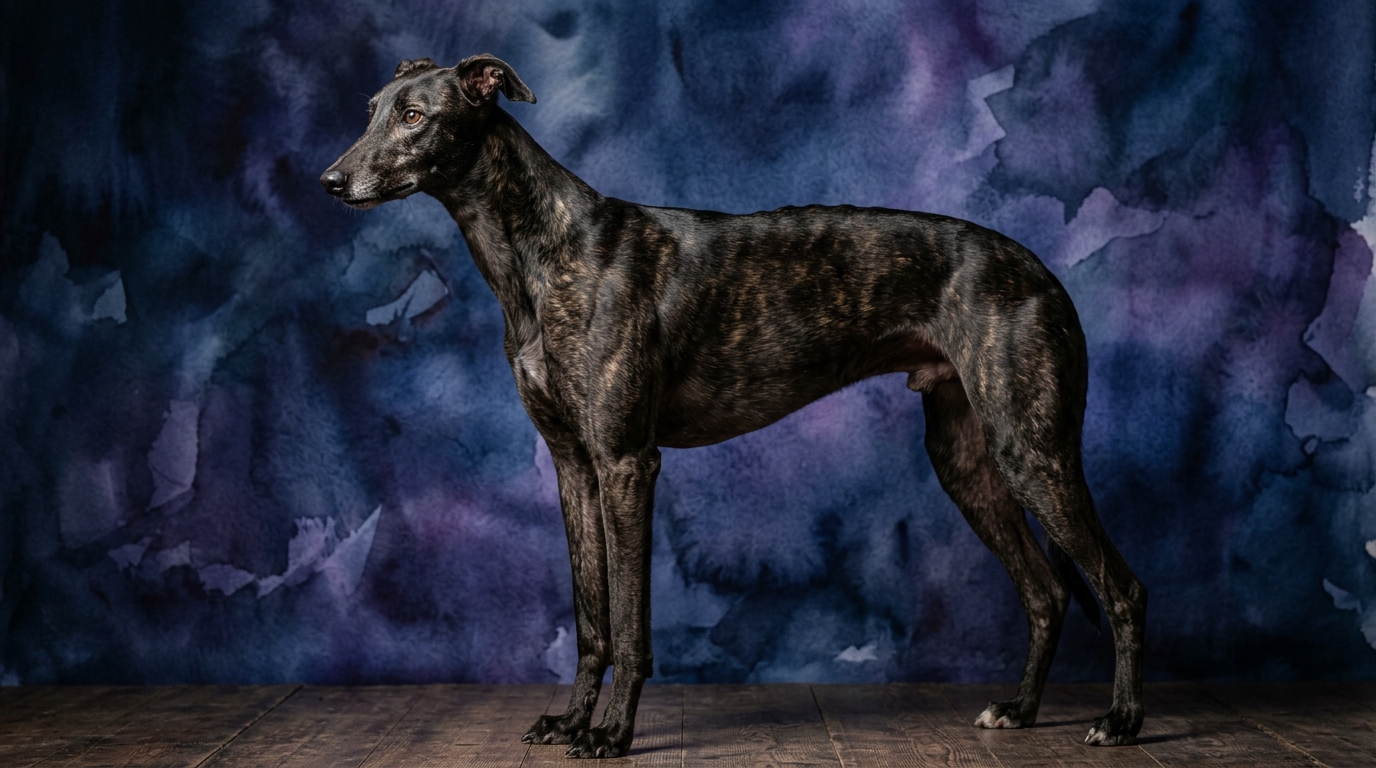
**Greyhound (dog, Hound, Coren rank #46)**
**Problem Solving (3/5):** Greyhounds approach challenges with direct, functional solutions, often reflecting their pursuit heritage. They excel at immediate, physical problem-solving rather than intricate, multi-step cognitive tasks, favoring efficiency in their responses.
**Training Speed (2/5):** Learning new commands generally requires consistent repetition and strong motivation for Greyhounds. Their independent hound nature means they often need clear incentives and patience to solidify behaviors, as compliance isn't always their primary drive.
**Social Intelligence (3/5):** Greyhounds exhibit moderate social acumen, forming deep bonds with their immediate family and often displaying sensitivity to human emotions. They are generally reserved with strangers, preferring a smaller, trusted social circle.
**Instinctive Drive (5/5):** This is a defining trait; their sighthound drive for chasing and pursuit is exceptionally powerful. This core instinct profoundly influences their behavior, demanding safe, enclosed spaces for exercise to satisfy their natural urge.
**Memory (3/5):** Greyhounds possess a practical memory for routines, familiar individuals, and learned commands. Their recall is reliable for functional needs, reinforcing consistent habits and positive associations over time.
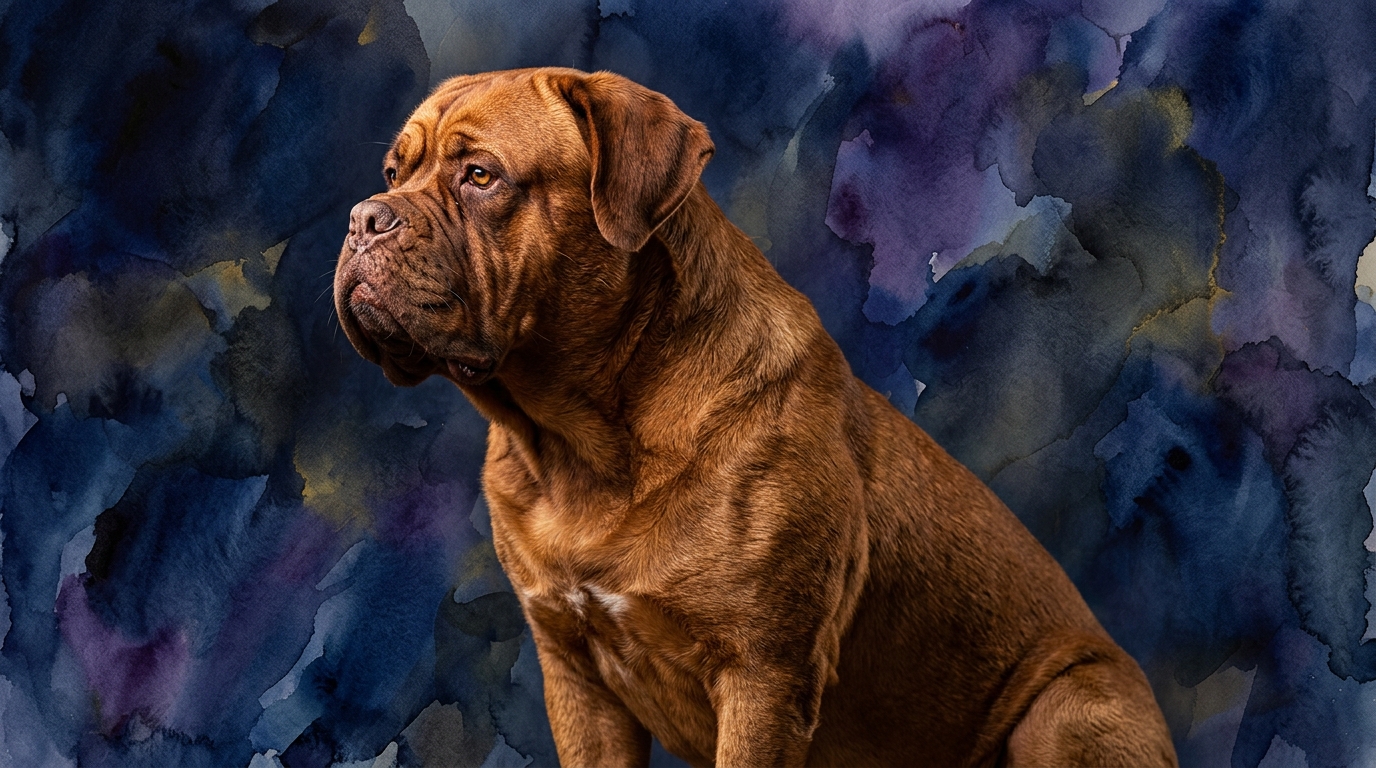
**Dogue de Bordeaux (dog, Working, Not Coren-ranked)**
**Problem Solving (3/5):** The Dogue de Bordeaux shares a practical problem-solving ability, assessing situations and finding solutions to immediate environmental needs. They rely on their determination and physical presence, adapting to new circumstances rather than engaging in abstract strategizing.
**Training Speed (3/5):** Dogue de Bordeaux typically learn at a slightly faster pace than Greyhounds, responding well to fair, consistent training. Their desire to please and working breed heritage often translates to a higher inclination for cooperation and structured learning.
**Social Intelligence (3/5):** These dogs display a profound capacity for social bonding and understanding within their family. Deeply devoted, they can be sensitive to moods and show quiet empathy, though they may be reserved or watchful with unfamiliar individuals.
**Instinctive Drive (3/5):** Their moderate instinctive drive primarily focuses on guarding and protecting their family and territory. This manifests as a watchful, loyal demeanor, distinct from the intense prey drive seen in sighthounds.
**Memory (3/5):** Dogue de Bordeaux exhibit reliable memory for people, places, and established routines. This consistent recall supports their role as steadfast companions, allowing them to remember past experiences and learned behaviors effectively.
Where Greyhound Wins Cognitively
The Greyhound's cognitive profile reveals a distinct advantage in areas tied directly to its millennia-old purpose: speed and pursuit. Their **Instinctive Drive (5/5)** is unparalleled among many breeds, manifesting as an acute awareness of movement and an instantaneous reaction to chase. This isn't just a physical attribute; it's a cognitive processing superpower, allowing them to assess trajectories and react with incredible precision. While their general problem-solving is moderate, their ability to quickly strategize a pursuit path, often over varied terrain, demonstrates a specialized, highly refined form of cognitive function unique to sighthounds. This swift, instinct-driven decision-making in high-speed scenarios showcases a specialized form of intelligence that few other breeds can match.
Where Dogue de Bordeaux Wins Cognitively
Conversely, the Dogue de Bordeaux exhibits cognitive strengths rooted in its guardian role. Its slightly higher **Training Speed (3/5)** suggests a greater inherent willingness to engage with human instruction and a potentially quicker grasp of new commands compared to the Greyhound. This isn't about being "smarter" overall, but rather a difference in their cognitive processing of human requests, often stemming from a stronger innate desire to work alongside their people. Their **Social Intelligence (3/5)**, while rated identically to the Greyhound, often manifests differently, with a profound, quiet devotion and an ability to sense and respond to family dynamics, suggesting a nuanced emotional perceptiveness crucial for a protective companion. Their problem-solving, though rated equally, often involves a more deliberate, watchful approach to environmental changes, indicating a different cognitive strategy focused on assessment rather than immediate, explosive action.
Which is Easier to Train and Why
Based on their respective `Training Speed` scores, the Dogue de Bordeaux (3/5) generally presents as a slightly easier breed to train than the Greyhound (2/5). The Dogue de Bordeaux often possesses a stronger intrinsic motivation to please its family, making it more receptive to consistent positive reinforcement. Their working breed background means they are often more inclined to engage in structured learning and respond to commands, especially when they understand their role within the family unit. Greyhounds, on the other hand, often require more patience and creative motivation due to their independent hound nature. While they are capable learners, their lower `Training Speed` score reflects a need for greater repetition and a more compelling reason to comply, as their instincts often take precedence over human directives. This isn't a deficit in capacity, but a difference in their cognitive priorities and willingness to defer.
Which Suits Active Owners vs. Relaxed Owners
The choice between these two breeds largely depends on an owner's lifestyle. The Greyhound, with its exceptional `Instinctive Drive (5/5)` and history as a swift hunter, is surprisingly well-suited for relaxed owners who can provide short bursts of intense exercise in a secure area. They are often described as '45 mph couch potatoes,' requiring substantial, safe running opportunities but then contentedly lounging for the rest of the day. Their specific exercise needs mean an active owner might enjoy their speed, but a relaxed owner who prioritizes calm indoor companionship after a good sprint could also find them a perfect fit. The Dogue de Bordeaux, with its `Instinctive Drive (3/5)` focused on guardianship and its need for regular, moderate activity, suits owners who appreciate a more deliberate pace. They thrive on daily walks and mental engagement but aren't built for sustained, high-speed efforts. Their steadfast nature makes them ideal for relaxed owners seeking a loyal, present companion who enjoys shared, calm activities and has a protective streak.
The Verdict
For owners drawn to a specialized, instinct-driven athlete that thrives on explosive bursts of speed followed by serene relaxation, the Greyhound is an unparalleled choice.
If you seek a devoted, watchful companion with a steady temperament and a willingness to engage in consistent, gentle training, the Dogue de Bordeaux stands out.
🧠 Find Your Pet's IQ Score
Our Pet IQ Lab assessment covers 25+ tests across 5 cognitive dimensions — personalized to your breed.
Take the Full IQ Test →Frequently Asked Questions
Do Greyhounds need a lot of exercise daily?
While Greyhounds are incredibly fast, they are sprinters, not endurance runners. They benefit from 1-2 opportunities daily for a short, fast run in a securely fenced area, but are otherwise content to relax indoors. Their exercise needs are often less demanding than many other active breeds.
Are Dogue de Bordeaux good with children?
With proper socialization and training, Dogue de Bordeaux can be very gentle and devoted family dogs, often displaying a patient and protective nature towards children. Due to their large size, supervision is always recommended to prevent accidental bumps during play.
Does a Dogue de Bordeaux require extensive mental stimulation?
While not requiring constant, complex puzzles, the Dogue de Bordeaux benefits from consistent mental engagement through training, interactive toys, and varied daily routines. This helps prevent boredom and channel their natural guardian instincts positively, contributing to a well-adjusted companion.