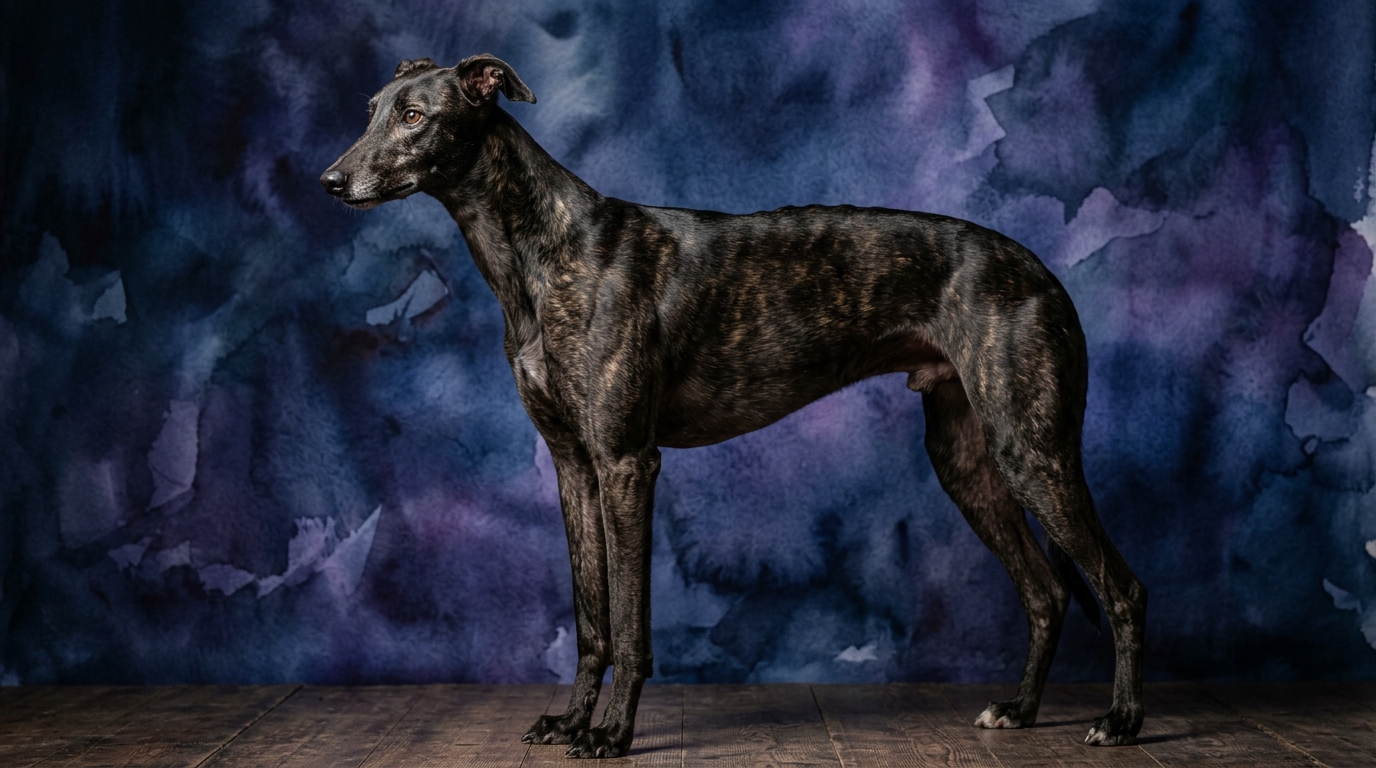

Side-by-Side IQ Profile: Greyhound vs. English Setter
The Greyhound, ranked #46 by Coren, presents a cognitive profile finely tuned for its ancestral role as a pursuit hunter. Their problem-solving ability, rated 3/5, is often pragmatic and direct, focusing on immediate solutions rather than complex, multi-step strategies, especially when a chase is involved. Training speed, at 2/5, indicates they are capable learners but often require patient, consistent, and highly rewarding methods, as their motivation is less about eager compliance and more about what benefits them directly. Social intelligence, also 3/5, describes a breed that is generally polite and observant, forming deep, quiet bonds with their inner circle but often reserved with strangers. The standout trait is their instinctive drive, a formidable 5/5, which signifies an overwhelming, hardwired impulse for chase and pursuit, a dominant force in their cognitive landscape. Finally, their memory, at 3/5, is sufficient for routines and learned commands, though perhaps not exceptional for intricate sequences or highly abstract concepts.
The English Setter, holding a Coren rank of #37, exhibits a cognitive makeup geared towards cooperative hunting and companionship. Their problem-solving aptitude, rated 4/5, suggests a breed adept at navigating complex environments and figuring out solutions, particularly in tasks related to their field work or retrieving. Training speed, an impressive 4/5, highlights their eagerness to learn and please, making them relatively quick to pick up new commands with positive reinforcement and enjoy collaborative tasks. Social intelligence, at 3/5, reflects an affectionate and generally good-natured temperament, valuing companionship but also being sensitive and requiring gentle handling. Their instinctive drive, rated 3/5, indicates a strong hunting instinct focused on pointing and scent work, but one that is more integrated with human partnership than the Greyhound's pure chase. Their memory, a robust 4/5, is excellent for retaining complex sequences, commands, and the precise location of objects or scents, making them effective and reliable working partners.
Where the Greyhound Wins Cognitively
The Greyhound's cognitive strengths are singularly concentrated on its profound instinctive drive (5/5), a specialization that manifests as an extraordinary ability for rapid visual processing and dynamic decision-making during high-speed pursuit. This isn't just physical velocity; it involves an innate capacity to instantly assess optimal pursuit trajectories, react to sudden changes in a target's direction, and filter out extraneous sensory input to maintain laser focus on the objective. Their problem-solving, while rated 3/5 in general terms, becomes a 5/5 when applied to the context of the chase, where they demonstrate an unparalleled efficiency in recognizing and exploiting fleeting opportunities. The cognitive architecture of a Greyhound is a marvel of evolutionary optimization for a single, powerful purpose, showcasing a specific form of intelligence where speed of processing and execution for a defined goal are paramount.
Where the English Setter Wins Cognitively
The English Setter's cognitive victories lie in their cooperative intelligence and nuanced information processing, particularly evident in their problem-solving (4/5) and memory (4/5) scores. Unlike the Greyhound's specialized focus, Setters display a broader range of cognitive flexibility. They excel at understanding and applying complex sequences of commands, often demonstrating an innate ability to generalize learned behaviors to novel situations, especially those involving scent discrimination or retrieving tasks. Their superior memory allows them to retain intricate hunting patterns, recall the precise location of fallen game, or remember the specific cues associated with various training exercises. This breed's enthusiasm for training (4/5) isn't merely about obedience; it reflects a genuine cognitive engagement with their human partners, demonstrating a capacity for collaborative problem-solving and a desire to work alongside their people that is a hallmark of their intellect.
Which is Easier to Train and Why
When considering ease of training, the English Setter generally holds an advantage, largely attributed to their higher training speed (4/5) and an inherent disposition for cooperative engagement. Setters often exhibit a strong desire to work with their human companions, a trait that translates into a quicker uptake of new commands and a greater willingness to repeat desired behaviors for praise and interaction. Their intrinsic motivation frequently stems from the collaborative process itself and the satisfaction of a task well executed, making them highly responsive to positive reinforcement and clear communication. This eagerness to please and partner makes them adaptable to a wider range of training methodologies and less prone to independent decision-making during instruction.
In contrast, the Greyhound's training speed (2/5) reflects a different cognitive priority and a more independent learning style. While they are certainly capable of learning, their motivation is often less about human approval and more about self-interest or immediate, tangible rewards. Training Greyhounds requires exceptional patience, absolute consistency, and the use of high-value reinforcers to maintain their focus. Their formidable instinctive drive (5/5) means that even well-learned commands can be temporarily forgotten in the presence of a strong environmental trigger, such as a scurrying squirrel or a blowing leaf. Their cognitive programming is not primarily geared towards complex obedience for its own sake, but rather towards efficient action in pursuit. Effective training for a Greyhound involves understanding and working with this independent nature, focusing on clear boundaries, secure environments, and making training a rewarding experience for them, rather than expecting eager compliance.
Which Suits Active Owners vs. Relaxed Owners
The English Setter is undoubtedly better suited for active owners who thrive on interactive engagement and outdoor adventures. While these dogs certainly enjoy periods of rest, their cognitive and physical well-being are deeply tied to activities that stimulate their natural instincts for scent work, retrieving, and problem-solving. They are ideal companions for hiking, field trials, agility, or even advanced obedience, flourishing with an owner who can consistently channel their moderate instinctive drive (3/5) into structured, fulfilling activities. Their desire to partner makes them enthusiastic participants in a wide array of active pursuits, ensuring both their mental and physical needs are met.
Conversely, the Greyhound, despite its athletic prowess, can often be a surprisingly good fit for more relaxed owners, provided their unique exercise requirements are understood and met. They absolutely need opportunities for short, intense bursts of running in a securely fenced area to satisfy their profound instinctive drive (5/5). However, once these explosive energy releases are fulfilled, Greyhounds are largely content to spend the majority of their day lounging, earning them the affectionate moniker of "45-mph couch potatoes." Their independent social intelligence (3/5) means they appreciate quiet companionship without constant demands for interaction, making them excellent, low-key housemates. Therefore, a 'relaxed' owner for a Greyhound isn't inactive, but rather one who understands and respects their specific pattern of intense sprint followed by extensive rest, rather than continuous, endurance-based activity.
The Verdict
Choose a Greyhound if you admire independent spirits, appreciate a dog whose exercise needs are met with short, intense sprints followed by extensive lounging, and are prepared to manage a powerful prey drive with secure environments and consistent training.
Opt for an English Setter if you seek a highly trainable, cooperative companion for active outdoor pursuits, value a dog eager to engage in collaborative tasks, and are prepared to provide consistent mental and physical stimulation.
🧠 Find Your Pet's IQ Score
Our Pet IQ Lab assessment covers 25+ tests across 5 cognitive dimensions — personalized to your breed.
Take the Full IQ Test →Frequently Asked Questions
Do Greyhounds make good family pets despite their independent nature?
Yes, Greyhounds can be wonderful family pets, often forming deep, quiet bonds with their chosen people and being gentle with children. Their independent social intelligence means they appreciate a calm household and are not typically demanding of constant attention, making them adaptable companions.
How much exercise does an English Setter truly need?
English Setters require a significant amount of daily exercise, typically an hour or more of vigorous activity, to satisfy their moderate instinctive drive and ensure their mental and physical well-being. This can include long walks, runs, or engaging in scent games and training sessions.
Is a Greyhound's high prey drive manageable?
A Greyhound's high prey drive (5/5) is a fundamental part of their cognitive makeup and requires consistent management rather than eradication. This means always leashing them outside of securely fenced areas and being vigilant in environments where small animals might be present, ensuring their safety and the safety of others.