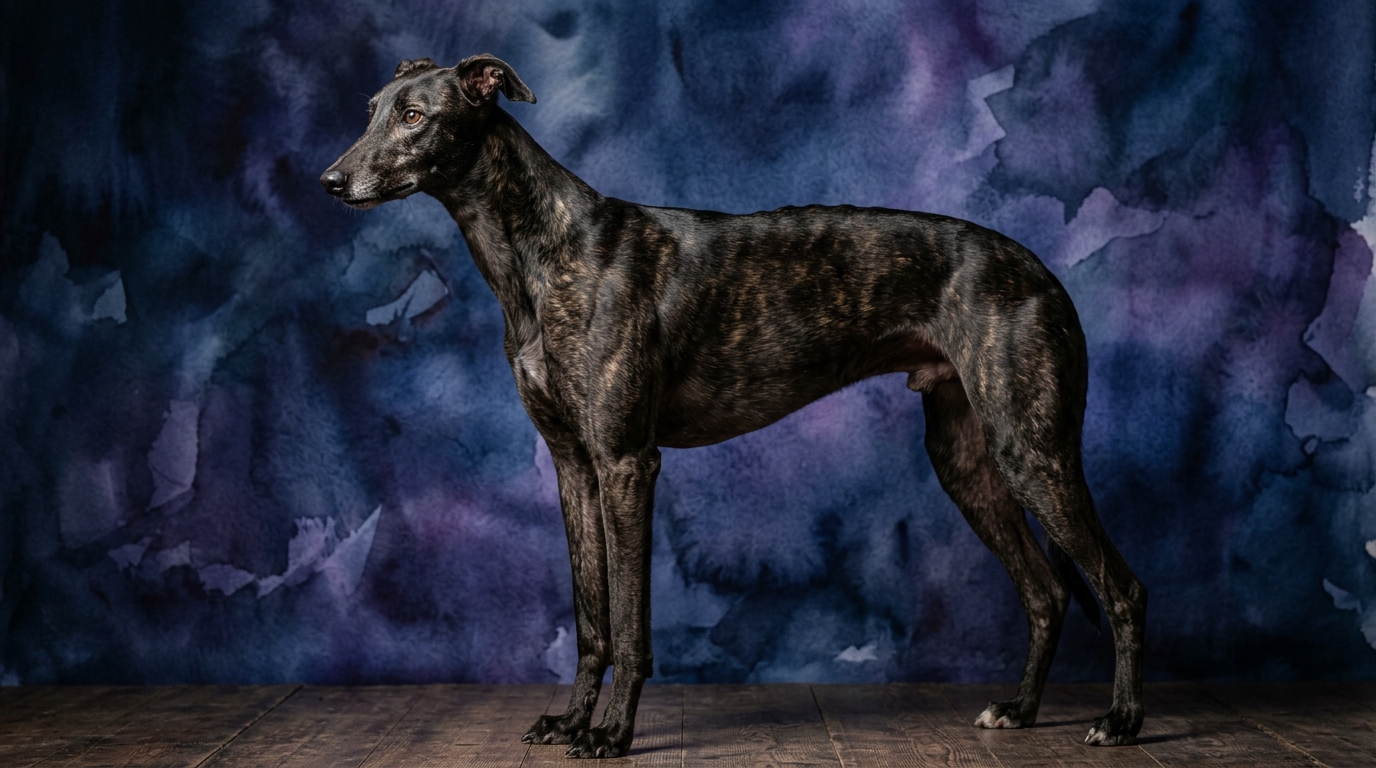

Side-by-Side IQ Profile: Greyhound vs. English Toy Spaniel
To truly understand the cognitive makeup of these two breeds, we examine five key dimensions. The Greyhound, a Hound breed ranked #46 by Coren, presents a profile reflecting its historical purpose. Its Problem Solving ability scores 3/5, indicating a moderate capacity for independent thought and navigation through novel situations. Training Speed is 2/5, suggesting they acquire new commands at a measured pace, often requiring consistent, patient reinforcement. Social Intelligence is 3/5, meaning they are capable of reading human cues and adapting to social dynamics, though perhaps with a quiet reserve. Instinctive Drive, critical for a sighthound, is a formidable 5/5, reflecting their powerful impulse to chase and react to visual stimuli. Finally, their Memory is 3/5, allowing them to retain learned behaviors and spatial information adequately.
The English Toy Spaniel, a Toy breed not listed in Coren's rankings, offers a different intellectual blueprint, tailored more for companionship. Their Problem Solving ability matches the Greyhound at 3/5, showing a similar moderate capacity for navigating challenges. Crucially, their Training Speed is 3/5, indicating a slightly quicker and often more eager approach to learning new commands compared to the Greyhound. Social Intelligence also scores 3/5, suggesting they are equally adept at understanding and responding to human interactions, often with a more overt desire for connection. Their Instinctive Drive is 3/5, a balanced score that means they possess natural canine instincts but without the overwhelming intensity of a specialized hunter. Their Memory mirrors the Greyhound at 3/5, providing a solid foundation for recalling routines and learned experiences.
Where the Greyhound Excels Cognitively
The Greyhound's cognitive strengths are deeply rooted in its unparalleled Instinctive Drive, scoring a perfect 5/5. This isn't just about chasing; it translates into an exceptional capacity for focus and pattern recognition when engaged in a task directly related to their innate drive. When observing movement, a Greyhound can process visual information with incredible speed and precision, making split-second decisions about pursuit angles and obstacles. This high drive supports a form of practical problem-solving: how to most efficiently intercept a moving target or navigate a course during lure coursing, relying on speed, agility, and spatial awareness.
While their Training Speed is 2/5, indicating a need for patience, their Memory at 3/5 allows them to effectively retain the sequences and cues associated with these instinct-driven activities. A Greyhound can recall the layout of a familiar running track or the nuances of a lure's movement, applying past experiences to improve future performance. Their quiet demeanor often belies a deep internal processing, where they absorb environmental details and strategize within their specific sphere of interest. This makes them particularly adept at tasks requiring sustained, independent focus once motivated by their core instincts, rather than constant human prompting.
Where the English Toy Spaniel Excels Cognitively
The English Toy Spaniel's cognitive advantages lie in their balanced profile, particularly their higher Training Speed (3/5) and their equally strong Social Intelligence (3/5). These scores suggest a greater natural inclination to engage with and please their human companions, making them highly receptive to learning household rules, tricks, and obedience cues. Their problem-solving (3/5) often manifests in navigating complex social situations within a family, figuring out how to gain attention or comfort, or adapting to changes in routine with relative ease.
This breed's strength isn't in explosive, instinct-driven tasks, but in their adaptability and nuanced understanding of human-canine bonds. An English Toy Spaniel can quickly learn elaborate routines or chains of behaviors due to their cooperative spirit and solid memory (3/5). They excel in environments where social interaction and communication are paramount, often demonstrating a keen ability to pick up on subtle emotional shifts in their owners. Their moderate instinctive drive means fewer internal conflicts or distractions when asked to perform a task, allowing their social intelligence to guide their learning and interactions more consistently.
Which is Easier to Train and Why?
When considering ease of training, the English Toy Spaniel generally presents a more straightforward experience due to its Training Speed of 3/5 and its balanced Instinctive Drive. This breed typically exhibits a greater eagerness to cooperate and a desire to please, making them more amenable to traditional obedience methods. Their lower, more manageable instinctive drive means they are less likely to be distracted by external stimuli like squirrels or distant movements, allowing them to focus more intently on the trainer and the task at hand. They thrive on positive reinforcement and consistent, gentle guidance, often picking up new commands and routines with a visible enthusiasm.
Conversely, the Greyhound, with a Training Speed of 2/5 and a robust Instinctive Drive of 5/5, often requires a different approach. Their independent nature and overwhelming prey drive mean that while they are capable of learning, their motivation might stem more from self-interest or the satisfaction of a chase than from a desire to please. Training a Greyhound demands immense patience, positive reinforcement, and a deep understanding of their sighthound instincts. Commands may need to be repeated more frequently, and distractions must be minimized, especially when teaching recall. While they can achieve high levels of obedience, their learning curve might appear slower, not due to lack of capacity, but due to their selective focus and strong internal motivations that sometimes override human directives.
Which Suits Active Owners vs. Relaxed Owners?
For active owners, the Greyhound presents a fascinating paradox. While they possess an incredible athletic capability and a high instinctive drive for bursts of speed, they are often described as '45 mph couch potatoes' indoors. Active owners who understand this dichotomy will find a Greyhound rewarding. They are ideal for individuals who can provide consistent, safe opportunities for their dog to run and engage their natural instincts, such as secure off-leash areas or lure coursing events. Beyond these intense bursts of activity, Greyhounds are typically calm and quiet housemates, requiring a mentally stimulating environment that respects their need for rest and serene companionship. Their social intelligence allows them to integrate well into family life, but they may not be the type to constantly demand interaction.
The English Toy Spaniel, on the other hand, is an excellent match for more relaxed owners who desire a highly engaged and affectionate companion. Their moderate instinctive drive means they are content with shorter walks, indoor play, and ample lap time. This breed thrives on close human interaction and is well-suited to individuals or families who are home frequently and can provide consistent companionship. Their balanced problem-solving and social intelligence allow them to adapt smoothly to a calmer household routine, making them excellent companions for apartment living or for owners who prefer less strenuous outdoor activities. They are often keen observers of their owners' moods, offering comfort and companionship without demanding extensive physical exertion.
The Verdict
Choose the Greyhound if you appreciate a quiet, independent companion who requires specific outlets for their powerful athletic and instinctive drives, valuing their calm demeanor indoors after appropriate exercise.
Opt for the English Toy Spaniel if you seek a devoted, adaptable, and affectionate companion who thrives on close interaction and a more relaxed lifestyle, eager to engage in social learning and companionship.
🧠 Find Your Pet's IQ Score
Our Pet IQ Lab assessment covers 25+ tests across 5 cognitive dimensions — personalized to your breed.
Take the Full IQ Test →Frequently Asked Questions
Do Greyhounds make good apartment dogs despite their speed?
Yes, Greyhounds can be excellent apartment dwellers. While they need opportunities for short, intense bursts of running in a secure area, they are remarkably calm and quiet indoors, often enjoying long naps on soft surfaces. Their low energy requirements within the home make them surprisingly adaptable to smaller living spaces.
Are English Toy Spaniels prone to separation anxiety?
English Toy Spaniels thrive on companionship due to their social intelligence and desire for close bonds. While not all will develop separation anxiety, their strong attachment means they can become distressed if left alone for extended periods. Consistent training and gradual desensitization can help, but they generally do best in homes where they have frequent human interaction.
Which breed is better for first-time dog owners?
For first-time dog owners, the English Toy Spaniel might be a more manageable choice due to their higher training speed and lower, more balanced instinctive drive, making basic obedience and house-training generally easier. Greyhounds, while gentle, require a deeper understanding of their sighthound instincts and specific exercise needs, which can be challenging for novices.