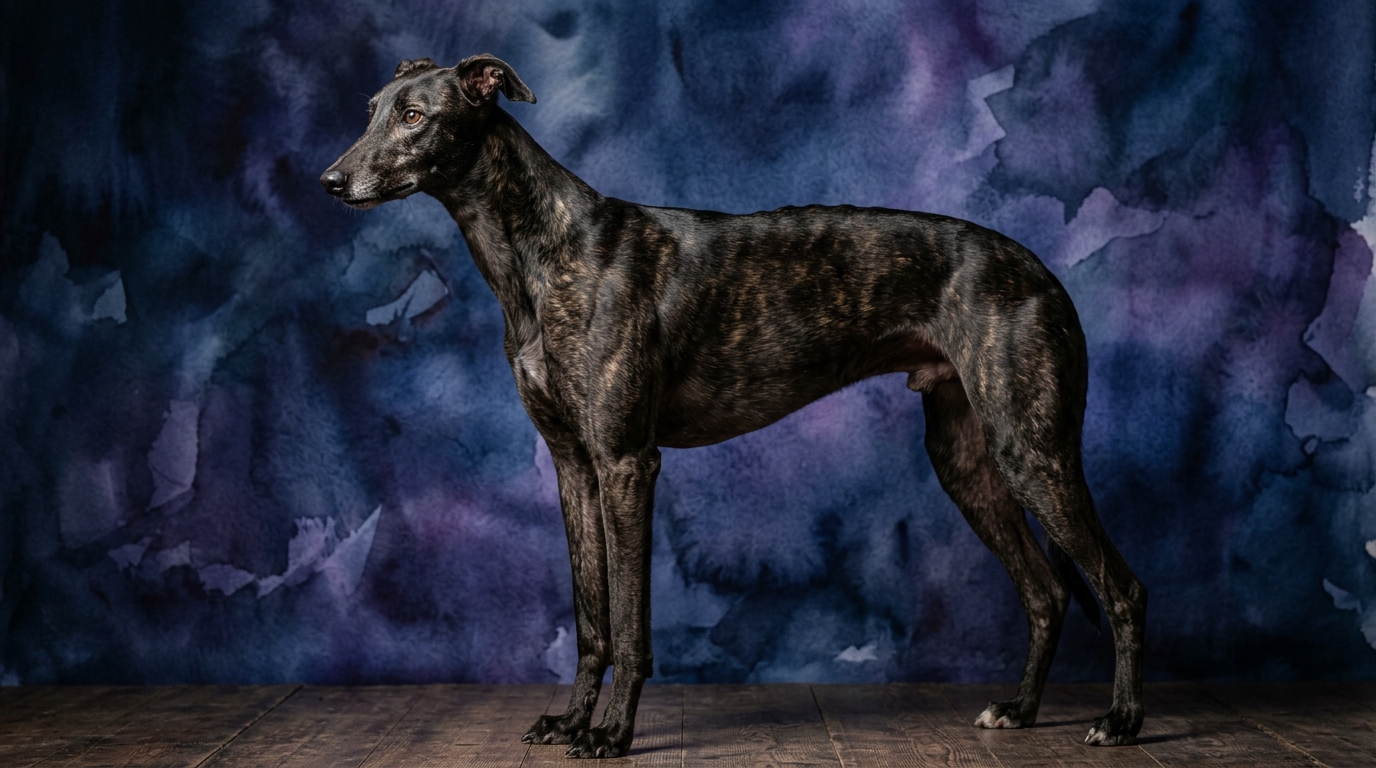
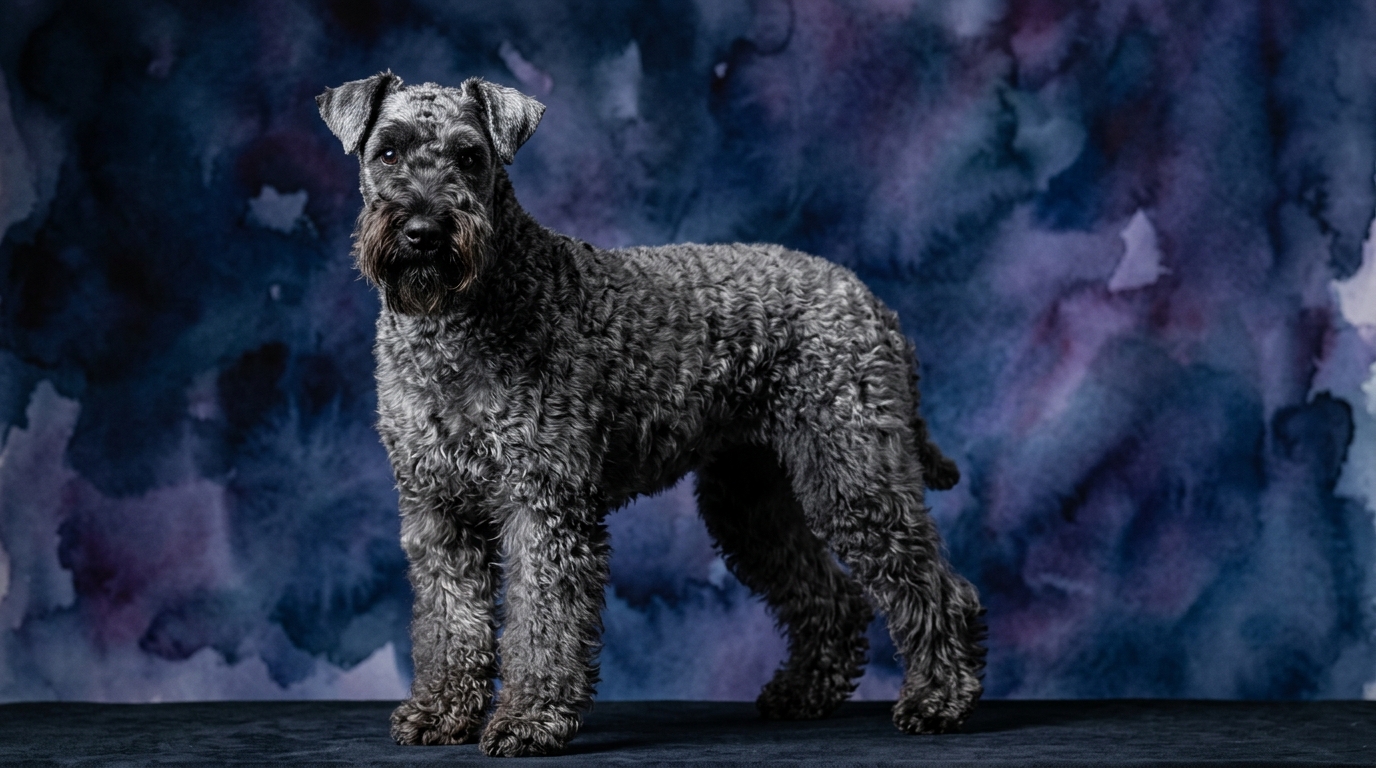
Side-by-Side Cognitive Profiles: Greyhound vs. Kerry Blue Terrier
The Cosmic Pet Pet IQ Lab provides a fascinating framework for understanding canine cognition, breaking down intelligence into several key dimensions. For the Greyhound, a sighthound with a long history of pursuit, its profile includes a Problem Solving score of 3/5, indicating an average capacity to navigate novel situations or overcome obstacles. Its Training Speed is rated at 2/5, suggesting it requires more repetitions to solidify new commands compared to many other breeds. Social Intelligence stands at 3/5, reflecting an average ability to interpret and respond to social cues from humans and other animals. A standout feature is its Instinctive Drive, a robust 5/5, which speaks to its powerful, inherent urge to chase and hunt. Finally, its Memory is noted at 3/5, indicating an average ability to recall experiences and learned behaviors.
In contrast, the Kerry Blue Terrier, a tenacious terrier breed, presents a slightly different cognitive fingerprint. Its Problem Solving ability also registers at 3/5, demonstrating a similar average aptitude for tackling mental challenges. Where it diverges significantly is in Training Speed, scoring 3/5, which implies a more readily trainable disposition compared to the Greyhound. Its Social Intelligence matches the Greyhound's at 3/5, showing an average capacity for social understanding. The Kerry Blue Terrier's Instinctive Drive is rated at 3/5, a moderate score that, while present, is less overwhelming than the Greyhound's intense prey drive. Its Memory, like the Greyhound's, is assessed at 3/5, indicating an average retention of information.
Where the Greyhound's Mind Excels Cognitively
The Greyhound's cognitive strengths are undeniably rooted in its profound instinctive drive, rated at a maximum 5/5. This isn't just about speed; it's about a highly refined sensory-motor intelligence geared towards observation, pursuit, and capture. A Greyhound's brain excels at rapidly processing visual stimuli, identifying movement at great distances, and initiating an immediate, explosive response. This involves sophisticated spatial reasoning for intercepting fast-moving targets and an intrinsic understanding of physics in motion, allowing them to adjust their trajectory and speed with remarkable precision. Their problem-solving, while rated 3/5 generally, is particularly acute when the problem involves navigating terrain at high speeds or outmaneuvering a perceived quarry, demonstrating a specialized intelligence for their ancestral purpose.
Furthermore, their memory, while average at 3/5, is particularly effective for remembering optimal running lines, familiar scents, and the layout of their established territories. While they may not be quick to learn abstract commands, their recall for practical, survival-oriented information, such as safe running paths or the location of a favorite napping spot, is robust. This specialized cognitive architecture makes them unparalleled in tasks requiring bursts of intense focus, rapid decision-making under pressure, and the relentless pursuit of a goal driven by instinct.
Where the Kerry Blue Terrier's Mind Shines Cognitively
The Kerry Blue Terrier's cognitive advantages lie in its balanced and adaptable mental makeup, particularly its average training speed of 3/5. This indicates a greater willingness and capacity for learning complex sequences of commands with fewer repetitions than the Greyhound. Their problem-solving, also rated 3/5, often manifests as persistent and creative approaches to challenges, especially those requiring manipulation or a 'never give up' attitude characteristic of terriers. This might involve figuring out how to retrieve a toy from a tight space or systematically exploring an environment to achieve a desired outcome, relying on tactile and olfactory cues more than raw visual speed.
Their social intelligence, at 3/5, combines with a moderate instinctive drive (3/5) to create an animal that is generally more engaged with human directives without being overwhelmingly distracted by external stimuli. This means they can often focus more intently on their handler during training sessions or interactive play, making their cognitive resources more readily available for cooperative learning. Their memory, like the Greyhound's, is 3/5, but within the context of their balanced profile, it supports a broader range of learned behaviors and social routines, making them quite adept at remembering household rules, complex tricks, and the expectations of their human companions.
Navigating Training: Which is Easier and Why?
When considering ease of training, the Kerry Blue Terrier generally presents a more straightforward path for the average owner. Its Training Speed of 3/5 suggests it grasps new commands with a moderate number of repetitions, allowing for a steady progression in learning. Coupled with an Instinctive Drive of 3/5, while present, it's not as overwhelming as the Greyhound's, meaning the Kerry Blue Terrier is less likely to become completely fixated on a distraction like a squirrel during a training session. Their terrier tenacity means they can be persistent, but this can often be channeled into focused training if approached with consistency and positive reinforcement, making them responsive to engaging, reward-based methods.
The Greyhound, with its Training Speed of 2/5, typically requires significantly more patience and repetition to ingrain new behaviors. This isn't a reflection of a lack of mental capacity, but rather a different wiring; their brains are honed for independent action and pursuit, not necessarily for eager human-directed obedience. The most significant factor is their 5/5 Instinctive Drive. This powerful urge to chase means that any moving object can instantly override learned commands, making off-leash training in unsecured areas particularly challenging and often unsafe. Their memory, while average, is more attuned to practical, self-serving information rather than abstract commands, requiring trainers to make lessons highly relevant and rewarding to hold their attention against the lure of instinct. Therefore, while both breeds can learn, the Kerry Blue Terrier's cognitive balance makes it a more cooperative and less distraction-prone student in a typical training environment.
Matching Cognitive Profiles to Lifestyles: Active vs. Relaxed Owners
For the truly active owner who enjoys consistent mental engagement and structured activities, the Kerry Blue Terrier's cognitive profile aligns well. Its moderate instinctive drive, combined with average problem-solving and training speed, means it thrives on varied tasks, agility, obedience, and puzzle toys that challenge its mind and body. These dogs generally require regular exercise that isn't just about running; it's about exploring, sniffing, and engaging with their environment under direction. Owners who dedicate time to teaching new tricks, participating in dog sports, or even just consistent, varied walks will find the Kerry Blue Terrier's mind stimulated and satisfied, preventing boredom-related behaviors.
Conversely, the Greyhound, despite its athletic prowess, often suits a more relaxed owner who appreciates bursts of intense activity followed by extended periods of calm. Their 5/5 instinctive drive means secure, fenced areas are paramount for safe exercise, as their chase instinct can lead them far afield. While they need daily opportunities to stretch their legs at full speed, they are largely content to be quiet companions indoors, often described as '45 mph couch potatoes.' Their average social intelligence and memory mean they integrate well into a calm household routine, and their problem-solving tends to focus on comfort and resourcefulness within their home environment. Owners who understand and respect their powerful chase instinct, providing safe outlets for it while valuing their serene indoor presence, will find a harmonious match.
The Verdict
Choose the Greyhound if you appreciate a calm, affectionate indoor companion who needs short, intense bursts of exercise in secure areas, and you are prepared to manage a powerful chase instinct with vigilance.
Opt for the Kerry Blue Terrier if you seek a consistently engaged, adaptable partner for varied activities, enjoy a more cooperative training experience, and can provide regular mental and physical stimulation.
🧠 Find Your Pet's IQ Score
Our Pet IQ Lab assessment covers 25+ tests across 5 cognitive dimensions — personalized to your breed.
Take the Full IQ Test →Frequently Asked Questions
Is a Greyhound difficult to train due to its chase drive?
Greyhounds have a training speed of 2/5 and an instinctive drive of 5/5, meaning they require more repetition to learn commands and are easily distracted by moving objects. While not impossible to train, it demands significant patience, consistency, and a deep understanding of their sighthound nature to manage their powerful chase instinct effectively, especially in unsecured environments.
What kind of mental stimulation does a Kerry Blue Terrier need?
A Kerry Blue Terrier, with its balanced problem-solving (3/5) and training speed (3/5), thrives on varied mental challenges. They benefit from obedience training, puzzle toys, interactive games, and activities like agility or earthdog trials that engage their natural terrier instincts for digging and exploration, preventing boredom.
Do Greyhounds make good family pets despite their strong prey drive?
Yes, Greyhounds can be excellent family pets, often displaying a calm and gentle demeanor indoors with their social intelligence rated at 3/5. However, their strong prey drive (5/5) means they require careful supervision around smaller pets and children, and secure fencing is crucial for their outdoor safety. With proper introductions and management, they integrate well into family life.