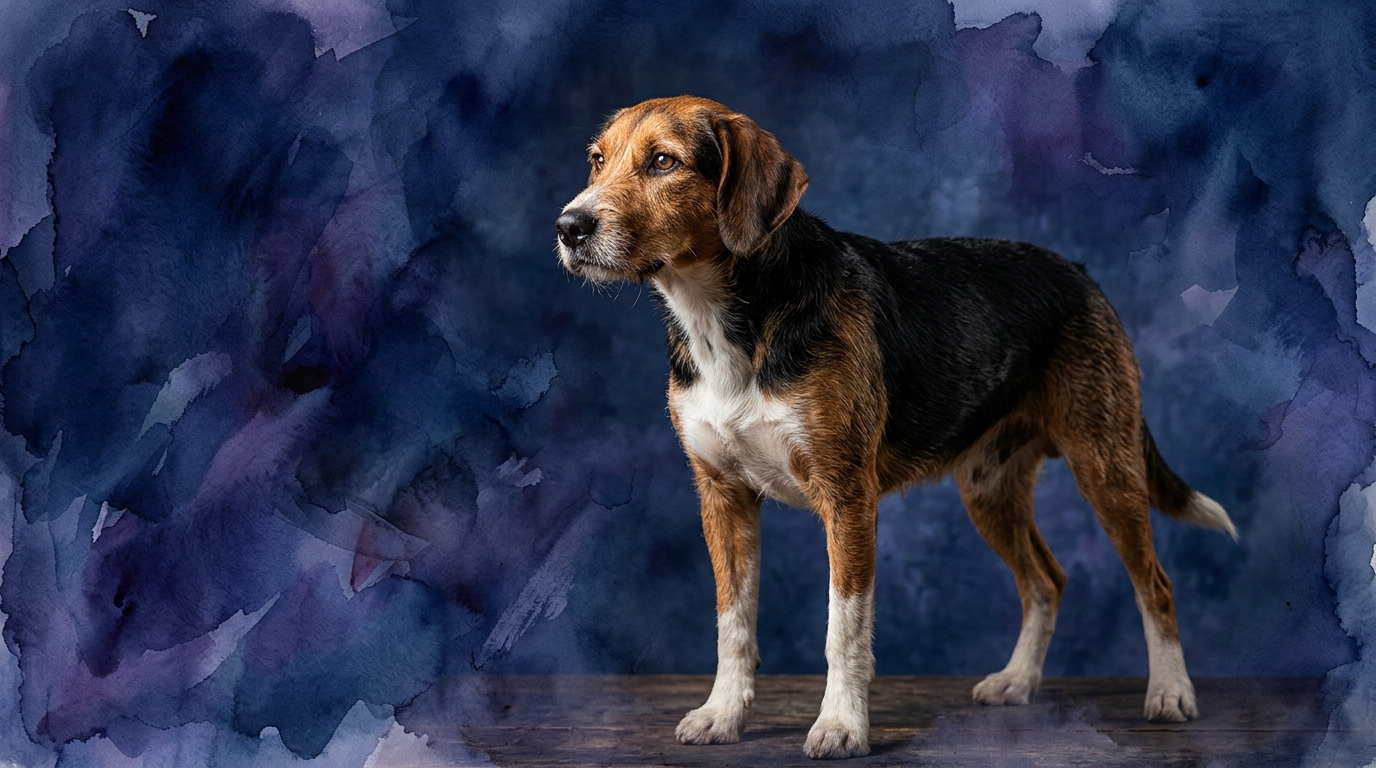
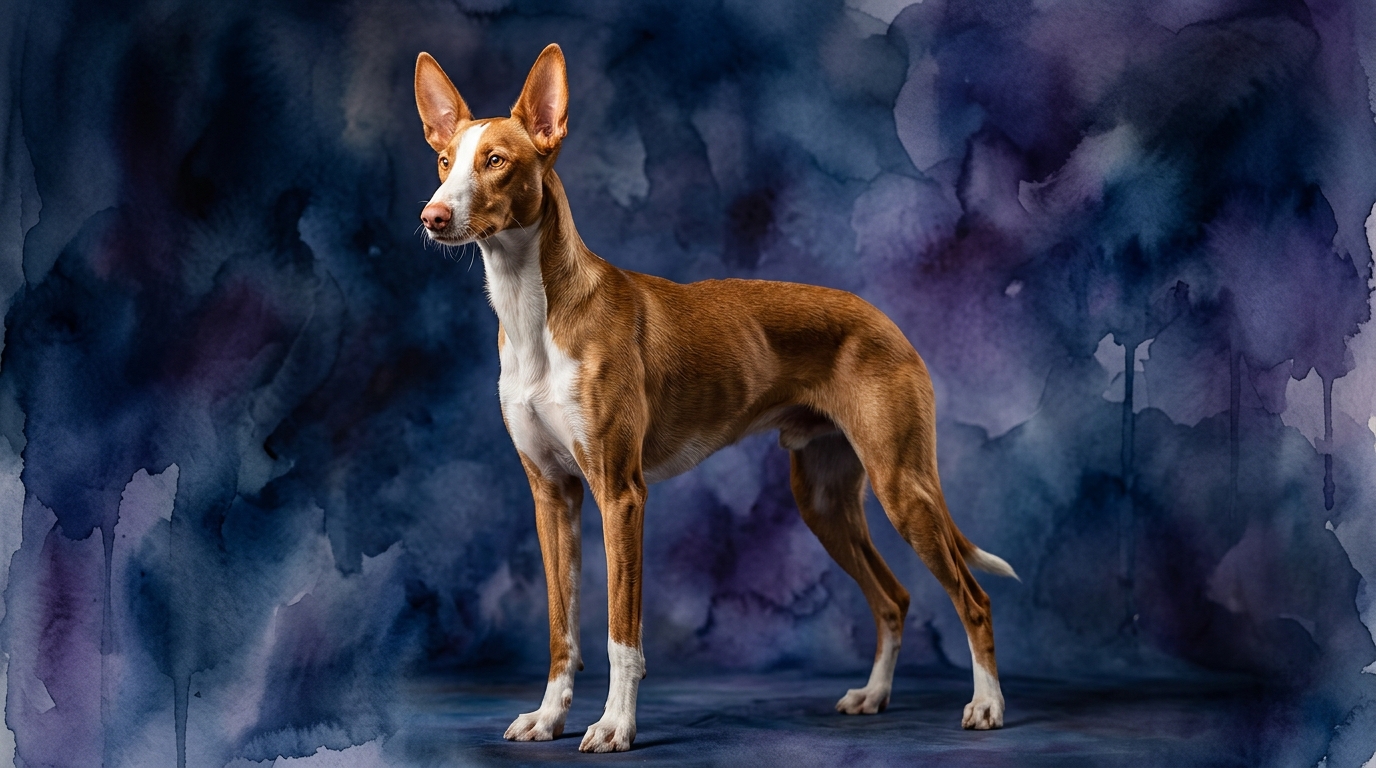
Side-by-Side Cognitive Profiles: Unpacking the 3/5 Score
At first glance, the cognitive profiles of the Harrier and the Ibizan Hound appear identical, each scoring 3 out of 5 across problem-solving, training speed, social intelligence, instinctive drive, and memory. However, to truly understand their mental capabilities, we must delve beyond these numerical similarities and consider the unique ways these scores manifest within their respective breed contexts. This requires a nuanced interpretation, acknowledging that a '3/5' in one breed might reflect a different set of skills or priorities than in another, especially given their divergent evolutionary paths.
For the Harrier, a scent hound bred for cooperative pack hunting, a 3/5 in problem-solving centers on persistent, iterative tracking and navigating varied terrain as a cohesive unit. Their training speed (3/5) reflects a willingness to work within a pack hierarchy, but their potent scent drive can easily divert attention, demanding consistent, patient guidance. Social intelligence (3/5) is finely tuned for pack dynamics and cooperative effort, understanding cues for coordinated action in the field, while their instinctive drive (3/5) is profoundly scent-oriented, filtering the world primarily through their nose. Memory (3/5) is excellent for recalling scent trails, established hunting routes, and learned routines within their working group.
The Ibizan Hound, a sighthound known for independent hunting, interprets its 3/5 scores differently. Problem-solving (3/5) involves rapid visual assessment, strategic pursuit, and navigating obstacles at speed, alongside a notable knack for independent thinking like escape artistry. Training speed (3/5) suggests they can grasp concepts quickly, but their independent spirit often means compliance depends on perceived value or engagement, requiring creative and positive reinforcement. Social intelligence (3/5) is strong within their family unit, understanding household routines and human moods, though they can be reserved with strangers. Their instinctive drive (3/5) is intensely visual, prompting immediate chase of anything that moves, and their memory (3/5) is strong for visual cues, spatial layouts, and learned effective hunting strategies.
Where the Harrier's Cognition Shines
The Harrier's cognitive strengths are deeply rooted in its heritage as a cooperative pack hunter. Their problem-solving, rated 3/5, manifests not in individual ingenuity but in a remarkable collective effort. They excel at sustained, iterative problem-solving: how to systematically work a field, how to maintain a scent line despite environmental challenges, and how to operate harmoniously within a hunting group. This involves a profound understanding of cooperation and persistence, where the individual dog contributes to a larger, shared objective, showcasing a specialized form of cognitive endurance and focus that few breeds can match.
Their instinctive drive, also 3/5, is a testament to their unwavering focus on scent. This isn't merely a high prey drive; it's a finely tuned sensory processing system that filters out extraneous information to prioritize olfactory input. This singular dedication allows them to maintain incredible focus over long periods, making them exceptionally adept at tasks requiring endurance and detailed scent discrimination. Their memory (3/5) perfectly complements this, allowing them to recall intricate scent patterns and terrain features essential for successful tracking, demonstrating a cognitive specialization for olfactory data retention.
Where the Ibizan Hound's Cognition Excels
The Ibizan Hound, with its 3/5 problem-solving score, demonstrates a different kind of cognitive prowess, one born from its role as an independent, visual hunter. Their intelligence manifests in rapid assessment and execution: quickly identifying prey, calculating trajectories, and navigating complex terrain at high speeds. This involves spatial reasoning and a capacity for strategic decision-making in real-time, often without direct human guidance. Their reputation for escape artistry further underscores this independent, clever problem-solving, as they analyze their environment for weaknesses and devise methods to overcome physical barriers, highlighting a unique spatial and environmental awareness.
Their instinctive drive (3/5) is intensely sight-oriented, prompting swift, decisive action. This visual acuity and immediate responsiveness demand a cognitive system capable of processing information at speed and initiating complex motor sequences. Their memory (3/5) supports this by retaining visual landmarks, effective hunting strategies, and the layout of their environment, allowing them to optimize their movements and predict outcomes. Socially, their 3/5 score reflects a nuanced understanding of their human family, often expressing affection and demonstrating an awareness of household routines, indicating a sophisticated ability to adapt to a domestic setting while retaining their independent spirit.
Navigating Training: Harrier vs. Ibizan Hound
When it comes to training speed, both breeds are rated 3/5, yet the path to success with each diverges significantly due to their inherent motivations and processing styles. The Harrier, driven by scent, presents a challenge of distraction. While they possess a pack mentality that inclines them to follow a leader, a compelling scent can override learned commands instantly. Training a Harrier demands immense consistency, patience, and often, an environment where olfactory distractions can be minimized initially. Success hinges on making compliance more rewarding than the pursuit of a scent, a delicate balance that requires creative positive reinforcement and a deep understanding of their primary drive.
The Ibizan Hound's training, while also rated 3/5 for speed, is complicated by their independent nature and sensitivity. They can learn quickly, but their willingness to perform a command often depends on whether they perceive it as worthwhile or engaging. Repetitive drills can bore them, leading to disengagement. Harsh training methods are counterproductive, as their sensitive disposition can cause them to shut down or become wary. Effective training for an Ibizan Hound involves making sessions fun, using positive reinforcement, and often incorporating activities that tap into their natural sighthound instincts, such as lure coursing, to build a strong, trusting relationship that encourages cooperation.
Lifestyle Compatibility: Active Explorers vs. Graceful Athletes
Choosing between a Harrier and an Ibizan Hound based on lifestyle involves understanding their energy expenditure and cognitive needs. The Harrier is unequivocally suited for active owners who relish outdoor adventure and can provide consistent, vigorous exercise. Their 3/5 instinctive drive, rooted in scent pursuit and endurance, means they thrive on long walks, hikes, and opportunities for detailed scent work. A 'relaxed owner' who prefers short strolls would quickly find a Harrier to be a mismatch, as their unmet cognitive and physical needs can lead to frustration and destructive behaviors; they need a job, even if it's 'just' exploring a new trail with their nose to the ground.
The Ibizan Hound also demands an active owner, but their activity profile differs. While they need intense bursts of speed and the chance to gallop in secure, expansive areas, their 3/5 social intelligence allows them to transition seamlessly to a more relaxed indoor demeanor once their exercise needs are met. They are graceful athletes who require outlets for their powerful sighthound drive, such as lure coursing or running in a safely fenced yard. Owners who appreciate elegance and independent thinking, and can provide both intense physical activity and a calm home environment, would find a compatible partner in an Ibizan Hound. They are not suited for owners who cannot provide secure running space or who expect a perpetually high-energy companion indoors.
The Verdict
Choose the Harrier if you seek a persistent, scent-driven companion for long outdoor adventures and appreciate a dog that thrives on cooperative tasks within a consistent routine.
Opt for the Ibizan Hound if you admire independent problem-solving, elegant athleticism, and can provide secure spaces for intense sprints, valuing a calm home life once exercise needs are met.
🧠 Find Your Pet's IQ Score
Our Pet IQ Lab assessment covers 25+ tests across 5 cognitive dimensions — personalized to your breed.
Take the Full IQ Test →Frequently Asked Questions
Can Harriers and Ibizan Hounds live together peacefully?
Both breeds generally get along well with other dogs, especially if socialized early. Their individual prey drives (scent vs. sight) might mean they pursue different stimuli outdoors, but within a home, they can coexist harmoniously with proper introductions and management.
Do Harriers or Ibizan Hounds make good family pets with children?
Both can be good family pets. Harriers are generally robust and playful, enjoying interaction, while Ibizan Hounds are often gentle and affectionate with their families, though they may be more reserved with boisterous play. Supervision is always essential, especially with young children.
How much exercise do these breeds truly need daily?
Harriers require at least an hour to two hours of vigorous activity, ideally including scent work or long, varied walks. Ibizan Hounds need daily opportunities for high-speed running in a secure area, in addition to walks, to satisfy their sighthound instincts.