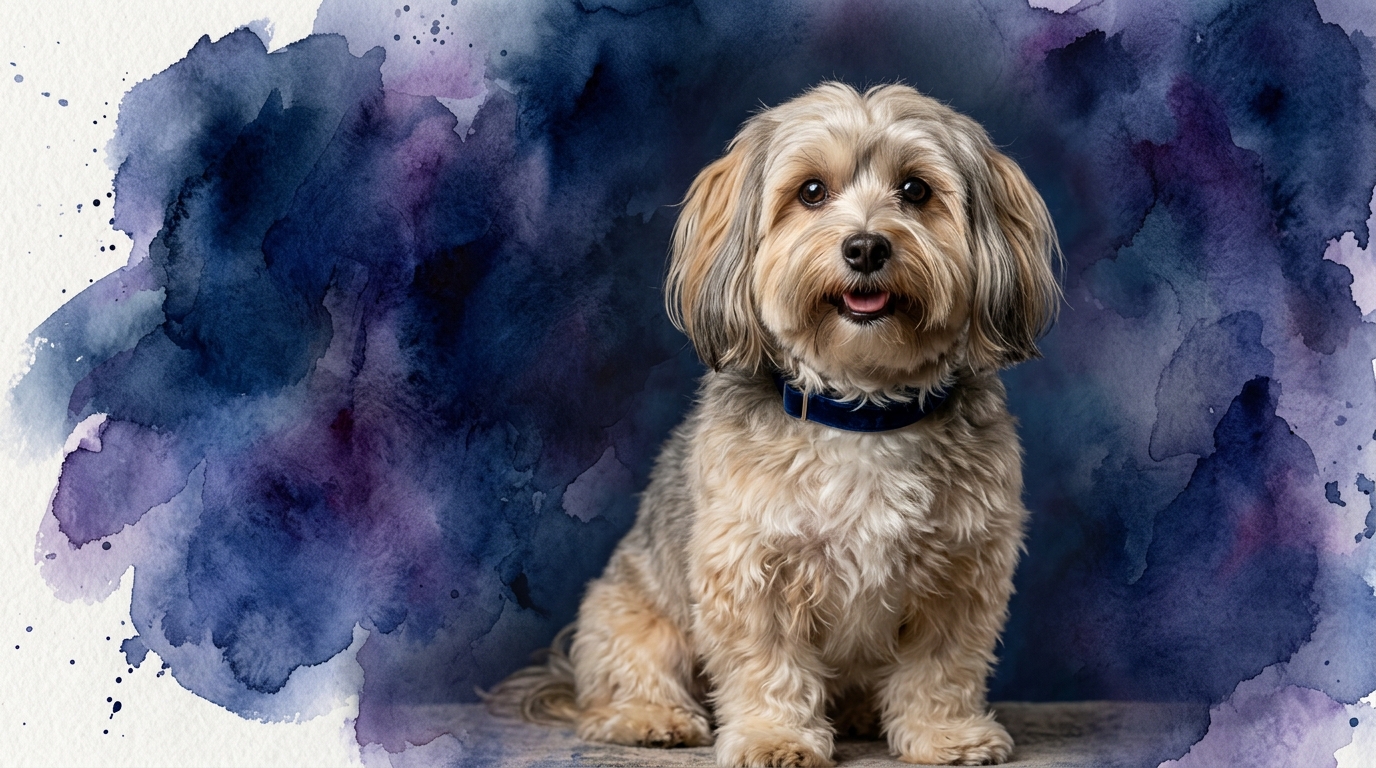
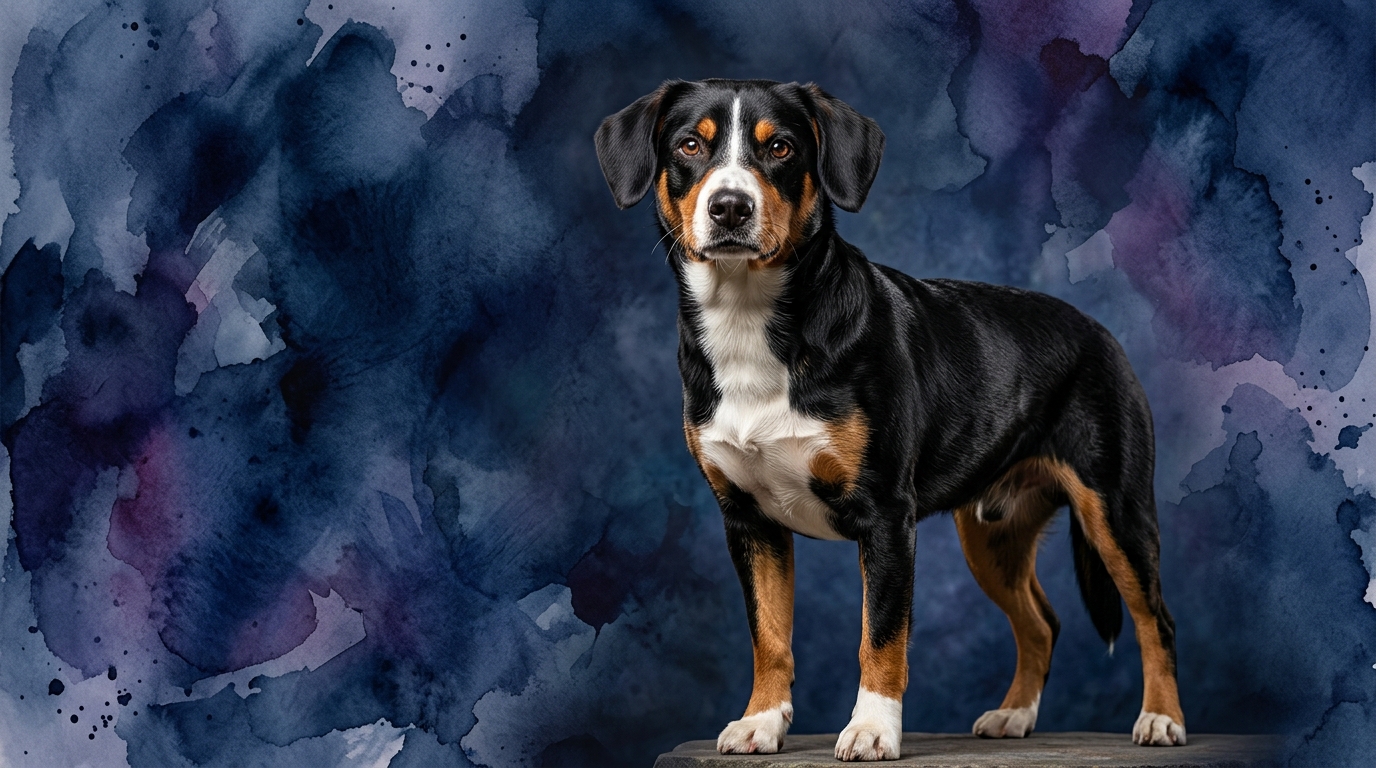
Side-by-Side IQ Profile: Havanese vs. Entlebucher Mountain Dog
At The Cosmic Pet Pet IQ Lab, we delve beyond broad labels to understand the specific cognitive dimensions that shape a breed's interaction with its world. The Havanese, categorized as a Toy breed, and the Entlebucher Mountain Dog, a Herding breed, offer an intriguing comparison, neither being Coren-ranked but each possessing a unique mental blueprint. Let's explore their individual IQ profiles across five crucial dimensions.
For the Havanese, problem-solving registers at a moderate 3/5. This suggests they are quite capable of figuring out environmental puzzles, such as opening treat-dispensing toys or navigating familiar obstacles, but they may not consistently devise multi-step solutions to complex new challenges. Their training speed also sits at 3/5, indicating they learn new commands and routines at a steady, average pace, responding well to consistent, positive reinforcement methods. Where the Havanese truly shines is in social intelligence, scoring an exceptional 5/5; they are profoundly attuned to human emotions and social cues, often anticipating desires and offering comfort without explicit prompts. Their instinctive drive is notably low at 2/5, meaning they possess minimal inherent working or prey drives, primarily motivated by companionship. Finally, their memory stands at 3/5, allowing them to retain learned behaviors and routines effectively, though perhaps not extensive sequences of abstract commands.
The Entlebucher Mountain Dog, in contrast, shares some numerical similarities but with different underlying expressions. Its problem-solving ability also rates at 3/5, indicating a capacity to analyze and navigate their surroundings, such as finding creative routes or understanding basic mechanical functions like latches, similar to the Havanese but often applied in a more independent context. Their training speed is likewise 3/5; they absorb lessons at an average pace, but their herding background means they often benefit from training that engages their natural drive and provides clear structure. Social intelligence for the Entlebucher is 3/5; while they form deep bonds with their families and understand social cues, they tend to be more reserved with strangers and less overtly people-pleasing than a Havanese, displaying a more independent demeanor. Their instinctive drive is a moderate 3/5, reflecting their heritage as a herding dog with a natural inclination towards purpose-driven activities and environmental awareness. Their memory, like the Havanese, is 3/5, enabling them to recall learned tasks and spatial information reliably, crucial for their historical roles.
Where the Havanese Wins Cognitively
The Havanese possesses a distinct cognitive advantage in the realm of social intelligence, where it scores a remarkable 5/5 compared to the Entlebucher's 3/5. This isn't merely about being friendly; it reflects a profound capacity to interpret and respond to human emotional states and social nuances. A Havanese can often perceive when its owner is feeling down, offering gentle nudges or quiet companionship without being prompted, demonstrating an intuitive understanding of the family's emotional landscape. They excel at integrating into the social fabric of a household, adapting their behavior to match the mood or activity level, making them exceptionally empathetic and seamlessly connected companions. This high social acumen allows them to form incredibly deep and nuanced emotional bonds, often appearing to 'read minds' due to their acute observational skills regarding human behavior and cues.
Where the Entlebucher Mountain Dog Wins Cognitively
While the Havanese excels in social attunement, the Entlebucher Mountain Dog showcases a different cognitive strength, particularly evident in its instinctive drive, rated at a moderate 3/5 compared to the Havanese's 2/5. This isn't just about energy; it's about a foundational mental inclination towards purpose and engagement with the environment. Stemming from their herding lineage, Entlebuchers possess a natural curiosity and a desire to be active participants in their surroundings. This drive manifests as a robust awareness of their territory, a willingness to investigate novel stimuli, and an intrinsic motivation to engage in tasks, whether it's a structured training session or a self-appointed 'patrol' of the backyard. This moderate drive provides an internal impetus for activity and exploration, often leading them to take initiative in problem-solving related to their environment or a task, rather than solely relying on human direction for motivation. This cognitive trait makes them particularly suited for owners who enjoy channeling a dog's natural urges into productive and engaging activities.
Which is Easier to Train and Why?
On paper, both the Havanese and the Entlebucher Mountain Dog share a training speed score of 3/5, suggesting they learn new commands at an average pace. However, real-world training experiences often differ significantly due to their contrasting social intelligence and instinctive drives. The Havanese, with its exceptional 5/5 social intelligence and low 2/5 instinctive drive, tends to be perceived as easier to train by many owners. Their eagerness to please and profound desire for human connection means they are highly motivated by positive reinforcement and praise, actively seeking to engage in the training process as a form of social interaction. Their low drive means fewer internal distractions from strong working urges, allowing them to focus intently on the handler and the task at hand, making them quick to pick up tricks and respond to verbal cues in a variety of settings.
The Entlebucher Mountain Dog, while equally capable of learning (3/5 training speed), often presents a different training dynamic. Their moderate 3/5 social intelligence means they are not as overtly people-pleasing; they form strong bonds but maintain a more independent streak. Coupled with their moderate 3/5 instinctive drive, they can sometimes prioritize their own interests, such as investigating a scent or attempting to 'herd' family members, over immediate compliance. Training an Entlebucher requires consistency, clear expectations, and often benefits from incorporating activities that engage their natural working drives, such as agility or scent work, to maintain their focus. While they can learn just as quickly as a Havanese, their motivation often needs to be more purpose-driven rather than purely social, and they may require a more experienced hand to channel their robust personality effectively.
Suitability for Active vs. Relaxed Owners
When considering lifestyle compatibility, the cognitive profiles of these two breeds offer clear guidance. The Havanese, with its low 2/5 instinctive drive and outstanding 5/5 social intelligence, is an ideal match for relaxed owners or those seeking a highly interactive companion whose activity is primarily shared and internal. They don't possess a strong innate urge for extensive physical exertion or independent work, making them content with moderate daily walks, engaging playtime indoors, and most importantly, constant companionship. Their cognitive design means they thrive on being an integral part of family life, preferring emotional engagement and proximity over long, strenuous outdoor adventures. They are the quintessential lapdog who is always ready for a cuddle or a short game of fetch, perfectly suiting a home where affection and presence are paramount.
Conversely, the Entlebucher Mountain Dog, with its moderate 3/5 instinctive drive and 3/5 social intelligence, is better suited for active owners who can provide consistent outlets for their robust energy and mental engagement. Their herding heritage means they possess an internal engine that requires more than just passive companionship; they need structured activities to satisfy their cognitive and physical needs. This could involve regular hiking, participation in dog sports like agility or obedience, or even practical tasks around a property. Without sufficient mental and physical stimulation, an Entlebucher might channel its drive into less desirable behaviors, such as excessive barking or 'herding' children. While they form deep bonds, their social needs are often met through shared activities and a sense of purpose, rather than solely through quiet companionship, making them a superb partner for an adventurous and engaging lifestyle.
The Verdict
Choose the Havanese if you prioritize an emotionally intelligent, highly social companion who thrives on close interaction and requires moderate physical activity, fitting seamlessly into a companion-centric home.
Choose the Entlebucher Mountain Dog if you are an active owner prepared to provide consistent training, structured activities, and appreciate a dog with a purpose-driven mindset and robust physical and mental engagement needs.
🧠 Find Your Pet's IQ Score
Our Pet IQ Lab assessment covers 25+ tests across 5 cognitive dimensions — personalized to your breed.
Take the Full IQ Test →Frequently Asked Questions
Do Havanese need extensive exercise to be content?
No, Havanese have a low instinctive drive (2/5) and are generally content with moderate daily walks and engaging indoor play. Their exercise needs are easily met through companionship-focused activities rather than strenuous independent work.
Are Entlebucher Mountain Dogs suitable for individuals without prior dog ownership experience?
Entlebuchers can be a good fit for dedicated first-time owners who are prepared for their moderate exercise requirements and consistent, structured training. Their herding instincts mean they benefit from clear guidance and engaging activities.
How do these breeds adapt to apartment living?
Havanese, with their high social intelligence and low drive, adapt exceptionally well to various living situations, including apartments, as long as they receive consistent human interaction. Entlebuchers can adapt to apartment living if their significant physical and mental stimulation needs are consistently met through daily outings and structured engagement.