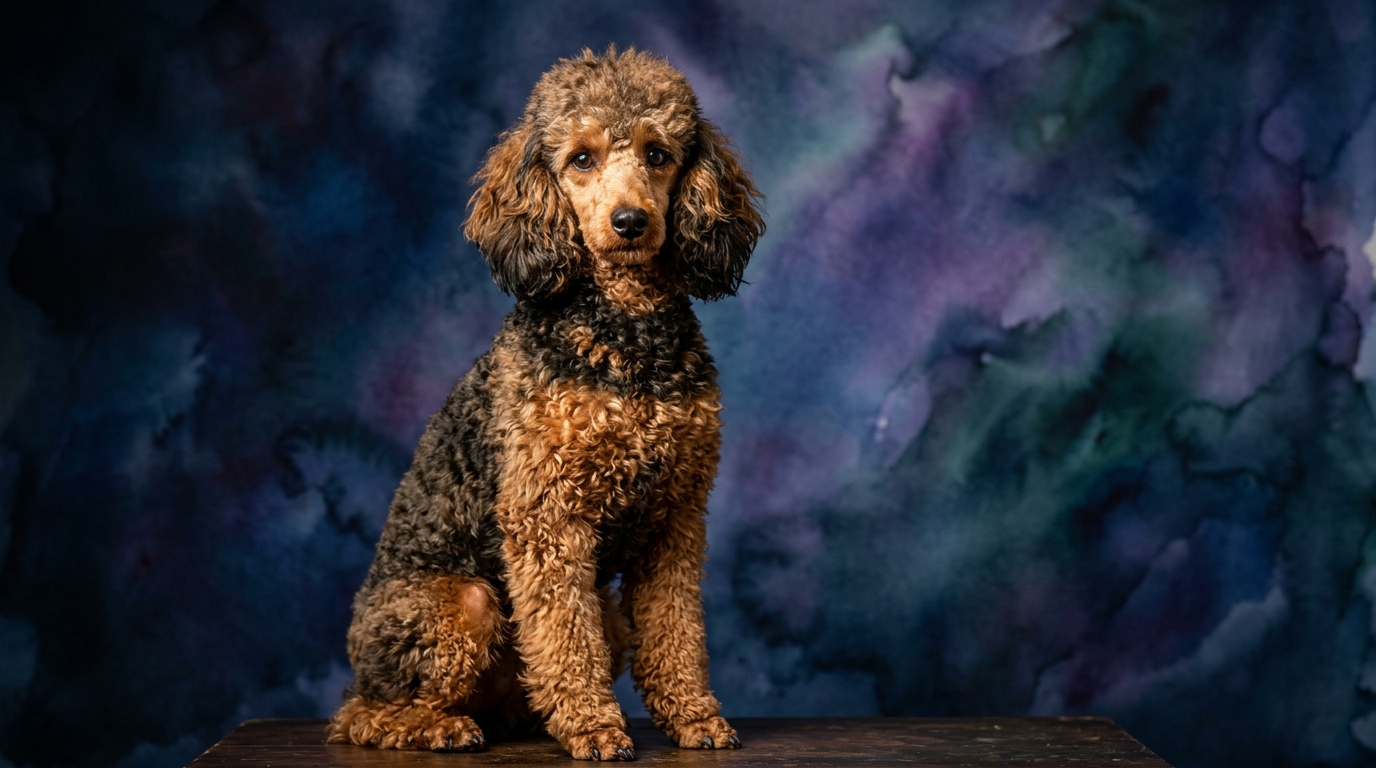
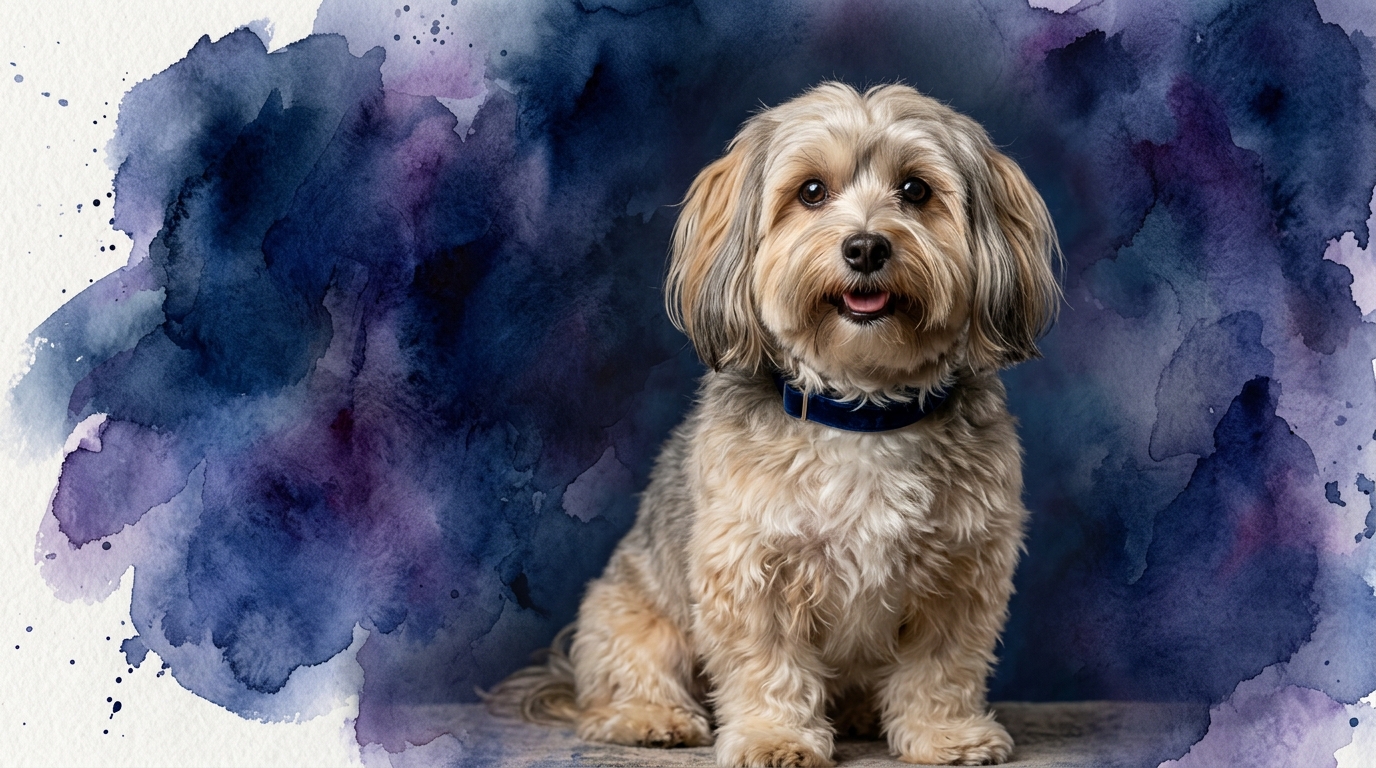
Side-by-Side Cognitive Profile: Poodle vs. Havanese
To understand the nuances of canine cognition, we assess five key dimensions. The Standard Poodle, a breed recognized for its versatile capabilities, consistently demonstrates elevated scores across most metrics. Its Coren rank of #2 places it among breeds with exceptional working and obedience aptitude. In contrast, the Havanese, while not Coren-ranked, brings a specialized set of cognitive strengths, particularly in social engagement, reflecting its history as a cherished companion animal.
For the **Standard Poodle**, its **Problem Solving** is rated 5/5, indicating an exceptional capacity to analyze novel situations and devise effective solutions, often with minimal guidance. Its **Training Speed** also stands at 5/5, meaning new commands and complex sequences are acquired with remarkable swiftness and few repetitions. The breed's **Social Intelligence** is 5/5, showing a profound ability to interpret human cues, adapt behavior to social contexts, and form deep bonds. An **Instinctive Drive** of 4/5 points to a strong, inherent motivation for tasks like retrieving, reflecting its historical role as a water retriever. Finally, its **Memory** is 5/5, allowing for long-term retention of learned behaviors, routines, and experiences, contributing to its consistent performance.
The **Havanese**, on the other hand, presents a different cognitive emphasis. Its **Problem Solving** is 3/5, suggesting it can learn to navigate challenges, but may require more structured guidance or simpler steps for intricate puzzles. The **Training Speed** is also 3/5, indicating a moderate pace of learning where consistency and positive reinforcement are key for command acquisition. Notably, its **Social Intelligence** is 5/5, mirroring the Poodle's score, but manifested through an intense focus on human connection, empathy, and a strong desire to participate in family life. A lower **Instinctive Drive** of 2/5 signifies a reduced propensity for independent hunting or roaming behaviors, aligning with its companion role. Its **Memory** is 3/5, sufficient for daily routines and core commands, but perhaps less adept at retaining extensive, complex chains of behavior over long periods without reinforcement.
Where the Standard Poodle Excels Cognitively
The Standard Poodle's cognitive strengths are evident in its superior performance across multiple domains, most notably in its Problem Solving, Training Speed, and Memory. A Poodle's 5/5 Problem Solving means it doesn't just follow instructions; it processes information and strategizes. This manifests in their ability to quickly figure out how to open latches, solve intricate puzzle toys, or navigate complex obstacle courses without prior exposure. They are adept at generalizing learned concepts, applying a solution from one scenario to a similar, yet new, situation.
Their 5/5 Training Speed is not merely about quick learning; it's about efficiency and enthusiasm for the process itself. Poodles often enjoy the mental exercise of training and can master advanced obedience, tricks, and even multi-step routines with fewer repetitions than many other breeds. This rapid acquisition is supported by their exceptional 5/5 Memory, which ensures that once a behavior is learned, it is retained over long periods, making them reliable performers in competitive dog sports or service roles. This combination positions the Standard Poodle as a highly adaptable and capable partner for a wide array of mentally demanding activities.
Where the Havanese Excels Cognitively
While the Havanese may not match the Standard Poodle's scores in problem-solving or training speed, its cognitive profile shines brightly in its specialized domain: social intelligence. With a 5/5 rating, the Havanese possesses a profound understanding of human emotions and social dynamics, making it an extraordinarily perceptive companion. This isn't just about being friendly; it's about an acute ability to read subtle shifts in human mood, tone, and body language, allowing them to offer comfort or adjust their behavior instinctively.
Their social acumen translates into a remarkable capacity for harmonious living. A Havanese can sense when an owner needs quiet companionship versus playful interaction, often adapting its demeanor to match the household's rhythm. This deep social awareness, coupled with a lower 2/5 instinctive drive, means they are less prone to independent pursuits like chasing small animals or exploring far from home. Instead, their cognitive focus is primarily on fostering connection and integrating seamlessly into the family unit, making them unparalleled in their role as empathetic, devoted companions. Their intelligence, in this context, is about relational depth and emotional attunement.
Which is Easier to Train and Why
When evaluating ease of training, the Standard Poodle holds a distinct advantage, primarily due to its 5/5 Training Speed, 5/5 Problem Solving, and 5/5 Memory. These attributes mean Poodles grasp new commands and concepts with minimal repetition and retain them effectively over time. They often demonstrate a desire for mental engagement, which makes them eager participants in training sessions and allows for the teaching of complex sequences, advanced obedience, and specialized tasks. Their cognitive agility enables them to understand abstract concepts and generalize learning across different situations, streamlining the training process significantly.
The Havanese, with a 3/5 Training Speed and 3/5 Problem Solving, is certainly trainable, but the process generally requires more patience and consistency. While they are eager to please their human companions due to their high social intelligence, they may take more repetitions to solidify new behaviors and might not generalize concepts as quickly. Training for a Havanese thrives on positive reinforcement, short, engaging sessions, and making the experience fun and rewarding. For basic manners and house-training, both breeds are capable, but for advanced obedience, intricate tricks, or competitive dog sports, the Standard Poodle's innate cognitive framework provides a smoother, faster path to mastery.
Cognitive Fit: Active vs. Relaxed Owners
The differing cognitive profiles of the Standard Poodle and Havanese mean they are suited to distinct owner lifestyles. For **active owners** who thrive on engagement and mental stimulation, the Standard Poodle is an ideal match. Their 5/5 Problem Solving and 5/5 Memory necessitate consistent mental challenges. Without adequate intellectual outlets, a Poodle's substantial cognitive capacity can lead to boredom, manifesting as creative (and sometimes undesirable) ways to entertain themselves. They flourish in environments where they can participate in agility, obedience trials, retrieving games, or learn complex trick sequences. Owners who enjoy teaching new things, engaging in canine sports, or even considering service dog work will find the Poodle's cognitive drive to be a rewarding partnership.
Conversely, the Havanese is a superb fit for **relaxed owners** who prioritize companionship and a harmonious home life over intense mental and physical exertion. Their 2/5 instinctive drive and moderate problem-solving needs mean they are generally content with a more laid-back routine, as long as they receive ample social interaction. A Havanese's intelligence shines in its ability to seamlessly integrate into family life, offering consistent affection and intuitive emotional support. While they enjoy walks and playtime, their primary cognitive and emotional fulfillment comes from being close to their people. Owners seeking a devoted, perceptive companion whose intelligence is geared towards understanding and sharing their everyday rhythms will find the Havanese to be an exceptional partner.
The Verdict
Choose the Standard Poodle if you seek a cognitively driven canine partner for advanced training, dog sports, or a working role, and are prepared to provide consistent mental and physical challenges.
Choose the Havanese if you desire a devoted, socially adept companion whose cognitive strengths are rooted in harmonious family integration and providing comforting presence in a relaxed home environment.
🧠 Find Your Pet's IQ Score
Our Pet IQ Lab assessment covers 25+ tests across 5 cognitive dimensions — personalized to your breed.
Take the Full IQ Test →Frequently Asked Questions
Can a Havanese learn complex tricks?
Yes, a Havanese can certainly learn a variety of tricks, especially those involving social interaction or simple sequences. While they might require more repetition and patience than a Standard Poodle, their eagerness to please and social acumen make them receptive to fun, reward-based training sessions.
Do Standard Poodles get bored easily?
Standard Poodles require consistent mental engagement due to their significant cognitive capacity; without it, their minds can lead to boredom and potentially undesirable behaviors as they seek their own stimulation. Providing puzzle toys, training sessions, and interactive games is crucial for their well-being.
Is social intelligence the same for both breeds at 5/5?
While both breeds score 5/5 in social intelligence, their expression differs; the Poodle's social acumen supports versatile training and adaptability in various roles, while the Havanese's is deeply tied to their role as an empathic, devoted companion, prioritizing nuanced emotional connection within the family unit.