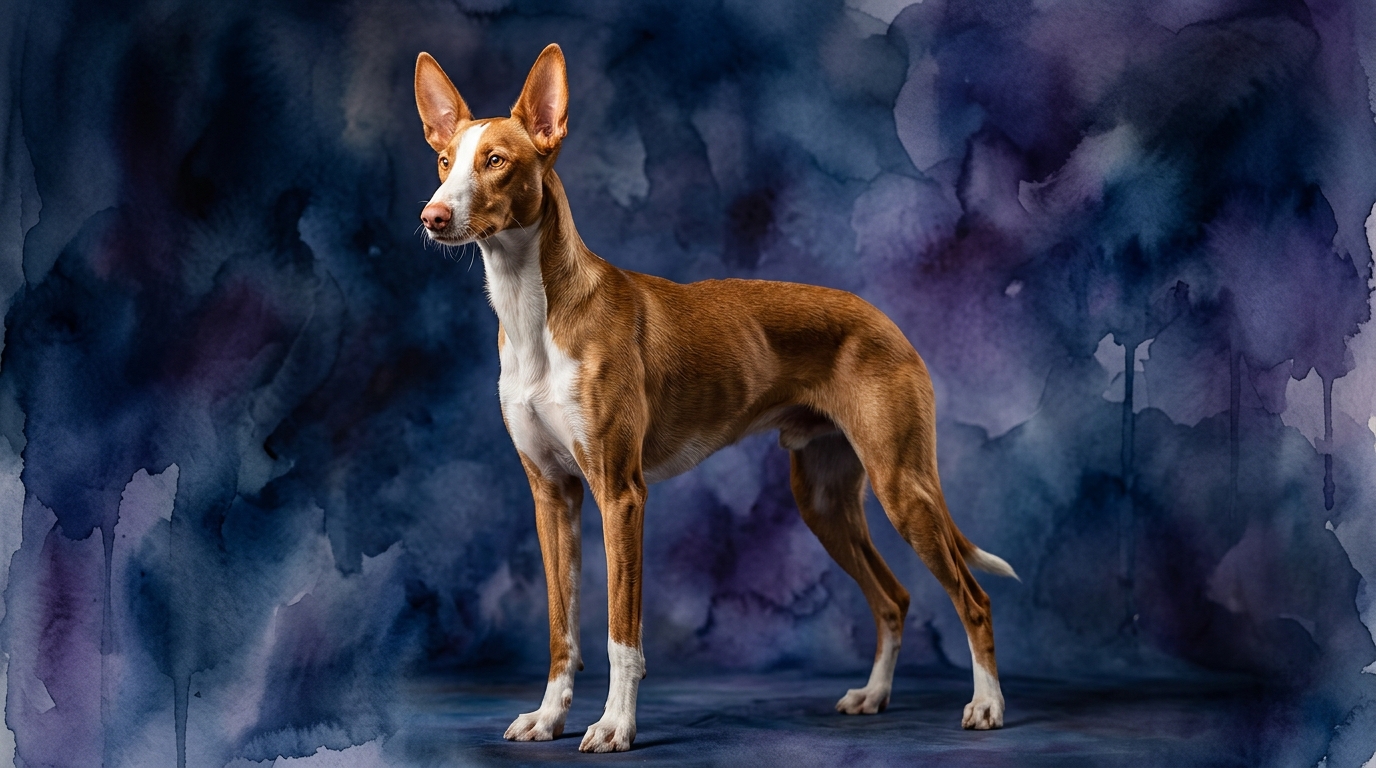
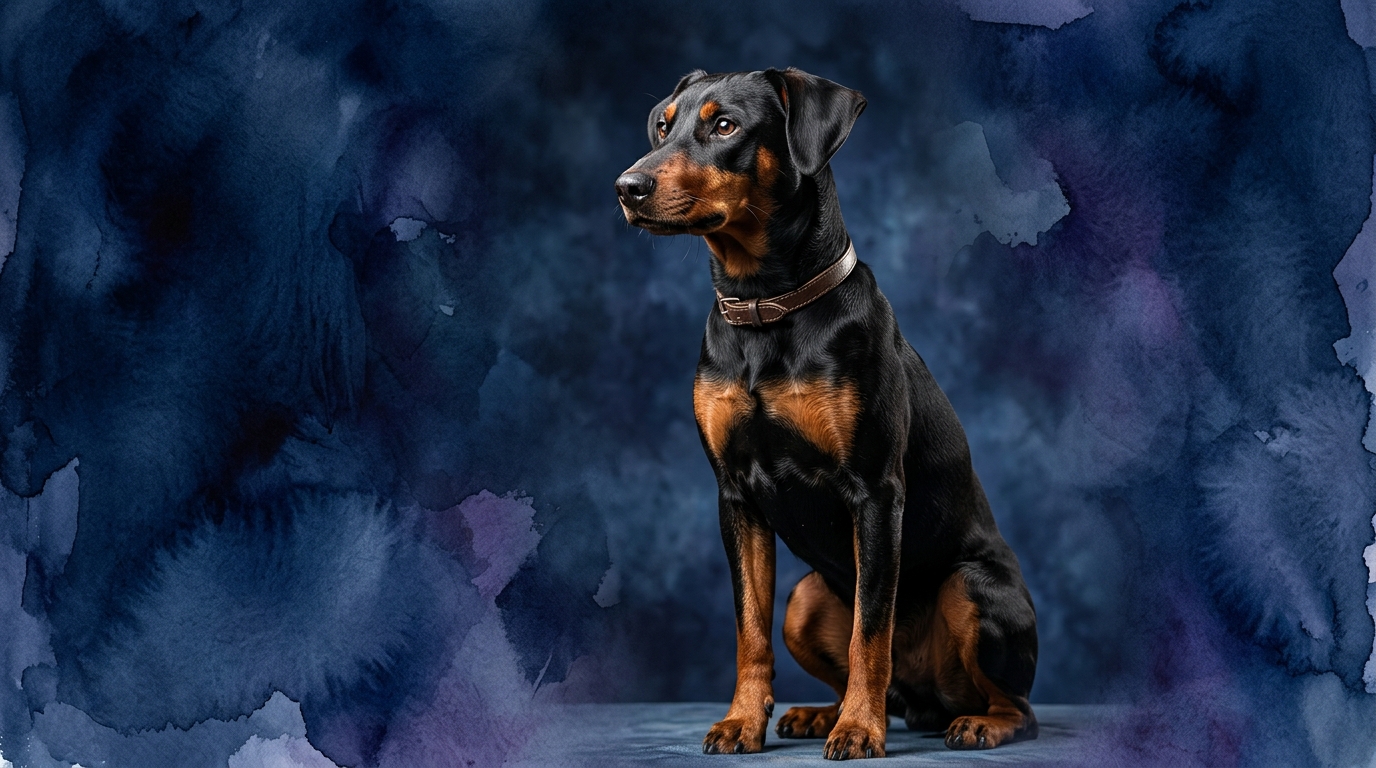
Side-by-Side IQ Profile: Ibizan Hound vs. German Pinscher
The Cosmic Pet Pet IQ Lab provides a standardized framework for evaluating canine cognition across five crucial dimensions, offering a unique lens through which to compare the Ibizan Hound and the German Pinscher. Intriguingly, both breeds register a consistent 3 out of 5 across all measured metrics, suggesting a solid, capable, but not exceptionally dominant cognitive profile in each area. This uniform scoring invites a deeper look into the qualitative differences rather than just the quantitative.
For the Ibizan Hound, a sighthound historically tasked with flushing and retrieving small game in rugged terrain, these scores translate into a specific set of aptitudes. Its Problem Solving at 3/5 often manifests as an independent resourcefulness, particularly in navigating complex environments or strategizing during a chase. Training Speed at 3/5 indicates an ability to learn commands, but often with a thoughtful consideration of whether to comply, reflecting its independent nature. Social Intelligence at 3/5 suggests it reads human cues well, yet maintains a dignified, sometimes aloof disposition, observing more than actively engaging in constant interaction. Its Instinctive Drive, also 3/5, is powerfully geared towards pursuit and hunting, a deep-seated impulse. Memory at 3/5 ensures it retains routines, spatial layouts, and past interactions with reliability. The Ibizan Hound holds a Coren rank of #53, placing it squarely in the average working/obedience intelligence category.
The German Pinscher, a working breed originally developed for vermin control and guarding on farms, interprets these identical 3/5 scores through the lens of its protective and alert heritage. Its Problem Solving at 3/5 frequently involves figuring out solutions related to its territory or family unit, often with a determined and focused approach. Training Speed at 3/5 means it learns efficiently and eagerly when motivated, often thriving on structure and purpose. Social Intelligence at 3/5 shows a keen awareness of its human family's dynamics and a cautious, discerning attitude towards strangers, making it an effective alarm system. The Instinctive Drive at 3/5 is strongly oriented towards guarding, territorial defense, and a robust prey drive for smaller animals. Memory at 3/5 allows it to retain training, remember perceived threats, and recall routines with precision. The German Pinscher is not listed in Coren's ranking, which means its cognitive assessment relies solely on its breed characteristics and our lab's specific evaluations.
Where the Ibizan Hound Wins Cognitively
While sharing identical numerical scores, the Ibizan Hound's cognitive strengths lean into its sighthound heritage, particularly in areas demanding independent thought and environmental awareness. Its 3/5 Problem Solving, for example, shines brightest when given a task requiring self-sufficiency, such as navigating a complex lure course or finding a hidden toy in an open field, relying less on direct human instruction and more on its own spatial reasoning and ingenuity. This capacity for autonomous problem-solving is a hallmark of breeds bred to hunt independently, where quick, unassisted decisions are crucial for success.
Furthermore, the Ibizan Hound's 3/5 Instinctive Drive, while strong in pursuit, is often paired with an exceptional ability to scan and process visual information over vast distances. This makes them cognitively superior in tasks requiring sustained visual tracking and rapid assessment of moving targets, a skill honed over centuries of open-field hunting. Their memory, also 3/5, contributes to this by allowing them to recall the paths of fleeing prey or the layout of an expansive territory, making them adept at pattern recognition in dynamic visual environments. Their social intelligence, though appearing somewhat reserved, provides them with a nuanced understanding of their human's moods and intentions without demanding constant interaction or validation, demonstrating a quiet observational acuity.
Where the German Pinscher Wins Cognitively
The German Pinscher's cognitive edge, despite matching scores, is rooted in its historical role as a vigilant guardian and active working dog. Its 3/5 Problem Solving often manifests as a determined and practical intelligence, particularly when it comes to understanding household routines, identifying potential threats, or figuring out how to achieve a desired outcome within a structured environment. This is not the independent, wide-ranging problem-solving of a hunter, but rather a focused, goal-oriented approach often tied to its immediate surroundings and family unit, like discerning which visitor is welcome and which requires a warning.
The German Pinscher's 3/5 Instinctive Drive, while encompassing a prey drive, is more distinctly channeled into alert guardianship and territorial protection. This translates into a superior cognitive capacity for vigilance and discrimination—quickly assessing situations, identifying anomalies, and reacting appropriately. Their 3/5 Social Intelligence makes them acutely attuned to changes in their human's demeanor or the presence of strangers, enabling them to act as effective, intelligent protectors who can interpret subtle cues. Their memory, also 3/5, is particularly strong in recalling training commands and associating specific individuals or situations with past experiences, reinforcing their role as reliable companions and watchdogs. This combination of traits makes them particularly adept at tasks requiring loyalty, discernment, and quick, decisive action in response to perceived threats or duties.
Which is Easier to Train and Why
Determining which breed is 'easier' to train, despite both scoring 3/5 in Training Speed, requires understanding their fundamental behavioral drivers. The German Pinscher generally presents as the more straightforward student for many owners. Their working dog heritage instills a desire for purpose and a tendency to bond closely with their primary caregiver, often translating into a higher eagerness to please. This manifests as a more consistent response to commands and a greater satisfaction derived from successful task completion. Their alertness and focus, combined with their instinctive drive for structure and protection, mean they often perceive training as a shared activity that strengthens their bond and fulfills their inherent purpose.
The Ibizan Hound, while capable of learning at the same speed, often brings a different approach to the training arena. Their sighthound independence means they are less motivated by pleasing their human and more by what benefits them or aligns with their intrinsic desires. A 3/5 Training Speed for an Ibizan Hound means they understand what is asked, but they might weigh the request against the allure of an interesting scent or a perceived opportunity for a chase. Training an Ibizan requires more patience, creativity, and a deep understanding of positive reinforcement to make compliance more appealing than their independent impulses. Their social intelligence allows them to understand human expectations, but their instinct often guides their choices, making consistent, enthusiastic execution of commands a more nuanced achievement.
Which Suits Active Owners vs. Relaxed Owners
For active owners, both breeds offer considerable engagement, but their ideal activities diverge. The Ibizan Hound thrives with owners who embrace its need for vigorous, expansive exercise. Its powerful 3/5 instinctive drive for pursuit necessitates regular opportunities for off-leash running in secure, large areas where it can truly stretch its legs and satisfy its chase instincts. Activities like lure coursing, racing, or long, exploratory hikes where its independent problem-solving can be engaged are perfect. An active owner for an Ibizan is someone who understands and respects its independent spirit, providing outlets for its energy without expecting constant, intense interaction during exercise. They need space and freedom, not necessarily constant directed activity.
The German Pinscher also requires significant activity, but typically prefers more structured and interactive engagement. Its 3/5 instinctive drive for guarding and its social intelligence make it well-suited for activities that involve its human, such as agility, obedience, tracking, or protection sports. These activities provide mental stimulation and a sense of purpose, fulfilling its working dog instincts. An active owner for a German Pinscher is someone who enjoys consistent training, structured play, and including their dog in daily activities, providing clear leadership and a strong bond. They thrive on having a job, even if that job is simply being an engaged companion on a brisk walk or during a training session. Neither breed is suited for a truly 'relaxed' owner who prefers minimal activity, as both possess moderate to high energy levels that require consistent outlets to prevent boredom and potential behavioral issues. However, the Pinscher's need for interactive, directed activity might be more appealing to some active owners than the Ibizan's more independent exercise requirements.
The Verdict: When to Choose Each
The Verdict
Choose the Ibizan Hound if you appreciate an independent, elegant companion who excels in self-directed activities and requires expansive, secure spaces to fulfill its sighthound instincts. They are ideal for owners who enjoy a dog with a quiet dignity and a unique, resourceful approach to life.
Opt for the German Pinscher if you seek a loyal, vigilant, and highly interactive companion who thrives on structure, consistent training, and active participation in family life. They are best for owners who can provide clear leadership and channel their working drive into purposeful activities.
🧠 Find Your Pet's IQ Score
Our Pet IQ Lab assessment covers 25+ tests across 5 cognitive dimensions — personalized to your breed.
Take the Full IQ Test →Frequently Asked Questions
Do Ibizan Hounds and German Pinschers have similar energy levels?
Both breeds possess moderate to high energy levels, but their manifestations differ. Ibizan Hounds require bursts of intense running in open spaces, while German Pinschers prefer more structured, interactive activities and consistent mental engagement throughout the day.
Which breed is better for a first-time dog owner?
Neither breed is typically recommended for inexperienced owners due to their strong instincts and distinct temperaments. However, a German Pinscher might be slightly more manageable for a dedicated first-timer willing to invest heavily in consistent training and socialization, given their desire to please.
Are these breeds good with children?
Both breeds can be good with respectful, well-behaved children when properly socialized from a young age. Ibizan Hounds are often gentle but may prefer older, calmer children, while German Pinschers can be playful and protective but require supervision due to their strong guarding instincts and potential for boisterous play.