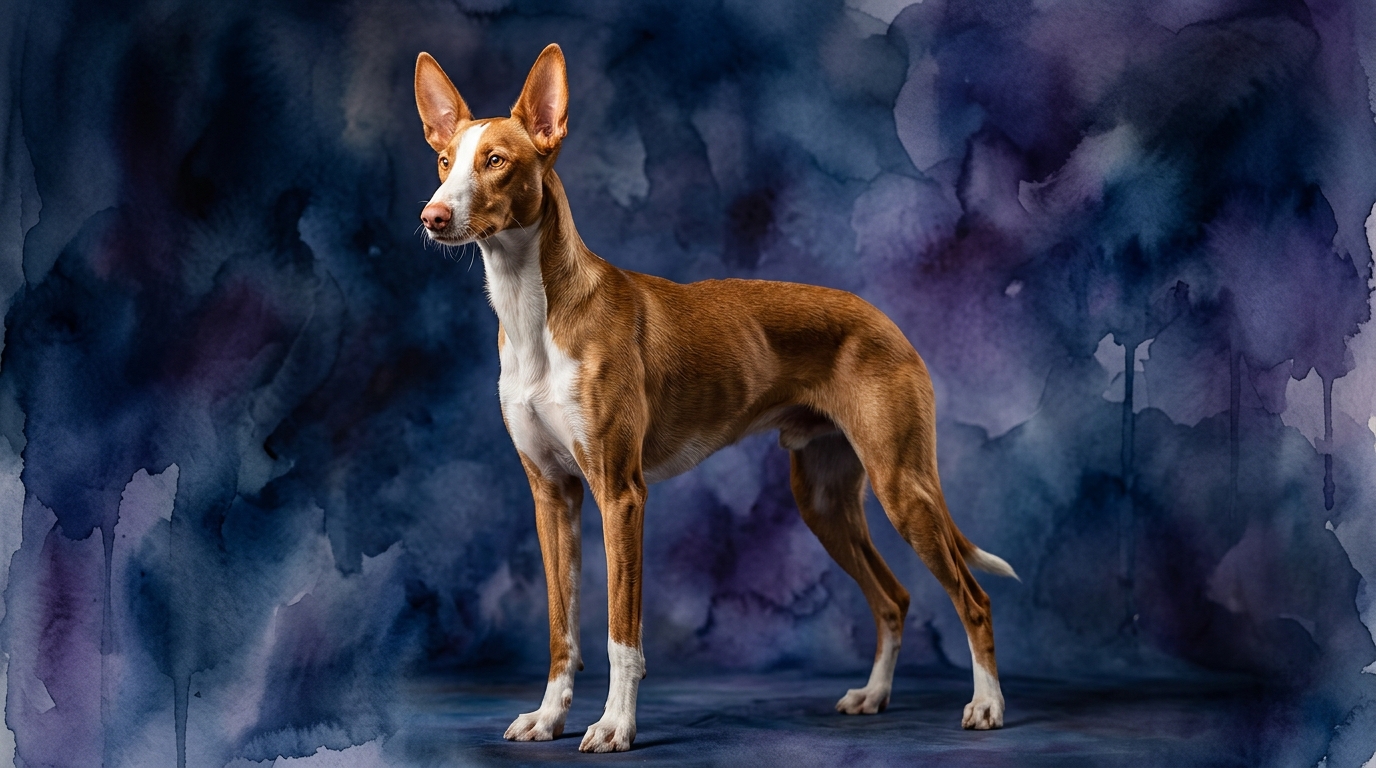

Side-by-Side Cognitive Profile: Unpacking Identical Scores
Both the Ibizan Hound and the Lhasa Apso register a consistent 3/5 across all five measured cognitive dimensions, a numeric tie that belies their distinct breed histories and mental approaches. This middle-ground ranking suggests a foundational level of cognitive competence, but the *application* of these skills varies dramatically based on their ancestral roles.
In Problem Solving (3/5), the Ibizan Hound demonstrates an independent, often physically-oriented cleverness, adept at navigating complex outdoor environments or devising strategies to pursue a visual target. Their solutions are often practical and action-driven. Conversely, the Lhasa Apso's problem-solving (3/5) leans towards manipulating their immediate household environment or human companions, figuring out how to achieve comfort or communicate a desire through nuanced, persistent actions rather than overt physical challenges.
Training Speed (3/5) for the Ibizan Hound means they absorb new commands with moderate repetition, but their sighthound independence means compliance is often contingent on their own assessment of the situation, especially if a more engaging stimulus is present. Motivation through engaging play or the thrill of a chase is paramount. The Lhasa Apso, also at 3/5, can learn effectively, yet their strong-willed nature necessitates exceptional patience, consistency, and positive reinforcement. They aren't inherently driven to please, often needing to perceive a clear benefit or logical reason for their cooperation.
Social Intelligence (3/5) in the Ibizan Hound manifests as deep, often reserved bonds with their chosen family, reading their closest humans' moods and routines with accuracy, yet remaining aloof with strangers. Their social interactions are frequently about companionship within a trusted circle. The Lhasa Apso, also scoring 3/5, is highly attuned to household dynamics, acting as a vigilant observer and guardian. They excel at understanding human intentions within their family unit, often using this insight to assert their position or signal perceived threats, though their social circle can be very exclusive.
For Instinctive Drive (3/5), the Ibizan Hound's lineage as a rabbit hunter means a dominant, compelling urge for pursuit and sight-based tracking. This translates into a powerful need to chase anything that moves quickly, demanding secure outdoor spaces. The Lhasa Apso's 3/5 Instinctive Drive is rooted in its role as a sentinel. This manifests as a keen awareness of their surroundings and a strong protective instinct for their home and family, making them alert to changes, sounds, and strangers, often with vocal alerts.
Lastly, Memory (3/5) for the Ibizan Hound is strong for routes, spatial layouts, and experiences tied to their hunting drive, remembering successful endeavors or preferred running paths. They recall people and animals, sometimes holding preferences based on past interactions. The Lhasa Apso's memory (3/5) shines in remembering routines, household rules, and the specific boundaries they've tested. They accurately recall who belongs in their inner circle and past social interactions, which contributes to their discerning nature.
Where the Ibizan Hound Excels Cognitively
Despite sharing numerical scores, the Ibizan Hound's cognitive strengths are profoundly shaped by its sighthound heritage, offering unique advantages. They possess exceptional observational processing for movement and distance. Their visual acuity, combined with rapid mental processing, allows them to track fast-moving objects across vast distances with remarkable precision, a cognitive specialization honed over centuries for effective hunting.
Another distinct strength is their capacity for independent decision-making in pursuit. Unlike many breeds that rely heavily on human direction, the Ibizan Hound makes split-second choices in the field, autonomously assessing terrain, speed, and trajectory of prey. This demonstrates a sophisticated, self-reliant problem-solving capacity that is deeply rooted in their instinctive drive, allowing them to adapt and strategize without constant human input.
Their spatial awareness and navigation skills are also particularly developed. The ability to remember complex routes, navigate varied terrain at high speeds, and consistently return to a starting point showcases a superior spatial memory and environmental understanding. This cognitive mapping is crucial not just for hunting, but also for safely exploring and mastering their surroundings, reflecting a highly engaged environmental intelligence.
Where the Lhasa Apso Excels Cognitively
The Lhasa Apso, with its distinct history as a sentinel and companion, also exhibits specific cognitive strengths that set it apart. They demonstrate acute auditory discernment and interpretation. This breed excels at distinguishing subtle sounds within their environment, identifying potential threats or unusual occurrences with remarkable precision, often reacting and alerting their family to a stimulus long before humans are consciously aware of it.
Furthermore, the Lhasa Apso displays a nuanced ability to read subtle social cues within the home. While not always overtly collaborative, they are masters at interpreting delicate human body language, vocal inflections, and established routines. They often anticipate needs or moods, leveraging this insight to communicate their own desires or to provide timely alerts, showcasing a sophisticated understanding of their immediate social ecosystem.
Their cognitive abilities also converge in persistent, strategic communication. The Lhasa Apso's problem-solving and social intelligence often combine in sophisticated ways to convey their desires or perceived threats. They employ varied vocalizations, persistent actions, and calculated behaviors to ensure their message is received and acted upon by their human companions, demonstrating a clever and determined approach to interaction.
Training Dynamics: A Study in Motivation and Will
When considering which breed is 'easier' to train, it's important to understand that both the Ibizan Hound and the Lhasa Apso, with their 3/5 Training Speed scores, present unique challenges rather than effortless compliance. For the Ibizan Hound, training requires a deep understanding of their independent, pursuit-driven nature. They are not inherently biddable or eager to please in the traditional sense; their motivation often stems from the thrill of the chase, engaging play, or high-value rewards. Recall can be particularly challenging if a compelling scent or visual stimulus captures their attention, demanding highly consistent, creative training that makes compliance more rewarding than the distraction.
The Lhasa Apso’s training journey, conversely, often feels like a negotiation due to their strong will and discerning personality. They can be stubborn, requiring immense patience, unwavering consistency, and exclusively positive reinforcement methods. These dogs need to perceive that following a command benefits them, or that their human is a fair, consistent, and confident leader. While they understand household rules (a manifestation of their social intelligence), their 3/5 training speed rating reflects that they will frequently test those boundaries, making consistent boundary setting and early socialization crucial to channel their protective instincts effectively.
Lifestyle Match: Active Engagement vs. Alert Companionship
Matching a dog's cognitive and physical needs to an owner's lifestyle is paramount. The Ibizan Hound is unequivocally suited for active owners. They possess significant energy reserves and a deep-seated need to run, chase, and expend both their physical and mental energy. Owners must provide ample, secure outlets for their instinctive drive, whether through lure coursing, extensive off-leash runs in safely enclosed areas, or engaging scent work. A relaxed or sedentary owner will likely find an Ibizan Hound prone to boredom, restlessness, and potentially destructive behaviors due to unfulfilled cognitive and physical requirements.
The Lhasa Apso, while not demanding extreme physical exertion, is better suited for owners who appreciate a mentally alert and engaged companion with moderate physical activity requirements. They enjoy walks and playtime, but their exercise needs are not as demanding as the Ibizan Hound's. However, they are not 'relaxed' in a passive sense; their sentinel nature means they are always observing, processing, and reacting to their environment. They require consistent mental stimulation, dedicated companionship, and a clear understanding of their role within the family, making them suitable for owners who are present and engaged, even if not constantly hiking or running marathons.
The Verdict
Choose the Ibizan Hound if you're an active individual or family who can provide ample physical exercise and mental stimulation for a clever, independent sighthound. They thrive with owners who appreciate their unique hunting instincts and engage them in activities like lure coursing or long, secure runs.
Opt for the Lhasa Apso if you seek a vigilant, discerning companion who will bond deeply with their family, offering alert companionship without extreme exercise demands. They suit owners who are prepared for consistent training, enjoy a dog with a strong personality, and appreciate their role as a devoted household sentinel.
🧠 Find Your Pet's IQ Score
Our Pet IQ Lab assessment covers 25+ tests across 5 cognitive dimensions — personalized to your breed.
Take the Full IQ Test →Frequently Asked Questions
Do Ibizan Hounds and Lhasa Apsos learn at the same pace?
While both breeds score 3/5 in Training Speed, their learning styles differ significantly. Ibizan Hounds learn quickly when motivated by chase or play but may choose not to obey if distracted. Lhasa Apsos learn effectively with consistent positive reinforcement but can be stubborn, often needing to see the personal benefit in compliance.
Which breed is better with strangers, considering their social intelligence?
Both score 3/5 in Social Intelligence, but express it uniquely. Ibizan Hounds are typically reserved with strangers, forming close bonds within their family and often ignoring outsiders. Lhasa Apsos are generally more wary and protective of their home and family, frequently alerting to new arrivals, making them more discerning and vocal with strangers.
How do their instinctive drives impact their daily lives?
The Ibizan Hound's 3/5 Instinctive Drive is primarily for pursuit, meaning they require secure environments and regular outlets for running and chasing, often making them unsuitable for off-leash walks in unsecured areas. The Lhasa Apso's 3/5 Instinctive Drive manifests as a strong sentinel behavior, making them vigilant guardians who alert to perceived changes or threats within their territory, often through barking.