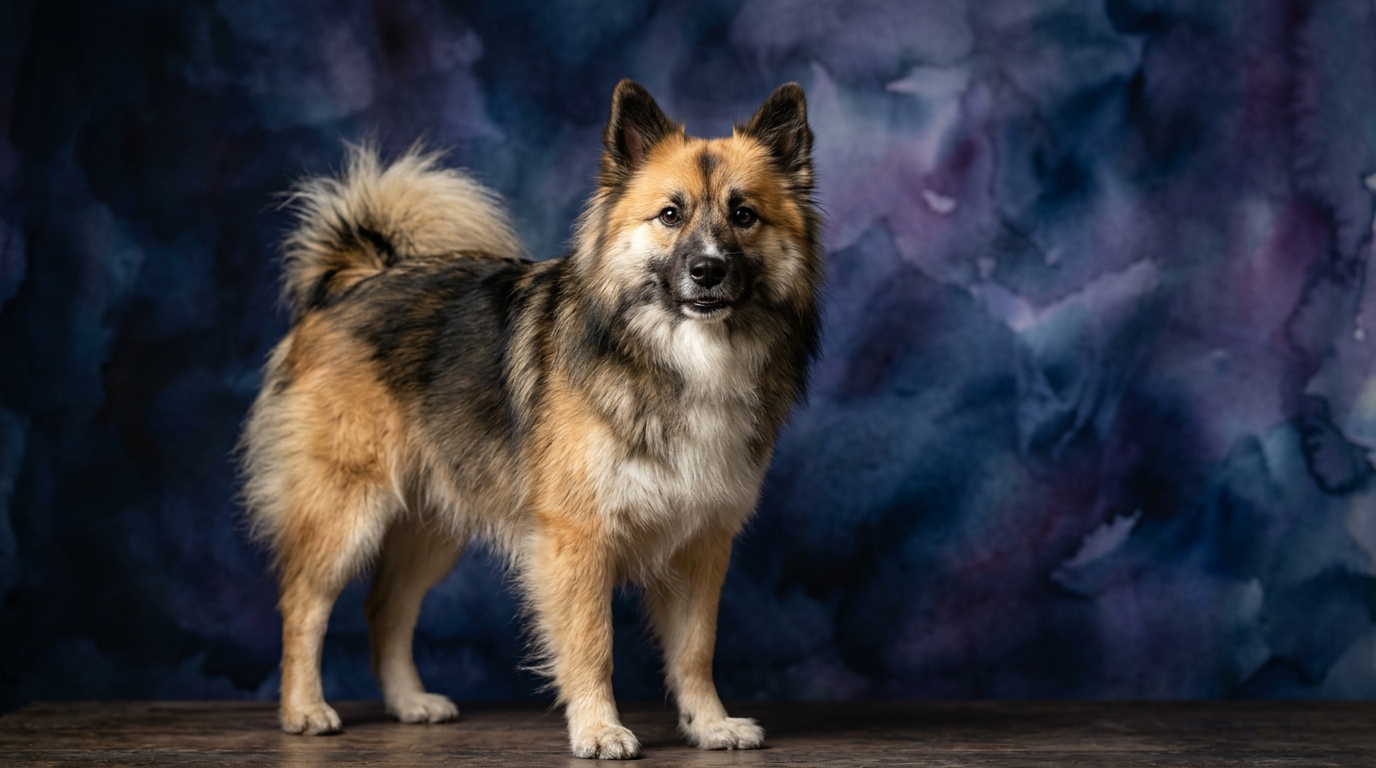

Side-by-Side IQ Profile: Herding vs. Toy Minds
**Icelandic Sheepdog:** This breed, steeped in centuries of herding tradition, exhibits a cognitive profile tailored for outdoor work and independent decision-making. Their **Problem Solving (3/5)** is practical and environmentally focused; they are adept at navigating complex terrains, finding lost livestock, or figuring out how to bypass obstacles without direct human intervention. This isn't about abstract puzzles, but real-world challenges. Their **Training Speed (3/5)** is moderate; they learn new commands with a cooperative spirit but also retain a degree of independence, often needing consistent, engaging methods to maintain focus, especially when their instincts are piqued. **Social Intelligence (3/5)** in the Icelandic Sheepdog extends beyond mere human interaction; it encompasses a nuanced understanding of flock dynamics and the subtle cues of other animals, allowing them to effectively manage and protect their charges. Their **Instinctive Drive (3/5)** is powerfully expressed through their inherent desire to gather, organize, and monitor, making them naturally inclined towards activities that simulate their ancestral herding duties. Finally, their **Memory (3/5)** is robust for routines, learned tasks, and environmental layouts, crucial for efficient work across varied landscapes and ensuring the safety of their flock.
**Brussels Griffon:** As a companion breed, the Brussels Griffon's cognitive strengths are finely tuned for domestic life and close human interaction. Their **Problem Solving (3/5)** often manifests as clever strategies to achieve comfort, attention, or preferred resources within the home. They can be remarkably inventive at navigating household rules, such as figuring out how to reach a favorite treat or subtly signaling their desires to their owners. Their **Training Speed (3/5)** is moderate, and they are generally eager to learn new things when the process is engaging and involves their human companions. However, their small size and companion nature mean they can sometimes be easily distracted or, conversely, highly focused on their own agenda if not properly motivated. The **Social Intelligence (3/5)** of a Brussels Griffon is particularly refined in understanding human emotions and social cues; they thrive on companionship and are adept at reading moods, often adjusting their behavior to comfort or entertain. Their **Instinctive Drive (3/5)** is predominantly geared towards being a devoted companion and the center of attention, influencing their motivation and focus towards interactions that strengthen their bond with their human family. Their **Memory (3/5)** is excellent for people, established routines, and the specific behaviors that elicit desired responses from their owners, allowing them to navigate their domestic world with a charming, knowing air.
Where the Icelandic Sheepdog Wins Cognitively
The Icelandic Sheepdog truly excels in cognitive tasks demanding independent thought and sustained engagement in practical, often outdoor, scenarios. Their 3/5 problem-solving ability is inherently geared towards environmental challenges; they are less likely to passively await human instruction and more inclined to assess a situation and act autonomously. For instance, if a gate is ajar or a specific path is blocked, an Icelandic Sheepdog might independently investigate and devise a solution, a trait invaluable for a herding dog expected to operate without constant supervision. Their instinctive drive, also rated 3/5, is channeled into purposeful activity, giving them a distinct advantage in tasks requiring sustained focus on a goal, such as intricate scent work, agility courses that mirror herding patterns, or navigating complex trails. This inherent drive provides an internal motivation for multi-step, physical challenges that a more companion-oriented breed like the Brussels Griffon might find less inherently engaging without continuous human prompting. Furthermore, while both breeds show 3/5 social intelligence, the Icelandic Sheepdog's understanding extends to broader group dynamics, interpreting subtle cues not just from humans but also from livestock or other dogs in a working context, a cognitive strength less emphasized in a breed primarily bred for human companionship.
Where the Brussels Griffon Wins Cognitively
The Brussels Griffon, with its consistent 3/5 scores across the board, demonstrates a distinct cognitive strength in navigating complex social environments and subtly manipulating situations for comfort and attention. Their problem-solving, while also rated 3/5, is often applied to domestic 'puzzles' – how to secure a coveted spot on the sofa, how to communicate a need for a treat with surprising clarity, or how to charm a new visitor. This breed can be remarkably astute at interpreting human body language and vocal tones, leveraging their 3/5 social intelligence to anticipate needs or endearingly exploit perceived weaknesses in their owners. For example, a Griffon might 'fake' a cough for extra cuddles or strategically position themselves to intercept falling crumbs, showcasing a sophisticated understanding of cause and effect within a human household. Their memory, also 3/5, is particularly strong for social routines and the specific responses their actions elicit from their human family, making them adept at learning the 'rules' of the house and bending them when possible. This nuanced understanding of human-dog interaction and their immediate environment allows them to integrate seamlessly into a human household, often becoming the emotional barometer of the family, a role where their specific cognitive strengths truly shine.
Which is Easier to Train and Why
Both breeds share a 3/5 rating for training speed, suggesting they learn at a moderate pace. However, the practical 'ease' of training can differ significantly due to their distinct instinctive drives and how their social intelligence is applied. The Icelandic Sheepdog's herding drive means they often respond well to training that taps into their natural inclinations for movement, control, and purpose. While possessing an independent streak, they are generally eager to work alongside their human, especially in activities like agility, rally, or herding trials, where they can apply their problem-solving to structured tasks. Their training might necessitate more physical engagement and mental stimulation to maintain focus, as their cognitive processes are often externally directed towards environmental management. Conversely, the Brussels Griffon, driven by companionship, often learns quickly when training involves close interaction and positive reinforcement that strengthens their bond. Their social intelligence makes them highly attuned to their owner's approval, which can be a powerful motivator. However, their independent 'Toy' temperament means they can also be prone to charming stubbornness if they don't see an immediate benefit or if they prefer to engage in more comfortable activities. Training a Griffon might require more patience with occasional playful defiance and a consistent focus on making learning feel like a fun, bonding experience that reinforces their desire for connection.
Which Suits Active Owners vs. Relaxed Owners
The Icelandic Sheepdog is undoubtedly better suited for active owners. Their 3/5 instinctive drive, deeply rooted in herding, translates into a significant need for consistent physical exercise and mental engagement. They thrive in environments where they have a job to do, whether it's participating in dog sports, going on long hikes, or engaging in complex, varied training sessions. Their problem-solving skills are best utilized when given challenges that require them to think and move purposefully. A relaxed owner who cannot consistently provide sufficient outlets for this breed's energy and drive might find themselves with a bored companion exhibiting unwanted behaviors. In contrast, the Brussels Griffon is an ideal match for more relaxed owners, though they still enjoy play and daily walks. Their 3/5 social intelligence and companionship-driven instincts mean they are content to be close to their people, observing and participating in household activities. While they appreciate mental stimulation through short, engaging training sessions or puzzle toys, their needs are generally met within a less physically demanding routine. Their problem-solving often manifests in domestic scenarios, making them excellent companions for those who enjoy a clever, attentive presence without the requirement for extensive outdoor adventures.
The Verdict
For owners seeking a diligent, active companion capable of independent thought in practical, engaging tasks and outdoor adventures, the Icelandic Sheepdog is an excellent choice.
If your lifestyle calls for a charming, socially astute companion who thrives on close interaction and clever domestic problem-solving, the Brussels Griffon will be a delightful addition.
🧠 Find Your Pet's IQ Score
Our Pet IQ Lab assessment covers 25+ tests across 5 cognitive dimensions — personalized to your breed.
Take the Full IQ Test →Frequently Asked Questions
Do Icelandic Sheepdogs need a lot of mental stimulation?
Yes, their 3/5 problem-solving and instinctive drive mean they benefit greatly from mental challenges like puzzle toys, training for dog sports, or opportunities to engage their natural herding tendencies to prevent boredom and ensure contentment.
Are Brussels Griffons good at learning tricks?
Absolutely, their 3/5 training speed and strong social intelligence make them quite capable of learning tricks. They are often highly motivated by positive reinforcement and the desire to please and interact closely with their human companions.
How do their similar IQ scores manifest differently in daily life?
While both breeds share 3/5 scores across dimensions, the Icelandic Sheepdog applies its problem-solving and drive to environmental navigation and purposeful, often physical, tasks. The Brussels Griffon, conversely, uses its intelligence for social dynamics, understanding human cues, and maximizing comfort within a domestic setting.