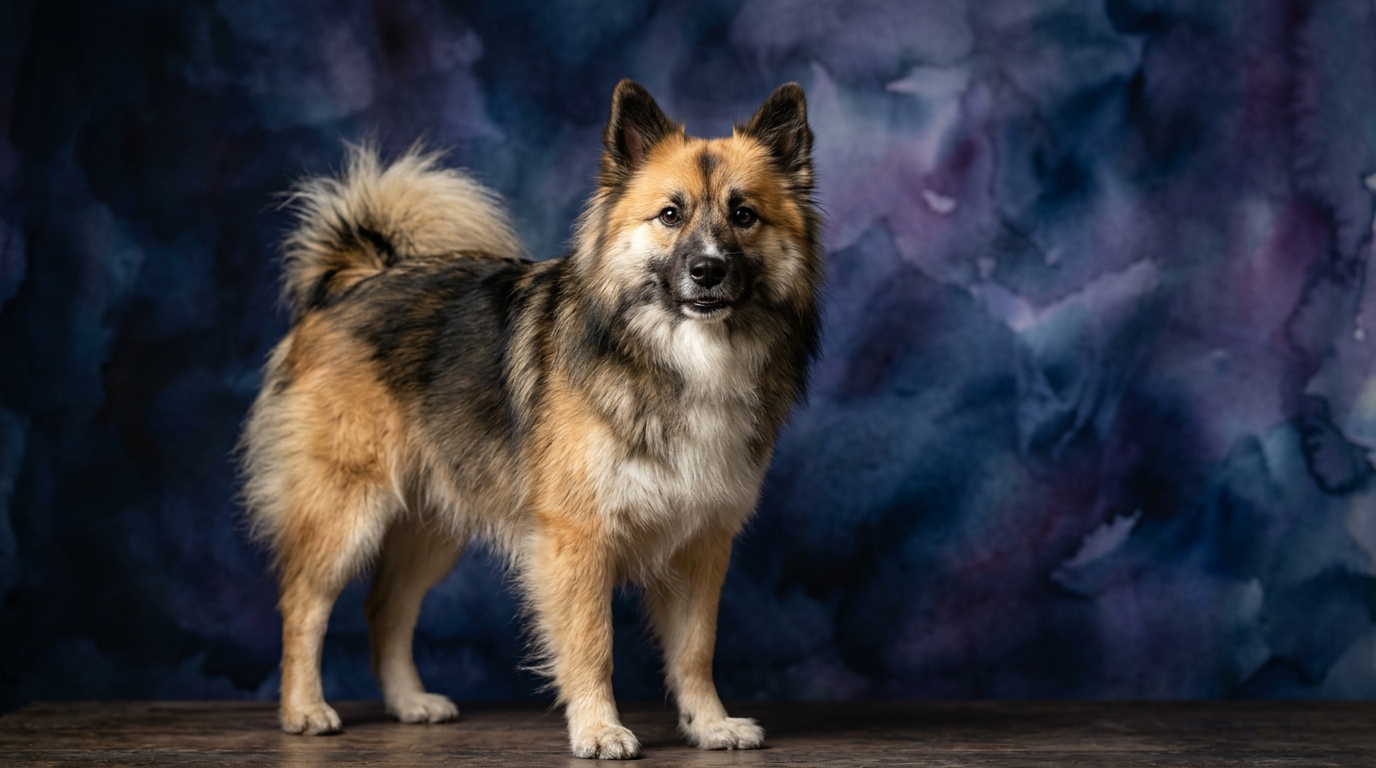
Icelandic Sheepdog at a glance
| IQ Rank / Score | 16/25 |
|---|---|
| Trainability | ★★★☆☆ (3/5) |
| Social Intelligence | ★★★★☆ (4/5) |
| Lifespan | 11-14 years |
| Shedding | Low to moderate |
| Exercise Needs | High (60+ min/day + training) |
| Origin | Iceland |
The Observational Herder: A Symphony of Senses and Voice
The primary angle for understanding the Icelandic Sheepdog's intelligence lies in their unparalleled observational herding abilities, intricately combined with sophisticated vocal communication and adaptability to challenging, varied terrain. Unlike some herding breeds that use intense stare or nipping to drive livestock, the Icelandic Sheepdog employs a distinctive "bark and gather" method. This requires acute awareness of their environment, the ability to spot and track scattered livestock in expansive, often foggy or snow-covered landscapes, and the intelligence to use their voice strategically to direct or alert. Their cognition is finely tuned to active surveillance, rapid environmental assessment, and clear communication, making them not just herders, but vital, vocal partners to their human companions.
Their keen senses are constantly at work, processing information about movement, scent, and subtle changes in the environment. This breed's intelligence is less about rote obedience and more about proactive engagement and problem-solving in dynamic, unpredictable settings. They excel at understanding complex social cues, both from their human handlers and the livestock, using their voice as a primary tool to convey information, manage flocks, and warn of potential dangers. This unique blend of observational prowess, vocal strategy, and environmental adaptability forms the cornerstone of their cognitive uniqueness.
Icelandic Sheepdog IQ Profile: A Deep Dive into Cognitive Strengths
The Icelandic Sheepdog's intelligence is a direct reflection of its ancestral duties and environment, showcasing a balanced yet highly specialized cognitive profile. Their IQ scores reveal a breed perfectly equipped for cooperation, vigilance, and problem-solving.
**Problem-Solving (4/5):** Icelandic Sheepdogs are adept at figuring things out in their environment. Their historical role demanded ingenuity in navigating difficult terrain, finding lost lambs, or maneuvering a flock around obstacles. This score reflects their capacity for flexible thinking and practical application of intelligence to overcome challenges, often without direct human instruction.
**Training Speed (3/5):** While intelligent and eager to please their family, Icelandic Sheepdogs possess an independent streak typical of many working herding breeds. They learn quickly when motivated by positive reinforcement and engaging training methods, but their focus can be swayed by their strong instincts or environmental distractions. Consistency and understanding their vocal nature are key to unlocking their full training potential.
**Social Intelligence (4/5):** These dogs are highly attuned to human emotions and intentions, making them exceptionally cooperative and communicative. Their history as close companions and working partners means they excel at reading subtle cues and forming deep bonds with their families. Their social intelligence extends to understanding the dynamics within a flock and their role in it.
**Instinctive Drive (5/5):** Herding, vocalizing, and watchfulness are deeply ingrained in the Icelandic Sheepdog's DNA. Their "bark and gather" herding style, coupled with their innate desire to alert and protect their family, results in a very high instinctive drive. This drive needs appropriate outlets to ensure a happy, well-adjusted dog.
**Memory (4/5):** An excellent memory is crucial for a dog tasked with finding lost livestock or navigating complex routes. Icelandic Sheepdogs demonstrate strong spatial memory, remembering locations, learned commands, and social interactions with ease. This cognitive strength allows them to build upon past experiences and learn from their environment effectively.
A Legacy Forged in Fire and Ice: The Icelandic Sheepdog's Surprising Cognitive History
A surprising historical fact about the Icelandic Sheepdog's cognition is their pivotal role as the "eyes and ears" of isolated farms, often acting as early warning systems and navigators for shepherds in Iceland's treacherous, low-visibility conditions. Unlike breeds primarily focused on driving large flocks, the Icelandic Sheepdog's intelligence was honed for active environmental monitoring and precise communication, particularly where visibility was poor due to fog, snow, or vast, undulating terrain. They developed an extraordinary ability to spot subtle changes, identify lost sheep, or detect approaching threats long before their human counterparts, and then use specific vocalizations and body language to direct shepherds.
This wasn't just about traditional herding; it was about survival. Their keen senses – sight, hearing, and smell – combined with their innate drive to observe and communicate, made them indispensable guides. They could discern the difference between a distant rock and a wayward lamb, or recognize the unusual sound signaling danger, and then effectively convey this critical information to their human partners. This specialized form of observational intelligence and communicative precision was a cornerstone of their existence and adaptation to one of the world's most unforgiving landscapes.
Decoding Icelandic Sheepdog Cognition: Recommended IQ Lab Tests
To truly understand the multifaceted intelligence of the Icelandic Sheepdog, The Cosmic Pet's IQ Lab recommends a series of tests designed to challenge and reveal their unique cognitive strengths. These assessments go beyond basic obedience, delving into problem-solving, sensory perception, and social learning capabilities, all crucial to their breed-specific intelligence.
Debunking the Myth: The "Noisy" Icelandic Sheepdog Fallacy
**Claim:** A common myth suggests that Icelandic Sheepdogs are simply overly vocal, often labeled as "barkers" whose constant noise indicates a lack of focus or general intelligence. This misconception often leads to frustration for owners and an unfair assessment of the breed's cognitive abilities. While they are indeed a vocal breed, this is frequently misunderstood.
**Why It Exists:** The myth largely originates from their strong instinctive drive to use their voice as a primary tool. In their ancestral role, barking was essential for herding, alerting shepherds to threats, and communicating over long distances in open terrain. Modern interpretations often misinterpret this functional vocalization as aimless noise.
**Truth:** The reality is that the Icelandic Sheepdog's vocal nature is a highly intelligent form of communication. Their barking is not random; it's a sophisticated tool used for various purposes: to gather and direct livestock, to alert their family to approaching strangers or unusual sounds, and to express excitement or a need for attention. When understood and appropriately channeled through training, their vocalizations are a testament to their communicative intelligence, not a sign of a lack of it.
Historical Echoes: Intelligence in Their Ancestral Role
For over a thousand years, the Icelandic Sheepdog’s intelligence was forged by the extreme conditions and unique demands of their island home. Originally brought by the Vikings, these dogs adapted to a life of working alongside shepherds in harsh, isolated environments where livestock were often left to graze freely in vast, unfenced areas. Their survival, and that of their human families, depended on their keen observational skills, quick problem-solving, and reliable communication.
Their role wasn't just about driving sheep from one pasture to another, but critically, about finding lost lambs in dense fog, alerting to predatory birds (like the raven), and guiding their human partners through treacherous landscapes. This required a level of independent thought and decision-making that shaped their cognitive profile significantly. Selective pressures naturally favored dogs that were not only hardy but also intelligent, adaptable, and highly cooperative with humans, fostering a unique blend of instinct and intellect that persists to this day.
Modern Minds: Applying Icelandic Sheepdog Intelligence Today
Today, the intelligence that once served shepherds on remote Icelandic farms translates beautifully into a variety of modern roles for the Icelandic Sheepdog. Their problem-solving abilities make them excellent candidates for dog sports like agility and obedience, where they can channel their physical and mental energy. Their strong social intelligence makes them superb therapy and companion dogs, thriving on close interaction and understanding human cues.
However, their high cognitive capacity also means they require consistent mental stimulation to prevent boredom and potential behavioral issues. Puzzle toys, interactive games, and varied training sessions that engage their problem-solving and memory skills are essential. Positive reinforcement methods work best, as their desire to cooperate and please their family is a powerful motivator, ensuring their sharp minds remain engaged and fulfilled.
Unique Cognitive Traits of the Íslenskur Fjárhundur
The Icelandic Sheepdog stands out for several distinctive cognitive traits. Foremost is their highly developed **observational intelligence**, allowing them to scan environments, detect subtle changes, and anticipate movements with remarkable accuracy. This is complemented by their sophisticated **vocal communication skills**, using a diverse range of barks, yips, and howls to convey specific information, acting as a constant conversational partner.
Their strong **human bond** translates into exceptional social learning and a deep understanding of human emotions and intentions. They possess notable **environmental adaptability**, demonstrating flexibility in problem-solving regardless of changing conditions. Finally, their excellent **memory** for places, people, and routines ensures they are reliable and consistent, forming a robust cognitive package ideal for their historical and modern roles.
Comparing Canine Cognition: Icelandic Sheepdog vs. Shetland Sheepdog
While both are vocal herders, the Icelandic Sheepdog's intelligence is more focused on independent observation and communication in expansive, rugged terrain, whereas the Shetland Sheepdog often excels in precision herding and obedience in more structured environments with a greater emphasis on handler direction.
Frequently Asked Questions About Icelandic Sheepdog Intelligence
**Q: Are Icelandic Sheepdogs hard to train?** A: Not hard, but they are independent thinkers who thrive on positive reinforcement and engaging methods; consistency and understanding their motivations are key, rather than rote repetition.
**Q: Do Icelandic Sheepdogs bark a lot?** A: Yes, they are naturally vocal, using their barks for communication, herding, and alerting, but this is a sign of their intelligence and can be managed with proper training and mental stimulation.
**Q: Are they good for first-time dog owners?** A: They can be, provided the owner is committed to meeting their significant needs for mental stimulation, consistent training, socialization, and can embrace and manage their naturally vocal nature.
3 At-Home Tests to Measure Your Icelandic Sheepdog's IQ
These tests are adapted from peer-reviewed ethology research. No equipment is needed beyond items you have at home. Run each test 5–10 times for reliable results.
The Myth: "Icelandic Sheepdogs are excessively vocal and therefore lack focus or are merely 'noisy' rather than intelligent."
✅ The truth is that an Icelandic Sheepdog's vocal nature is a highly intelligent form of communication. They use a varied repertoire of barks, yips, and howls to convey specific information—herding, warning of strangers, expressing excitement, or requesting attention—demonstrating sophisticated communicative intelligence rather than a lack of focus.
Icelandic Sheepdog vs. Similar Breeds
🧠 What's Your Dog's IQ Score?
Our full Pet IQ Lab assessment includes 12+ tests across 5 cognitive dimensions, calibrated for Icelandic Sheepdogs specifically.
Take the Full IQ Test →Frequently Asked Questions
How smart is a Icelandic Sheepdog?
Our Pet IQ Lab framework scores cognition across five dimensions (max 25). The Icelandic Sheepdog totals 16/25 — high for a domestic dog. The full article breaks down each dimension with at-home tests.
Are Icelandic Sheepdogs easy to train?
Icelandic Sheepdogs can learn most cues, but expect to repeat lessons and keep sessions short. They score 3/5 on Training Speed in our breed profile.
Are Icelandic Sheepdogs good with children and other pets?
Yes — their Social Intelligence rates 4/5 in our Pet IQ Lab framework. With early socialization and supervised play, most Icelandic Sheepdogs integrate well into families with respectful children and other pets.
Do Icelandic Sheepdogs need a lot of mental stimulation?
Absolutely. With Problem Solving 2/5 and Instinctive Drive 4/5, Icelandic Sheepdogs need daily mental work — puzzle feeders, scent games, training sessions, or nose-work — to avoid boredom.
How much exercise does a Icelandic Sheepdog need?
Icelandic Sheepdogs need active engagement. Plan for 45-60 minutes of exercise and training per day, plus mental stimulation.
How good is a Icelandic Sheepdog's memory?
Icelandic Sheepdogs score 3/5 on memory. They remember high-value associations well; less-used cues fade without refresher sessions.
What is the typical lifespan of a Icelandic Sheepdog?
Expect a lifespan of 11-14 years for a healthy Icelandic Sheepdog.
The Icelandic Sheepdog is a testament to adaptive intelligence, a breed whose cognitive strengths are deeply rooted in centuries of cooperative survival in a demanding environment. Understanding their unique blend of observational skills, communicative prowess, and social intelligence allows us to truly appreciate these remarkable dogs beyond their charming appearance.