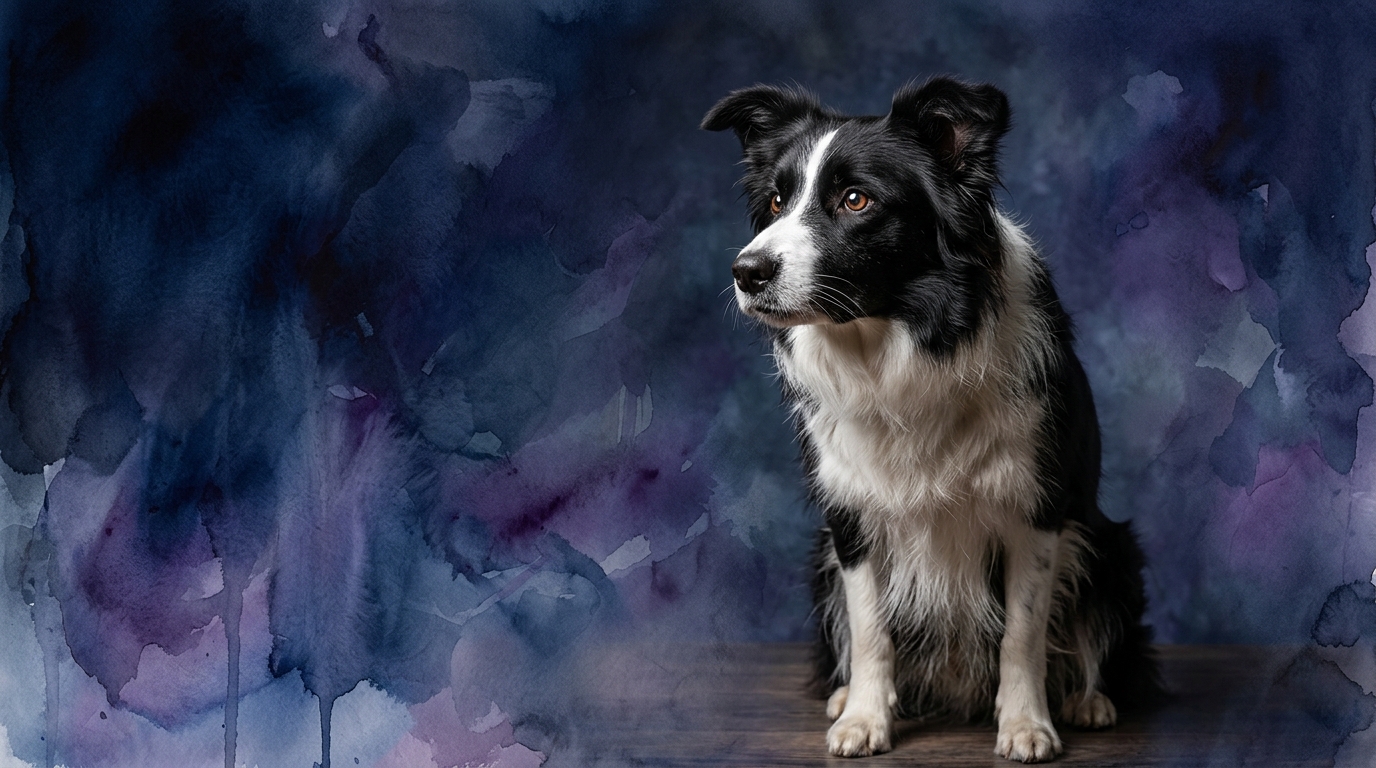
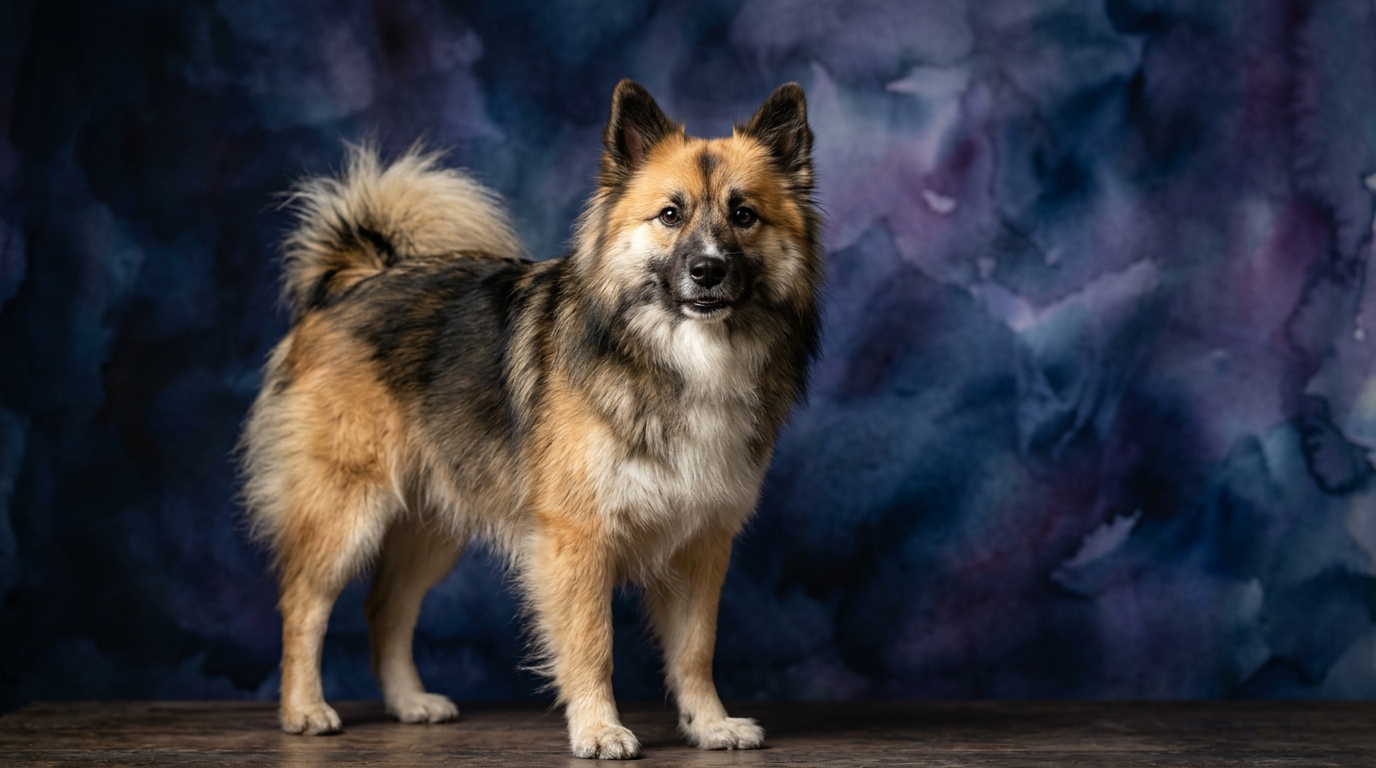
Side-by-Side IQ Profile: Border Collie vs. Icelandic Sheepdog
At The Cosmic Pet Pet IQ Lab, we evaluate canine cognition across five key dimensions, offering a nuanced perspective beyond simple labels. The Border Collie, renowned for its working acumen, stands at Coren rank #1, a testament to its cognitive prowess. The Icelandic Sheepdog, while not Coren-ranked, presents a distinct and equally valid set of cognitive priorities, reflecting its unique historical development and role.
The Border Collie's IQ profile paints a picture of intense mental capability: Problem Solving 5/5, Training Speed 5/5, Social Intelligence 4/5, Instinctive Drive 5/5, and Memory 5/5. This breed demonstrates an exceptional capacity for abstract thought, strategizing to overcome obstacles, and understanding complex sequences. They acquire new commands and routines with astonishing rapidity, often needing only a handful of repetitions before mastery, truly learning concepts rather than just rote actions. Their social intelligence involves a refined ability to read human and canine cues, anticipating intentions and adapting behavior accordingly, excelling in collaborative tasks. An intense, focused drive for herding fuels sustained mental and physical work, underpinning much of their cognitive engagement. Finally, they retain a vast repertoire of commands, routines, and experiences over extended periods, recalling complex sequences and past lessons with precision.
In contrast, the Icelandic Sheepdog’s IQ profile reflects a different, yet highly effective, cognitive approach: Problem Solving 3/5, Training Speed 3/5, Social Intelligence 3/5, Instinctive Drive 3/5, and Memory 3/5. This breed approaches challenges with practical, immediate solutions rather than elaborate, abstract planning, adept at navigating familiar environments and solving tangible, everyday issues. They learn new skills steadily and consistently, benefiting from patient, positive reinforcement and more frequent repetitions, absorbing information at a comfortable, deliberate pace. Their social intelligence manifests as a warm, engaging demeanor, forming strong bonds with their family; while generally friendly, their interpretation of subtle cues might be less nuanced than a Border Collie's, preferring clear, direct communication. A moderate herding instinct often expresses itself as a desire to keep their 'flock' (family) together, complemented by a strong vocal tendency for alarm barking, indicating a drive more focused on general guardianship and companionship than intense, precise control. They show good recall for frequently practiced commands and established routines, especially those tied to positive experiences, though less common tasks may require refreshers.
Where the Border Collie Wins Cognitively
The Border Collie's cognitive strengths are particularly evident in areas demanding high-level processing, rapid learning, and sustained mental application. Their 5/5 Problem Solving and Training Speed mean they excel at tasks requiring strategic thinking and quick adaptation. For instance, a Border Collie presented with a novel puzzle or a complex environmental challenge will systematically try different approaches, often demonstrating foresight in their attempts, rather than relying on trial and error alone. They can learn and execute intricate agility courses with dozens of distinct commands and sequences after minimal practice, showcasing their ability to process and apply large amounts of information quickly.
Furthermore, their exceptional Memory (5/5) allows them to retain a vast and complex library of commands and experiences, enabling them to perform long, intricate command sequences or discriminate between numerous different objects with precision. This capacity for deep learning, combined with their intense 5/5 Instinctive Drive, means they thrive on continuous mental engagement, channeling their energy into tasks that demand constant cognitive effort and strategic adjustments. Their social intelligence, while high at 4/5, is often geared towards collaborative work, allowing them to anticipate a handler's subtle body language during a herding trial and make incredibly precise adjustments in real-time, demonstrating a cognitive agility that involves rapid processing and application of learned patterns.
Where the Icelandic Sheepdog Wins Cognitively
While the Border Collie excels in intricate, abstract problem-solving, the Icelandic Sheepdog demonstrates a practical, resilient form of intelligence that is equally valuable in its own context. Their 3/5 Problem Solving manifests as effective, immediate solutions to tangible, everyday issues; for example, an Icelandic Sheepdog might not devise an elaborate strategy to open a complex latch, but it will quickly learn that barking alerts its human to its desire for entry, a direct and efficient solution. Their situational awareness is a significant cognitive strength, making them excellent at monitoring their surroundings and using their voice to communicate perceived changes or threats, a practical application of their instinctive drive for general guardianship.
The Icelandic Sheepdog's 3/5 Social Intelligence translates into a robust, uncomplicated friendliness and adaptability to varied social settings. They are less prone to overthinking subtle social cues, preferring clear communication and offering a warm, engaging presence that requires less mental energy to manage than the intense focus of a Border Collie. Their Memory, at 3/5, is reliable for the routines of daily life and for remembering friendly faces, contributing to a stable, predictable home environment. This breed demonstrates a sensible, less neurotic approach to new experiences, often approaching them with curiosity rather than intense analysis, making them less prone to anxiety in novel situations and more adaptable to a diverse range of family activities.
Which Is Easier to Train and Why
When considering ease of training, the distinction between these two breeds lies not just in speed, but in the *type* of training experience they offer. The Border Collie, with its 5/5 Training Speed and Problem Solving, is easier to train for complex tasks and rapid skill acquisition. They absorb new concepts in very few repetitions and can generalize learning to novel situations with remarkable efficiency. Their 5/5 Instinctive Drive fuels an intense desire to work and please, making them highly motivated students who often 'offer' behaviors, trying to anticipate what the handler wants. Their laser-sharp focus during training sessions and their innate drive for mental challenges make them incredibly rewarding for trainers who enjoy pushing cognitive boundaries. However, this ease comes with a caveat: their profound cognitive capacity and drive mean they *demand* constant mental engagement; an untrained or under-stimulated Border Collie can channel their immense energy into challenging, sometimes destructive or obsessive behaviors.
The Icelandic Sheepdog, conversely, requires more patience and repetition due to their 3/5 Training Speed. While they are willing learners, they process information at a more deliberate pace, necessitating clear, consistent cues and positive reinforcement. Their 3/5 Social Intelligence means they respond well to direct communication and positive interaction, but might not pick up on subtle handler nuances as quickly as a Border Collie. Their 3/5 Instinctive Drive is less about precise, intense work and more about companionship and general guardianship, meaning their motivation is often tied to social interaction and reward rather than an intense drive for task mastery. Behaviorally, they are typically less obsessive and more independent than a Border Collie, though they can be easily distracted if not properly motivated. Their vocal nature means training often involves managing barking, a natural part of their communication. They are generally easier to train for basic manners and social integration, making them a good choice for owners seeking a well-adjusted family companion without the need for advanced competitive work.
Which Suits Active Owners vs. Relaxed Owners
The choice between these two breeds often hinges on an owner's lifestyle and their capacity to meet specific cognitive and physical demands. The Border Collie is the unequivocal choice for owners who lead a highly active lifestyle and are prepared to dedicate substantial time daily to intensive mental stimulation and rigorous physical exercise. This includes individuals passionate about dog sports like agility, obedience, flyball, or actual herding, or those who can provide a consistent 'job' for their dog. Their profound cognitive capacity and intense drive (5/5 for both Problem Solving and Instinctive Drive) mean they require an owner who can consistently provide challenging tasks, structured training, and ample opportunities to 'work' their brain and body. An owner who can channel these formidable traits will find an unparalleled partner; one who cannot will invariably find a dog prone to frustration, anxiety, and behavioral issues born from unspent mental and physical energy.
The Icelandic Sheepdog, while still needing regular exercise and mental engagement, is better suited for owners seeking a more moderately active companion. They thrive on family interaction, daily walks, and less structured play in a secure yard, content with being an integral part of the family 'flock.' Their 3/5 Instinctive Drive and Social Intelligence make them contented with companionship and participating in daily routines without the relentless demand for complex, competitive tasks. They are adaptable to various living situations, provided they receive consistent attention, socialization, and basic training. They offer a warm, engaging presence without requiring the intense, constant cognitive challenge a Border Collie demands to remain well-adjusted, making them a delightful choice for owners who prefer a harmonious family companion over a high-performance working partner.
The Verdict
Choose the Border Collie if you are an experienced, active owner ready to dedicate substantial time daily to advanced training, complex problem-solving, and intense physical exercise, thriving on a partner that demands constant mental engagement.
Opt for the Icelandic Sheepdog if you desire a warm, moderately active family companion who excels in social settings and appreciates consistent, patient training, offering a delightful presence without requiring a demanding competitive work schedule.
🧠 Find Your Pet's IQ Score
Our Pet IQ Lab assessment covers 25+ tests across 5 cognitive dimensions — personalized to your breed.
Take the Full IQ Test →Frequently Asked Questions
Do Icelandic Sheepdogs require as much exercise as Border Collies?
No, Icelandic Sheepdogs have moderate exercise needs compared to the Border Collie's intense requirements. While they enjoy daily walks and engaging play, they don't demand the constant, high-impact physical and mental stimulation essential for a Border Collie's well-being.
Can an Icelandic Sheepdog participate in dog sports?
Absolutely! Icelandic Sheepdogs can enjoy and excel in various dog sports like obedience, agility, and rally, especially when training is approached with patience and positive reinforcement. Their steady learning pace and desire for companionship make them enthusiastic participants, though they may not reach the same competitive speeds as a Border Collie.
Are Border Collies good family pets?
Border Collies can be excellent family pets for the right household, particularly one that understands their profound need for mental and physical stimulation. They thrive in environments where they are given a 'job' and consistent training, otherwise their intense drive and problem-solving skills can lead to challenging behaviors from boredom or frustration.