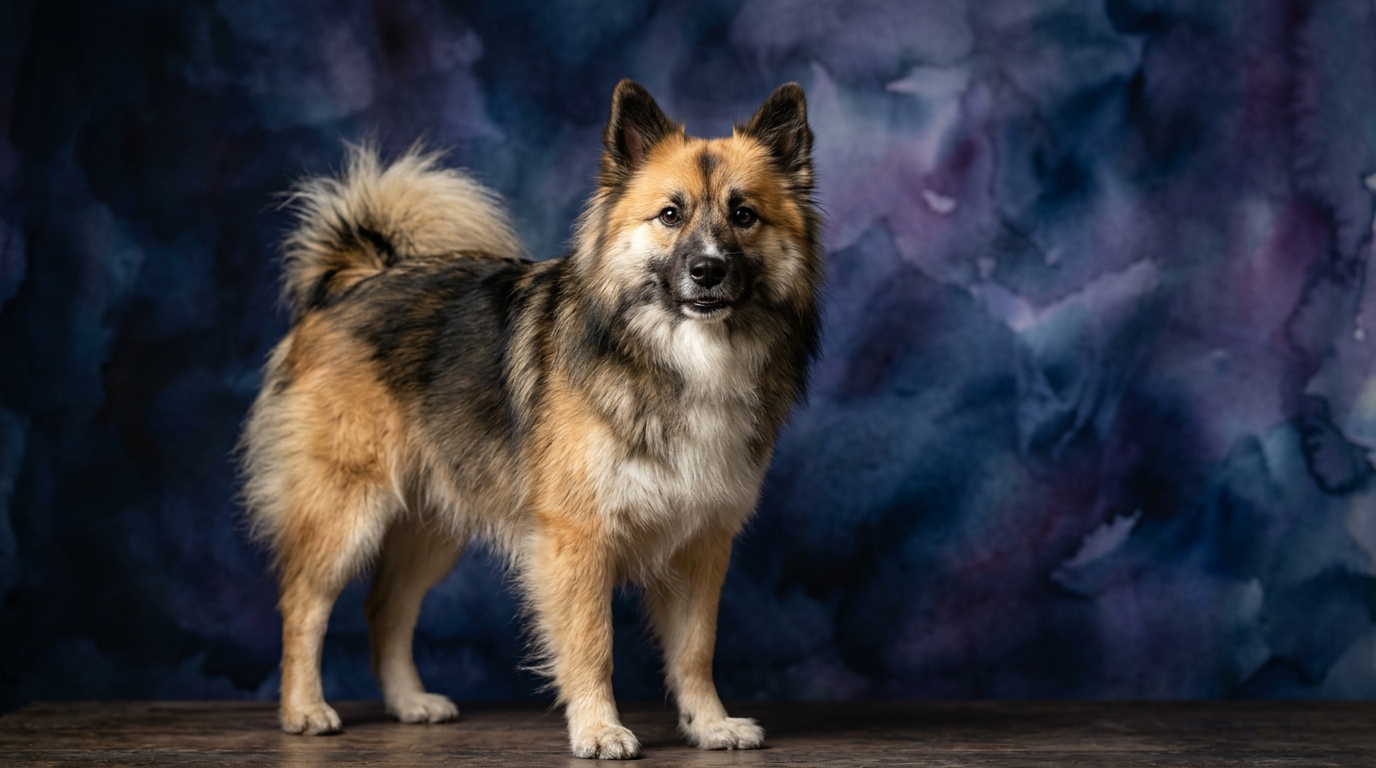

Side-by-Side IQ Profile: Unpacking Cognitive Dimensions
**Icelandic Sheepdog:** This breed, steeped in a herding heritage, demonstrates its cognitive capacities through a lens of environmental engagement and purposeful work.
**Problem Solving (3/5):** This score reflects a capacity for practical, real-world problem-solving, particularly within dynamic, outdoor environments. An Icelandic Sheepdog might readily figure out how to guide a flock through a gate or navigate varied terrain, demonstrating an ability to adapt strategies based on immediate feedback from their surroundings, rather than abstract puzzles.
**Training Speed (3/5):** Their score indicates a moderate pace for acquiring new commands and behaviors. While generally eager to please their human companions, their independent herding instincts can sometimes lead to moments of self-directed action, requiring consistent, engaging, and reward-based training to maintain focus and compliance.
**Social Intelligence (3/5):** This dimension highlights their aptitude for understanding social cues, both from their human handlers and other animals. An Icelandic Sheepdog often exhibits a keen awareness of group dynamics within a flock or family unit, using this insight to facilitate cooperation or manage conflicts, making them perceptive companions.
**Instinctive Drive (3/5):** Rooted deeply in their herding heritage, this drive manifests as a strong inclination to gather, organize, and move objects or individuals. This isn't just about sheep; it can translate into a desire to keep family members together or 'herd' toys, indicating a persistent, purpose-driven focus that requires appropriate outlets.
**Memory (3/5):** Their memory score suggests a reliable capacity for recalling routines, learned commands, and the layout of familiar territories. An Icelandic Sheepdog can remember specific routes taken during walks or the locations of their favorite resting spots, and often retains training cues effectively over time, even with periodic reinforcement.
**English Toy Spaniel:** This breed, developed for companionship, showcases its cognitive attributes through a keen focus on social interaction and domestic harmony.
**Problem Solving (3/5):** For the English Toy Spaniel, this problem-solving capability often centers on navigating the social intricacies of a human household and maximizing comfort or attention. They might ingeniously figure out how to get onto a preferred lap, open a cupboard containing treats, or elicit a desired response from their owner, showcasing a different but equally effective form of cognitive agility.
**Training Speed (3/5):** This breed typically learns new tasks at a moderate pace, often driven by a strong desire for companionship and positive reinforcement. While they can be sensitive to harsh methods, a consistent, gentle, and reward-rich approach often sees them quickly pick up basic obedience and house rules, eager to please their beloved human.
**Social Intelligence (3/5):** The English Toy Spaniel excels in understanding human emotional states and social dynamics within a family. They are often highly attuned to their owner's mood, offering comfort or seeking interaction at opportune moments, demonstrating a profound capacity for empathetic connection and social bonding.
**Instinctive Drive (3/5):** While lacking the herding drive of their counterpart, the English Toy Spaniel's instinctive drive is primarily geared towards companionship, comfort, and sometimes a mild 'lap guardian' tendency. This drive manifests as a persistent desire to be near their people, seeking warmth, affection, and a secure spot within the family unit, often showing a persistent charm to achieve these aims.
**Memory (3/5):** Their memory is well-suited for retaining social schedules, the location of their human companions, and the routines of a domestic setting. An English Toy Spaniel will remember where their favorite napping spots are, the sequence of events leading to mealtime, and the specific family members who are most likely to offer a cuddle, demonstrating good recall for personal comfort and social patterns.
Where the Icelandic Sheepdog's Cognition Shines
While both breeds share a 3/5 rating across cognitive dimensions, the Icelandic Sheepdog's strengths particularly emerge in contexts requiring independent assessment of dynamic, real-world scenarios. Their problem-solving, though rated equally, is geared towards environmental challenges; they might independently assess the safest path across a rocky stream or how to round up a wayward toy without direct instruction. Their instinctive drive, specifically for herding, means they process spatial relationships and group movements with a different kind of focus, often predicting the trajectory of moving objects or individuals with an inherent understanding. This breed exhibits a cognitive resilience in varied outdoor conditions, demonstrating memory for complex routes and the ability to adapt learned behaviors to new, slightly altered outdoor situations, which can be a distinct advantage for active, exploratory households.
Where the English Toy Spaniel's Cognition Excels
In contrast, the English Toy Spaniel's cognitive strengths are particularly pronounced in the realm of nuanced social interaction and domestic adaptability. Their 3/5 social intelligence score manifests as an exceptional ability to read human body language and vocal tone, often anticipating their owner's needs or moods with remarkable accuracy. While their problem-solving is also 3/5, it's expressed as a refined skill in navigating household dynamics to achieve desired outcomes, such as subtly influencing their owner for extra cuddle time or finding the most comfortable, sun-drenched nap spot. Their memory, while rated similarly, is acutely tuned to the rhythm of human life, recalling intricate social patterns and personal preferences of family members, making them extraordinarily perceptive and comforting companions within a home environment.
Training Dynamics: Herding Instinct vs. Companion Desires
Given both breeds score 3/5 in training speed, the perceived ease of training often boils down to motivation and the nature of the tasks. The Icelandic Sheepdog, with its strong instinctive drive for herding, generally thrives on training that engages its working mind. They respond well to consistent, positive reinforcement, but their independent nature means they might occasionally prioritize their own assessment of a situation over a direct command, especially if a herding-like instinct kicks in. Training an Icelandic Sheepdog often requires making tasks feel purposeful and stimulating, channeling their natural drive into activities like agility, obedience, or even trick training that mimics problem-solving.
The English Toy Spaniel, conversely, is often motivated by a deep desire for companionship and affection. While also scoring 3/5 in training speed, their sensitivity and eagerness to please their beloved human mean they typically respond best to gentle, praise-heavy methods. They might be less inclined towards highly complex, multi-step commands if not continuously motivated by the promise of closeness or treats, preferring to master behaviors that enhance their bond with their owner. Their social intelligence means they are quick to understand what pleases their human, making them generally cooperative in training when approached with patience and positive reinforcement.
Lifestyle Suitability: Active Exploration vs. Relaxed Companionship
The Icelandic Sheepdog is a breed designed for activity and engagement, making them an excellent match for active owners who relish outdoor exploration and purposeful activities. Their cognitive profile, with its emphasis on environmental problem-solving and an inherent drive to work, means they require regular mental and physical stimulation to prevent boredom. Owners who enjoy hiking, dog sports, or simply long, varied walks where the dog can engage its senses and intellect will find a highly compatible companion in the Icelandic Sheepdog. Their social intelligence makes them adaptable to family life, but they thrive when given a 'job' or consistent engagement.
The English Toy Spaniel, on the other hand, is perfectly suited for relaxed owners seeking a devoted and perceptive companion primarily within the home. Their cognitive strengths, centered on social intelligence and domestic problem-solving, mean they flourish in environments where they can be close to their human family. While they enjoy gentle walks and play, their need for vigorous physical activity is moderate. Owners who appreciate a sensitive, intuitive companion for quiet evenings, lap cuddles, and consistent, affectionate interaction will find the English Toy Spaniel to be an ideal match. They are content with a comfortable routine and the constant presence of their people.
The Verdict
Choose the Icelandic Sheepdog if you seek an active, engaged companion who thrives on outdoor adventures and mental challenges, appreciating their independent, problem-solving spirit.
Opt for the English Toy Spaniel if you desire a devoted, sensitive companion who excels in social dynamics and offers intuitive comfort within a relaxed home environment.
🧠 Find Your Pet's IQ Score
Our Pet IQ Lab assessment covers 25+ tests across 5 cognitive dimensions — personalized to your breed.
Take the Full IQ Test →Frequently Asked Questions
Are Icelandic Sheepdogs good with children?
Yes, Icelandic Sheepdogs generally possess a gentle and patient temperament, often exhibiting their social intelligence by being good with children. Their herding instinct may lead them to 'herd' children playfully, so supervision and training are beneficial to ensure appropriate interactions.
Do English Toy Spaniels need a lot of exercise?
English Toy Spaniels have moderate exercise needs, enjoying short, gentle walks and indoor play sessions. Their instinctive drive is more geared towards companionship and comfort than intense physical activity, making them suitable for owners who prefer a less demanding exercise routine.
Can either breed live in an apartment?
Both breeds can adapt to apartment living, though with different considerations. The English Toy Spaniel is generally well-suited due to its smaller size and lower exercise needs, provided it receives consistent companionship. An Icelandic Sheepdog can manage apartment life if its owners are committed to providing substantial daily outdoor exercise and mental stimulation to satisfy its working drive.