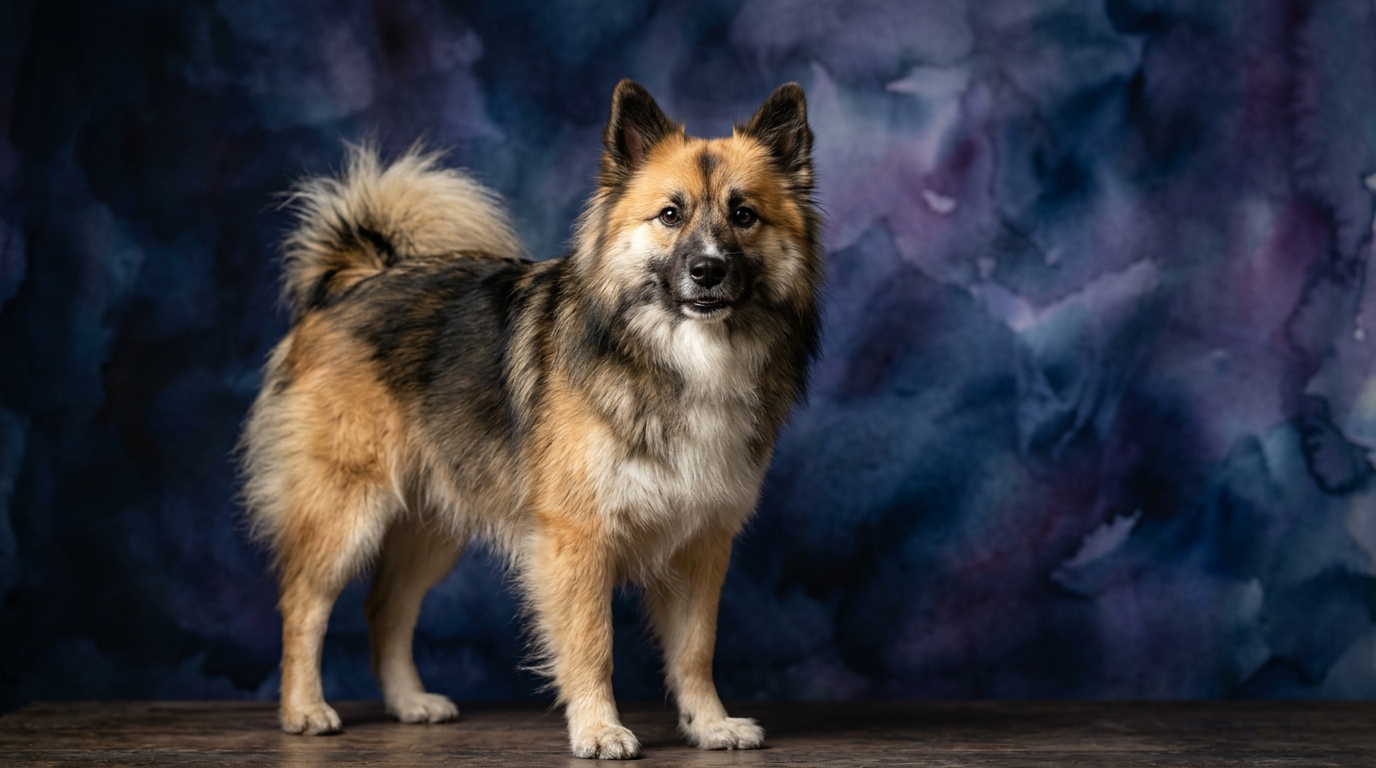
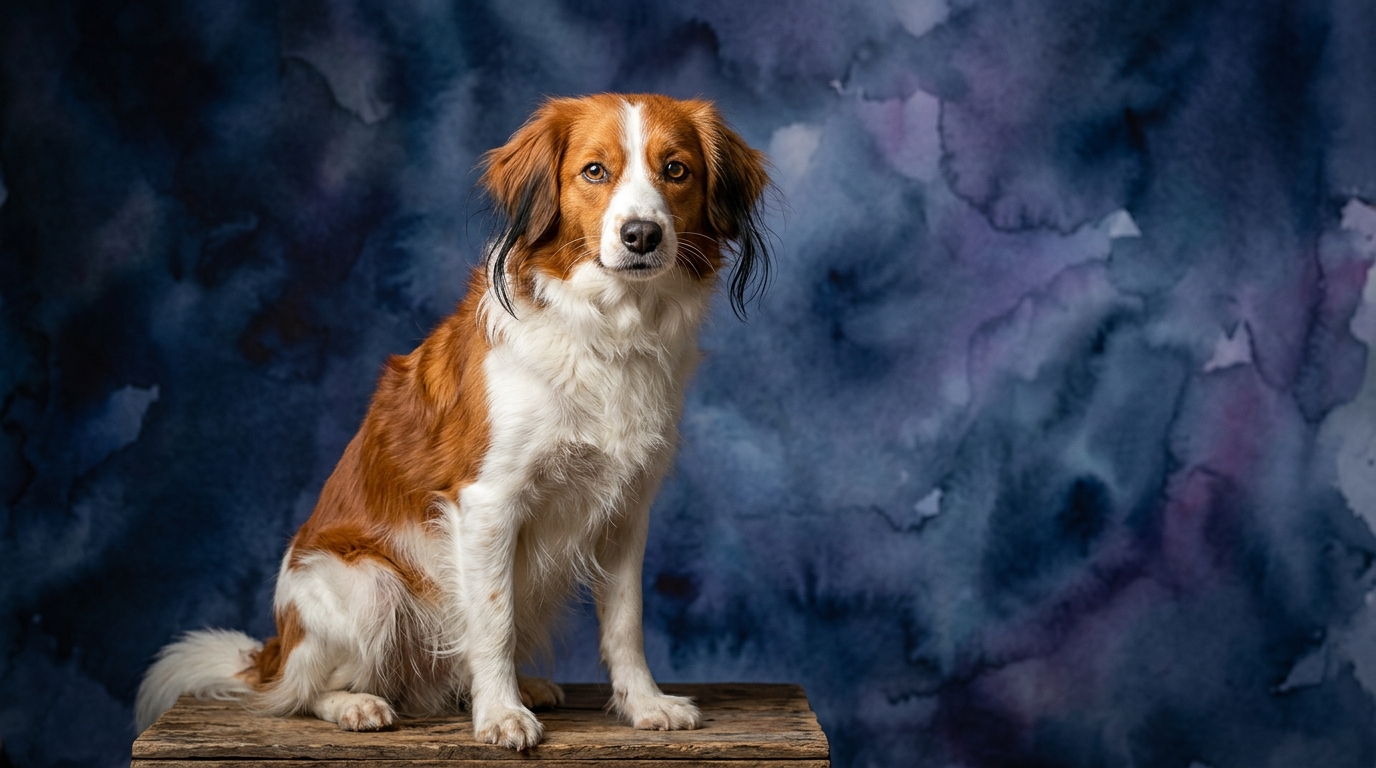
Side-by-Side IQ Profile: Interpreting Identical Scores
At first glance, both the Icelandic Sheepdog and the Kooikerhondje register a consistent 3 out of 5 across all five cognitive dimensions measured by The Cosmic Pet Pet IQ Lab: Problem Solving, Training Speed, Social Intelligence, Instinctive Drive, and Memory. This uniform scoring doesn't suggest a lack of mental capacity but rather indicates a balanced cognitive profile, where no single dimension dramatically overshadows the others. However, the true depth of their intelligence emerges when we interpret these scores through the lens of their historical roles and inherent behavioral patterns, revealing how a '3' for a herding dog differs from a '3' for a sporting dog.
For the Icelandic Sheepdog, a 3/5 in Problem Solving reflects their capacity for independent decision-making in dynamic, often unpredictable, herding scenarios. They must assess changing flock movements, navigate varied terrain, and adapt their strategies to gather livestock, sometimes out of sight of their shepherd. This involves practical, real-time tactical thinking. The Kooikerhondje's 3/5 in Problem Solving manifests in a different way, focused on the strategic intricacies of decoy work. They learn to lure ducks into traps by appearing and disappearing from behind screens, a task requiring patience, understanding of patterns, and the ability to execute complex sequences accurately.
Both breeds score 3/5 in Training Speed, indicating they absorb new commands and tasks at a moderate pace, responding well to consistent, positive reinforcement. The Icelandic Sheepdog’s speed is buoyed by their eagerness to engage and their cooperative nature, though their independent herding instincts can sometimes lead to momentary distractions requiring patient redirection. The Kooikerhondje, on the other hand, often demonstrates a keen focus on their handler during training, picking up cues efficiently due to their desire to work in partnership and their capacity for sustained attention on a specific task.
A 3/5 in Social Intelligence for the Icelandic Sheepdog highlights their deep attunement to their human family and their flock. They are perceptive communicators, using a variety of barks and body language to express needs and gather information, forming strong, empathetic bonds with those they consider part of their 'pack.' The Kooikerhondje’s 3/5 score reflects a sensitive and observant nature; they are adept at reading subtle human emotions and intentions, often forming intensely devoted relationships. While typically reserved with strangers initially, they are keenly aware of social dynamics within their household.
The 3/5 in Instinctive Drive for the Icelandic Sheepdog is rooted in their strong herding impulses, which include circling, gathering, and sometimes nipping at heels, all geared towards managing movement. This drive is a powerful motivator, shaping much of their natural behavior and requiring appropriate outlets. The Kooikerhondje's 3/5 score in this dimension stems from their specialized decoy and retrieving instincts. They possess a natural inclination to lure, chase, and retrieve, behaviors integral to their historical role in duck hunting, and they thrive when these drives are engaged through structured play or sports.
Both breeds exhibit a 3/5 in Memory, demonstrating a solid ability to retain information. The Icelandic Sheepdog excels at remembering complex routes, the locations of their flock, and routines, along with specific commands and social interactions within their environment. Their memory serves their herding duties by recalling past strategies and recognizing individual animals. The Kooikerhondje's memory is particularly robust for sequences of actions, such as the patterns required for decoy work or the steps in a complex retrieving task. They consistently recall training cues and specific associations, aiding their precision in performance.
Where the Icelandic Sheepdog Excels Cognitively
The Icelandic Sheepdog's cognitive strengths lean into their history of working semi-independently in vast, challenging landscapes. Their 3/5 Problem Solving score shines brightest in dynamic, open-ended scenarios where immediate, on-the-spot decisions are crucial without constant human direction. They possess a superior spatial awareness and navigational intelligence, essential for traversing varied terrain and locating scattered livestock, often adapting to changing weather or flock movements with minimal prompting. This capacity for self-directed problem-solving in an unpredictable environment gives them an edge in tasks requiring broad situational awareness.
Furthermore, their 3/5 Social Intelligence is uniquely expressed through a sophisticated understanding of group dynamics, not just human-to-dog but also dog-to-flock. They are masters of non-verbal communication within a group, using nuanced body language and a rich vocabulary of barks to influence and control, demonstrating a more expansive social comprehension beyond typical companion animal interactions. This ability to 'manage' a moving entity, whether sheep or playful children, through subtle cues and vocalizations, is a distinct cognitive advantage stemming directly from their herding heritage.
Where the Kooikerhondje Excels Cognitively
The Kooikerhondje's cognitive prowess, despite matching scores, reveals itself in their highly specialized focus and precision. Their 3/5 Problem Solving score is optimized for intricate, patterned tasks, particularly those involving sequential actions and strategic waiting, as seen in their decoy work. They excel at recognizing and executing complex routines, demonstrating exceptional patience and the ability to maintain concentration over extended periods on a singular objective. This capacity for sustained, deliberate focus on a structured task gives them a specific cognitive advantage in environments demanding intricate execution rather than broad, independent improvisation.
Their 3/5 Memory and Instinctive Drive converge to create a superior ability for pattern recall and strategic engagement. A Kooikerhondje can remember specific luring sequences, the exact timing for appearances and disappearances, and the precise cues from their handler with remarkable accuracy. This precision memory, coupled with a well-channeled prey drive, translates into an astute understanding of cause-and-effect within a defined framework. Their social intelligence, while scoring the same, is often characterized by a profound sensitivity to subtle handler cues, allowing for a highly collaborative and responsive working partnership, making them exceptionally attuned to specific instructions.
Training Dynamics: Which is Easier to Train?
When considering ease of training, both breeds, with their 3/5 Training Speed, respond well to positive reinforcement and consistency, yet their underlying motivations differ. The Kooikerhondje often *feels* easier to train for structured obedience and dog sports due to their inherent desire to work closely with their handler and their capacity for focused attention on a specific task. They thrive on clear instructions and consistent routines, often taking pride in executing commands precisely. Their sensitivity means they respond poorly to harsh methods, but positively to gentle, encouraging guidance, leading to a willing and eager partnership.
The Icelandic Sheepdog, while also trainable and eager to please, presents a different dynamic. Their robust 3/5 Instinctive Drive for herding can be a double-edged sword; it makes them enthusiastic workers but can also lead to independent decision-making or distractions if not properly channeled. Training an Icelandic Sheepdog often requires more creativity in managing their wide-ranging instincts and providing outlets for their vocal nature and desire to move. While they learn quickly, their independence means an owner must be consistent in setting boundaries and providing engaging, stimulating tasks to prevent them from "making their own fun," which might involve herding household members or objects. Ultimately, the Kooikerhondje’s focus on handler collaboration might make initial obedience training seem smoother, while the Icelandic Sheepdog requires a more nuanced approach to harness and redirect their powerful natural drives effectively.
Matching Breeds to Lifestyles: Active vs. Engaged Owners
Neither the Icelandic Sheepdog nor the Kooikerhondje are suitable for truly "relaxed" owners who prefer minimal interaction and exercise. Both breeds possess significant energy and a strong need for mental stimulation, reflected in their balanced 3/5 scores across all cognitive dimensions. Active owners will find both breeds to be fulfilling companions. The Icelandic Sheepdog is particularly suited for owners who embrace expansive outdoor adventures, such as hiking, long walks, or farm life, and who are keen to engage in dog sports like agility, herding trials, or flyball. Their vocal nature and need for constant engagement mean they thrive in dynamic households where they are integral to daily activities.
The Kooikerhondje also demands an active lifestyle, but their energy can often be satisfied with more structured activities. They are excellent partners for owners interested in competitive obedience, rally, agility, or scent work, where precision and focus are paramount. While they enjoy outdoor excursions, their herding instinct is less about wide-ranging patrols and more about focused engagement. They can adapt to slightly smaller living spaces than an Icelandic Sheepdog, provided their exercise needs are met and they receive ample mental enrichment through training and puzzle toys. For owners who prefer intricate games and close, collaborative work over rugged, independent exploration, the Kooikerhondje might be a slightly better fit, though neither is a couch potato.
The Verdict
Choose the Icelandic Sheepdog if you're an owner who appreciates a self-reliant, vocal companion with a strong herding spirit, eager to join you on wide-ranging outdoor adventures and engage in dynamic problem-solving. They thrive with active families who can channel their robust instincts into stimulating activities and enjoy a dog that makes independent decisions.
Opt for the Kooikerhondje if you seek a sensitive, highly focused partner for structured dog sports, intricate retrieving tasks, or a devoted companion who excels at close collaboration and precision work. They suit owners who value a biddable nature and enjoy engaging in mentally stimulating activities that require sustained attention and pattern recognition.
🧠 Find Your Pet's IQ Score
Our Pet IQ Lab assessment covers 25+ tests across 5 cognitive dimensions — personalized to your breed.
Take the Full IQ Test →Frequently Asked Questions
Are Icelandic Sheepdogs particularly vocal?
Yes, Icelandic Sheepdogs are known for their varied vocalizations, a trait stemming from their herding heritage where barking was used to communicate with sheep and shepherds. Owners should be prepared for a dog that expresses itself frequently through barks, yips, and howls, especially when excited or seeking attention.
Do Kooikerhondjes require extensive grooming?
Kooikerhondjes have a medium-length, soft coat that requires regular, but not excessive, grooming. Weekly brushing helps prevent mats and reduces shedding, while attention to their feathered ears and tail ensures they remain free of tangles, making their maintenance relatively manageable.
Can either the Icelandic Sheepdog or the Kooikerhondje live comfortably in an apartment?
Both breeds *can* potentially adapt to apartment living, but it requires significant commitment from their owners. They both need substantial daily exercise and consistent mental stimulation to prevent boredom and destructive behaviors, meaning multiple walks, training sessions, and interactive play are essential to keep them happy and balanced in a smaller space.