
Side-by-Side Cognitive Profiles: Decoding the 3/5 Score
Both the Irish Red and White Setter (IRWS) and the English Foxhound score a consistent 3/5 in Problem Solving, Training Speed, Social Intelligence, Instinctive Drive, and Memory. Yet, these numerical equivalences belie significant differences in how their cognitive abilities are applied, shaped by centuries of selective breeding for specific tasks. The IRWS, a sporting dog, was refined to work in close cooperation with a hunter, locating and pointing game birds with grace and responsiveness. Their problem-solving typically involves navigating varied terrain to find quarry and signaling its presence, tasks requiring a blend of independence and handler awareness. Their training speed reflects an ability to learn complex field commands, often with a desire to please, but their inherent drive to range can present a delightful challenge.
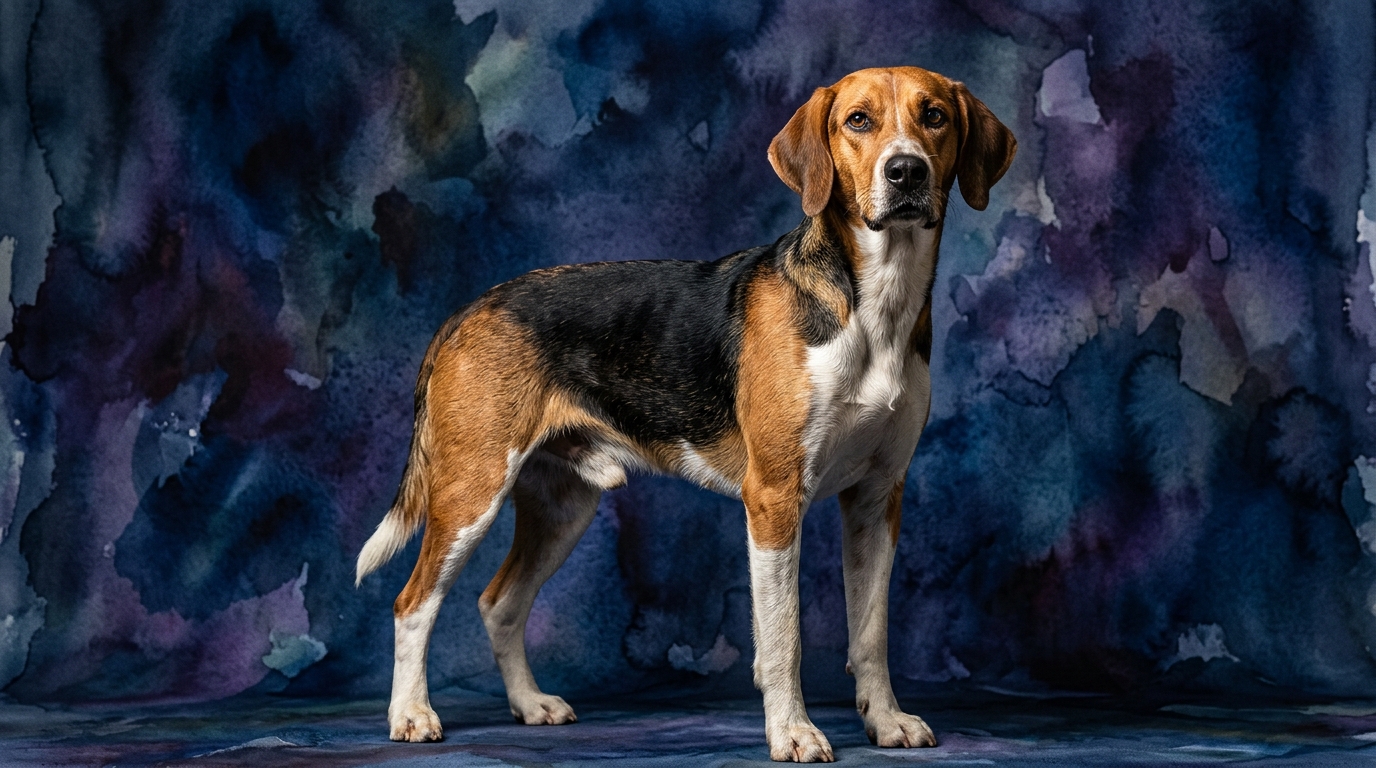
Conversely, the English Foxhound, a quintessential hound, was developed to hunt in packs, relentlessly pursuing scent trails over vast distances, largely independent of direct human command once the hunt was on. For the Foxhound, a 3/5 in problem-solving translates to an unwavering determination to follow a scent, overcoming natural obstacles like streams or fences through sheer persistence and an intricate understanding of scent dynamics. Their training speed is influenced by a profound, almost singular, focus on scent, meaning general obedience might require more patience and creative motivation to compete with their primary drive. Their social intelligence is exceptionally geared towards pack dynamics, understanding the subtle cues and cooperation necessary for a group hunt, while their memory is adept at recalling scent patterns and established routes.
The instinctive drive of 3/5 is paramount for both breeds, but its direction differs. For the IRWS, it's a keen prey drive coupled with a strong pointing and retrieving instinct, channeled into a partnership. For the English Foxhound, it's an all-consuming scent drive, an urge to bay and pursue that defines their very existence, often making them less concerned with human-centric directives when a compelling scent is present. Their memory scores of 3/5 reflect their respective needs: the Setter remembering commands, field locations, and the nuanced signals of its handler, while the Foxhound primarily retains complex scent information and the movements of its packmates over long hunts.
Where the Irish Red and White Setter Shines Cognitively
The Irish Red and White Setter truly excels in cognitive tasks requiring a more intricate, two-way partnership with a human. Their 3/5 in social intelligence, while numerically identical, manifests as a greater inclination towards understanding and responding to subtle human body language and vocal cues, crucial for their role in quartering a field and holding a point until the hunter arrives. This makes them particularly adept at learning nuanced commands for activities like competitive obedience, agility, or advanced field trials where precision and responsiveness are key. Their problem-solving, though rated 3/5, often involves more adaptable decision-making in varied, handler-directed scenarios, making them quicker to grasp novel tasks presented by their human companions beyond their core hunting function.
Furthermore, their instinctive drive, while potent, is often more readily channeled into activities that mirror their original purpose but within a structured, familial environment. This means an IRWS might more easily transition their drive for finding and retrieving into playing fetch or scent games within a yard, demonstrating a cognitive flexibility in applying their natural talents to domestic settings. Their memory of 3/5 extends well to recalling a broader array of learned behaviors and household routines, making them generally more predictable in a home setting once properly trained.
Where the English Foxhound Holds a Cognitive Edge
The English Foxhound's cognitive strengths lie in areas demanding extreme focus, endurance, and independent decision-making when driven by instinct. Their 3/5 for problem-solving is unparalleled when it comes to unraveling complex scent puzzles in the open field, demonstrating an incredible ability to differentiate, follow, and re-acquire faint trails over miles of diverse terrain. This isn't about human-directed puzzle toys; it's about an innate, sophisticated olfactory intelligence that allows them to process vast amounts of sensory data and make critical decisions about direction and persistence without explicit human input. Their memory of 3/5 is intimately tied to this, allowing them to retain intricate scent maps and the movements of a pack over extended periods.
Their social intelligence, while focused on pack dynamics, gives them a unique ability to coordinate and communicate with other dogs, a skill that can translate into excellent behavior in multi-dog households or group activities. The Foxhound's instinctive drive of 3/5 is an almost unstoppable force, showcasing a mental fortitude and single-minded dedication to a task once engaged. This persistence, though challenging for general training, means that when their talents are properly harnessed—such as in tracking sports or endurance activities—they display a cognitive stamina and focus that few other breeds can match, demonstrating an exceptional capacity for sustained, goal-oriented effort.
Trainability: Nuances Beyond the Score
While both breeds score 3/5 in training speed, the 'why' behind this score differs significantly, impacting their ease of training for the average owner. The Irish Red and White Setter, with its history of working closely alongside a hunter, generally exhibits a greater eagerness to please and a stronger desire for human interaction during training sessions. Their sporting background means they are often more amenable to learning a wide range of commands, from basic obedience to intricate field tasks, provided training is consistent, positive, and engaging. Distractions can be a factor, particularly scents or sights of birds, but their inherent partnership orientation often makes redirection more feasible.
The English Foxhound, on the other hand, presents a different training dynamic. Their 3/5 training speed is heavily influenced by their powerful, independent scent drive. Once a Foxhound locks onto a compelling scent, their world narrows, and human commands can become secondary. This means that while they are capable of learning, training often requires immense patience, extremely high-value rewards, and a deep understanding of their hound nature. Recall, in particular, can be a lifelong endeavor, as the thrill of the chase often overrides learned behaviors. For general obedience, the Setter typically proves more straightforward due to their inherent desire for collaboration, whereas the Foxhound requires an owner prepared to work *with* their powerful instincts, rather than against them, making them generally more challenging for a novice dog owner.
Matching Breeds to Lifestyles: Active vs. Relaxed Owners
Neither the Irish Red and White Setter nor the English Foxhound are suited for truly 'relaxed' owners in the traditional sense, as both possess significant energy and exercise requirements. However, the *type* of activity and owner engagement differs. The IRWS is an excellent choice for active individuals or families who enjoy outdoor activities like hiking, jogging, or cycling, and are prepared to engage their dog in mentally stimulating games and training. They thrive on companionship and structured activity, making them adaptable to various active family lifestyles, provided their need for consistent exercise and mental engagement is met. They can enjoy downtime with their family after a good run, but they are not content to be couch potatoes.
The English Foxhound, conversely, demands an owner with an exceptionally active lifestyle, ideally one who understands and can accommodate their profound need to run and follow scents. These dogs require immense daily exercise, often needing long, off-leash opportunities in secure areas where they can truly stretch their legs and engage their olfactory senses. They are not typically suited for apartment living or owners who prefer short walks around the block. Their endurance and drive mean they excel with owners involved in activities like canicross, bikejoring, or extensive tracking sports. Their vocal nature and independent streak also mean they are best suited for experienced dog owners who appreciate the unique challenges and rewards of a true hound, rather than those seeking a low-maintenance companion.
The Verdict: When to Choose Each Breed
The Verdict
Choose the Irish Red and White Setter if you seek an active, engaging companion for outdoor adventures and structured training, valuing a strong human-dog partnership and a dog that can adapt its sporting drive to varied family activities. They are ideal for owners who enjoy consistent training and can provide ample mental and physical stimulation.
Opt for the English Foxhound if you are an incredibly active, experienced owner prepared for a dog with an unparalleled scent drive and endurance, ideally with access to vast, secure spaces for running and tracking. They are best for those who appreciate the unique challenges of a true pack hound and can provide the specific outlets their instincts demand.
🧠 Find Your Pet's IQ Score
Our Pet IQ Lab assessment covers 25+ tests across 5 cognitive dimensions — personalized to your breed.
Take the Full IQ Test →Frequently Asked Questions
Do Irish Red and White Setters make good family pets?
Yes, Irish Red and White Setters generally make excellent family pets for active households. They are typically affectionate, good with children, and thrive on being part of family activities, provided their significant exercise and mental stimulation needs are consistently met.
Can an English Foxhound live in an apartment?
An English Foxhound is generally not recommended for apartment living due to their immense energy levels, need for extensive running space, and their characteristic vocalizations (baying). They require a secure yard and an owner dedicated to providing substantial daily exercise and mental engagement.
Which breed is better for a first-time dog owner?
Between these two, the Irish Red and White Setter is generally a more manageable choice for a first-time active dog owner, given their greater willingness to work with humans and their adaptability in a family setting. The English Foxhound's intense drive and independent nature typically require more experienced handling.