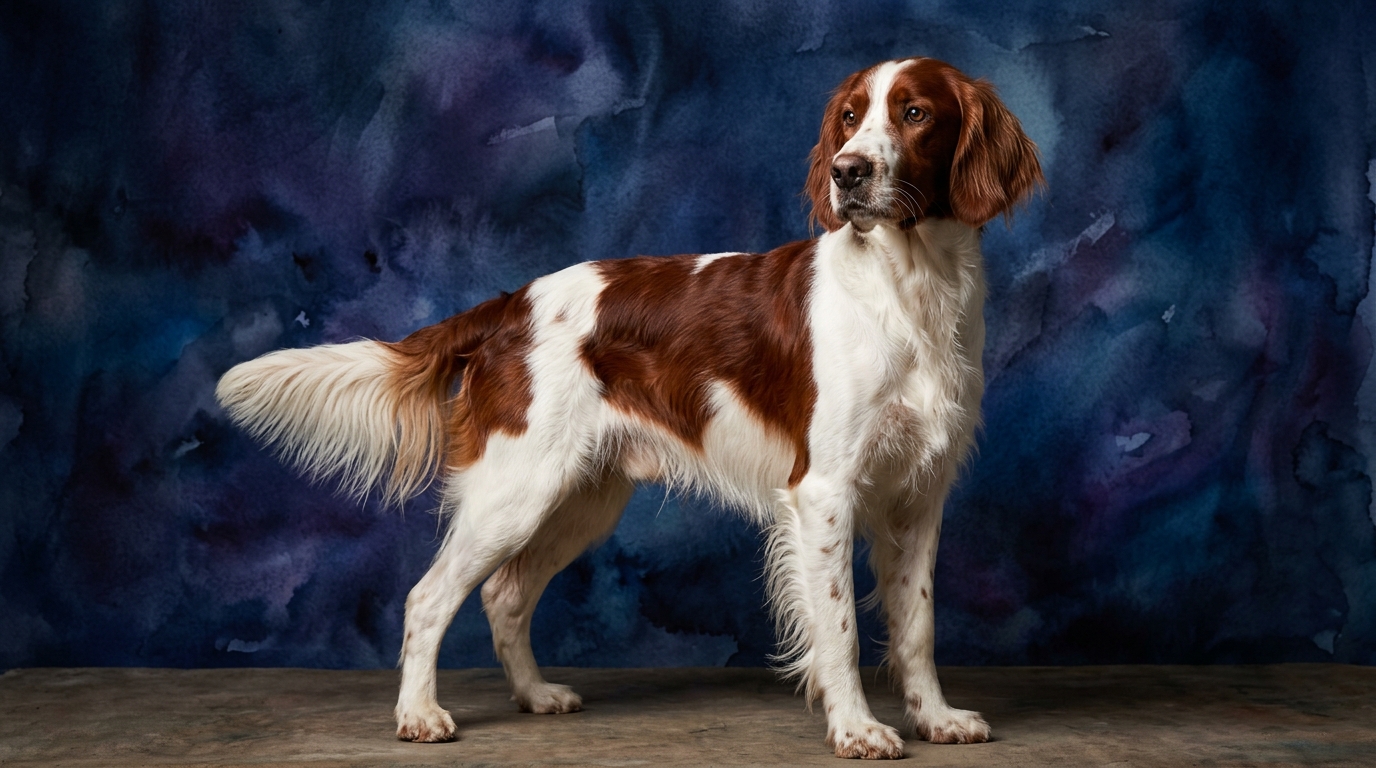
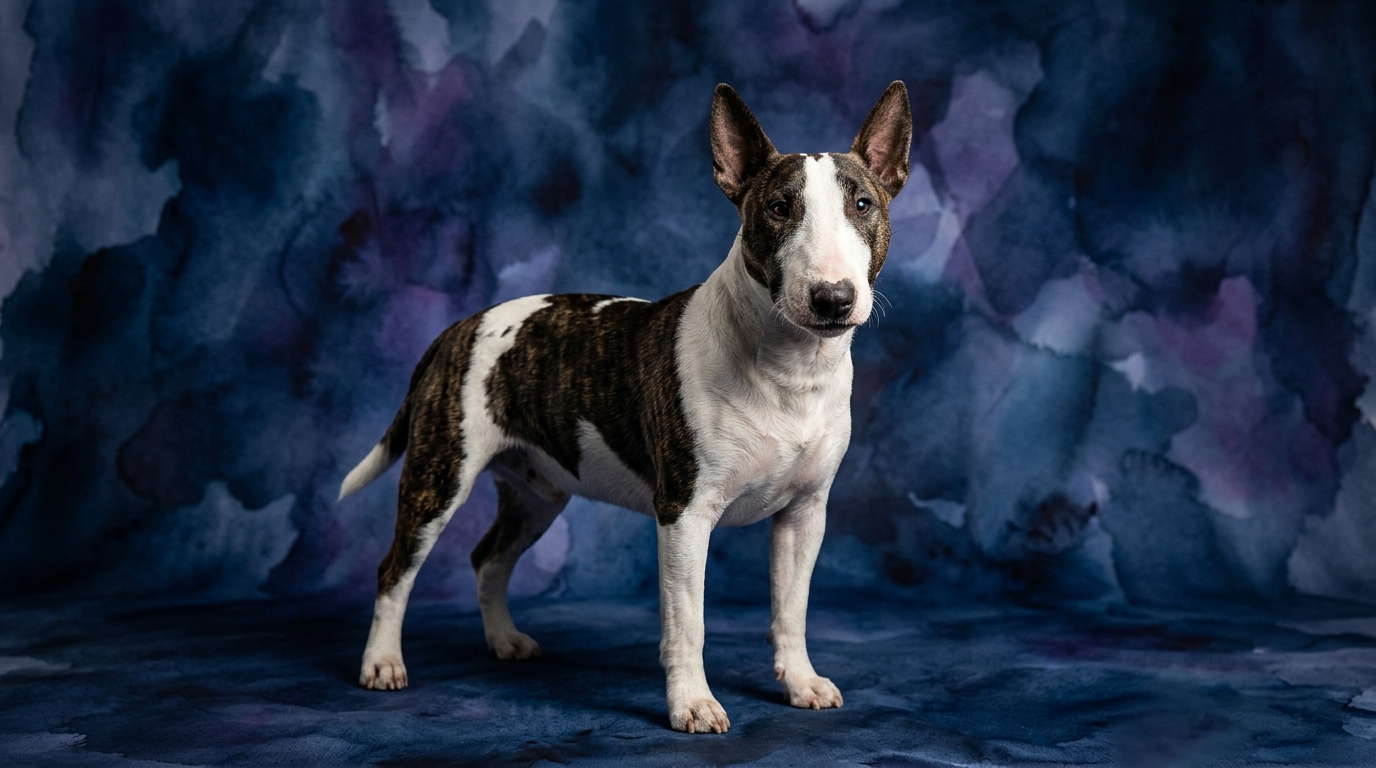
Side-by-Side Cognitive Profile: Setter vs. Mini Bull Terrier
Despite their shared 3/5 rating across all cognitive dimensions, the application and manifestation of these traits vary significantly between the Irish Red and White Setter and the Miniature Bull Terrier. Understanding these nuances provides a deeper insight into their mental makeup.
For the **Irish Red and White Setter**, a sporting breed:
**Problem Solving (3/5):** This score indicates a solid capacity for practical challenges, particularly those related to their traditional field role. They can learn complex command sequences and apply them to varied conditions, demonstrating adaptable thinking within a structured framework. Their problem-solving often involves understanding human cues and working collaboratively towards a shared goal.
**Training Speed (3/5):** Setters generally absorb new commands and routines at a moderate pace. Their biddable nature and desire to please often make them responsive students, with consistency and positive reinforcement being key to embedding behaviors efficiently. They typically form strong associations between actions and consequences, enabling steady progress.
**Social Intelligence (3/5):** This breed typically exhibits a good understanding of social dynamics with both humans and other animals. They are often perceptive of emotional states, responding with empathy or appropriate deference. Their cooperative nature in a hunting partnership translates to harmonious integration into family life, showing awareness of social cues.
**Instinctive Drive (3/5):** The instinctive drive of the Irish Red and White Setter is deeply rooted in their sporting heritage, specifically pointing and retrieving. This manifests as a strong inclination to explore, scent, and follow game, requiring outlets for these natural behaviors. While robust, it's typically manageable and can be channeled effectively with proper engagement.
**Memory (3/5):** Setters demonstrate reliable memory for learned commands, routines, and experiences. They recall specific tasks, locations, and the intricacies of their training, allowing them to build upon past knowledge. This memory aids in their consistency during field work and their ability to retain complex sequences.
For the **Miniature Bull Terrier**, a terrier breed:
**Problem Solving (3/5):** Miniature Bull Terriers approach problem-solving with a distinctive independent streak. Their score indicates they can strategize to achieve their own goals, often displaying cleverness in overcoming obstacles or manipulating situations to their advantage. This is about figuring things out for themselves, whether opening a gate or acquiring a desired toy.
**Training Speed (3/5):** While capable of learning at a moderate pace, the Miniature Bull Terrier's training speed is influenced by their strong will. They grasp concepts readily but may choose whether to comply based on perceived self-interest or immediate reward. Effective training requires patience, creativity, and consistent demonstration of what's in it for them.
**Social Intelligence (3/5):** Miniature Bull Terriers possess a good capacity for understanding social cues, but their interpretation often aligns with their assertive personalities. They can be keenly aware of hierarchies, sometimes testing boundaries. Their interactions are often characterized by a confident, sometimes boisterous, approach, requiring careful socialization.
**Instinctive Drive (3/5):** The Miniature Bull Terrier's instinctive drive stems from its terrier lineage – a tenacious desire to pursue, dig, and engage with small prey. This manifests as determined focus when something captures their interest, a strong prey drive, and an inclination to investigate. It's directed more towards independent exploration than collaborative work.
**Memory (3/5):** Miniature Bull Terriers exhibit sound memory for experiences, training, and consequences. They remember routines, places, and particularly what leads to positive or negative outcomes for them. This strong recall, combined with independence, means they remember both commands and successful strategies for bending rules, requiring consistent reinforcement.
Where the Irish Red and White Setter Excels Cognitively
The Irish Red and White Setter truly excels in cognitive scenarios demanding sustained focus, cooperative effort, and the application of learned sequences within dynamic environments. Their sporting heritage cultivates a mind that thrives on understanding complex instructions related to scent work, pointing, and retrieving. For instance, a Setter can be trained to systematically quarter a field, respond to silent hand signals from a distance, and then patiently hold a point on game for extended periods, all while ignoring other distractions. This requires not just memory for commands, but also an advanced understanding of the task's overarching goal and the ability to inhibit other natural urges in favor of the primary objective. Their problem-solving often involves assessing a situation to effectively execute a pre-learned strategy, like navigating dense cover to retrieve a bird, demonstrating a practical, goal-oriented cognitive style that is highly responsive to human direction. This capacity for disciplined, collaborative effort, where their instinctive drives are finely tuned to a human partner's intent, showcases a distinct cognitive advantage when precision and teamwork are paramount.
Where the Miniature Bull Terrier Excels Cognitively
Conversely, the Miniature Bull Terrier demonstrates a unique cognitive strength in independent problem-solving, particularly when ingenuity is required to achieve a self-motivated outcome. Their terrier roots instilled a tenacious and often cunning approach to obstacles. Imagine a Mini Bull Terrier faced with a puzzle toy: rather than waiting for a human cue, they will relentlessly experiment with different angles, pawing, nudging, and even vocalizing until the treat is released. This isn't about following a command; it's about devising a novel solution through trial and error, driven by an internal desire. They excel at 'thinking outside the box' from their own perspective, often finding creative ways to circumvent rules or access forbidden items, which owners might interpret as stubbornness but is, in fact, a demonstration of adaptable, self-directed cognitive function. Their tenacity in pursuing a goal, whether it's digging under a fence or figuring out how to open a cupboard, highlights a distinct cognitive edge in autonomous, persistent, and often resourceful problem-solving, even if it's not always aligned with human expectations.
Training Dynamics: Setter's Biddability vs. Terrier's Independence
When considering ease of training, the Irish Red and White Setter generally presents a more straightforward experience due to its inherent biddability and desire to work alongside humans. Their history as a cooperative hunting partner means they are typically eager to please and receptive to direction. Setters often find satisfaction in executing commands correctly and receiving positive affirmation, making them amenable to consistent, reward-based training. They tend to form strong bonds and look to their handlers for guidance, which facilitates the learning process. Conversely, the Miniature Bull Terrier's independent spirit and strong will can make training a more nuanced endeavor. While equally capable of understanding commands, their compliance is often contingent on their perceived self-interest or mood. A Mini Bull Terrier might understand 'sit' perfectly but choose to do so only if the reward is enticing enough or if they feel like it at that moment. This difference isn't about cognitive capacity, but rather about motivation: Setters are often motivated by cooperation, while Mini Bull Terriers are primarily motivated by what directly benefits them. Training a Mini Bull Terrier requires exceptional patience, creativity in motivation, and a firm, consistent approach to establish boundaries and demonstrate that compliance is ultimately rewarding.
Lifestyle Match: Active Engagement vs. Relaxed Companionship
For active owners seeking a dynamic companion for outdoor adventures, the Irish Red and White Setter is an exceptional match. Their robust instinctive drive and stamina mean they thrive on extensive exercise, whether it's long hikes, trail running, or engaging in dog sports like agility or field trials. Their cognitive needs are also met through activities that involve problem-solving in motion, like scent work or complex retrieve games, keeping their minds as engaged as their bodies. They are not content with short strolls; they require purposeful activity to prevent boredom and channel their energy constructively. In contrast, while the Miniature Bull Terrier certainly needs regular exercise to stay healthy and happy, their activity profile is less about sustained endurance and more about intense bursts of play and mental stimulation. They can adapt to a more relaxed owner who enjoys interactive games in the yard, obedience training sessions, or puzzle toys, interspersed with moderate daily walks. A relaxed owner who appreciates a dog with a quirky personality and a penchant for independent thought, willing to engage in shorter, more focused bursts of activity and mental challenges, might find the Miniature Bull Terrier a better fit. They are less about covering miles and more about engaging keenly with their immediate environment and their people in a playful, often boisterous way.
The Verdict
Choose the Irish Red and White Setter if you seek a highly cooperative, biddable companion eager for shared outdoor adventures and structured activities, valuing a dog that thrives on working harmoniously with you.
Opt for the Miniature Bull Terrier if you appreciate an independent, tenacious, and often comical companion who enjoys bursts of intense play and mental challenges, and you are prepared for a dog with a strong will and unique problem-solving flair.
🧠 Find Your Pet's IQ Score
Our Pet IQ Lab assessment covers 25+ tests across 5 cognitive dimensions — personalized to your breed.
Take the Full IQ Test →Frequently Asked Questions
Do Irish Red and White Setters need a lot of exercise?
Yes, Irish Red and White Setters are a sporting breed with significant energy and stamina. They require extensive daily exercise, including long walks, runs, or active play, to keep them physically and mentally content and prevent boredom.
Are Miniature Bull Terriers good with children?
Miniature Bull Terriers can be good with children, especially if raised with them and properly socialized. However, their boisterous play style and strong will mean supervision is essential, and children should be taught how to interact respectfully with dogs.
How do their grooming needs compare?
The Irish Red and White Setter has a medium-length coat that requires regular brushing (2-3 times a week) to prevent mats and tangles, along with occasional trimming, especially around the ears, feet, and tail. The Miniature Bull Terrier has a short, flat coat that is much lower maintenance, needing only weekly brushing to remove loose hair and maintain shine.