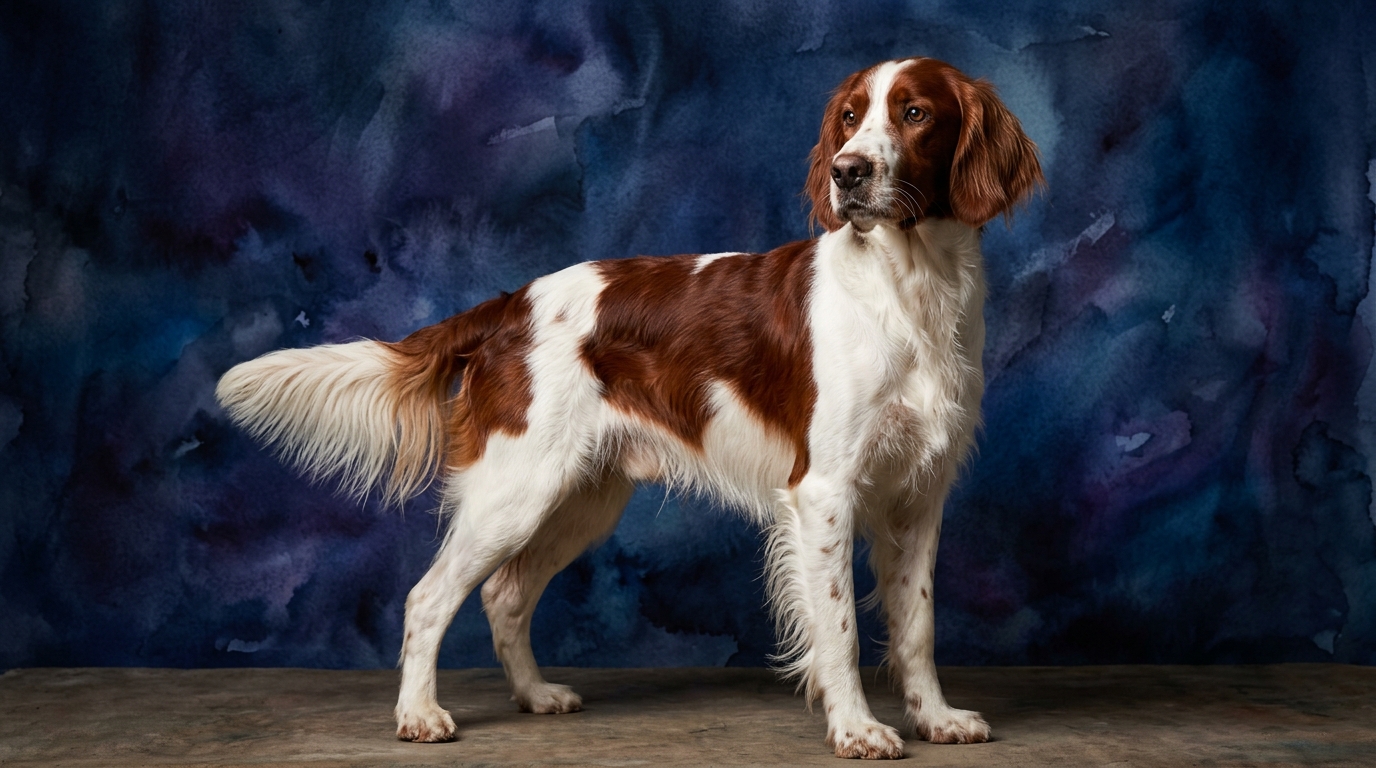

Side-by-Side Cognitive Profiles
For the Irish Red and White Setter, Problem Solving (3/5) manifests as a moderate ability to navigate novel situations, often preferring to work through challenges in partnership with their human. Their Training Speed (3/5) indicates they learn at a steady pace, benefiting immensely from clear, positive reinforcement. Social Intelligence (3/5) means they generally grasp human cues and intentions, making them agreeable companions within a family setting. Instinctive Drive (3/5) is present as a keen desire to hunt and point, typically a controlled, collaborative drive. Their Memory (3/5) is functional, allowing them to retain commands and experiences, though consistent practice helps solidify less frequent lessons.
Conversely, the West Highland White Terrier's Problem Solving (3/5) often expresses itself through an independent, persistent approach to obstacles, particularly when motivated by curiosity or a perceived 'prey.' Their Training Speed (3/5) is moderate, yet their strong-willed terrier nature can sometimes make it seem slower if they don't see immediate benefit. Social Intelligence (3/5) allows them to understand social dynamics, though their assertive personality might not always prioritize human expectations. Instinctive Drive (3/5) is a powerful force, manifesting as a persistent urge to dig, chase, and bark, deeply rooted in their vermin-hunting heritage. Crucially, their Memory (4/5) is a standout trait, enabling them to recall past events and learned behaviors with impressive clarity and longevity.
Where the Irish Red and White Setter Excels Cognitively
While raw scores show parity or a slight advantage elsewhere, the Irish Red and White Setter's cognitive strengths lie in their application of these scores within a cooperative framework. Their Problem Solving (3/5) is often directed towards tasks involving working alongside a handler, such as navigating a field or retrieving an object in a complex environment. Unlike the independent problem-solving of a terrier, the Setter's approach is typically more collaborative, making them excellent partners for intricate multi-step tasks requiring communication and responsiveness. Their moderate Instinctive Drive (3/5) is frequently channeled into focused, controlled activities like pointing or scent work. This allows their Social Intelligence (3/5) to shine, as they are generally more attuned to their handler's guidance and less prone to independent tangents when engaged in a shared activity. This inherent willingness to collaborate means their moderate Training Speed (3/5) can feel more rewarding, as they are typically eager to please, making the learning process a shared endeavor.
Where the West Highland White Terrier Excels Cognitively
The West Highland White Terrier's clear cognitive advantage lies in their superior Memory (4/5). This enhanced recall capability means they embed learned commands, routines, and experiences far more deeply and for longer durations than the Setter. Once a Westie has grasped a concept or a command, it is often retained with remarkable tenacity, requiring fewer refreshers over time. This strong memory also extends to their understanding of environmental cues and consequences, allowing them to adapt their behavior based on past outcomes. Their Problem Solving (3/5), while numerically equivalent to the Setter's, is applied with a distinct terrier tenacity. They excel at figuring out how to achieve their own objectives, whether navigating a complex backyard or discovering how to open a cabinet. This independent problem-solving, coupled with their Instinctive Drive (3/5) for hunting, makes them formidable at tasks requiring perseverance and cleverness. Their Coren ranking of #47 further underscores their capacity for obedience and working intelligence, demonstrating a solid ability to learn and execute commands within a structured environment.
Training Ease and Behavioral Differences
When considering ease of training, the nuanced behavioral expressions of their cognitive profiles become evident. The Irish Red and White Setter, with a Training Speed of 3/5 and a Social Intelligence of 3/5, often presents as more straightforward to train due to their intrinsic desire to cooperate. As a sporting breed, they are inherently wired to work with a human partner, making them generally receptive to commands and eager to please. Their moderate instinctive drive means they are less likely to be sidetracked by overwhelming urges to chase or dig, allowing for more focused training sessions. They respond beautifully to positive reinforcement, praise, and consistent, gentle guidance, thriving in an environment where learning is a partnership.
Conversely, while the West Highland White Terrier also has a Training Speed of 3/5, their unique combination of a strong Memory (4/5) and a robust Instinctive Drive (3/5) shapes a different training experience. Their independent terrier spirit means they often require more compelling motivation and a clear 'what's in it for me?' understanding before complying. They might test boundaries more frequently, and their problem-solving (3/5) can be applied to finding ways around commands rather than through them. However, their exceptional memory means that once a behavior is learned and consistently reinforced, it becomes deeply ingrained. This can be a double-edged sword: good habits stick, but so do undesirable ones or negative associations from inconsistent training. Patience, consistency, and engaging, reward-based methods are paramount for the Westie, as their strong-willed nature requires a confident and understanding handler.
Suiting Active vs. Relaxed Owners
The activity levels and cognitive engagement required by these breeds naturally steer them towards different owner lifestyles. The Irish Red and White Setter, a true sporting dog, thrives with active owners who can provide ample physical exercise and mental stimulation. Their moderate instinctive drive (3/5) means they require outlets for their energy, such as long daily walks, running, hiking, or participation in dog sports like agility, obedience, or field trials. Owners who enjoy spending significant time outdoors and appreciate a canine companion for these adventures will find the Setter's cooperative nature and stamina an excellent match. They are not content to be solely backyard dogs; their physical and mental well-being depends on regular engagement and purposeful activity that taps into their heritage.
The West Highland White Terrier, while an energetic terrier, can adapt to a slightly less demanding exercise regimen than the Setter, making them potentially suitable for owners who are active but perhaps not marathon runners. They still require daily walks, playtime, and mental challenges to satisfy their moderate instinctive drive (3/5) for digging, chasing, and exploring. Their problem-solving (3/5) and strong memory (4/5) mean they benefit immensely from puzzle toys, scent games, and consistent training to keep their minds engaged and prevent boredom-induced mischief. While they can be content with cozy indoor time, they are not sedentary. Owners who enjoy daily strolls, interactive play sessions, and providing consistent mental enrichment will find the Westie a spirited and engaging companion. They are often a good fit for suburban or urban dwellers who can commit to regular outdoor excursions and indoor brain games.
The Verdict
For owners seeking a graceful, cooperative companion for extensive outdoor adventures, who value a dog that integrates seamlessly into family life and thrives on working collaboratively during training and activities, the Irish Red and White Setter is an excellent choice.
For owners who appreciate a spirited, independent companion with a tenacious personality, who can provide consistent, engaging mental challenges and clear boundaries, and enjoy a dog with remarkable memory and a confident, assertive demeanor, the West Highland White Terrier is a fitting match.
🧠 Find Your Pet's IQ Score
Our Pet IQ Lab assessment covers 25+ tests across 5 cognitive dimensions — personalized to your breed.
Take the Full IQ Test →Frequently Asked Questions
Do Irish Red and White Setters bark a lot?
Irish Red and White Setters typically have a moderate barking tendency. They might bark to alert their owners or express excitement, but generally, they are not excessive barkers unless bored or left without sufficient mental and physical stimulation. Consistent training can help manage any unwanted vocalizations.
Are West Highland White Terriers good with children?
West Highland White Terriers can be good with children, especially if raised with them and properly socialized from a young age. Their sturdy build and playful nature can make them good companions, but their independent terrier spirit means they might not tolerate rough handling and require supervision with very young children.
Which breed is more prone to separation anxiety?
Both breeds can potentially develop separation anxiety if not properly socialized or if left alone for excessively long periods without adequate stimulation. Irish Red and White Setters, being more people-oriented, might be slightly more prone to distress if isolated. However, individual temperament and early training play a larger role than breed alone.