
Side-by-Side IQ Profile
The Cosmic Pet Pet IQ Lab assesses canine intelligence across five key dimensions, providing a nuanced understanding of each breed’s mental landscape. Let’s break down the individual scores for the Irish Setter and the Australian Terrier.
**Irish Setter (Sporting Group, Coren Rank #35)**
**Problem Solving (4/5):** These dogs demonstrate a strong capacity for navigating complex situations, often figuring out novel solutions to reach a desired outcome, such as retrieving a hidden toy or opening a simple latch. Their approach is often adaptive and experimental.
**Training Speed (4/5):** Irish Setters typically grasp new commands and routines quickly, showing a readiness to learn and a responsiveness to consistent instruction. Their eagerness to please often translates into swift behavioral acquisition, making them receptive students.
**Social Intelligence (3/5):** While affectionate with their human families, their social acumen is moderate. They understand human cues and group dynamics sufficiently for companionship but may not excel at complex social navigation in highly varied environments or with unfamiliar individuals.
**Instinctive Drive (3/5):** Their foundational drive for hunting and retrieving is present but generally manageable, channeled into activities like scent work or fetch rather than overpowering their domestic life. It’s a purposeful, rather than overwhelming, internal motivation.
**Memory (4/5):** Irish Setters possess a robust memory, retaining learned commands, routines, and the locations of favored items or people over extended periods, contributing significantly to their trainability and predictability in daily life.
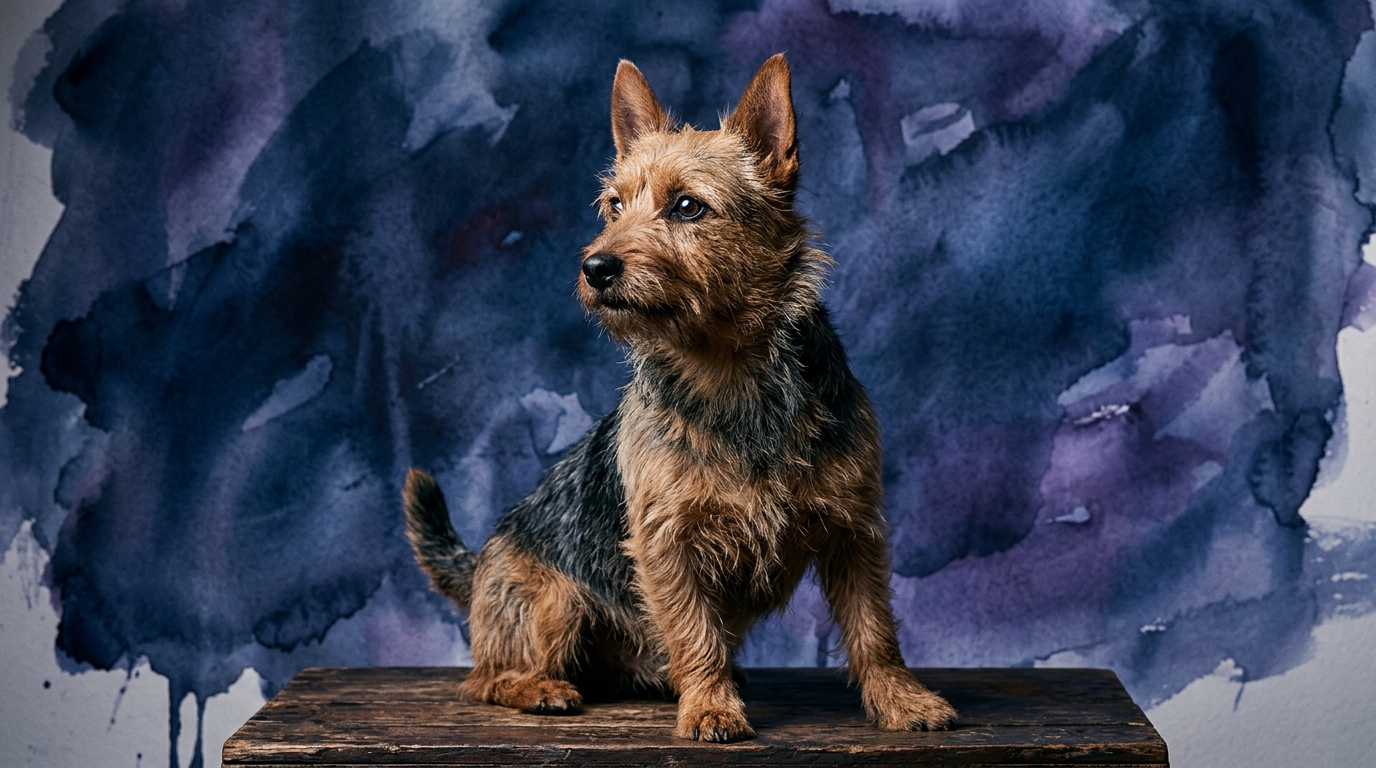
**Australian Terrier (Terrier Group, Not Coren-Ranked)**
**Problem Solving (3/5):** Australian Terriers exhibit practical problem-solving, particularly when it pertains to their immediate environment or achieving a specific goal like accessing a small burrow. Their approach tends to be direct, persistent, and hands-on rather than abstract or multi-step.
**Training Speed (3/5):** They learn at a moderate pace, often requiring patience and consistent, engaging methods. Their independent streak means they may not always prioritize human directives over their own perceived tasks, requiring motivation tailored to their personality.
**Social Intelligence (3/5):** Similar to the Setter, their social intelligence is adequate for family life, allowing them to form strong bonds and interpret familiar human signals. However, they can be reserved or discerning with strangers, taking time to assess new interactions.
**Instinctive Drive (3/5):** Their terrier heritage manifests as a distinct prey drive and a propensity for digging and exploring. This drive, while equal in score to the Setter, often presents differently, focusing intently on smaller quarry and territorial vigilance with an unwavering focus.
**Memory (3/5):** Australian Terriers have a functional memory, recalling basic commands and routines. They remember specific people and places, but perhaps less detail or nuance in complex sequences than breeds with higher memory scores, focusing on what is immediately relevant to their world.
Where the Irish Setter Wins Cognitively
The Irish Setter’s cognitive profile clearly positions it with an advantage in areas demanding adaptability and rapid learning. Their 4/5 score in problem-solving suggests a mind that can conceptualize solutions beyond simple trial and error. For instance, an Irish Setter might quickly deduce how to manipulate a puzzle toy with multiple steps or understand a complex sequence of commands during agility training, showcasing an ability to connect disparate pieces of information. This contrasts with the Australian Terrier’s more direct, often single-minded approach to obstacles, which tends to be less about abstract reasoning and more about persistent physical engagement.
Furthermore, the Setter’s 4/5 in training speed indicates a pronounced aptitude for acquiring new skills efficiently. This translates to quicker mastery of complex obedience routines, advanced tricks, or specialized tasks like retrieving specific items by name, even when the context changes. Their strong memory (4/5) reinforces this, allowing them to retain vast repertoires of commands and experiences, building upon past lessons rather than requiring frequent re-teaching. This cognitive architecture makes them exceptionally receptive to varied training methods and capable of excelling in diverse canine sports requiring sequential learning and nuanced understanding, making them a joy for those who enjoy structured training.
Where the Australian Terrier Wins Cognitively
While the Australian Terrier’s individual scores might not surpass the Irish Setter's in general cognitive flexibility, their strengths lie in the *application* of their specific cognitive makeup, particularly in tasks aligned with their terrier heritage. Their 3/5 instinctive drive, while numerically equivalent to the Setter's, manifests as a distinct tenacity and focus on specific objectives, such as tracking small game or diligently guarding their territory. This focused drive, combined with a practical problem-solving score of 3/5, means they excel at persistent, goal-oriented tasks that require sustained effort rather than broad-spectrum ingenuity.
For example, an Australian Terrier might spend hours systematically investigating a scent trail or meticulously attempting to unearth a perceived burrow, showcasing a dedication that can sometimes be mistaken for stubbornness but is, in fact, an unwavering commitment to their immediate objective. Their moderate training speed (3/5) and memory (3/5) are perfectly adequate for mastering the repetitive actions necessary for their traditional roles, ensuring they can reliably perform tasks without becoming easily distracted by complex, extraneous variables. Their cognitive profile is less about versatile problem-solving and more about resolute, task-specific efficacy, making them champions of determined, focused effort.
Which is Easier to Train and Why
Based on their cognitive profiles, the Irish Setter generally presents as the easier breed to train for a wide range of tasks and obedience. Their 4/5 rating in training speed indicates a natural inclination to absorb new commands rapidly and respond consistently. This is often coupled with a strong desire to cooperate with their human companions, making them highly amenable to positive reinforcement techniques. An Irish Setter is likely to pick up foundational commands like “sit,” “stay,” and “come” with fewer repetitions and generalize them more quickly across different environments, demonstrating an inherent willingness to engage in structured learning.
Their superior problem-solving (4/5) also means they can better understand the *why* behind a command, adapting their behavior rather than just memorizing a sequence of actions. In contrast, the Australian Terrier’s 3/5 training speed suggests a more deliberate learning pace. Their independent terrier spirit means they often require more patience, creativity, and consistency from their trainers. While capable of learning, an Australian Terrier might challenge a command or require more compelling motivation to perform, particularly if their innate drives conflict with the requested action. Their practical problem-solving style means they excel at tasks that make sense to them, but may be less inclined to perform arbitrary commands without clear incentive or purpose, necessitating a highly engaging and consistent training approach.
Which Suits Active Owners vs. Relaxed Owners
The cognitive and inherent drives of both breeds significantly influence their suitability for different owner lifestyles. The Irish Setter, with its 3/5 instinctive drive rooted in gundog work and strong problem-solving and memory, thrives with active owners who can channel its physical and mental energy. These dogs require consistent engagement through activities like long walks, running, hiking, or participating in canine sports such as agility, obedience, or field trials. Their cognitive makeup allows them to excel in complex, structured activities that provide both physical exertion and mental stimulation, preventing boredom and channeling their intelligence constructively. A relaxed owner might find an Irish Setter’s need for engagement overwhelming, potentially leading to boredom-driven behaviors if their intelligence isn't adequately challenged.
Conversely, the Australian Terrier, while also possessing an instinctive drive of 3/5, channels this energy into more focused, often independent activities like digging, exploring, and vigilant observation. They are suited for owners who appreciate a dog with a robust personality and are prepared to manage their terrier instincts. While they enjoy walks and playtime, their need for constant, structured activity might be slightly less demanding than a Setter's, but their mental engagement needs are different, requiring opportunities to “work” their terrier traits, perhaps through earthdog trials or scent games that satisfy their prey drive. A relaxed owner might find their persistent digging or vocal alerts challenging, whereas an active owner who understands and provides outlets for these specific drives will find a rewarding and engaging companion.
The Verdict
Choose the Irish Setter if you desire a highly trainable, versatile companion eager to learn complex tasks and participate in diverse activities, thriving on structured mental engagement and consistent physical output.
Choose the Australian Terrier if you appreciate a tenacious, independent spirit with a focused drive, valuing a loyal companion that excels at practical, goal-oriented tasks and offers robust companionship with a distinct terrier personality.
🧠 Find Your Pet's IQ Score
Our Pet IQ Lab assessment covers 25+ tests across 5 cognitive dimensions — personalized to your breed.
Take the Full IQ Test →Frequently Asked Questions
Are Irish Setters difficult to live with due to their energy levels?
Irish Setters possess significant energy and mental drive, but when channeled appropriately through regular exercise and consistent training, they are affectionate and well-behaved family members. Undersocialized or under-exercised Setters might become boisterous or destructive, so understanding their needs is key to a harmonious household.
Do Australian Terriers make good apartment dogs despite their terrier nature?
Australian Terriers can adapt to apartment living if their exercise and mental stimulation needs are met daily. While their size is suitable, their instinctive drive for digging and barking requires consistent management and specific outlets to prevent nuisance behaviors in a confined space, ensuring they have appropriate ways to express their natural instincts.
How do these breeds compare in terms of their social interaction with strangers?
Irish Setters, with their moderate social intelligence, are generally friendly and outgoing with strangers once properly introduced, often displaying an eager-to-please demeanor. Australian Terriers, while loyal to their family, can be more reserved or even wary of strangers, often taking time to warm up due to their protective instincts and independent nature, requiring careful introductions.