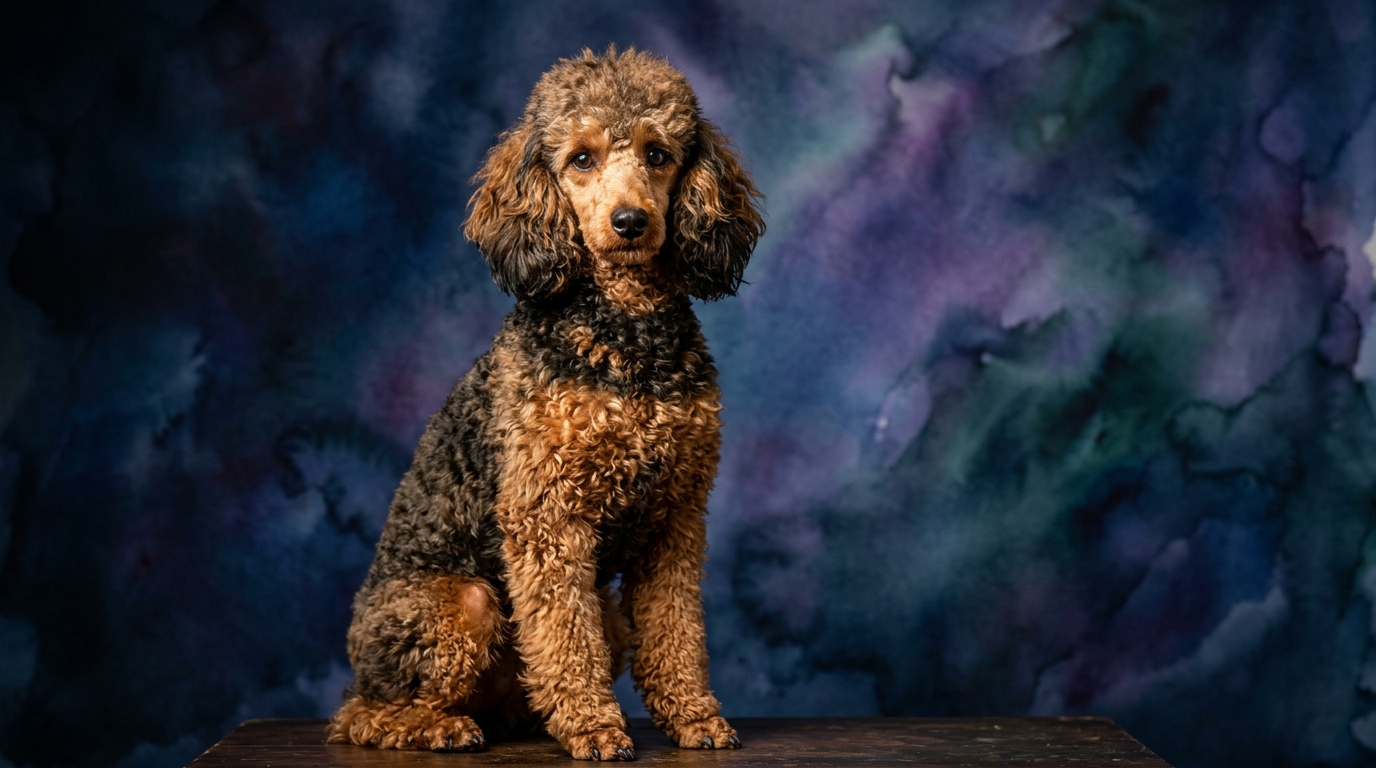
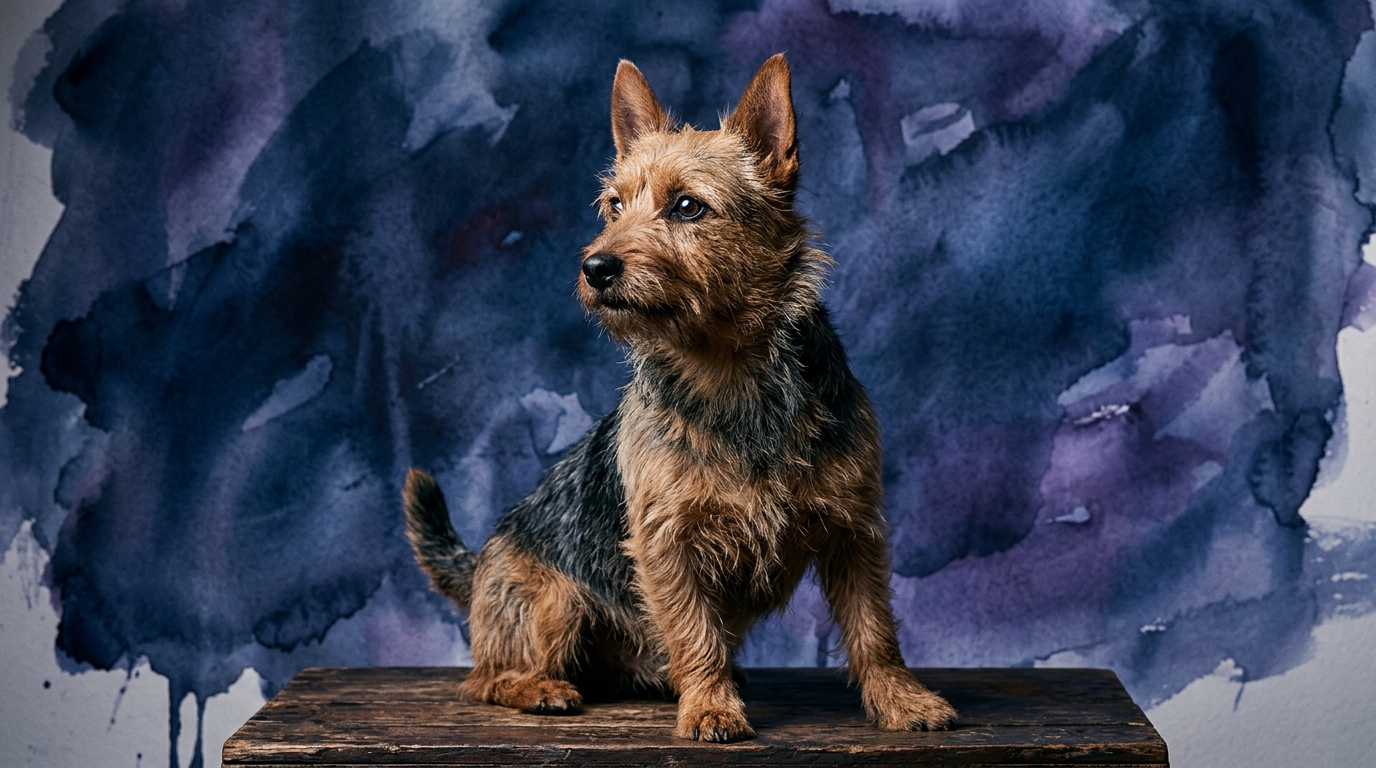
Side-by-Side Cognitive Profiles: Standard Poodle vs. Australian Terrier
The Cosmic Pet Pet IQ Lab offers a nuanced look at canine cognition, evaluating breeds across five critical dimensions. For the Standard Poodle, a breed consistently ranked among the most capable (Coren rank #2), its profile reveals a remarkable breadth of mental prowess. Their Problem Solving is rated 5/5, indicating an exceptional capacity to analyze novel situations and devise effective solutions. Training Speed also stands at 5/5, reflecting their rapid assimilation of new commands and routines. Social Intelligence is equally strong at 5/5, suggesting a deep understanding of human communication and social dynamics. Instinctive Drive, while still robust, is 4/5, signifying a purposeful, directed energy rather than an overwhelming, undirected surge. Finally, Memory is a perfect 5/5, enabling them to retain complex information over extended periods.
In contrast, the Australian Terrier presents a different, yet equally compelling, cognitive landscape. While not Coren-ranked, their IQ profile highlights a solid foundation of practical intelligence. Their Problem Solving is rated 3/5, indicating a capability to navigate everyday challenges and learn through experience, though perhaps with less abstract reasoning than a Poodle. Training Speed is 3/5, meaning they are certainly trainable, but may require more repetition and consistent methods to solidify new behaviors. Social Intelligence also scores 3/5, suggesting they form strong bonds and understand their core family's cues, though they might not possess the same broad social adaptability as the Poodle. Instinctive Drive is 3/5, reflecting their heritage as tenacious working terriers with a focused purpose. Memory, at 3/5, supports their learned behaviors and routines, though it might not extend to the same level of detail or duration as the Poodle's.
These scores are not absolute measures of 'good' or 'bad,' but rather indicators of how each breed processes information, learns, and interacts with their environment. The Poodle's profile suggests a highly adaptable, intellectually versatile companion, while the Australian Terrier's points to a resilient, focused, and practical thinker.
Where the Standard Poodle Excels Cognitively
The Standard Poodle's cognitive strengths are evident across nearly all measured dimensions, particularly in their ability to process and apply information with speed and accuracy. Their 5/5 Problem Solving means they don't just react to situations; they proactively analyze them. For instance, a Standard Poodle presented with a complex puzzle toy will often experiment with various approaches, demonstrating an understanding of cause and effect, rather than relying solely on brute force or trial-and-error. This aptitude makes them adept at learning intricate tasks, from opening latches to navigating agility courses with precision.
Their 5/5 Training Speed and Memory complement this problem-solving ability, allowing them to rapidly acquire and retain an extensive repertoire of commands and tricks. Owners often report Poodles grasping multi-step instructions after just a few repetitions, and recalling them perfectly weeks later. This isn't merely rote learning; their 5/5 Social Intelligence means they are often highly attuned to their handler's intentions and subtle cues, facilitating a cooperative and efficient learning process. They often strive to understand what is being asked of them, making them eager participants in training sessions.
Furthermore, the Poodle's 4/5 Instinctive Drive, while not the highest, is highly adaptable and can be channeled into diverse activities. Unlike breeds with a more singular drive, a Standard Poodle can excel in everything from obedience and rally to scent work, dock diving, and even therapy work. Their cognitive flexibility allows them to apply their drives across a wide spectrum of tasks, making them versatile partners in almost any canine endeavor that requires mental engagement and cooperation.
Where the Australian Terrier Shines Cognitively
While the Australian Terrier’s cognitive scores are generally lower than the Standard Poodle's, their particular combination of aptitudes enables them to shine in ways uniquely suited to their breed's purpose and temperament. Their 3/5 Problem Solving isn't about abstract reasoning, but rather a tenacious, practical approach to challenges. An Australian Terrier might not devise an elegant multi-step solution to a complex puzzle, but they will persist with focused determination, using their keen senses and physical dexterity to achieve their goal, especially if it involves digging or investigating small spaces, aligning with their terrier heritage.
The Australian Terrier's 3/5 Instinctive Drive is a focused, purposeful energy that, when properly channeled, translates into unwavering dedication to tasks they deem important. This isn't a broad, adaptable drive like the Poodle's, but a specific, powerful impulse, often directed towards exploration, scent following, and the pursuit of small vermin. This focus means they can be incredibly single-minded once engaged in an activity, exhibiting a resilience that might see them through challenges where a more broadly capable dog might lose interest.
Their 3/5 Social Intelligence often means they form incredibly strong, devoted bonds with their immediate family. While perhaps less outwardly gregarious than a Poodle, an Australian Terrier's social acumen is finely tuned to the dynamics of their core human pack. They are perceptive about their family's moods and routines, often providing comfort or companionship in a quiet, observant manner. Their 3/5 Training Speed and Memory, though requiring more patience, mean that once a behavior is learned and reinforced, it tends to be deeply ingrained, supported by their inherent persistence.
Training Dynamics: Poodle's Adaptability vs. Terrier's Tenacity
Training a Standard Poodle is often described as a rewarding and relatively swift process, largely due to their 5/5 Training Speed, 5/5 Memory, and 5/5 Social Intelligence. These dogs possess an innate desire to understand and cooperate, quickly grasping new commands and retaining them with minimal refresher sessions. They are highly responsive to positive reinforcement, often motivated by praise and the opportunity to engage in interactive learning. Their ability to read human body language and vocal inflections means they often anticipate what is expected, making them seem to learn almost telepathically. This cognitive agility allows them to excel in advanced obedience, complex tricks, and specialized tasks where precision and quick thinking are paramount.
Conversely, training an Australian Terrier requires a different approach, aligning with their 3/5 scores in Training Speed, Memory, and Social Intelligence. While certainly trainable, they are not typically as eager to please or as quick to pick up abstract concepts as a Poodle. Their independent, tenacious terrier spirit means training success hinges on consistency, clear communication, and making the learning process engaging and relevant to their natural drives. Repetition is key, and owners must be patient, understanding that an Australian Terrier might take more time to internalize a command, but once learned, it is often performed with conviction.
Behavioral differences stem from these cognitive profiles. A Poodle might quickly learn to differentiate between permissible and impermissible chewing objects due to their rapid learning and memory, while an Australian Terrier might require more consistent management and redirection to curb instinctive digging or chasing behaviors. The Poodle's high social intelligence means they are often more amenable to social learning and observation, whereas the Australian Terrier's focus means they often learn best through direct, hands-on experience and clear consequences, even if it takes a bit longer to sink in.
Lifestyle Match: Cognitive Demands for Owners
For owners seeking a companion with considerable cognitive needs, the Standard Poodle is an exceptional match. Their 5/5 Problem Solving and Memory mean they require consistent mental stimulation to prevent boredom and potential undesirable behaviors. An active owner who enjoys engaging in dog sports, advanced obedience, puzzle games, or even canine freestyle will find a Poodle to be an enthusiastic and capable partner. They thrive on novelty and challenge, making them ideal for individuals who want to continuously teach new things and explore diverse activities. A relaxed owner who cannot provide this level of mental engagement might find a Poodle inventing its own (potentially destructive) 'problems' to solve.
The Australian Terrier, while physically energetic, presents a different set of cognitive demands. Their 3/5 Instinctive Drive means they benefit from owners who can provide outlets for their natural terrier behaviors, such as supervised digging areas, scent games, or controlled chase opportunities. They are well-suited for active owners who appreciate a dog with a focused, independent spirit, and who can provide regular physical exercise coupled with consistent, structured routines. While they enjoy learning, their mental engagement might be more about mastering practical skills and fulfilling their terrier instincts than about abstract problem-solving or complex choreography. A relaxed owner can certainly enjoy an Australian Terrier, provided they understand and commit to providing sufficient physical activity and clear boundaries, as their cognitive profile suggests they need purpose and consistency, rather than constant intellectual novelty.
The Verdict: Choosing Your Canine Companion
The Verdict
Choose the Standard Poodle if you seek a highly adaptable, rapidly learning companion eager for diverse mental challenges and complex training, thriving in environments that encourage continuous intellectual engagement. They are ideal for active individuals ready to explore a wide range of canine activities and advanced obedience.
Choose the Australian Terrier if you appreciate a resilient, tenacious companion with a focused drive, who thrives on consistent routines, clear guidance, and outlets for their natural terrier instincts. They are best for owners who value a loyal, independent spirit and are prepared for patient, consistent training methods.
🧠 Find Your Pet's IQ Score
Our Pet IQ Lab assessment covers 25+ tests across 5 cognitive dimensions — personalized to your breed.
Take the Full IQ Test →Frequently Asked Questions
Does a Standard Poodle's high social intelligence mean they are always friendly with strangers?
While a Standard Poodle's 5/5 social intelligence indicates a strong capacity to understand social cues, it doesn't automatically mean universal friendliness. It means they are adept at reading intentions and often respond appropriately; early socialization is still crucial to channel this intelligence into positive interactions with unfamiliar people and dogs.
How does an Australian Terrier's 3/5 instinctive drive manifest in daily life?
An Australian Terrier's 3/5 instinctive drive often manifests as a focused determination, particularly towards tasks like digging, chasing small moving objects, or exploring scents. This means they benefit from secure yards, leashed walks, and engaging games that satisfy these natural impulses in a controlled environment, rather than allowing them to act on every instinct.
Can an Australian Terrier learn complex tricks, despite lower training speed scores?
Yes, an Australian Terrier can certainly learn complex tricks, but it typically requires more patience, repetition, and creative motivation from the owner. Their 3/5 training speed means they may take longer to grasp new concepts, but their inherent tenacity and focused drive can lead to deep retention once a trick is mastered.