A Side-by-Side Cognitive Blueprint
Despite their shared Sporting Group heritage and identical scores across core IQ dimensions, the Irish Setter and Chesapeake Bay Retriever express their cognitive abilities in ways unique to their breed's historical role and inherent disposition. Understanding these nuances moves beyond mere numbers, revealing how each breed processes information, interacts with their environment, and forms bonds.
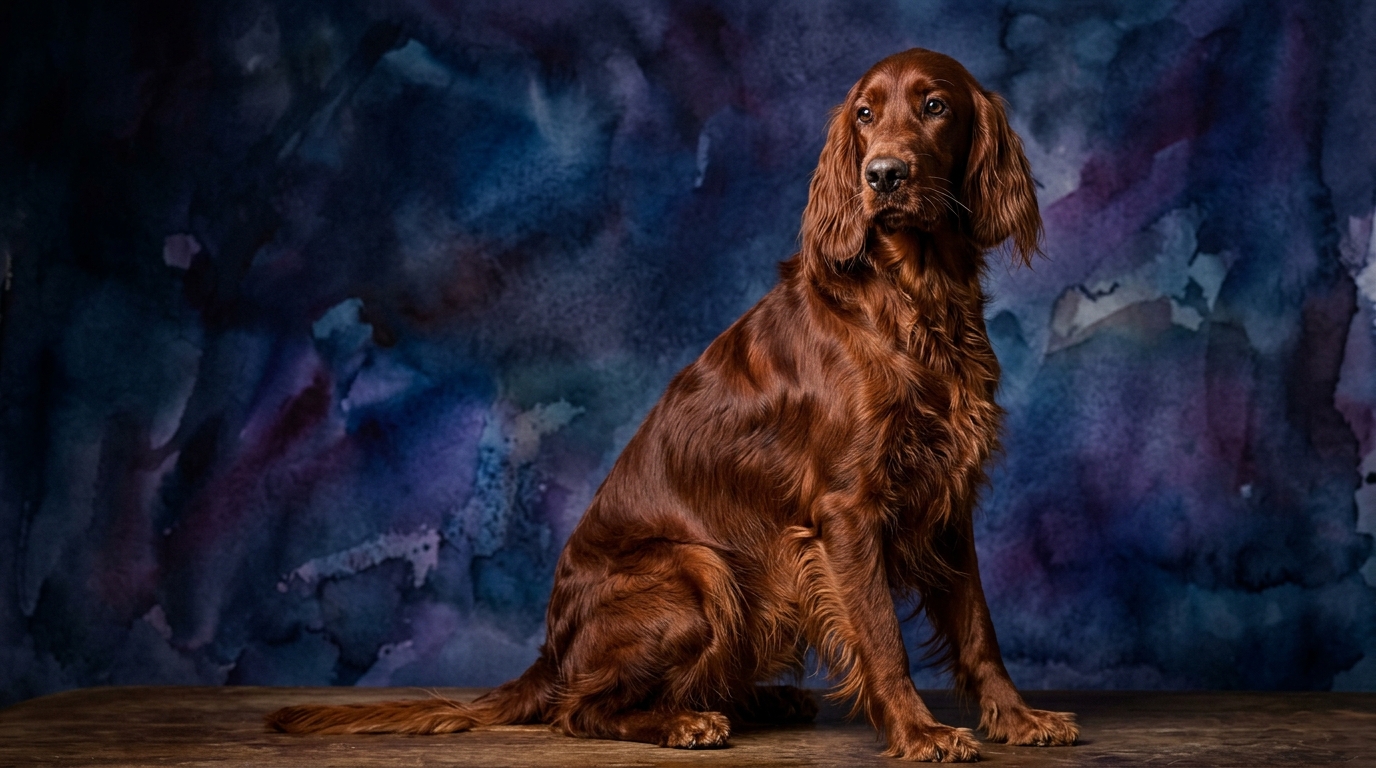
The Irish Setter, ranked #35 by Coren, presents a captivating cognitive profile marked by spirited engagement and adaptable problem-solving. Their Problem Solving (4/5) reflects an ability to navigate complex environments and figure out novel challenges, often with a flair for creative, sometimes independent, solutions, manifesting in their capacity to adapt hunting strategies or find ways to achieve desired outcomes, even if it means bending the rules playfully. Training Speed (4/5) indicates they absorb new commands and routines effectively, demonstrating a quick grasp of associations; their eagerness to please, combined with an energetic disposition, means they can learn rapidly when engaged, though their spirited nature sometimes requires consistent, patient reinforcement to maintain focus. Their Social Intelligence (3/5), while generally amiable, leans towards engaging with their human companions rather than complex pack dynamics with other dogs; they read human cues well and seek interaction, but their enthusiasm can sometimes override subtle social signals from other canines, necessitating careful socialization. Instinctive Drive (3/5) is primarily rooted in their bird-pointing and retrieving heritage, expressed through a keen desire to explore, scent, and chase, fueling their activity levels and responsiveness to fieldwork. Finally, their Memory (4/5) is robust, retaining learned commands, routines, and experiences over long periods, contributing to their training success and ability to remember specific locations or scent trails.
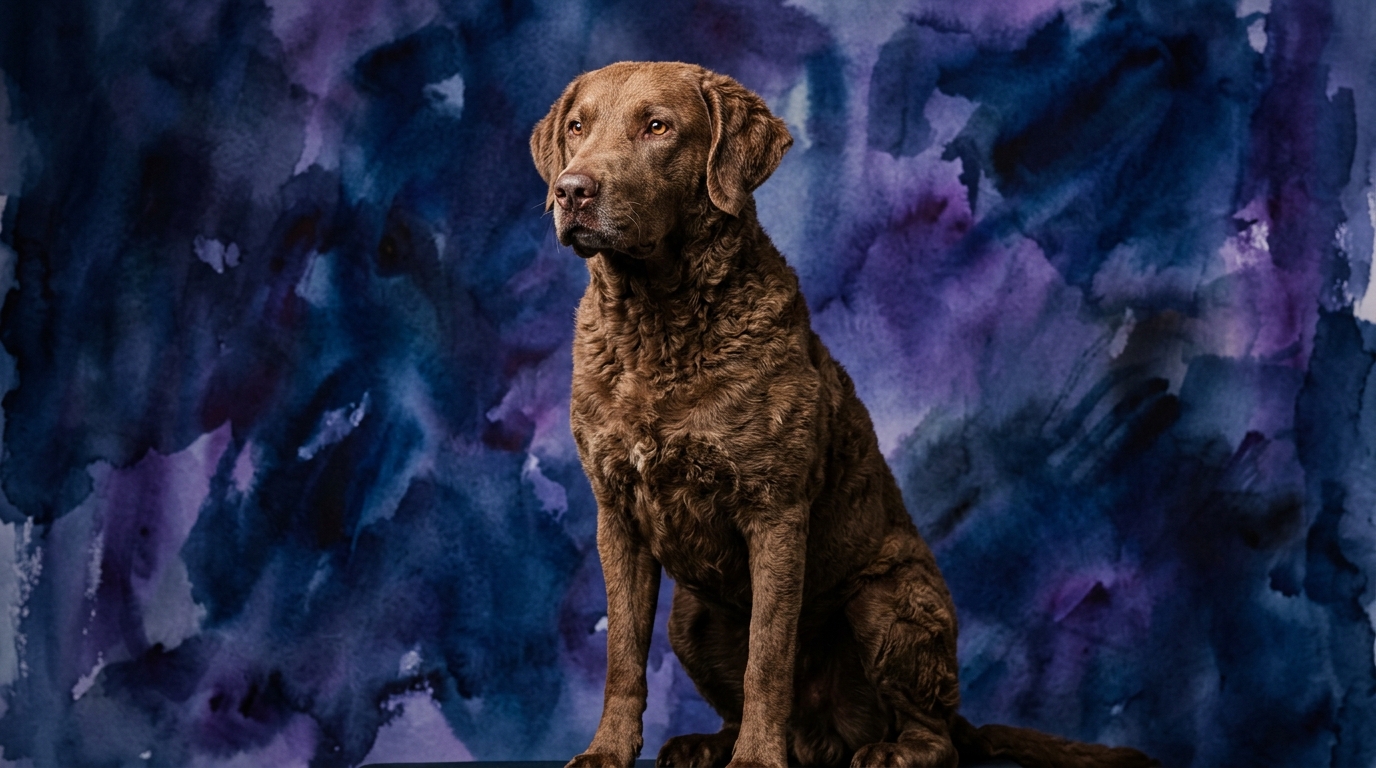
The Chesapeake Bay Retriever, with a higher Coren rank of #27, showcases a pragmatic and resilient cognitive style, deeply ingrained in their demanding retrieving work. Their Problem Solving (4/5) is marked by a pragmatic and persistent approach, particularly in task-oriented scenarios, excelling at figuring out the most efficient way to retrieve objects from challenging environments, often displaying a focused determination to overcome obstacles. Training Speed (4/5) indicates they are quick learners when it comes to practical applications and commands, readily picking up complex sequences related to their work; their dedication to a task, once understood, allows for efficient training, though their independent streak means they respond best to clear, consistent, and reward-based methods. Their Social Intelligence (3/5) is often directed towards their primary human bond, exhibiting a reserved but deeply loyal connection; while they can coexist with others, their initial interactions with strangers or unfamiliar dogs may be cautious, reflecting a discerning nature rather than an immediate desire for broad social engagement. Instinctive Drive (3/5) is a powerful force centered on retrieving, particularly from water, combined with a protective instinct; this drive manifests as an unwavering focus on their “job,” whether it's bringing back a bumper or guarding their family, making them formidable and dedicated working partners. Their Memory (4/5) is exceptional, especially for tasks, routes, and the location of retrieved items, with their capacity to remember intricate sequences of commands and prior experiences contributing significantly to their effectiveness as working dogs, allowing them to perform complex, multi-stage tasks with precision.
Where the Irish Setter's Cognition Shines
The Irish Setter, despite identical numerical IQ scores, often displays a more overt and enthusiastic cognitive engagement with their environment and people. Their problem-solving, while equally rated, might manifest with a touch more creativity and less rigid adherence to pre-defined methods, sometimes finding novel, charmingly mischievous ways to get what they want. Their social intelligence, while scoring 3/5, is characterized by a more effusive and generally outgoing disposition compared to the Chessie, making them quicker to bond and interact openly with a wider circle of humans. This effervescence means they might excel in environments where quick, light-hearted interaction and adaptability to varied social stimuli are valued over stoic focus.
Chesapeake Bay Retriever's Distinct Cognitive Strengths
The Chesapeake Bay Retriever's cognitive strengths lie in their unwavering focus and robust practicality, even with identical IQ scores. Their problem-solving (4/5) is often geared towards efficiency and persistence, particularly in challenging physical tasks, reflecting their heritage of retrieving birds from icy waters. This translates into a dog that systematically works through obstacles rather than seeking alternative, potentially less direct, routes. Furthermore, while both breeds score 3/5 in social intelligence, the Chessie's expression of this is often a deep, reserved loyalty to their chosen family, coupled with a discerning caution towards strangers. This distinct social profile means they are keenly attuned to their immediate pack, offering a steadfast companionship that might be perceived as less overtly social but profoundly devoted.
Navigating Training: Behavioral Nuances
Both breeds rate 4/5 in training speed, yet their behavioral differences create distinct training experiences. The Irish Setter's training journey is often characterized by their exuberant energy and occasional distractibility; they grasp concepts quickly but require engaging, positive reinforcement to maintain focus amidst their spirited nature. Their eagerness to please is strong, but their playful independence means consistency is paramount to prevent them from "testing" boundaries. In contrast, the Chesapeake Bay Retriever, while equally quick to learn, often presents a more independent and determined demeanor. They respond well to clear, firm, and fair training, but can be less forgiving of inconsistency. Their deep-seated loyalty means they will commit to a task once they understand it, but their reserved social nature might make them less inclined to perform for just anyone, prioritizing their primary handler's commands. Effectively, the Setter learns with enthusiasm that needs channeling, while the Chessie learns with purpose that needs consistent direction.
Matching Canine Temperament with Owner Lifestyles
For active owners seeking a dynamic partner, both breeds offer ample energy and a desire for engagement, but their expression differs. The Irish Setter thrives with owners who appreciate their spirited, often playful nature and can provide outlets for their boundless energy through varied activities like long runs, dog sports, or interactive play. Their sociable disposition makes them adaptable to a range of family dynamics, often seeking to be at the center of attention. Conversely, the Chesapeake Bay Retriever also requires significant physical and mental exercise, excelling in demanding outdoor pursuits like hunting, hiking, or advanced obedience. However, their more reserved and task-focused temperament makes them a better fit for owners who value a steady, dedicated companion, comfortable with a dog that forms deep bonds but isn't necessarily the life of every party. Relaxed owners, regardless of breed, might find either dog's energy levels challenging without adequate structured exercise and mental stimulation.
The Verdict
Choose an Irish Setter if you desire a vibrant, outgoing companion who enjoys being the focal point of family activities and thrives on engaging, varied training sessions, offering a blend of playful energy and affectionate loyalty.
Opt for a Chesapeake Bay Retriever if you seek a deeply loyal, resilient partner for demanding outdoor adventures and appreciate a dog with a steadfast work ethic and a more reserved, protective demeanor, valuing purposeful engagement over constant effervescence.
🧠 Find Your Pet's IQ Score
Our Pet IQ Lab assessment covers 25+ tests across 5 cognitive dimensions — personalized to your breed.
Take the Full IQ Test →Frequently Asked Questions
Are Irish Setters or Chesapeake Bay Retrievers better with children?
Both breeds can be good with children, but their approaches differ. Irish Setters are typically more overtly playful and tolerant, often enjoying active interaction, while Chesapeake Bay Retrievers tend to be protective and patient with their family's children, though they might be more reserved with unfamiliar kids. Proper socialization and supervision are crucial for either.
Do either of these breeds require a lot of grooming?
Yes, both breeds require regular grooming, though for different reasons. Irish Setters have long, flowing coats that need frequent brushing to prevent mats and tangles, while Chesapeake Bay Retrievers have dense, oily double coats that require regular brushing to manage shedding and maintain skin health, especially after water activities.
Which breed is more prone to destructive behaviors if not exercised enough?
Both breeds, being high-energy sporting dogs, can develop destructive behaviors if their physical and mental stimulation needs are not met. An under-exercised Irish Setter might channel their energy into chewing or boisterous indoor play, while a frustrated Chesapeake Bay Retriever might become more vocal or engage in persistent chewing, reflecting their strong drive and need for purpose.