
Side-by-Side IQ Profile
**Irish Setter (Sporting, Coren #35):** This breed showcases a balanced and responsive cognitive makeup. Their Problem Solving (4/5) indicates a notable capacity to navigate novel situations and figure out solutions independently, suggesting a dog that adapts well to new challenges beyond rote commands. Their Training Speed (4/5) denotes a quick uptake of new commands and routines, pointing to a responsive learner eager to engage with instruction and form associations rapidly. Social Intelligence (3/5) suggests they form strong bonds and interact appropriately, but might not always read subtle human cues with exceptional precision. Instinctive Drive (3/5), such as scenting or retrieving, is present but generally manageable, allowing for redirection into a structured home environment. A strong Memory (4/5) allows the Irish Setter to retain complex sequences and recall learned behaviors over extended periods, significantly contributing to their trainability and consistency.
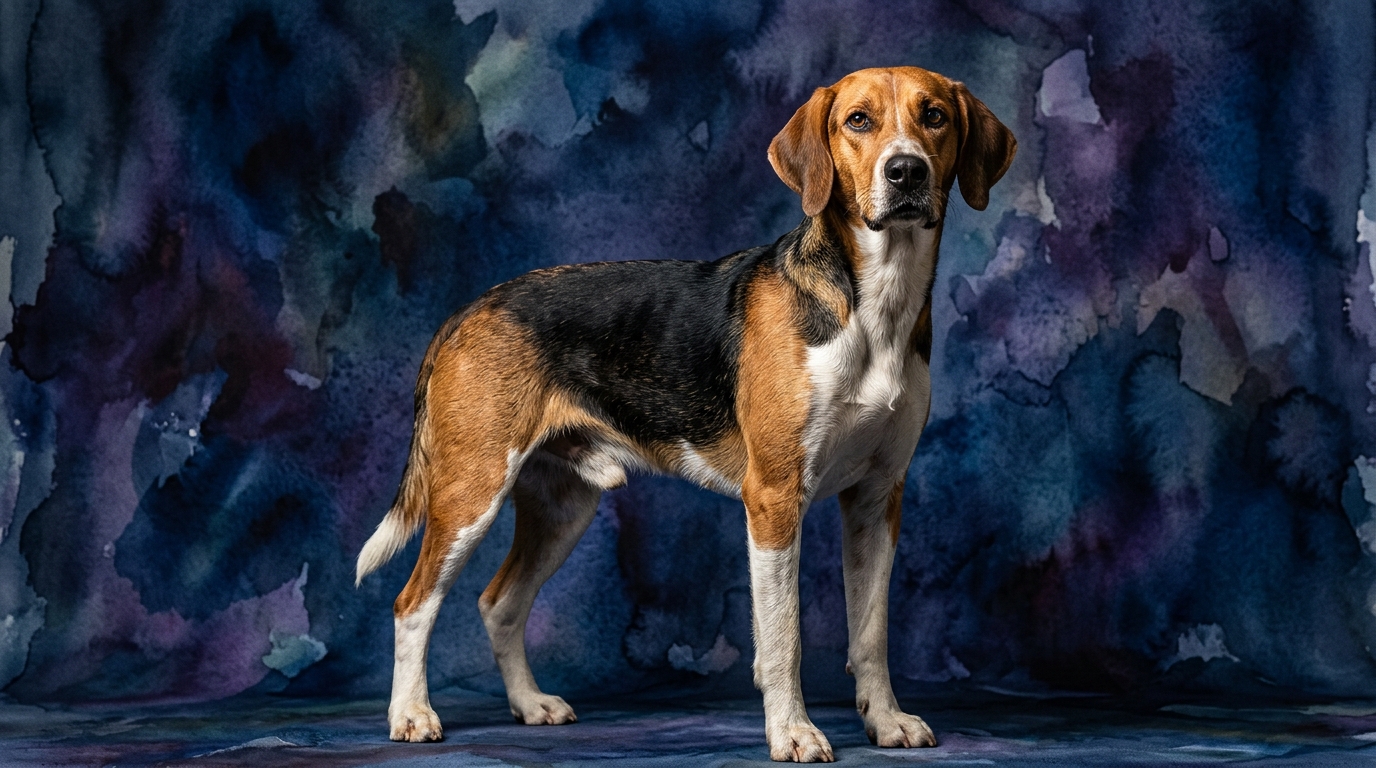
**English Foxhound (Hound, Not Coren-ranked):** The Foxhound's cognitive profile is geared towards endurance and focused pursuit. Their Problem Solving (3/5) suggests they can solve straightforward problems but might rely more on trial-and-error or established patterns rather than innovative solutions in complex scenarios. Training Speed (3/5) implies they learn at a steady pace, requiring consistent repetition and patience to solidify new commands and behaviors. Similar to the Setter, their Social Intelligence (3/5) equips them with adequate social skills, interacting predictably within their social circle but perhaps not exhibiting the nuanced sensitivity of some other breeds. Instinctive Drive (3/5), particularly for scenting and pursuit, is a defining trait, present at a level that requires guidance but can be channeled effectively for specific tasks. A good working Memory (3/5) allows them to recall important associations and learned tasks, though perhaps not with the same depth or longevity for intricate details as a breed with a higher score.
Where Irish Setter Wins Cognitively
The Irish Setter clearly distinguishes itself in two key cognitive dimensions: Problem Solving and Memory, both scoring 4/5 compared to the English Foxhound's 3/5. This indicates a dog with a greater propensity for independent thought and adaptive strategies when faced with novel situations, rather than simply following learned patterns. For instance, if a familiar gate is jammed, an Irish Setter is more likely to experiment with alternative ways to open it or find another path, demonstrating a more flexible cognitive approach. Their superior memory (4/5) also means they are more likely to retain complex sequences of commands or intricate learned routines over longer periods, making advanced training and recall more reliable. This cognitive advantage translates into a dog that can grasp multi-step tasks or remember specific cues after extended breaks, requiring less re-teaching. Furthermore, the Irish Setter's 4/5 Training Speed score, while matched by its memory, positions it as a more agile learner overall, absorbing new information and commands with greater alacrity than the Foxhound. This means they are quicker to make the connection between a cue and the desired action, and faster to generalize learned behaviors to new environments.
Where English Foxhound Wins Cognitively
While the English Foxhound does not outscore the Irish Setter in any of the provided IQ dimensions, its cognitive profile, particularly its 3/5 Instinctive Drive paired with its 3/5 Problem Solving and Memory, is precisely optimized for its historical role. The Foxhound's strength lies not in broad cognitive flexibility or rapid learning for diverse tasks, but in its unwavering focus and dedication to a specific, deeply ingrained purpose: scent tracking. Its instinctive drive, while rated 3/5, is intensely focused on scent, allowing it to shut out distractions and follow a trail with remarkable persistence. This isn't a "win" in raw score comparison, but a cognitive specialization. Its 3/5 Problem Solving manifests as effective navigation of terrain and obstacles during a chase, relying on practical, real-world application rather than abstract reasoning. Similarly, its 3/5 Memory is highly functional for remembering scent patterns, routes, and the specific cues associated with its hunting work, demonstrating a specialized intelligence that prioritizes utility over generalized versatility. The Foxhound's cognitive "win" is in its single-minded dedication and efficiency within its specialized hunting domain.
Which is Easier to Train and Why
Based on their respective "Training Speed" scores, the Irish Setter (4/5) is demonstrably easier to train than the English Foxhound (3/5). The Setter's higher score indicates a quicker grasp of new commands and routines, meaning they require fewer repetitions to solidify a behavior and are more responsive to novel instructions. This stems from a combination of their superior Problem Solving and Memory scores; they are faster to understand what is being asked of them and better at retaining that information. For instance, teaching an Irish Setter to "stay" will likely involve fewer sessions and quicker generalization across different environments. In contrast, the English Foxhound's 3/5 Training Speed suggests a more deliberate learning pace. They will require more consistent reinforcement and patience to master commands. Their strong instinctive drive, while manageable at 3/5, can sometimes lead to a divided focus; a compelling scent might momentarily override a training cue, demanding more persistent effort from the trainer. Behavioral differences manifest as the Irish Setter often being more eager to please and more attuned to human direction, whereas the Foxhound, while sociable, might prioritize its nose over handler cues when stimulated by interesting odors.
Which Suits Active Owners vs Relaxed Owners
Both breeds are generally active, but their energy profiles and cognitive needs suit different types of "active" owners. The Irish Setter, with its Sporting group heritage and higher Problem Solving (4/5) and Memory (4/5) scores, thrives with owners who can provide both physical exertion and mental engagement. They need activities that challenge their intellect, such as advanced obedience, agility, or scent work that involves problem-solving. An active owner for an Irish Setter is someone who enjoys long runs, hikes, and is committed to ongoing training and mental games to prevent boredom and channel their considerable energy and cognitive abilities. A relaxed owner, by contrast, would likely find the Irish Setter's need for mental stimulation and physical output overwhelming, potentially leading to restless or destructive behaviors.
The English Foxhound, while possessing a moderate instinctive drive (3/5) and requiring substantial physical activity, suits an active owner whose lifestyle aligns with their endurance and scenting instincts. These owners are often those who enjoy long, steady jogs, cycling with their dog, or participating in scent-tracking activities. Their 3/5 Problem Solving and Memory suggest they are less inclined toward intricate mental puzzles but excel in activities that leverage their stamina and nose. A "relaxed" owner who cannot commit to extensive daily exercise or who expects a dog to entertain itself with minimal intervention would find the English Foxhound challenging. While not requiring complex mental games, their robust physical needs and tendency to follow a scent make them unsuitable for a sedentary lifestyle. The Foxhound's activity needs are more about sustained physical output and opportunities for scent exploration, rather than intricate cognitive challenges.
The Verdict
Select the Irish Setter if you are an owner who values a responsive, adaptable companion capable of excelling in diverse training disciplines and enjoys engaging a dog with mental challenges beyond basic obedience. Their quicker learning and problem-solving aptitude make them ideal for those seeking a highly interactive and versatile canine partner.
Opt for the English Foxhound if you are an active individual or family who can provide extensive, consistent exercise, particularly enjoying outdoor activities where their endurance and remarkable scenting abilities can be utilized. This breed thrives with owners who appreciate a dog with a focused, persistent drive and are patient with its more deliberate training pace.
🧠 Find Your Pet's IQ Score
Our Pet IQ Lab assessment covers 25+ tests across 5 cognitive dimensions — personalized to your breed.
Take the Full IQ Test →Frequently Asked Questions
Does the English Foxhound's "Not Coren-ranked" status mean it's less intelligent?
No, "Not Coren-ranked" simply indicates it wasn't included in Coren's specific study, which focused on working and obedience intelligence, not an overall measure of cognitive capacity. The Foxhound possesses a specialized intelligence perfectly adapted for its historical role.
How does the "Instinctive Drive" of both breeds compare?
Both score 3/5, meaning they possess inherent drives that require management. The Irish Setter's drive leans towards retrieving and bird work, while the English Foxhound's is profoundly focused on scent tracking and endurance, both requiring appropriate outlets.
Can an English Foxhound be a good family pet despite its hunting background?
Yes, with proper socialization, training, and ample exercise, the English Foxhound can be a devoted family member. Their social intelligence (3/5) indicates they interact well, but their high exercise needs and scent-driven nature must be met to ensure a harmonious home life.