Side-by-Side IQ Profile: Irish Setter vs. German Pinscher
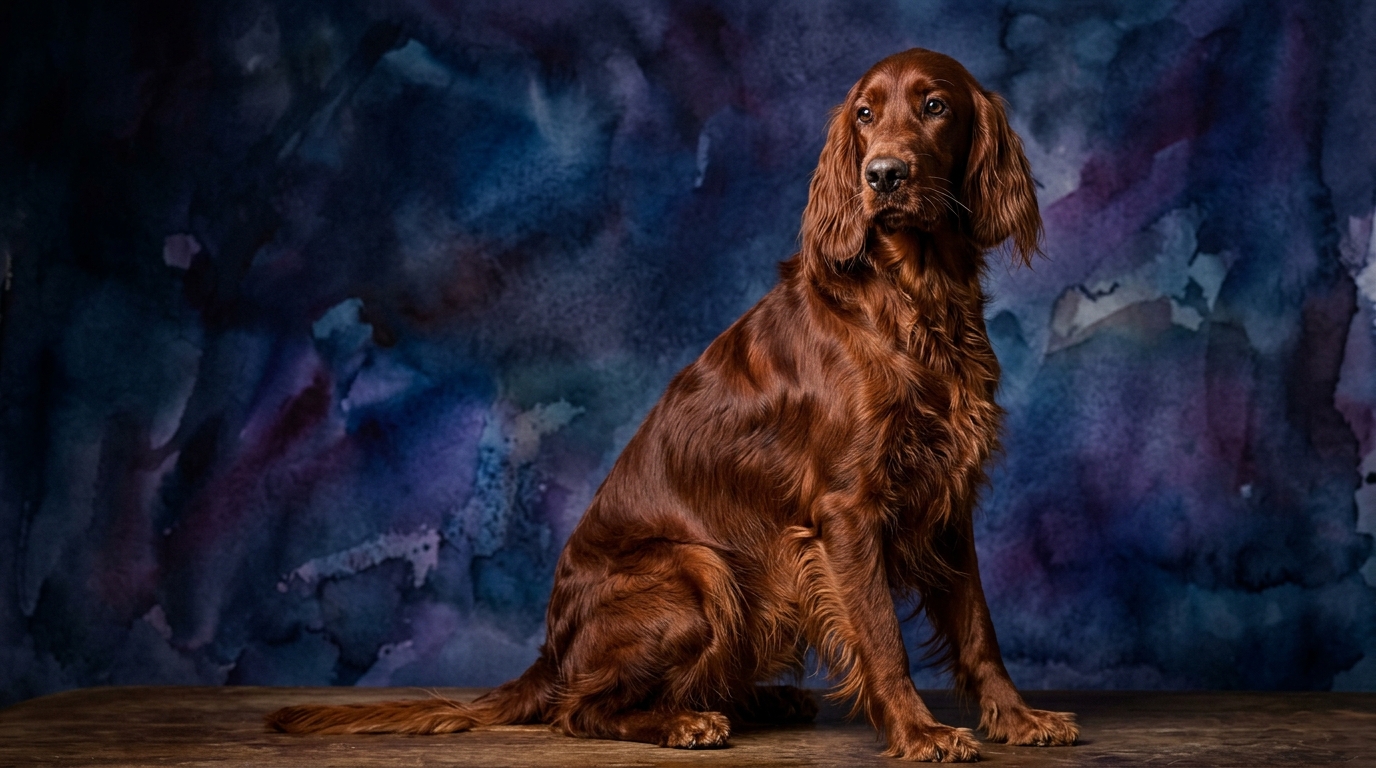
The Irish Setter, hailing from the Sporting Group and ranked #35 by Coren, presents a cognitive profile distinguished by several strong aptitudes. Its Problem Solving ability scores a robust 4 out of 5, indicating a capacity for independent thought and effective navigation of novel situations. Training Speed also stands at 4 out of 5, suggesting a quick grasp of new commands and routines, often requiring fewer repetitions. Social Intelligence is a balanced 3 out of 5, reflecting an appropriate capacity for interaction without excessive dependence or aloofness. Its Instinctive Drive, rated 3 out of 5, points to a moderate natural inclination for its original purpose as a bird dog, while a strong Memory score of 4 out of 5 means they retain learned behaviors and experiences effectively over time.
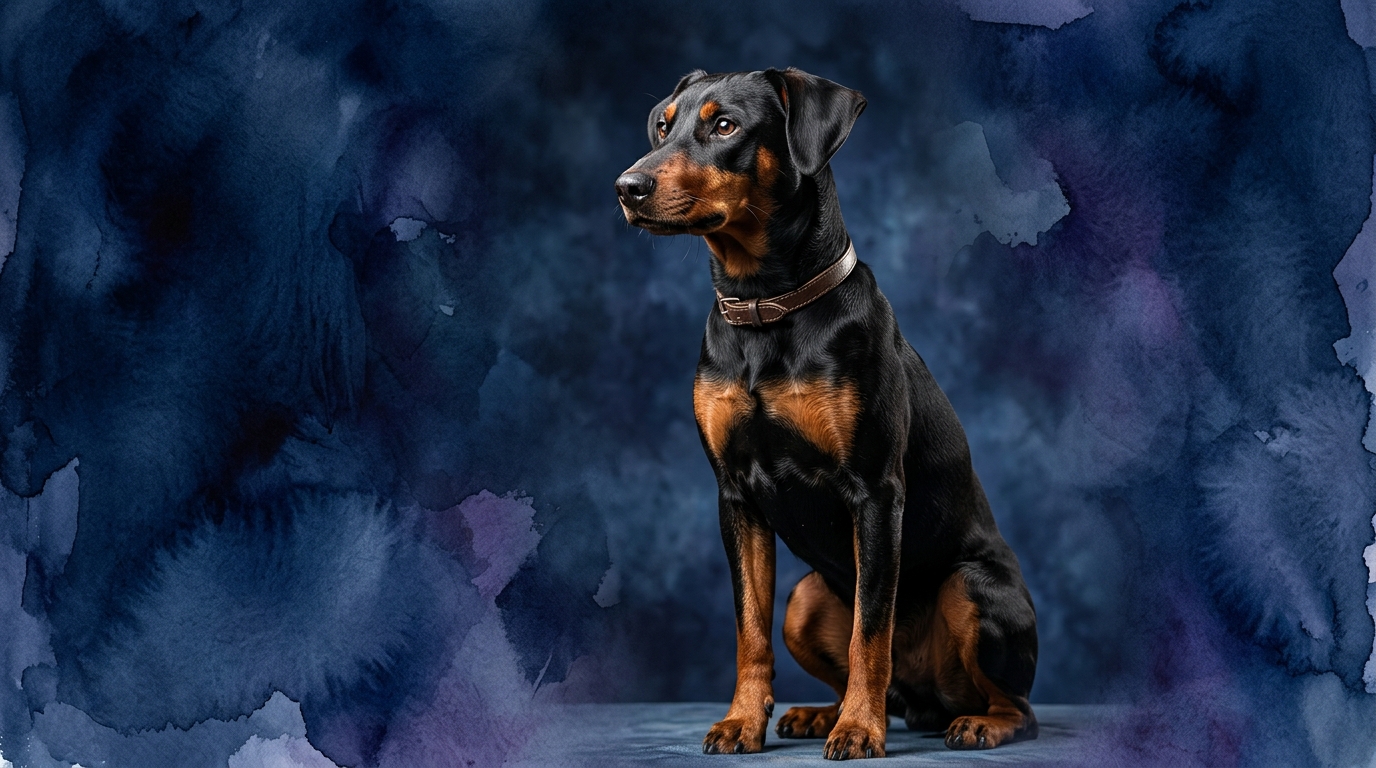
In contrast, the German Pinscher, a member of the Working Group, displays a remarkably consistent cognitive profile across all dimensions, scoring 3 out of 5 in each. Its Problem Solving at 3 out of 5 suggests a practical approach to challenges, often preferring established methods over extensive experimentation. A Training Speed of 3 out of 5 means they learn at a steady, reliable pace, thriving with clear, consistent instruction. Social Intelligence also at 3 out of 5 indicates a balanced ability to interact with both humans and other animals, neither overly gregarious nor withdrawn. An Instinctive Drive of 3 out of 5 points to a moderate inherent inclination for tasks related to their working heritage, and a Memory score of 3 out of 5 shows they retain information reliably, if not with the same rapid recall as the Setter.
Where the Irish Setter Wins Cognitively
The Irish Setter's cognitive strengths distinctly outshine the German Pinscher in several key areas, making it a particularly adept learner and problem-solver. Its superior Problem Solving score of 4/5, compared to the Pinscher's 3/5, means a Setter is more likely to independently figure out how to navigate complex environments, solve puzzles, or even cleverly open latches if not properly secured. This translates to an animal that can adapt quickly to new situations and devise creative solutions to obstacles, a trait that can be both engaging and occasionally challenging for owners.
Furthermore, the Irish Setter's Training Speed, also at 4/5 versus the Pinscher's 3/5, indicates a quicker acquisition of new commands and sequences. They often grasp concepts with fewer repetitions, allowing for faster progression in obedience, trick training, or dog sports. Their exceptional Memory (4/5 compared to 3/5) complements this, ensuring that once a lesson is learned, it is retained effectively over the long term. This combination of faster learning and robust retention means an Irish Setter can build a broad repertoire of behaviors and reliably recall them, making them highly capable partners in advanced training endeavors and stable companions who remember household rules and routines with precision.
Where the German Pinscher Wins Cognitively
While the German Pinscher's individual cognitive scores may not exceed the Irish Setter's peaks, its consistent 3/5 across all dimensions presents a unique and valuable cognitive 'win' for specific ownership preferences: predictability and manageable intellectual engagement. Unlike the Irish Setter's higher aptitude for independent problem-solving, the Pinscher's more moderate Problem Solving score means it is less inclined to creatively challenge boundaries or devise complex, unauthorized solutions to perceived dilemmas. This cognitive steadfastness ensures a more straightforward and less 'overthinking' approach to daily life.
The German Pinscher's balanced profile across Training Speed, Social Intelligence, Instinctive Drive, and Memory means its mental faculties are consistently applied without extreme fluctuations. This translates into a dog that is reliably engaged without being overly analytical or prone to independent excursions of thought that might deviate from human instruction. For owners who value a steady, consistent companion that thrives on clear guidelines and established routines, rather than one that constantly seeks to innovate or test limits, the Pinscher's uniform cognitive framework offers a significant advantage in terms of manageability and predictable behavior. Its 'win' lies in its cognitive equilibrium, fostering a reliable partnership where its moderate memory ensures steady retention without the potential for a higher memory to recall every past 'mistake' or deviation with analytical precision.
Which is Easier to Train and Why
When considering ease of training, the Irish Setter generally holds an advantage due to its higher scores in Training Speed (4/5), Problem Solving (4/5), and Memory (4/5). These attributes combine to create a dog that can quickly grasp new commands, understand complex sequences, and retain that information effectively over time. For instance, an Irish Setter might learn a multi-step retrieve in significantly fewer sessions than a Pinscher, and once learned, they are more likely to perform it consistently weeks later. Their problem-solving capacity also means they can generalize learned behaviors to new environments or slight variations in commands more readily, making them adaptable training partners. However, this same independence can mean they might try to 'outsmart' a handler or get bored if training lacks engagement, requiring a handler who is equally mentally agile and consistent.
The German Pinscher, with its consistent 3/5 across all cognitive dimensions, requires a different approach to training. While not as quick to pick up new commands as the Setter, its steady Training Speed means it responds very well to clear, consistent, and patient instruction. A German Pinscher thrives on repetition and a structured learning environment, building a strong foundation step-by-step. They are less likely to get bored by repetition if the handler keeps it engaging, and their moderate problem-solving means they are less inclined to deviate from established rules once they understand them. Training a German Pinscher might take more repetitions and a longer commitment to consistency, but the result is often a highly reliable and predictable companion that adheres faithfully to learned behaviors without the same independent 'thinking outside the box' that a Setter might employ.
Which Suits Active Owners vs. Relaxed Owners
Both the Irish Setter and the German Pinscher are dogs that benefit immensely from active owners, yet their specific cognitive profiles suggest different intensities and types of engagement. The Irish Setter, with its Sporting Group heritage and high scores in Problem Solving (4/5) and Memory (4/5), thrives on varied physical and mental challenges. They require significant outlets for their intelligence and energy, excelling in activities like agility, field trials, advanced obedience, or long, exploratory hikes where their problem-solving skills can be put to good use. A relaxed owner who cannot provide consistent mental stimulation and physical exercise might find the Setter's need for engagement overwhelming, potentially leading to boredom-induced behaviors such as excessive chewing or digging as they seek to entertain themselves.
The German Pinscher, while also an active Working breed, might be a more suitable choice for owners who are active and consistent but perhaps not seeking to constantly challenge their dog's problem-solving skills with novel puzzles. Its balanced 3/5 cognitive profile means it's less likely to independently invent its own entertainment if under-stimulated, making it somewhat more predictable. They enjoy regular, vigorous exercise and consistent mental engagement through training and structured play, but their cognitive needs are perhaps less intensely demanding than the Setter's. They are well-suited to owners who appreciate a reliable, steadfast companion for daily runs, structured training, and consistent companionship, rather than an animal that requires constant intellectual innovation, making them a good fit for active individuals who prefer a predictable routine.
The Verdict
Opt for the Irish Setter if you are an engaged owner who enjoys a mentally agile companion, ready to delve into advanced training, dog sports, or complex problem-solving activities and can provide extensive mental and physical stimulation.
Select the German Pinscher if you appreciate a consistently capable and predictable companion, valuing steadfastness and a straightforward approach to learning and interaction over rapid intellectual leaps, and can provide consistent activity and clear guidance.
🧠 Find Your Pet's IQ Score
Our Pet IQ Lab assessment covers 25+ tests across 5 cognitive dimensions — personalized to your breed.
Take the Full IQ Test →Frequently Asked Questions
Does the Irish Setter's higher problem-solving score make it more prone to mischief?
A higher problem-solving score can mean a dog is more adept at figuring out how to open cabinets, escape yards, or creatively obtain forbidden items if not adequately stimulated. Owners need to provide sufficient mental enrichment and consistent boundaries to channel this cognitive strength positively.
Is a German Pinscher harder to train because of its 3/5 training speed?
A 3/5 training speed means the German Pinscher learns at a steady, reliable pace, not necessarily 'harder' but requiring more consistency and patience from the trainer. They respond exceptionally well to clear, repetitive instruction, building a solid and dependable foundation of behaviors.
How does the 'Instinctive Drive' score impact daily life for these breeds?
Both breeds have a 3/5 Instinctive Drive, indicating a moderate inclination towards their historical working roles. For the Irish Setter, this might manifest as a desire to range and point, while for the German Pinscher, it could be a moderate prey drive or guarding instinct, requiring appropriate outlets and management in daily life to ensure harmonious coexistence.