Side-by-Side Cognitive Profile: Irish Setter vs. Irish Terrier
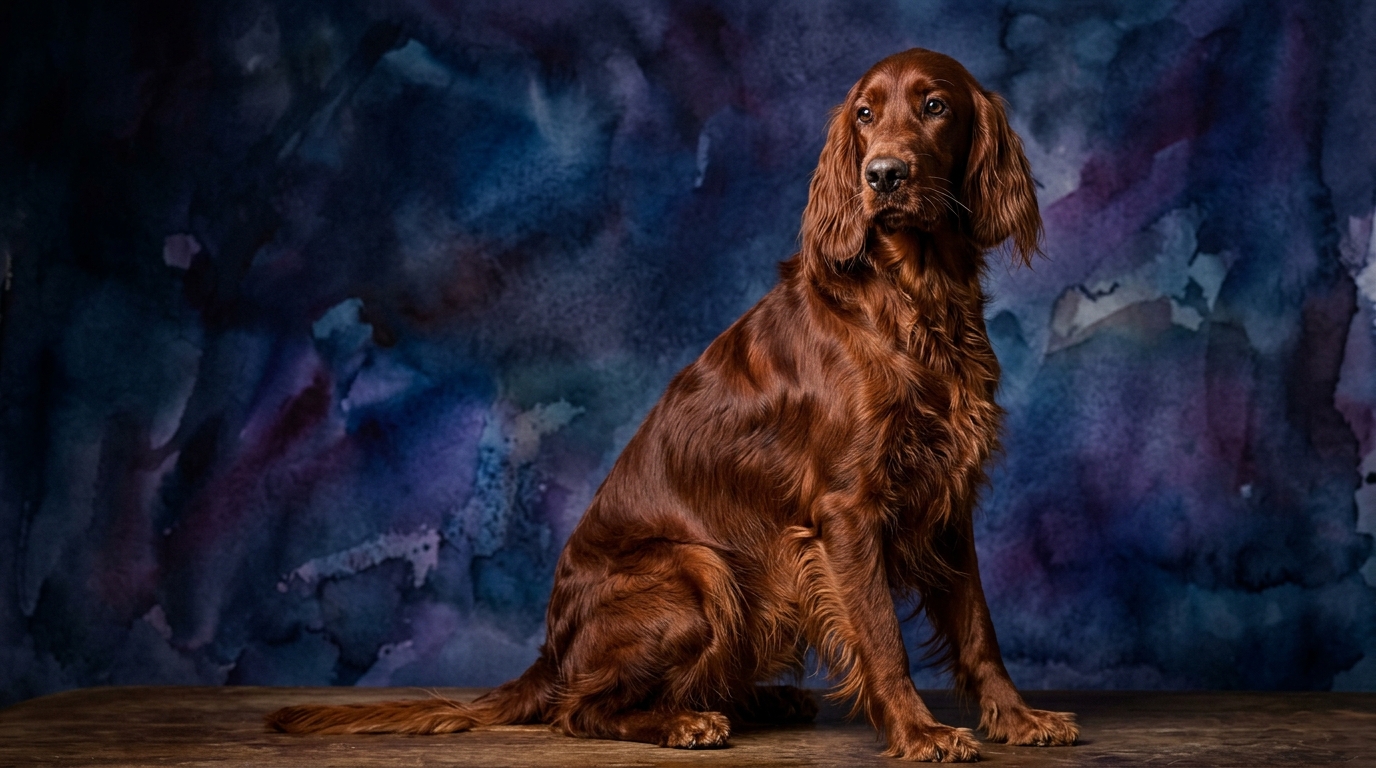
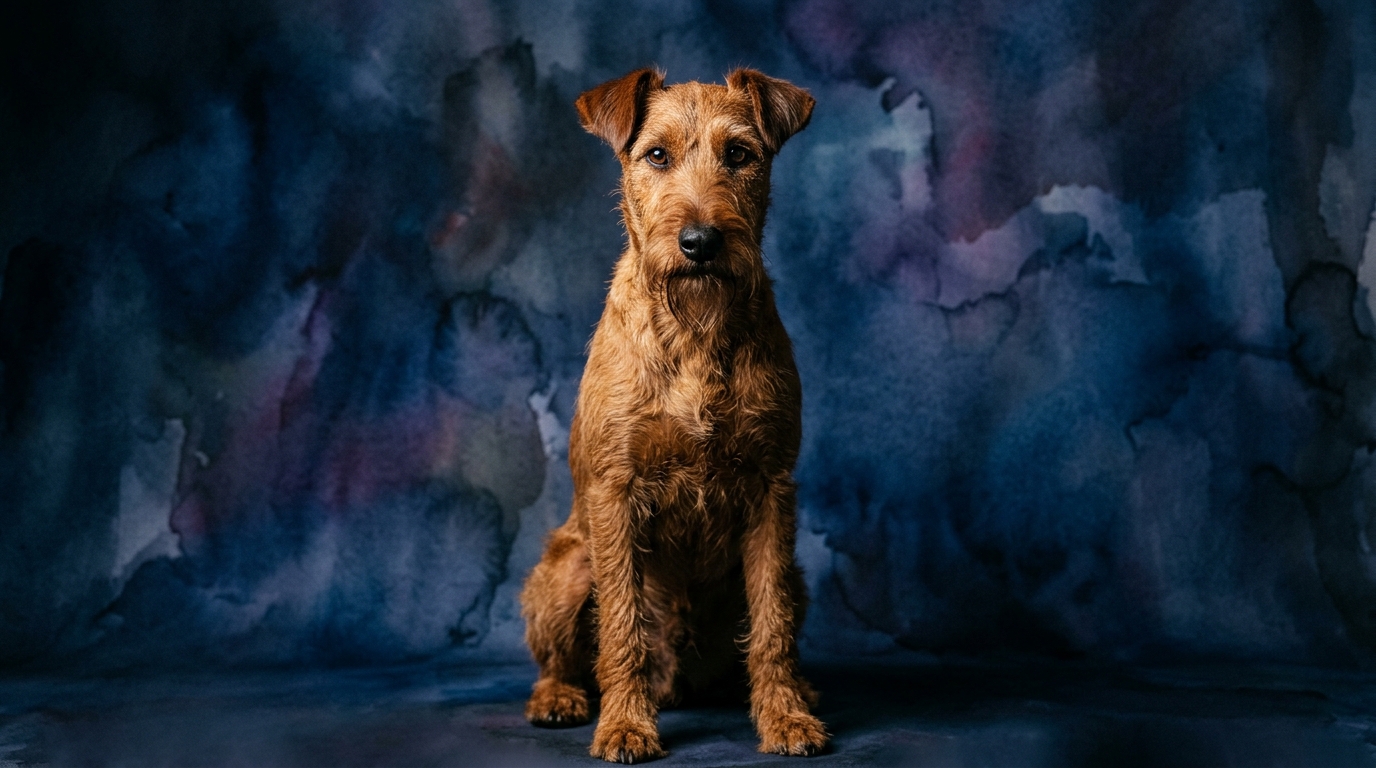
At The Cosmic Pet Pet IQ Lab, we evaluate canine intelligence across five key dimensions, revealing the nuanced mental makeup of each breed. The Irish Setter, a Sporting group member and Coren-ranked #35, and the Irish Terrier, a robust Terrier group member, offer a compelling contrast in their cognitive strengths.
The **Irish Setter** demonstrates a strong capacity for navigating complex situations, figuring out novel challenges, and adapting strategies, earning a **Problem Solving score of 4/5**. These dogs pick up new commands and routines with impressive alacrity, often requiring fewer repetitions than many other breeds, reflected in their **Training Speed of 4/5**. They possess a moderate understanding of human emotional states and social cues, generally responsive to their family's moods, scoring **Social Intelligence at 3/5**. Their **Instinctive Drive is 3/5**, exhibiting a moderate but persistent drive for tasks related to their sporting heritage, typically channeled and cooperative. Finally, they boast a robust memory, retaining learned behaviors, commands, and even specific locations over extended periods, achieving a **Memory score of 4/5**.
The **Irish Terrier** approaches challenges with a direct, often tenacious mindset, excelling at practical, persistent problem-solving, earning a **Problem Solving score of 3/5**. They learn at a steady pace, requiring consistent, positive reinforcement to solidify new commands; their independent nature means they absorb information effectively, but their compliance can sometimes be influenced by their own strong will, giving them a **Training Speed of 3/5**. Similar to the Setter, they display a moderate capacity for understanding social dynamics, capable of forming strong bonds and reading basic human emotions, but valuing clear boundaries, scoring **Social Intelligence at 3/5**. Possessing a moderate, yet potent, instinctive drive characteristic of their terrier lineage, expressed through focused hunting or digging, their **Instinctive Drive is 3/5**. Their memory retains information adequately for daily routines and learned behaviors, reliable for practical purposes, with a **Memory score of 3/5**.
Where the Irish Setter Excels Cognitively
The Irish Setter shines with its superior problem-solving and training speed, indicating a mind that not only grasps new concepts quickly but also applies them flexibly. Their 4/5 problem-solving score means they are adept at navigating novel situations, such as figuring out how to open a complex puzzle toy or understanding a sequence of commands to retrieve a specific item from another room. Coupled with a 4/5 training speed, they are often eager students, absorbing new skills like advanced obedience, agility courses, or even complex scent work with fewer repetitions. This cognitive agility allows them to adapt rapidly to changing environments or learning new roles, making them highly versatile companions who can master a wide array of tasks. Furthermore, their 4/5 memory ensures that once a lesson is learned, it tends to stick, leading to consistent performance and reliability in their learned behaviors over time.
Where the Irish Terrier Shows Unique Cognitive Strengths
While not boasting numerically higher scores, the Irish Terrier's cognitive strengths lie in the *application* of its balanced intelligence, particularly its tenacious drive and self-reliant problem-solving. Their 3/5 problem-solving, combined with a potent 3/5 instinctive drive, means they approach challenges with a direct, unwavering determination, often finding solutions through persistence rather than intricate analysis. This translates to a dog that, when tasked with an objective like rooting out a 'pest' in the yard (a toy, of course), will apply relentless focus until the task is complete, demonstrating a robust, practical form of intelligence. Their moderate social intelligence (3/5) can also be viewed as a cognitive advantage in certain contexts; it suggests a less anxious reliance on constant human validation, fostering a strong sense of independence and self-assurance. This allows them to operate effectively and confidently in situations where a more socially sensitive breed might hesitate or become overstimulated, making them resilient and unflappable. Their cognitive profile is perfectly suited for independent action and determined pursuit, requiring less direct instruction for tasks they deem important.
Ease of Training: Behavioral Differences Unpacked
The Irish Setter generally proves to be the easier and faster breed to train, largely due to its superior training speed (4/5) and problem-solving abilities (4/5). Setters typically demonstrate a strong desire to please their handlers and possess the cognitive flexibility to quickly understand and execute new commands, making them highly responsive to positive reinforcement methods. Their capacity for rapid learning means they master basic obedience and complex tasks with fewer repetitions, often anticipating what is expected of them. In contrast, the Irish Terrier, with its 3/5 training speed and a more independent streak, requires a different training approach. While equally capable of learning, Terriers can be more willful and less inclined to obey simply for the sake of pleasing; their compliance often hinges on strong motivation and the perceived value of the task. Their problem-solving (3/5) is more geared towards practical, self-directed solutions, which can sometimes manifest as selective hearing if a command conflicts with their immediate interests or a stimulating scent. Therefore, training an Irish Terrier demands greater patience, consistency, and creative methods to engage their independent spirit and channel their inherent drive effectively.
Matching Canine Cognition to Owner Lifestyle
Both breeds are inherently active, but their cognitive needs and energy output align differently with owner lifestyles. The Irish Setter, with its higher problem-solving and memory scores, thrives with owners who can provide consistent mental engagement alongside physical exercise. These dogs enjoy activities that challenge their intellect, such as advanced obedience, agility, field trials, or even dog sports that require strategic thinking. They are well-suited for active owners who relish long walks, runs, and dedicated training sessions that tap into their cooperative and intelligent nature. A relaxed owner might find a Setter's need for mental stimulation overwhelming, potentially leading to boredom-induced behaviors if their cognitive capacities are not adequately utilized. The Irish Terrier, while also requiring considerable physical activity, suits active owners who appreciate a more independent and tenacious companion. Their instinctive drive and practical problem-solving mean they excel in activities like earthdog trials, hiking, or exploring environments where their natural curiosity and determination can be unleashed. They are less about intricate cooperation and more about robust, self-directed exploration and vigorous play. While they need exercise, a 'relaxed' owner who cannot provide consistent engagement and firm, positive guidance for their spirited nature might struggle with the Terrier's independent decision-making and strong will. Neither breed is ideal for a truly sedentary lifestyle, but the Setter leans towards structured, cooperative activity, while the Terrier thrives on robust, independent, and often spontaneous exploration.
The Verdict
Opt for an Irish Setter if you desire a highly trainable, cooperative companion eager to engage in complex learning tasks and participate in structured dog sports or advanced obedience. Their keen problem-solving and memory make them excellent partners for owners who appreciate a dog that learns quickly and retains information reliably.
Select an Irish Terrier if you appreciate a spirited, independent, and tenacious companion that excels at practical problem-solving and self-directed activity, requiring consistent, firm, and patient guidance to channel their robust drive. They are ideal for owners who enjoy an active lifestyle and can provide engaging outlets for their terrier grit.
🧠 Find Your Pet's IQ Score
Our Pet IQ Lab assessment covers 25+ tests across 5 cognitive dimensions — personalized to your breed.
Take the Full IQ Test →Frequently Asked Questions
Which breed is more adaptable to different living situations?
The Irish Setter, with its generally more cooperative nature and higher problem-solving aptitude, tends to adapt more readily to various living situations, provided its needs for exercise and mental engagement are met. The Irish Terrier's strong independent streak means it can adapt, but it thrives best in environments where its determined personality and physical drives can be consistently managed and channeled.
How do their social intelligence scores impact their interactions with other pets or strangers?
Both breeds share a 3/5 social intelligence score, suggesting they are capable of understanding basic social cues. Setters, often more eager to please, might be more amenable to polite introductions with strangers or other pets, though their energy can be effusive. Terriers, while not overtly aggressive, are known for their spirited nature and may require more structured introductions to ensure harmonious interactions, especially with other dogs.
What kind of mental stimulation does each breed need?
Irish Setters benefit from mental stimulation that involves problem-solving and learning new commands, such as puzzle toys, scent work, advanced trick training, or agility. Irish Terriers thrive on mental challenges that tap into their instinctive drives, like supervised 'digging' pits, earthdog trials, robust fetch games, or exploring new, safe environments where they can use their senses and tenacity.