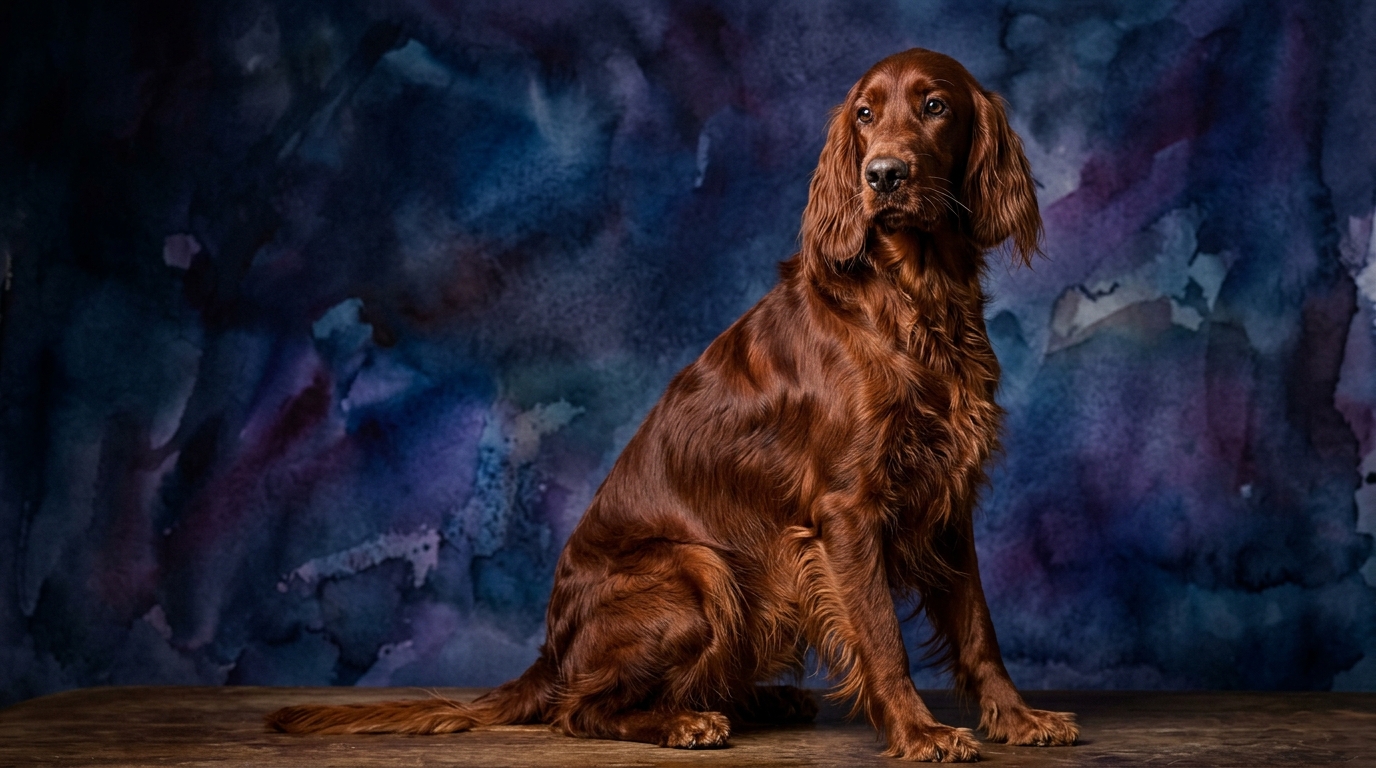
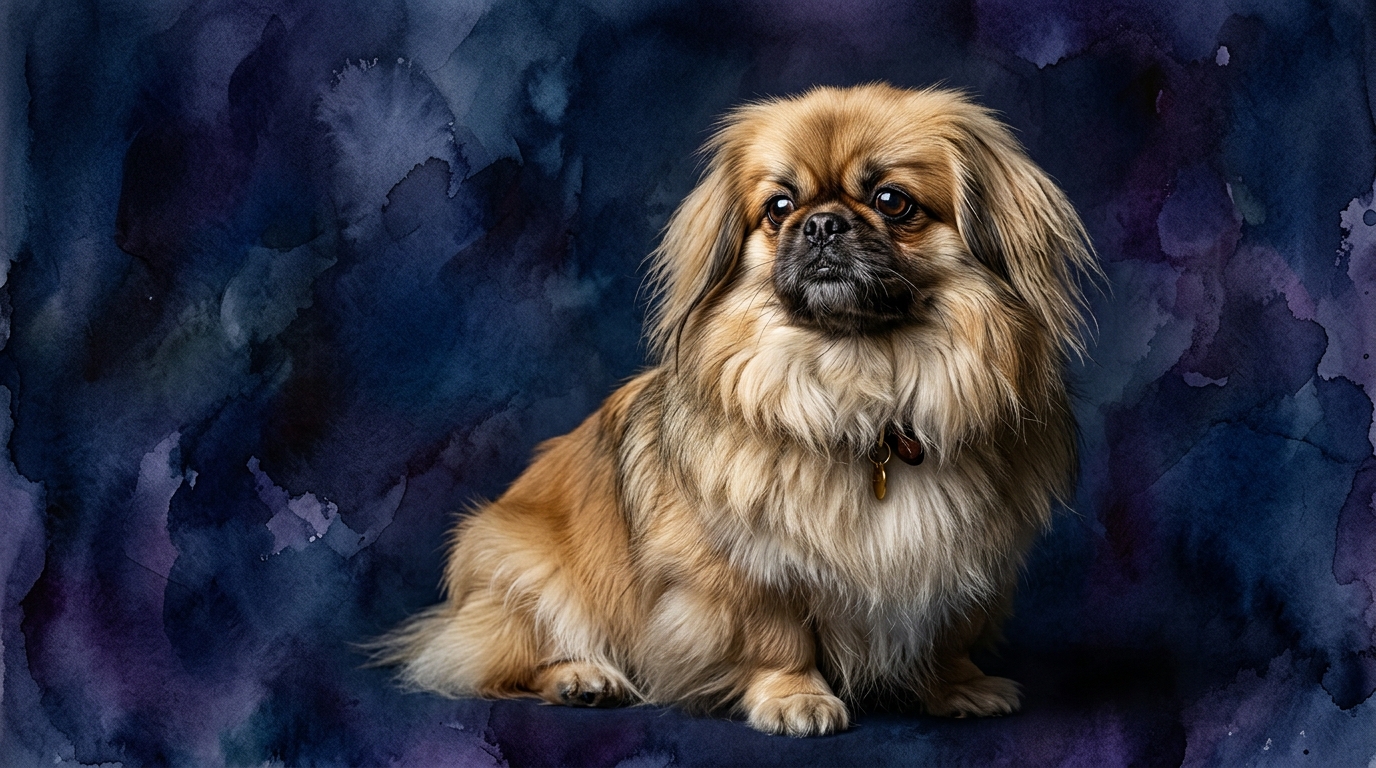
Side-by-Side IQ Profile: Irish Setter vs. Pekingese
At The Cosmic Pet Pet IQ Lab, we evaluate canine intelligence across five key dimensions, providing a nuanced understanding of each breed's cognitive strengths. The Irish Setter, a Sporting group member with a Coren rank of #35, presents a profile geared towards active engagement and learning, while the Toy group's Pekingese, ranked #77 by Coren, demonstrates an intelligence more focused on companionship and environmental awareness.
The Irish Setter exhibits strong problem-solving capabilities (4/5), suggesting a dog that can independently figure out solutions to challenges, whether it's navigating a complex scent trail or strategizing to retrieve a hidden object. This score indicates a capacity for flexible thinking and adapting to novel situations, a valuable trait for a dog historically bred for fieldwork requiring independent decision-making. With a high training speed (4/5), Irish Setters tend to grasp new commands and sequences quickly, often requiring fewer repetitions to master a task. This rapid learning curve makes them responsive to consistent instruction and amenable to advanced obedience or specialized training, reflecting their heritage as cooperative hunting partners. Their social intelligence, rated at 3/5, indicates a moderate ability to interpret human cues and social situations. While generally friendly and responsive to their family, they might not always be the most subtle communicators or as acutely sensitive to complex emotional shifts as some other breeds, preferring clear interactions. An instinctive drive of 3/5 highlights their inherent predisposition for certain behaviors, particularly those related to their sporting background like scenting, ranging, and retrieving. While present, this drive is generally manageable and can be channeled through appropriate outlets, rather than being overwhelming. Irish Setters possess strong memory capabilities (4/5), allowing them to retain learned commands, routines, and experiences over extended periods. This robust memory aids in reinforcing training, remembering specific locations for game, and recalling past interactions, contributing to their reliability in various tasks.
In contrast, the Pekingese displays moderate problem-solving skills (3/5), indicating it can learn routines and simple tasks but might require more guidance for intricate puzzles or novel situations. Their cognitive approach leans more towards observing and reacting within their established environment rather than actively seeking out complex solutions, fitting their role as pampered companions. With a training speed of 3/5, Pekingese generally learn at a steady pace, though they may require more consistent repetition and patience compared to faster-learning breeds. They respond best to positive reinforcement and clear, concise instructions, gradually absorbing new commands within their comfort zone. Their social intelligence rating of 3/5 suggests a moderate capacity for understanding human cues and social dynamics. Pekingese are often astute observers of their immediate family, capable of discerning moods and preferences, and will communicate their own needs and desires effectively within their established social circle. The Pekingese's instinctive drive at 3/5 reflects a moderate presence of innate behaviors, primarily focused on companionship and guarding their immediate space. Unlike working breeds, their drives are less about physical tasks and more about establishing comfort, security, and a strong bond with their chosen humans. Pekingese have moderate memory capabilities (3/5), allowing them to recall familiar routines, people, and places. They can retain learned commands and house rules, but might not excel at remembering long sequences of actions or complex scenarios, preferring consistency in their daily lives.
Where the Irish Setter Wins Cognitively
The Irish Setter clearly excels in areas demanding active engagement and retention. Their superior problem-solving (4/5) means they are more adept at navigating novel situations and figuring out solutions independently, whether it's finding a dropped toy or working out how to access a forbidden treat. This breed's high training speed (4/5) allows them to pick up complex command sequences and sports like agility or advanced obedience with impressive efficiency, making them a joy for owners who relish teaching and refining skills. Furthermore, their robust memory (4/5) ensures that these learned behaviors and environmental lessons stick, building a reliable and consistent working or companion dog over time. These combined strengths make the Irish Setter particularly suited for roles requiring adaptability and consistent performance.
Where the Pekingese Wins Cognitively
While the Pekingese may not boast higher scores in raw problem-solving or training speed, its cognitive strengths are uniquely tailored to its historical role as a companion. Its moderate social intelligence (3/5) allows it to be remarkably perceptive within its immediate human family, often understanding subtle shifts in mood or routine, and effectively communicating its desires or discomforts through nuanced expressions and behaviors. The Pekingese's cognitive 'win' lies in its focused attention on its immediate environment and human interactions, excelling at discerning established household dynamics and expressing clear preferences, rather than solving complex external puzzles. This breed's intelligence is often expressed through its steadfast devotion and its ability to subtly 'manage' its human companions to ensure its comfort and security, making it a master of domestic harmony.
Which is Easier to Train and Why
The Irish Setter is generally easier to train due to its higher training speed (4/5) and problem-solving abilities (4/5). They are eager to please and quickly connect actions with rewards, making them highly responsive to positive reinforcement and capable of mastering a wide array of commands and tasks in fewer repetitions. Their strong memory further solidifies learned behaviors, leading to a more consistent and reliable response across various environments. For example, an Irish Setter might quickly learn a multi-step retrieve, remembering the sequence and location of objects with ease, and will likely perform reliably in different settings once trained.
In contrast, the Pekingese, with moderate scores in both training speed (3/5) and problem-solving (3/5), requires more patience and consistency. While they are certainly trainable, their learning process might be slower, and they can sometimes exhibit a more independent or stubborn streak, demanding a dedicated and gentle approach focused on building trust and making training a positive, low-pressure experience. A Pekingese might take longer to grasp basic house rules or leash manners, often needing more repetition and a consistent routine to internalize these behaviors, preferring familiar patterns over novel challenges during training sessions.
Which Suits Active Owners vs. Relaxed Owners
The Irish Setter is an ideal match for active owners who desire a cognitively engaged and physically capable partner. Their strong instinctive drive (3/5), combined with high problem-solving and training speed, means they thrive with regular exercise, mental stimulation, and opportunities to use their natural abilities in activities like hiking, field trials, or dog sports. Owners who enjoy teaching new skills and participating in outdoor adventures will find the Irish Setter a fulfilling companion, as this breed genuinely enjoys working alongside its human and exploring the world with purpose.
Conversely, the Pekingese is perfectly suited for relaxed owners seeking a devoted and less physically demanding companion. Their moderate instinctive drive and preference for comfort make them content with indoor living and shorter, leisurely walks, focusing their energy on observing and interacting within the home. Owners who appreciate a quiet, observant presence and enjoy showering affection on a companion dog without the need for extensive training regimens or strenuous activities will find the Pekingese a wonderful fit, as their cognitive focus is primarily on comfort, routine, and close human connection.
The Verdict
Opt for an Irish Setter if you are an active individual or family seeking a highly trainable, intelligent partner for sports, outdoor adventures, and engaging mental challenges, appreciating a dog that learns quickly and remembers well.
Select a Pekingese if you desire a devoted, observant companion for a relaxed lifestyle, valuing a dog that thrives on consistent routines, close companionship, and expresses its intelligence through subtle social interactions within the home.
🧠 Find Your Pet's IQ Score
Our Pet IQ Lab assessment covers 25+ tests across 5 cognitive dimensions — personalized to your breed.
Take the Full IQ Test →Frequently Asked Questions
Is an Irish Setter good for first-time dog owners?
An Irish Setter can be a good fit for first-time owners who are prepared for their energy levels and commitment to consistent training. Their high training speed and desire to please make them responsive students, but their need for mental and physical stimulation requires dedication.
Do Pekingese dogs need much mental stimulation?
Pekingese dogs benefit from moderate mental stimulation, primarily through consistent routines, social interaction with their family, and gentle play. They don't typically require complex puzzle toys or extensive training sessions, preferring comfort and predictable engagement within their environment.
How do their Coren ranks reflect their intelligence differences?
The Coren rank of #35 for the Irish Setter and #77 for the Pekingese generally reflects the Irish Setter's superior obedience and working intelligence, indicating faster learning and command execution. The Pekingese's lower rank suggests they may require more repetitions to learn new commands and might be less inclined towards complex obedience tasks, prioritizing independence and comfort over strict adherence.