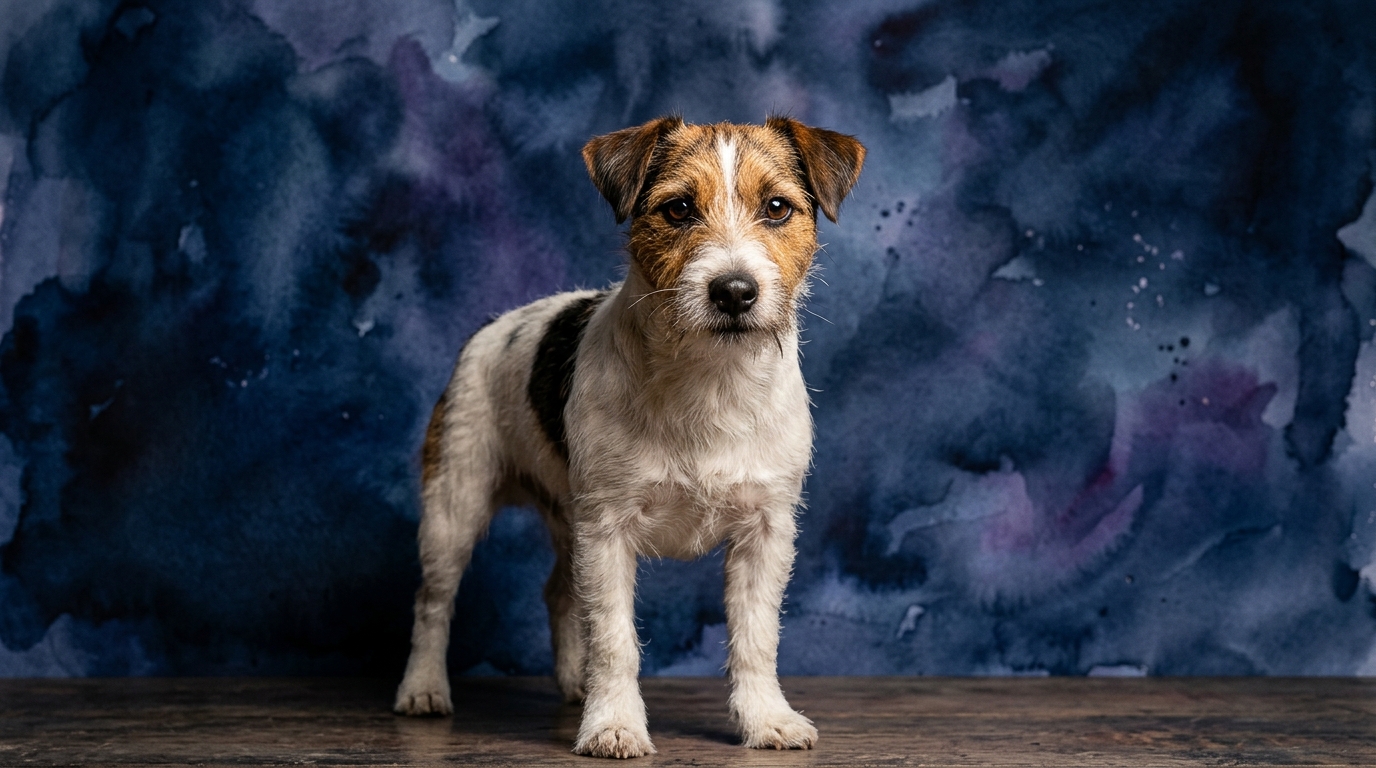
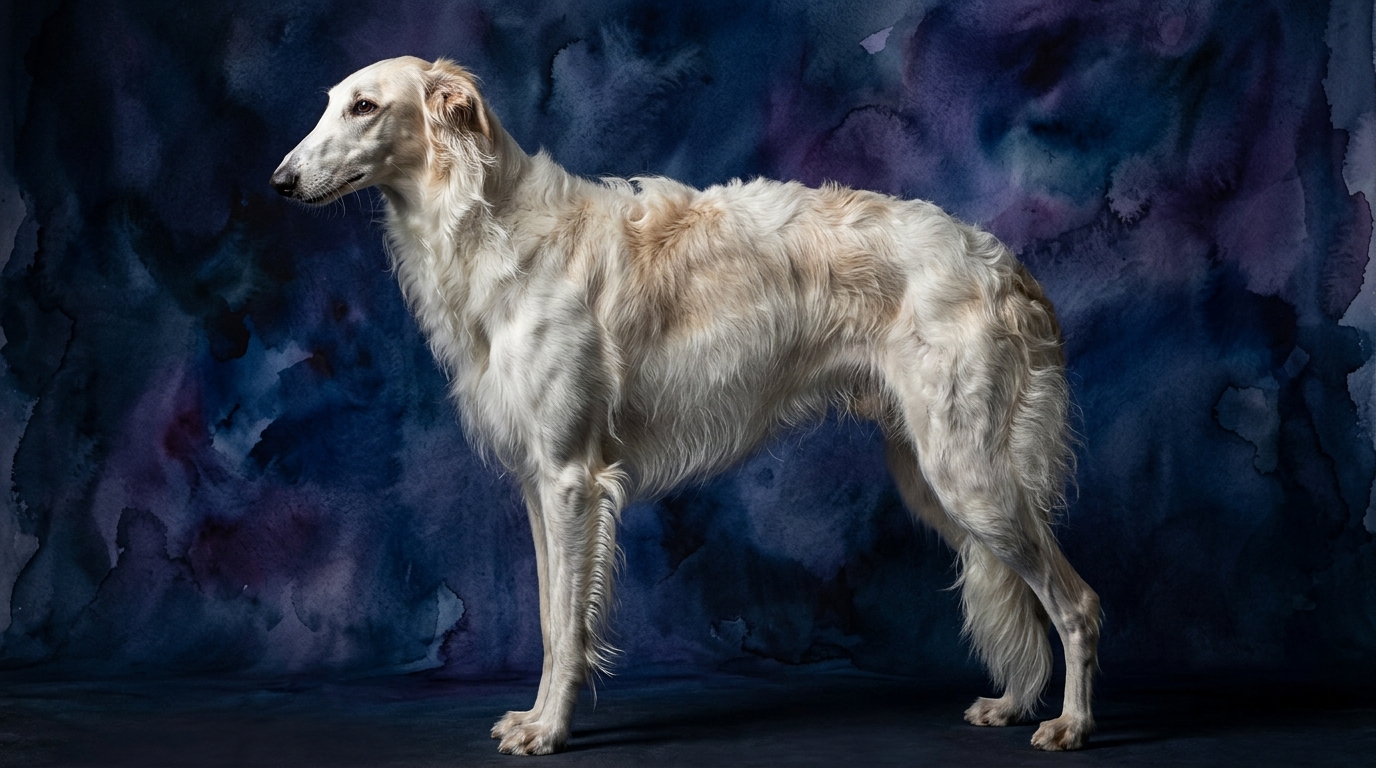
Side-by-Side IQ Profile: Jack Russell Terrier vs. Borzoi
When examining the cognitive blueprints of the Jack Russell Terrier and the Borzoi, we find two vastly different approaches to canine intelligence. The Jack Russell Terrier, a compact dynamo, scores a perfect 5/5 in Problem Solving, indicating an exceptional capacity for independent thought and devising novel solutions to obstacles or challenges, whether it's outsmarting a critter or figuring out how to open a gate. Their Training Speed is a moderate 3/5; while capable of learning rapidly, their independent nature and strong will can sometimes make consistent compliance a marathon. Social Intelligence stands at 3/5, meaning JRTs are generally adept at understanding human cues and social dynamics within their immediate family, though their focus can often be more task-oriented than purely social. A resounding 5/5 in Instinctive Drive defines their very essence, driven by an intense prey drive and an insatiable desire to hunt, dig, and explore. Finally, their Memory is strong at 4/5, particularly for locations, routines, and experiences related to their prey drive or past successes in problem-solving.
The Borzoi, with its elegant and reserved demeanor, offers a different intellectual landscape. Its Problem Solving is rated 3/5; these dogs are capable of navigating complex situations and learning, but they tend to approach challenges with less spontaneous ingenuity than some breeds, often preferring established routines or human guidance. Similar to JRTs, their Training Speed is 3/5; Borzois learn at a moderate pace, but their sighthound temperament means they may not always see the immediate value in compliance, leading to a thoughtful, sometimes aloof, approach to instruction. Social Intelligence also comes in at 3/5; they are keenly observant of their human companions and can form deep, sensitive bonds, often displaying a quiet understanding of emotions and social nuances within their family unit. Instinctive Drive is a 3/5; while possessing a sighthound's innate drive to chase, their hunting instinct is typically geared towards visual pursuit over close-quarters engagement, and it can be less omnipresent than a terrier's. Their Memory is a solid 3/5, maintaining a recall of places, people, and learned commands, though it might be less focused on intricate details or long-term strategic planning compared to a breed with higher problem-solving scores.
Where the Jack Russell Terrier Wins Cognitively
The Jack Russell Terrier's cognitive profile truly shines in areas demanding independent thought and tenacious application of will. Its perfect 5/5 in Problem Solving means these dogs are constantly analyzing their environment for opportunities, whether it's finding the weak point in a fence or devising a strategy to retrieve a toy from an inaccessible spot. This isn't just about learning tricks; it's about active, adaptive intelligence that seeks out and overcomes challenges. Coupled with a 5/5 in Instinctive Drive, the JRT's mind is perpetually engaged, driven by an ancient blueprint for seeking out and dispatching quarry. This strong drive fuels their problem-solving, pushing them to overcome physical and mental barriers with unwavering determination. Their 4/5 Memory also supports this, allowing them to recall successful tactics and locations, building a cognitive map of their world ripe for exploitation. When faced with a novel challenge, a JRT won't wait for instructions; its mind is already formulating a plan, making it a formidable and resourceful companion.
Where the Borzoi Wins Cognitively
While the Borzoi's cognitive scores might appear lower in direct comparison to the JRT, its strengths lie in a different kind of intelligence, one emphasizing keen observation, calm demeanor, and a unique form of independence. Its 3/5 in Instinctive Drive, specifically, allows for a less frenetic mental state than a terrier. This means while it possesses the innate drive to chase, it's often more selective and less perpetually 'on,' leading to a quieter, more contemplative presence indoors. This reduced intensity can be a significant cognitive 'win' for owners seeking a less constantly demanding mental companion. Their moderate 3/5 in Social Intelligence, combined with their observational nature, means they form deep, sensitive bonds without the constant need for engagement that some breeds exhibit. This breed's cognitive advantage is in its thoughtful, often reserved approach to life, processing information with a serene focus rather than a boisterous enthusiasm. They excel in environments where their keen visual perception and calm disposition are valued over constant interaction or intricate puzzle-solving.
Which is Easier to Train and Why
Despite both breeds scoring a 3/5 in Training Speed, the underlying cognitive profiles suggest vastly different training experiences. The Jack Russell Terrier's exceptional Problem Solving (5/5) and powerful Instinctive Drive (5/5) mean they are quick to grasp concepts but also quick to decide if a command serves their immediate, often self-directed, goals. Training a JRT involves harnessing that independent spirit and channeling their intense drive, which can be challenging as they often prefer to 'work it out' themselves or chase a perceived quarry rather than comply. Their memory (4/5) helps them retain lessons, but their strong will can make consistency and engaging motivation paramount to success, as they are not inherently inclined to simply follow orders.
The Borzoi, with its similar 3/5 Training Speed, but lower Problem Solving (3/5) and Instinctive Drive (3/5), presents a different dynamic. They might not challenge the trainer with constant independent problem-solving or a relentless prey drive, but their sighthound independence means they can be aloof and require motivation that speaks to their specific interests, often involving chase or comfort. They learn, but compliance often stems from a gentle bond and understanding rather than an innate desire to please. Training a Borzoi requires patience and understanding of their sensitive, sometimes stubborn, nature, relying less on force and more on building trust and making training intrinsically rewarding. Neither is inherently 'easier' than the other; they simply require different training philosophies and a deep appreciation for their distinct cognitive styles.
Which Suits Active Owners vs. Relaxed Owners
The Jack Russell Terrier is undeniably suited for active owners. Its 5/5 Problem Solving and 5/5 Instinctive Drive translate into a dog that requires significant mental and physical engagement daily. These are not dogs content with a short walk around the block; they need outlets for their hunting instincts, opportunities to solve puzzles, and vigorous exercise to prevent boredom and destructive behaviors. Owners who enjoy dog sports like agility, earthdog trials, or long, exploratory hikes, and who are prepared to provide structured 'work' for their dog's active mind, will find a JRT a stimulating and rewarding companion. Their cognitive makeup thrives on challenge and purpose.
The Borzoi, conversely, typically suits a more relaxed, yet still dedicated, owner. While they are sighthounds built for incredible bursts of speed and absolutely require safe, secure spaces for intense running, their lower instinctive drive (3/5) and generally calmer demeanor indoors mean they are often content to lounge gracefully after their exercise needs are met. Owners who appreciate a quiet, elegant companion that is observant but not constantly demanding attention, and who can reliably provide opportunities for their unique running style, will find the Borzoi a suitable match. They thrive with owners who understand their independent streak and do not expect constant, effusive interaction, valuing their serene presence and sensitive nature.
The Verdict
Choose a Jack Russell Terrier if you are an active, experienced owner ready to channel boundless energy and a keen, problem-solving mind into structured activities and consistent training.
Opt for a Borzoi if you appreciate a calm, independent, and elegant companion, are prepared for their specific exercise requirements, and value a sensitive bond over constant interactive demands.
🧠 Find Your Pet's IQ Score
Our Pet IQ Lab assessment covers 25+ tests across 5 cognitive dimensions — personalized to your breed.
Take the Full IQ Test →Frequently Asked Questions
Is a Jack Russell Terrier good with other pets?
A JRT's high instinctive drive (5/5) means they have a strong prey drive, which can make them challenging with smaller pets like cats or rodents unless extensively socialized from a young age. They generally coexist better with other dogs, especially those of similar energy levels, though their bold nature can sometimes lead to dominance issues.
Do Borzois need a lot of grooming?
Yes, Borzois have a long, silky coat that requires regular grooming to prevent matting and keep it healthy. Weekly brushing is typically needed, with more frequent sessions during shedding seasons, to manage their elegant but demanding coat.
Which breed is more vocal?
Jack Russell Terriers tend to be more vocal, often using barks, growls, and yaps to communicate their excitement, alert to perceived threats, or express frustration, stemming from their high drive and problem-solving nature. Borzois are generally much quieter, only barking occasionally or when there's a specific reason, preferring a more reserved form of communication.