
Side-by-Side IQ Profile
The Jack Russell Terrier exhibits exceptional Problem Solving (5/5), often demonstrating cleverness and resourcefulness in navigating complex situations or achieving desired outcomes, sometimes independently. Their Training Speed (3/5) suggests they absorb new concepts at a steady pace, but their strong will can sometimes translate into selective obedience rather than rapid, eager compliance. Social Intelligence (3/5) means they can interpret human cues and canine body language, yet their interactions are often driven by their own motivations. A profound Instinctive Drive (5/5) fuels their natural prey drive, digging tendencies, and relentless pursuit of perceived 'work.' Finally, their Memory (4/5) allows them to retain intricate sequences of events and learned behaviors, making them adept at remembering past successes or failures.
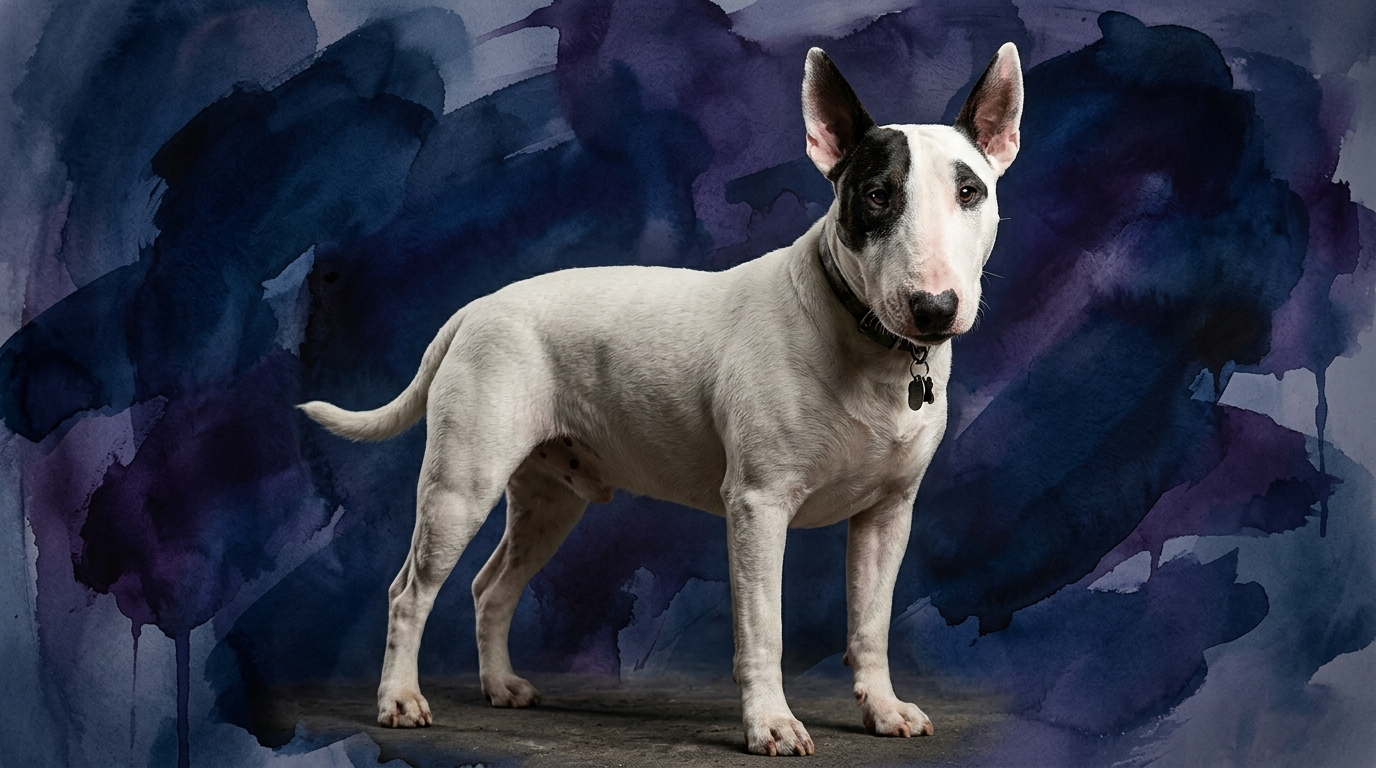
The Bull Terrier shows a Problem Solving (3/5) capability that is more methodical than spontaneous, approaching challenges with perseverance rather than rapid, innovative solutions. Their Training Speed (3/5) indicates they are capable learners, requiring consistent, clear instruction to solidify new behaviors and commands. In terms of Social Intelligence (3/5), they are generally affable and can form strong bonds, capable of understanding social dynamics within their family unit, though they may not always prioritize subtle social cues over their own comfort. Their Instinctive Drive (3/5) is present but more moderate compared to many terriers, manifesting as curiosity and occasional prey drive without the same obsessive intensity. Their Memory (3/5) allows them to recall learned information and routines, benefiting from regular reinforcement to keep their knowledge sharp.
Where Jack Russell Terrier Wins Cognitively
The Jack Russell Terrier clearly stands out for its formidable problem-solving prowess and intense instinctive drive. With a 5/5 in problem-solving, they are masters of ingenuity, capable of devising complex strategies to overcome obstacles, whether it's escaping a yard, retrieving a hidden toy, or manipulating situations to their advantage. This isn't just about following commands; it's about independent thought and creative application of their understanding. This cognitive strength, coupled with their 5/5 instinctive drive, means they possess an unparalleled determination to pursue goals, making them exceptionally effective in tasks requiring persistence and cunning, such as scent work or agility courses where they must navigate novel challenges. Their 4/5 memory further enhances this, allowing them to recall successful tactics and apply them to new, similar situations, learning from experience at an accelerated rate. For owners seeking a dog that actively engages with challenges and often outsmarts its environment, the Jack Russell Terrier's cognitive profile offers an engaging, albeit demanding, partnership.
Where Bull Terrier Wins Cognitively
While the Bull Terrier's cognitive scores might appear lower on paper compared to the Jack Russell, their unique profile presents distinct advantages, particularly in terms of predictability and integration into a family setting. Their moderate Instinctive Drive (3/5) means they are less likely to be consumed by the relentless pursuit of prey or obsessive digging that characterizes many terriers. This can translate to a calmer presence in the home and a reduced likelihood of engaging in behaviors driven purely by instinct, which some owners might find easier to manage and redirect. Their Social Intelligence (3/5), combined with their more measured problem-solving and training speed, suggests a dog that is generally good-natured and amenable to forming strong, stable bonds with their human companions. They are capable of understanding family routines and social cues without the independent, sometimes self-serving, cognitive approach of a higher-drive breed. This makes them less prone to challenging boundaries purely out of a desire for independent action, instead often seeking to participate within the established family structure. For those who value a sturdy, affectionate companion that is less prone to intense, instinct-driven escapades, the Bull Terrier's balanced cognitive approach can be a significant benefit.
Which is Easier to Train and Why
When considering ease of training, the distinction between these two breeds lies in the nature of the challenge. The Jack Russell Terrier, with its 5/5 problem-solving and 5/5 instinctive drive, can learn new concepts quickly, but their independent spirit and strong internal motivations (3/5 training speed) mean they often decide when and if to apply their knowledge. Training a Jack Russell involves channeling their intense drives and making the desired behavior seem like their own brilliant idea, or the fastest route to a highly coveted reward. Their tendency to think for themselves can make rote obedience challenging, as they might find more interesting things to do than follow a repetitive command. Real behavioral differences include their propensity for independent exploration, digging, and chasing, all of which require diligent, consistent management and redirection during training. In contrast, the Bull Terrier, with 3/5 across problem-solving, training speed, and memory, requires a more patient and consistent approach. They may not grasp new commands as rapidly or generalize them as quickly as a Jack Russell, but their moderate instinctive drive means they are often less distracted by environmental stimuli and more focused on their handler. Their training is more about clear communication, positive reinforcement, and consistent repetition to build reliable habits. While they might not innovate solutions, they are generally eager to please their family and will reliably perform learned tasks once fully understood. Therefore, while both require dedicated effort, the Bull Terrier might be considered 'easier' for an owner seeking predictable progress through consistent methods, whereas the Jack Russell demands a trainer who thrives on intellectual challenge and can outwit a clever, independent mind.
Which Suits Active Owners vs. Relaxed Owners
The cognitive profiles of the Jack Russell Terrier and Bull Terrier strongly dictate their suitability for different owner lifestyles. The Jack Russell Terrier, with its exceptional 5/5 problem-solving and 5/5 instinctive drive, is unequivocally suited for active owners who can provide substantial mental and physical engagement. These dogs thrive when given a 'job' to do, whether it's agility, earthdog trials, extensive hiking, or complex puzzle toys. Their high drive means they require consistent outlets for their energy and cunning, and without sufficient stimulation, they can become bored and channel their problem-solving skills into undesirable behaviors like destructive chewing or elaborate escape attempts. An owner who enjoys outdoor adventures, structured training, and can commit to daily, stimulating activities will find the Jack Russell an exhilarating companion. The Bull Terrier, on the other hand, with its more moderate 3/5 scores across the board, offers a more balanced energy profile, making it a good fit for owners who are active but perhaps not intensely so. While they still require regular exercise and mental stimulation to prevent boredom, their instinctive drive is less overwhelming. They enjoy walks, play sessions, and interactive toys, but their demands are generally more manageable than the relentless Jack Russell. They can adapt to a slightly more relaxed home environment, provided their needs for companionship and moderate activity are consistently met. A Bull Terrier can enjoy lounging with its family after a good walk, whereas a Jack Russell might still be looking for its next 'mission.'
The Verdict
Choose the Jack Russell Terrier if you are an active, experienced owner who relishes a cognitive challenge and can provide consistent, engaging outlets for a dog with intense drive and independent problem-solving skills.
Opt for the Bull Terrier if you seek a sturdy, affectionate companion that thrives on consistent routine, moderate activity, and a stable family environment, appreciating their more measured cognitive approach.
🧠 Find Your Pet's IQ Score
Our Pet IQ Lab assessment covers 25+ tests across 5 cognitive dimensions — personalized to your breed.
Take the Full IQ Test →Frequently Asked Questions
Do Jack Russell Terriers make good family pets?
Jack Russell Terriers can be excellent family pets for the right households, especially those active and experienced with their energetic and clever nature. They thrive with consistent training and clear boundaries, requiring owners who can channel their high drive and problem-solving skills positively.
Are Bull Terriers difficult to train?
Bull Terriers are not inherently difficult to train, but they do require patience, consistency, and positive reinforcement due to their moderate training speed and memory. They respond best to clear, predictable methods and benefit from early socialization and consistent routine.
Which breed is better for apartment living?
Neither breed is ideally suited for small apartment living without significant commitment to exercise and mental stimulation, but the Bull Terrier's more moderate instinctive drive might make them slightly more adaptable if their daily needs are met. Jack Russell Terriers typically require more space and outlets for their intense energy.