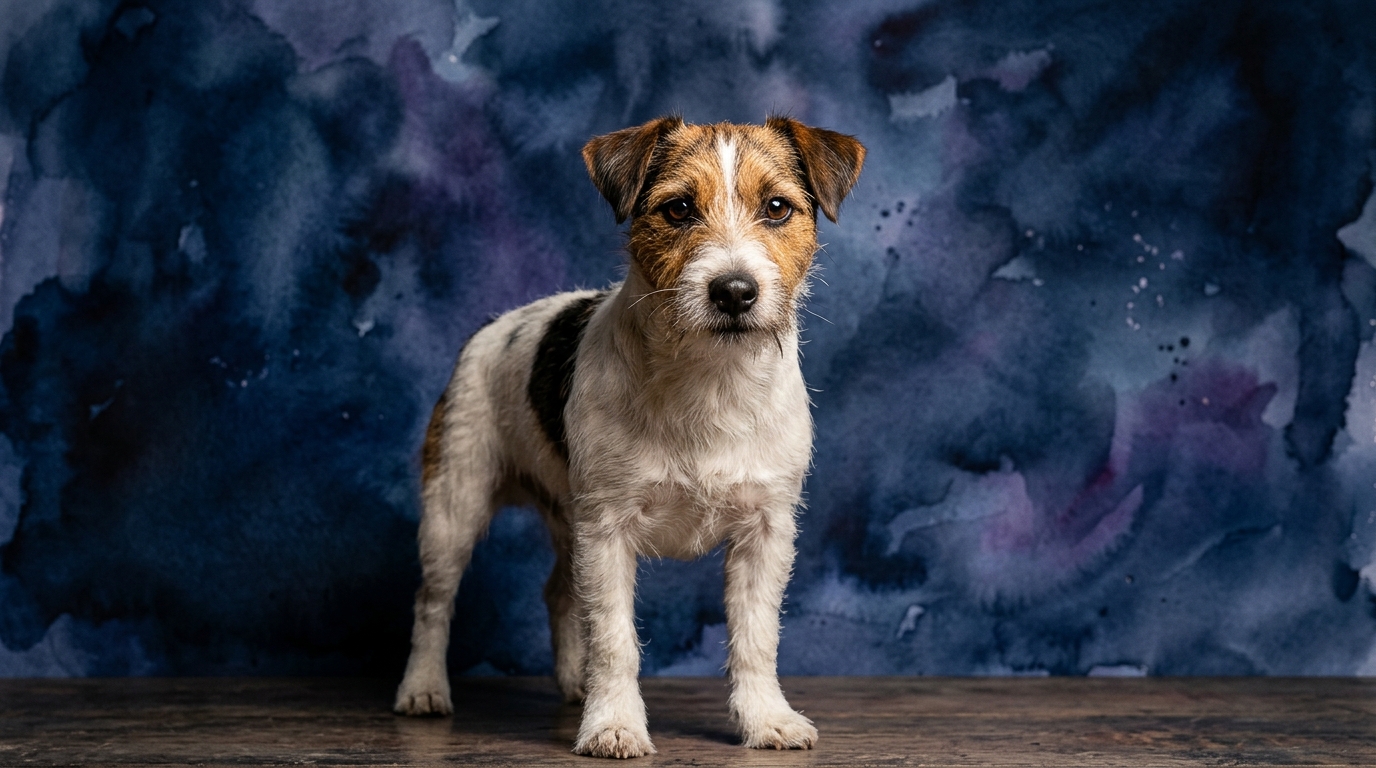

Side-by-Side IQ Profile
Let's delve into the Cosmic Pet Pet IQ Lab scores for each breed, examining their cognitive strengths across five key dimensions:
Jack Russell Terrier:
Problem Solving (5/5): This breed excels at independent problem-solving, employing tenacious and creative strategies to overcome obstacles or achieve objectives without much human direction.
Training Speed (3/5): Capable of learning, their strong independent streak can make them less inclined to immediate compliance, demanding consistent and patient training.
Social Intelligence (3/5): Jack Russells possess a moderate understanding of human cues, interacting on their own terms rather than seeking constant human affirmation.
Instinctive Drive (5/5): Their innate drive is exceptionally powerful, manifesting as relentless pursuit, deep exploration, and unwavering focus on natural terrier instincts.
Memory (4/5): They retain learned experiences, routines, and locations quite well, contributing to their cleverness in navigating their environment and recalling past successes.
Flat-Coated Retriever:
Problem Solving (4/5): Flat-Coats show a solid capacity for problem-solving, navigating complex tasks and adapting to new situations, often working collaboratively to find solutions.
Training Speed (4/5): This breed generally picks up new commands and routines with good alacrity, showing willingness to engage in training and respond positively.
Social Intelligence (3/5): Their social intelligence is moderate; they understand human interactions but aren't overly people-pleasing, often driven more by the task itself.
Instinctive Drive (3/5): While possessing the retriever's urge to fetch, their instinctive drive is moderate, making them generally less intensely focused on single-minded pursuits.
Memory (5/5): Flat-Coated Retrievers exhibit exceptional memory, retaining a vast array of commands, routines, and experiences with remarkable precision, significantly aiding their working roles.
Where Jack Russell Terrier Wins Cognitively
The Jack Russell Terrier truly shines in problem-solving and instinctive drive, both rated 5/5. These terriers are master strategists at achieving goals, whether escaping a yard or locating a hidden toy. Their high problem-solving means they persist, trying multiple approaches with tenacity. This cognitive strength is deeply intertwined with their potent instinctive drive. Bred for independent vermin control, a Jack Russell’s mind is wired to identify a target, formulate a plan, and execute with unwavering focus. This isn't about following instructions; it's about initiating complex actions based on internal motivation. For instance, a JRT might assess the quickest route to a squirrel, calculate shortcuts, and unleash a determined chase, adapting its strategy on the fly. Their 4/5 memory further supports this, allowing them to recall successful past strategies for new challenges, making them incredibly resourceful and persistent.
Where Flat-Coated Retriever Wins Cognitively
The Flat-Coated Retriever distinguishes itself with an outstanding memory (5/5) and a commendable training speed (4/5). These strengths make them adept at learning and retaining complex sequences of commands and tasks, a hallmark of their retriever heritage. A Flat-Coat can effortlessly recall a wide array of signals and cues, even after long breaks, making them superb for advanced obedience or field work. Their superior memory ensures concepts stick. Coupled with good training speed, they are eager to engage and absorb information efficiently, often making quick associations between actions and consequences. For example, in retrieving, a Flat-Coat remembers not just where a dummy fell but also the commands used to guide them and the precise retrieve technique. Their 4/5 problem-solving allows them to apply their vast memory to new challenges, often by drawing upon past learned behaviors for solutions.
Which Is Easier to Train and Why
When considering ease of training, the Flat-Coated Retriever generally offers a more straightforward experience. The Flat-Coat's 4/5 training speed means they quickly understand and respond to commands. Their exceptional 5/5 memory ensures lessons are retained, reducing reteaching. While their social intelligence is 3/5, they tend to be more cooperative due to their moderate instinctive drive (3/5), making them less prone to external distractions. They often enjoy collaborative training. In contrast, the Jack Russell Terrier, with 3/5 training speed, can be more challenging. Their high problem-solving (5/5) and powerful instinctive drive (5/5) mean they prioritize their own agenda – independent exploration or pursuit – over human directives. A JRT might understand a command but choose to ignore it if something more interesting captures their attention. Their moderate social intelligence (3/5) means they aren't inherently driven by human approval. Training a JRT requires immense consistency, creativity, and patience to channel their formidable drive and problem-solving into desired behaviors.
Which Suits Active Owners vs Relaxed Owners
Both breeds demand significant physical and mental engagement, but their specific needs cater to different 'active' owners. The Jack Russell Terrier, with its 5/5 instinctive drive and 5/5 problem-solving, suits highly active owners who provide constant mental stimulation for their dog's boundless energy and tenacious spirit. These dogs require challenging activities like agility, earthdog trials, or extensive scent work. Owners appreciating a dog that thinks for itself and enjoys a robust, often boisterous companion will find a JRT rewarding. A relaxed owner might be overwhelmed by a JRT's relentless energy and independent streak. The Flat-Coated Retriever, while active, aligns well with owners enjoying structured activities and a collaborative partnership. Their 4/5 training speed and 5/5 memory make them excellent partners for obedience, field trials, or long hikes, utilizing retrieving instincts and learning new skills. They are generally more amenable to direction. While needing regular exercise, their moderate instinctive drive (3/5) means their energy is often more manageable than a JRT's. They are active but settle after a good workout, suitable for active families appreciating a dog that transitions from play to calm companionship.
The Verdict
Choose a Jack Russell Terrier if you are an experienced, highly active owner who relishes a cognitive challenge, can provide consistent mental and physical outlets for a tenacious, independent thinker, and appreciates a dog that constantly engages its environment with unparalleled drive.
Choose a Flat-Coated Retriever if you are an active owner seeking a cooperative, eager-to-please companion for structured activities, appreciate a dog that learns quickly and remembers well, and desire a joyful, amiable partner that thrives on shared experiences.
🧠 Find Your Pet's IQ Score
Our Pet IQ Lab assessment covers 25+ tests across 5 cognitive dimensions — personalized to your breed.
Take the Full IQ Test →Frequently Asked Questions
Are Jack Russell Terriers difficult to train?
Jack Russell Terriers can be more challenging to train due to their powerful instinctive drive and independent problem-solving abilities. While they learn, their inclination is often to follow their own interests rather than human commands, requiring consistent, patient, and engaging training.
How much exercise do Flat-Coated Retrievers need?
Flat-Coated Retrievers need substantial daily exercise, typically 1-2 hours of vigorous activity, including walks, runs, swimming, or retrieving games. This helps manage their energy and keeps their well-developed cognitive functions stimulated.
Which breed is better for a first-time dog owner?
Given their generally higher training speed, exceptional memory, and more cooperative nature, the Flat-Coated Retriever is often a more forgiving choice for a first-time dog owner willing to commit to their exercise needs. The Jack Russell Terrier's intense drive and independence can be overwhelming for those new to dog ownership.