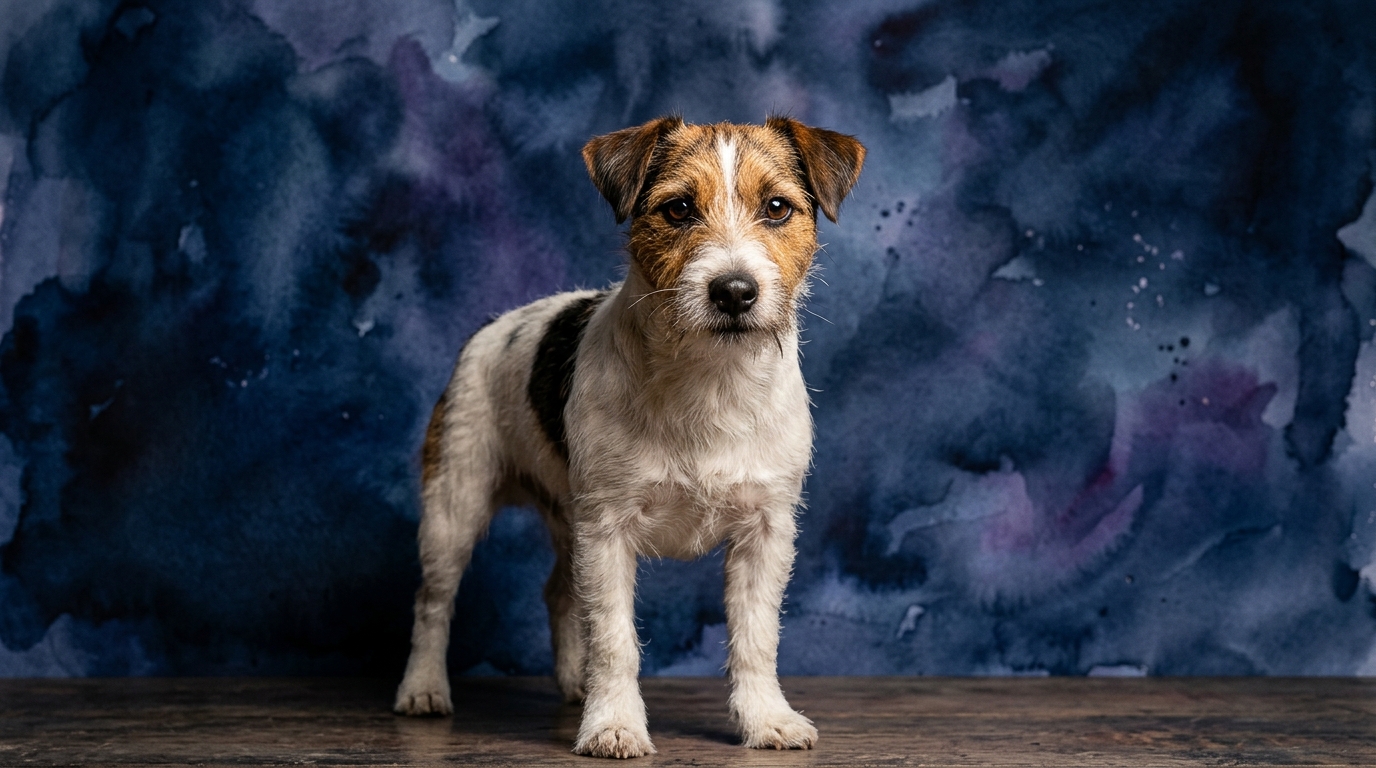

Side-by-Side Cognitive Profiles: JRT vs. Mastiff
At The Cosmic Pet Pet IQ Lab, we evaluate canine intelligence across five distinct dimensions, offering a granular view beyond generic labels. The Jack Russell Terrier, not included in Stanley Coren's traditional obedience-focused ranking, consistently scores high in areas reflecting its original purpose, while the Mastiff, ranked #72 by Coren, demonstrates a more deliberate, less driven cognitive approach.
For **Problem Solving**, the Jack Russell Terrier earns a top 5/5 score. This reflects their remarkable ability to independently navigate complex situations, devise creative solutions to obstacles, and persistently work through challenges, whether it's outsmarting prey or figuring out how to access a forbidden treat. The Mastiff, with a 3/5 in Problem Solving, approaches issues with a more methodical, less spontaneous mindset. They are capable of understanding and resolving straightforward problems but are less inclined to exhibit the same level of independent, persistent ingenuity or trial-and-error exploration as their terrier counterpart.
**Training Speed** sees both breeds scoring a 3/5. For the Jack Russell Terrier, this indicates they can grasp new commands and concepts relatively quickly, but their strong independent streak and high instinctive drive can sometimes lead to selective hearing or a preference for their own agenda over immediate compliance. Consistency and engaging methods are crucial. The Mastiff's 3/5 in Training Speed points to a steady, deliberate learning pace. They are not rapid assimilators of new commands, but once a behavior is understood and practiced, they tend to retain it well, benefiting from patience and clear, consistent repetition.
In **Social Intelligence**, both breeds again register a 3/5. The Jack Russell Terrier understands human cues and emotions but often processes them through the lens of its own goals or immediate interests; while capable of forming strong bonds, their independence can sometimes override subtle social signals. The Mastiff, with its 3/5, is often highly attuned to the emotional atmosphere of its family and can be quite sensitive to human moods, but their expression of this understanding is typically reserved and dignified rather than overtly effusive or complex in social interactions.
**Instinctive Drive** is where the Jack Russell Terrier truly shines with a 5/5. This score highlights an intense, inherent motivation for tasks related to their heritage – hunting, digging, exploring, and pursuing. This powerful drive fuels their boundless energy and tenacious focus, making them always ready for action and mental engagement. The Mastiff's 3/5 in Instinctive Drive reflects a less intense, more moderate internal motivation. While they possess protective instincts characteristic of their working group, they lack the high-octane, persistent drive for specific tasks like hunting or herding, preferring a more watchful, composed existence.
Finally, for **Memory**, the Jack Russell Terrier scores a 4/5. They possess a robust recall for routines, past experiences, and locations, which greatly aids their persistent problem-solving and navigation of their environment. This strong memory contributes to their ability to learn from past successes and failures. The Mastiff's 3/5 in Memory indicates a solid ability to retain learned behaviors, recognize familiar people and places, and remember past interactions. However, their recall might be less detailed or less immediately accessed compared to breeds with higher scores, aligning with their generally more relaxed and less frenetic approach to life.
Where the Jack Russell Terrier Excels Cognitively
The Jack Russell Terrier's cognitive prowess truly stands out in its capacity for independent problem-solving and its formidable instinctive drive. A 5/5 in problem-solving means these dogs are inherently equipped to think on their feet, creatively approaching challenges without constant human direction. This isn't just about learning tricks; it's about devising strategies to get what they want, whether it’s escaping a yard or figuring out a complex puzzle toy. Their tenacity means they rarely give up on a mental challenge, often trying multiple approaches until they succeed.
Coupled with their 5/5 instinctive drive, this breed possesses an unparalleled internal motivation to engage with the world through scent, sight, and pursuit. This isn't merely 'energy'; it's a deep-seated cognitive predisposition to explore, dig, and chase, making them incredibly effective at tasks requiring sustained focus and determination. Their sharp memory (4/5) further enhances these strengths, allowing them to recall successful tactics and apply them to new situations, making them formidable little strategists in their own right.
Where the Mastiff's Cognition Shines
The Mastiff's cognitive strengths lie in a different realm, characterized by a dignified calm and thoughtful observation rather than rapid action. While their scores in problem-solving, training speed, social intelligence, instinctive drive, and memory are all a moderate 3/5, this consistency points to a balanced and deliberate cognitive style. Their intelligence is less about independent, high-speed problem-solving and more about processing their environment with a steady, watchful presence.
Their strength is often seen in their ability to calmly assess situations and respond with measured judgment, particularly in their historical role as guardians. They might not quickly devise novel solutions (3/5 problem solving), but they excel at absorbing and understanding established routines and social cues within their family unit, even if their social intelligence score is moderate. This deliberateness allows them to make well-considered decisions, providing a sense of stability and predictability, which is a unique cognitive advantage for a companion animal.
Training Dynamics: JRT vs. Mastiff
When it comes to training, the identical 3/5 Training Speed scores for both breeds can be misleading without considering their other cognitive dimensions. The Jack Russell Terrier, despite its ability to grasp commands quickly, presents a training challenge due to its 5/5 Problem Solving and 5/5 Instinctive Drive. This means they often have their own strong opinions and a powerful internal agenda. A JRT might understand 'sit' perfectly, but if a squirrel runs by, its ingrained drive will likely override the learned command. Training a JRT requires immense consistency, creativity, and a firm understanding of motivation to channel their independent spirit rather than trying to suppress it.
The Mastiff, also with a 3/5 Training Speed, is a slower learner initially. They need more repetitions and patience to fully grasp a new command. However, their lower scores in Problem Solving (3/5) and Instinctive Drive (3/5) often make them more amenable to compliance once they understand what is expected. They are less likely to be distracted by strong impulses or to try to outsmart their trainer. Therefore, while a Mastiff might take longer to learn a new behavior, they are often more consistently obedient once it's established, making them, in some ways, an 'easier' dog to train for a novice owner focused on basic obedience, provided patience is abundant.
Matching Canine Cognition to Lifestyle: Active vs. Relaxed Owners
The cognitive profiles of the Jack Russell Terrier and Mastiff strongly dictate the type of owner they will thrive with. The Jack Russell Terrier, with its 5/5 Problem Solving and 5/5 Instinctive Drive, is unequivocally suited for active owners. These dogs require constant mental stimulation and physical outlets for their high drive. An owner who enjoys daily vigorous exercise, engages in dog sports like agility or earthdog trials, or is prepared to offer consistent, challenging puzzle toys and training sessions will find a JRT to be a joyful, engaged companion. A sedentary lifestyle would quickly lead to a frustrated, potentially destructive JRT, as their sharp minds and bodies demand purpose.
Conversely, the Mastiff, with its moderate 3/5 scores across most cognitive dimensions, is an ideal match for more relaxed owners. While they still benefit from regular, moderate exercise for their physical health, their cognitive makeup does not demand the intense mental and physical engagement of a terrier. They are content with quiet companionship, comfortable routines, and a watchful presence. An owner who enjoys a calm home environment, appreciates a dog's deliberate pace, and seeks a gentle, thoughtful companion will find the Mastiff's cognitive style aligns perfectly with their lifestyle. Their social intelligence, while moderate, allows them to be deeply attuned to their family's relaxed rhythm.
The Verdict: Choosing Your Cognitive Companion
The choice between a Jack Russell Terrier and a Mastiff hinges entirely on an owner's lifestyle and their readiness to engage with a specific cognitive profile. These two breeds represent distinct ends of the canine cognitive spectrum, each offering unique rewards.
For those seeking a compact powerhouse of independent thought, relentless drive, and keen problem-solving, the Jack Russell Terrier is an unmatched companion. They require an owner who understands and can channel their intense mental and physical needs into productive, engaging activities.
For individuals who value a calm, deliberate, and watchful presence, the Mastiff offers profound companionship. Their cognitive strengths lie in their steady temperament and dignified approach to life, making them perfect for a relaxed home environment where quiet observation is appreciated.
The Verdict
Choose the Jack Russell Terrier if you are an active owner ready for a cognitively demanding, high-energy companion who relishes independent tasks and outdoor adventures.
Choose the Mastiff if you are a relaxed owner seeking a calm, thoughtful companion who values stability and a more leisurely pace, offering gentle companionship and a watchful presence.
🧠 Find Your Pet's IQ Score
Our Pet IQ Lab assessment covers 25+ tests across 5 cognitive dimensions — personalized to your breed.
Take the Full IQ Test →Frequently Asked Questions
Does the Jack Russell Terrier's lack of Coren ranking mean it's less intelligent?
No, the Coren ranking primarily measures obedience and working intelligence. The JRT's unique cognitive profile, particularly its high problem-solving and instinctive drive, points to a different kind of intelligence not fully captured by Coren's methodology, emphasizing independent thought and action.
Are Mastiffs difficult to train due to their moderate IQ scores?
Mastiffs are not inherently difficult to train, but they require a different approach than some other breeds. Their 3/5 training speed suggests that patience, consistency, and positive reinforcement are crucial, as they learn at a more deliberate pace and respond best to a calm, steady hand rather than high-pressure methods.
How do their social intelligence scores of 3/5 compare in practical terms?
Both breeds have moderate social intelligence, but they express it differently. The Jack Russell Terrier might prioritize its own agenda even when understanding human cues, while the Mastiff is generally more observant and attuned to family dynamics, though neither is excessively effusive or complex in their social signaling.