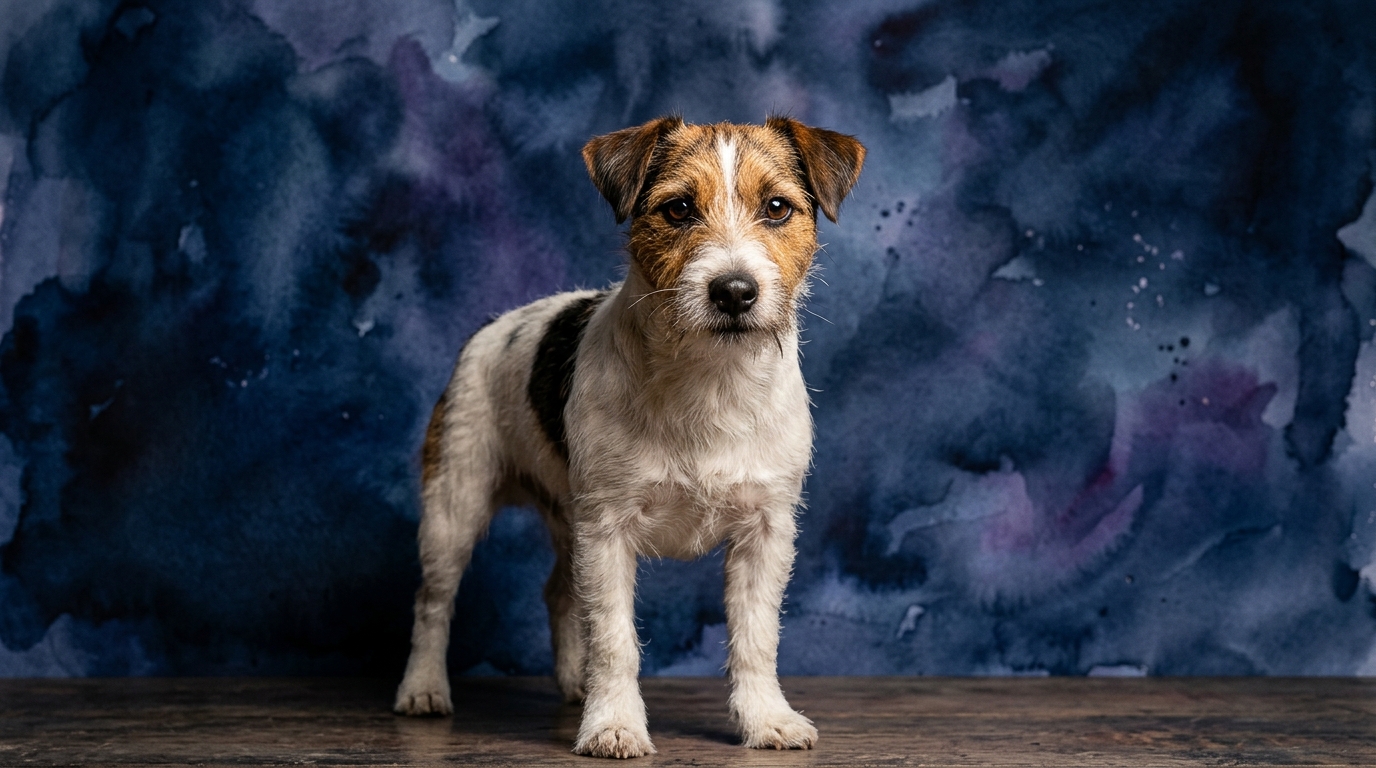
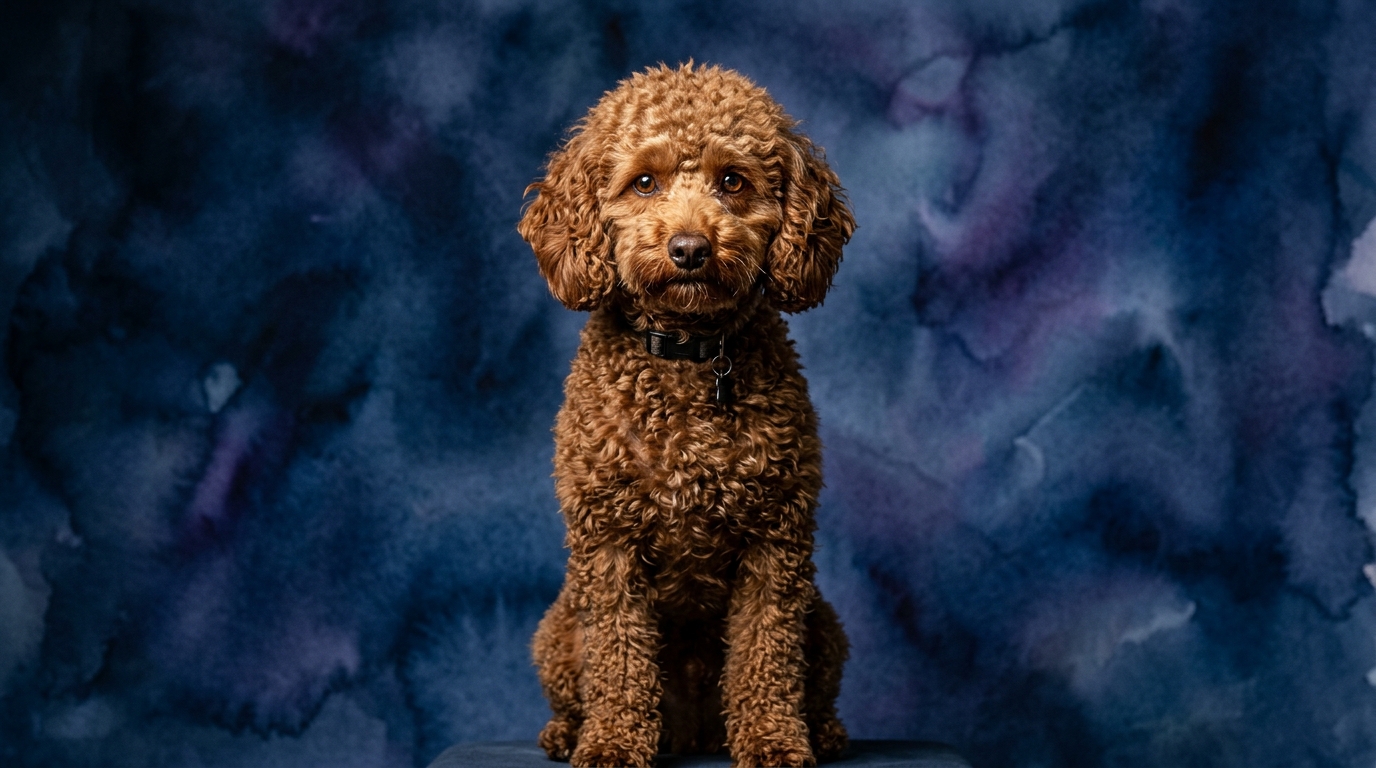
Side-by-Side Cognitive Profiles: Jack Russell Terrier vs. Miniature Poodle
The Jack Russell Terrier, a breed renowned for its boundless energy and unwavering focus, presents a cognitive profile built for purpose. At The Cosmic Pet Pet IQ Lab, we evaluate their intellect across five key dimensions, revealing a mind optimized for independent action and persistent pursuit. This Terrier's brain is wired for action, reflecting centuries of selective breeding for specific, demanding tasks.
Their Problem Solving ability scores a perfect 5/5, reflecting a capacity for independent thought and resourceful navigation of obstacles, particularly when motivated by an objective. Training Speed, however, registers a 3/5; while capable of learning, their inherent independence and strong will can sometimes make them less inclined towards rote obedience. Social Intelligence is rated 3/5, indicating they can interpret human cues but might prioritize their own agenda or instinctual urges over social harmony, especially in multi-animal households. Instinctive Drive is a dominant 5/5, manifesting as an intense prey drive, a propensity for digging, and an unwavering focus on a perceived task. Finally, Memory scores 4/5, demonstrating solid retention of routines, learned behaviors, and environmental layouts pertinent to their activities.
In contrast, the Miniature Poodle, often admired for its elegant appearance, possesses a cognitive framework that belies its sophisticated demeanor. This breed consistently ranks among the most capable in various canine intelligence assessments, including a Coren rank of #2, signifying a remarkable capacity for learning and adaptability. Their mental architecture is geared towards versatile application, from retrieving to companionship, showcasing a different kind of operational brilliance.
The Miniature Poodle also achieves a 5/5 in Problem Solving, showcasing a versatile ability to strategize and adapt to novel situations, often with a keen understanding of cause and effect. Their Training Speed is an exceptional 5/5, indicating a rapid grasp of new commands and a strong desire to engage in cooperative learning. Social Intelligence matches the JRT at 3/5; while attuned to their primary human's emotional state, they can be reserved with strangers or less universally empathetic than some other breeds. Instinctive Drive is a moderate 3/5, reflecting their historical role as water retrievers, manifesting as an enjoyment of fetching and structured play rather than an overwhelming prey drive. Their Memory is a stellar 5/5, allowing them to recall complex sequences, retain lessons over long periods, and execute intricate tasks with precision.
Where the Jack Russell Terrier Excels Cognitively
The Jack Russell Terrier's cognitive prowess shines brightest in scenarios demanding tenacious, independent action. With a perfect 5/5 in both Problem Solving and Instinctive Drive, their minds are uniquely wired to pursue objectives with relentless determination. This isn't just about raw intellect; it's about a specific application of cognition where persistence, resourcefulness, and a strong internal compass are paramount. They excel at figuring out how to achieve a desired outcome, often employing creative, hands-on solutions.
Consider a puzzle toy designed to challenge a dog's wits. While many breeds might eventually solve it, a JRT, fueled by its 5/5 instinctive drive, might not just strategize; it might also attempt to dismantle it, dig under it, or persistently nudge it until its objective is met. Their memory, at 4/5, effectively supports this drive by allowing them to recall successful tactics and the locations of interesting scents or objects. This breed is not simply waiting for instructions; it is actively assessing, strategizing, and executing, making it a formidable partner for tasks requiring self-directed initiative.
Where the Miniature Poodle Excels Cognitively
The Miniature Poodle's cognitive strengths lie in its remarkable capacity for comprehensive learning, adaptability, and retention. Their exceptional Training Speed (5/5) coupled with a stellar Memory (5/5) means they don't just solve problems; they learn how to solve problems efficiently and retain those lessons for life. This breed demonstrates broad cognitive flexibility, capable of mastering intricate command sequences, adapting quickly to new routines, and excelling in activities that demand precision and consistent execution across varied contexts.
Their 5/5 Problem Solving score, when combined with their impressive learning and memory capabilities, allows them to generalize learned concepts and apply them to novel situations with ease. For example, a Poodle can learn a complex agility course quickly, remember the sequence, and execute it reliably even with slight variations. This makes them outstanding candidates for advanced obedience, dog sports, and even service roles where consistent, adaptable performance is crucial. Their intellect is expressed through a willingness to engage cooperatively and systematically process information, making them highly receptive to structured learning environments.
Which is Easier to Train and Why
When evaluating ease of training, the distinction between these two breeds becomes particularly clear, primarily due to their differing scores in Training Speed and Instinctive Drive. The Miniature Poodle, with its 5/5 Training Speed and 5/5 Memory, is generally considered significantly easier to train in the traditional sense. They are often eager to please, highly responsive to cues, and enjoy the mental engagement that training provides. Their ability to quickly grasp and retain commands means fewer repetitions are often needed, and they tend to generalize learned behaviors across different environments with greater ease. Their moderate instinctive drive (3/5) means they are less likely to be overwhelmingly distracted by environmental stimuli during a training session.
The Jack Russell Terrier, while possessing a 5/5 in Problem Solving, scores a 3/5 in Training Speed. This lower score doesn't imply a lack of mental capacity, but rather a difference in how that capacity manifests in a training context. JRTs are independent thinkers with a powerful 5/5 Instinctive Drive. This drive often means they prioritize their own internal motivations—like chasing a squirrel or investigating a scent—over human commands. Training a JRT requires immense patience, creativity, and consistency, often needing to make training feel like a game or a 'hunt' to capture their full attention. They can be perceived as stubborn, but it's often their strong will and self-directed nature at play, making them challenging for novice trainers seeking quick, compliant results.
Which Suits Active Owners vs. Relaxed Owners
The choice between a Jack Russell Terrier and a Miniature Poodle also hinges significantly on an owner's lifestyle and activity level, directly correlating with the breeds' cognitive and behavioral profiles. Active owners, those who thrive on consistent outdoor adventures, structured dog sports, or engaging in mentally stimulating tasks, will find a compelling match in the Jack Russell Terrier. Their combination of 5/5 Problem Solving and 5/5 Instinctive Drive means they demand constant mental and physical engagement. A JRT thrives on activities like agility, earthdog trials, long hikes with opportunities for exploration, or complex puzzle games that tap into their natural drive to 'work' and figure things out. Without adequate outlets, their formidable intellect and energy can lead to destructive behaviors or restlessness.
For owners who might describe themselves as more 'relaxed'—meaning they prefer a companion that adapts well to varied activity levels, enjoys structured play and walks without an overwhelming need for intense, instinct-driven tasks—the Miniature Poodle often presents a more suitable option. While certainly not sedentary, their energy is often more amenable to being channeled into walks, fetching games, and mental challenges like advanced obedience or trick training. Their high Training Speed (5/5) and Memory (5/5) mean they derive immense satisfaction from learning and cooperative activities, making them content with mental stimulation and companionship. They are adaptable to apartment living provided their daily needs for exercise and mental engagement are met, offering a balance that might overwhelm an owner seeking a less demanding, instinct-driven dog.
The Verdict
Choose a Jack Russell Terrier if you are an active, experienced owner seeking a tenacious, independent problem-solver for goal-oriented tasks, embracing their intense focus and boundless energy.
Opt for a Miniature Poodle if you desire a highly trainable, adaptable companion keen on mastering complex skills, who excels in structured environments and enjoys mental engagement alongside affectionate companionship.
🧠 Find Your Pet's IQ Score
Our Pet IQ Lab assessment covers 25+ tests across 5 cognitive dimensions — personalized to your breed.
Take the Full IQ Test →Frequently Asked Questions
Are Jack Russell Terriers difficult to live with due to their high instinctive drive?
While their 5/5 instinctive drive makes them exceptionally keen and persistent, it also means they require consistent training, early socialization, and ample mental and physical stimulation to prevent unwanted behaviors. For an owner prepared to channel this drive positively, they are engaging companions, but they are not a suitable choice for a sedentary lifestyle.
Do Miniature Poodles require a lot of grooming because of their coat?
Yes, Miniature Poodles have a non-shedding, hypoallergenic coat that requires regular grooming, typically every 4-6 weeks, to prevent matting and maintain skin health. This can involve professional grooming or consistent home care, making it an important consideration for potential owners.
Can a Jack Russell Terrier and a Miniature Poodle get along in the same household?
Yes, they can, but successful cohabitation depends on individual personalities, early socialization, and consistent management. The JRT's strong prey drive and independent nature might clash with the Poodle's more cooperative demeanor, so careful introductions and supervision are crucial, especially around shared resources or during play.