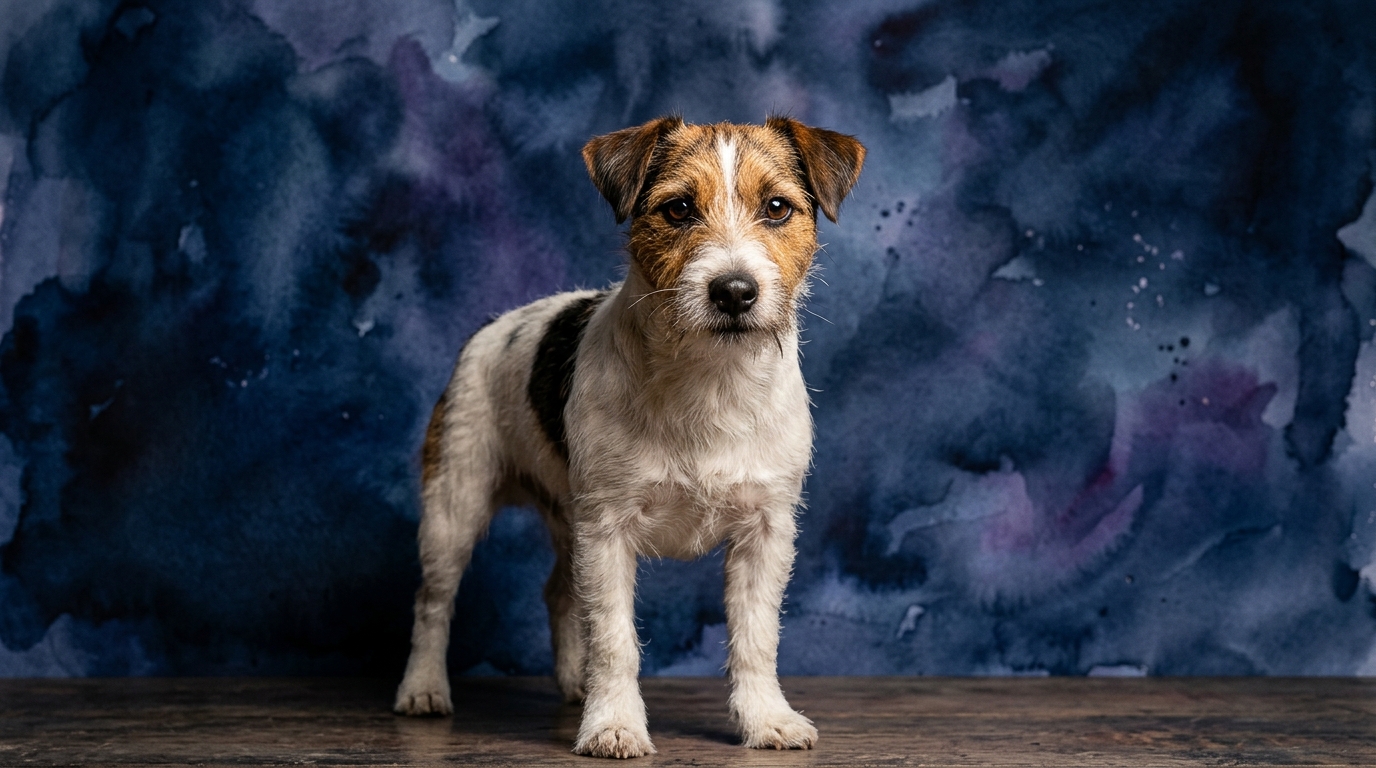
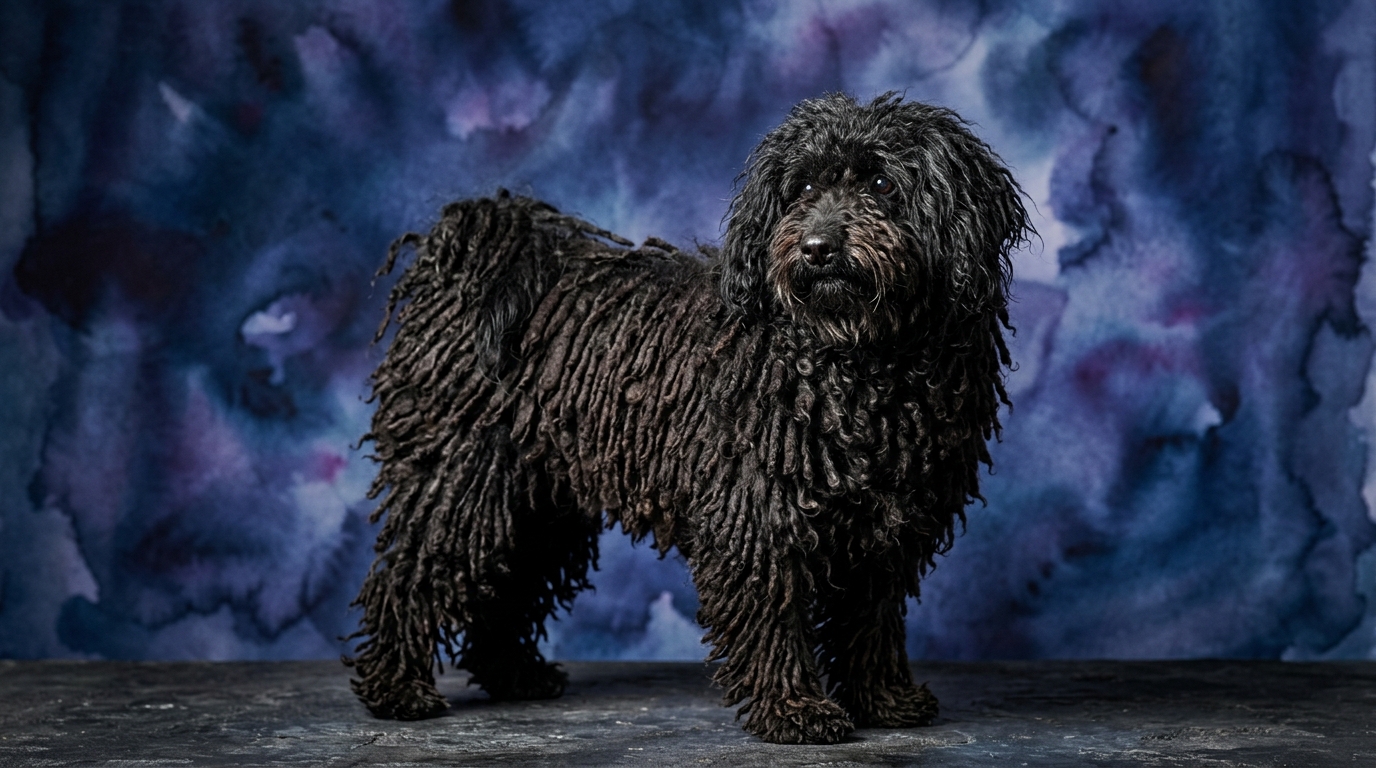
Side-by-Side Cognitive Profiles
The Cosmic Pet Pet IQ Lab provides a nuanced look at canine cognition, moving beyond simple rankings to analyze five key dimensions for each breed. For the Jack Russell Terrier, we observe a remarkable Problem Solving ability at 5/5, reflecting their independent, tenacious nature in pursuit of goals. Their Training Speed stands at 3/5, indicating a need for consistent, engaging methods to capture their focus. Social Intelligence is rated 3/5, suggesting they are perceptive but often driven by their own agendas. An Instinctive Drive of 5/5 underscores their powerful prey drive and boundless energy, while Memory is strong at 4/5, enabling them to retain complex information and learned behaviors.
Conversely, the Puli, a traditional herding dog, presents a slightly different cognitive emphasis. Their Problem Solving score is 4/5, demonstrating strategic thinking and adaptability in dynamic situations. The Puli excels in Training Speed with a 4/5 rating, often eager to please and quick to grasp new commands. Social Intelligence matches the Jack Russell at 3/5, indicating a capacity for connection while retaining a degree of independence. Their Instinctive Drive is 3/5, primarily focused on herding and gathering rather than predatory pursuits. Like the Jack Russell, the Puli also boasts a robust Memory at 4/5, crucial for recalling intricate patterns and routines.
Where the Jack Russell Terrier Excels Cognitively
The Jack Russell Terrier's cognitive prowess shines brightest in situations demanding autonomous action and relentless persistence. Their 5/5 Problem Solving score isn't just about figuring out a puzzle toy; it's about their inherent drive to overcome obstacles to achieve a goal, often related to a perceived 'prey.' This might manifest as ingeniously escaping a secure yard to chase a squirrel, or meticulously digging under a fence. Their solutions are often self-directed and highly effective for their specific objectives. This exceptional problem-solving ability is intrinsically linked to their 5/5 Instinctive Drive. This isn't merely a high energy level, but a profound, hardwired inclination to hunt, chase, and explore with an intensity that few breeds match. This combination means a Jack Russell can be incredibly resourceful when motivated by their instincts, demonstrating a deep focus and an almost single-minded determination that can be both impressive and challenging for owners to manage.
Where the Puli Demonstrates Superior Cognitive Strengths
The Puli's cognitive strengths lean towards cooperative intelligence and a readiness to engage with human direction, most notably in their Training Speed, rated at 4/5. This higher score compared to the Jack Russell Terrier indicates a breed generally more receptive to learning commands and behaviors quickly and consistently. This stems from their heritage as herding dogs, where a strong bond and immediate responsiveness to a shepherd's cues were paramount for effective work. A Puli often finds satisfaction in working alongside their owner, making them typically more amenable to structured training sessions and eager to understand what is expected of them. While their Problem Solving is rated 4/5, it often manifests as intelligent adaptation within a framework, such as strategically maneuvering a flock, rather than the independent, often disruptive, problem-solving of a terrier pursuing a perceived pest. Their memory at 4/5 further supports this, allowing them to recall complex sequences of commands or routines, making them adept at various dog sports or advanced obedience tasks.
Ease of Training: Jack Russell Terrier vs. Puli
When considering ease of training, the Puli generally presents a more straightforward experience due to its 4/5 Training Speed. Their herding background instilled a desire for partnership and a willingness to follow directions, making them typically more compliant and focused during training sessions. While they possess an independent streak, it is usually less pronounced than the Jack Russell's. A Puli often thrives on positive reinforcement and enjoys the mental stimulation of learning, making them a rewarding student for an owner committed to consistent training.
The Jack Russell Terrier, with its 3/5 Training Speed, requires a different approach. Their formidable 5/5 Instinctive Drive and 5/5 Problem Solving mean they are constantly assessing their environment for opportunities to engage their natural instincts. This can translate to a perceived stubbornness or distractibility during training. They are not unintelligent, but rather independently-minded and often require more creative, engaging, and consistent training methods to hold their attention. Owners must leverage their problem-solving abilities by making training a game and their strong drive by incorporating activities that satisfy their natural urges, such as scent work or agility, to achieve optimal results.
Suitability for Active vs. Relaxed Owners
For owners seeking a highly active companion, the Jack Russell Terrier stands out. Their 5/5 Instinctive Drive translates into an almost ceaseless need for physical and mental engagement. These dogs require owners who are prepared for frequent, vigorous exercise, extensive playtime, and mental challenges to prevent boredom and destructive behaviors. They thrive with activities like agility, earthdog trials, long hikes, or structured playtime that allows them to chase and 'hunt.' A relaxed owner might find the Jack Russell's energy and relentless drive overwhelming, as an under-stimulated terrier can become a nuisance, inventing their own (often undesirable) activities.
The Puli, while certainly not a couch potato, is a better fit for active owners who appreciate a dog with a more moderate and cooperative energy level. Their 3/5 Instinctive Drive means they enjoy regular exercise, such as long walks, runs, or dog sports like herding and agility, but they generally have an 'off switch.' They are typically content to settle down after their exercise needs are met, making them suitable for owners who are active but also enjoy periods of relaxation at home. Their desire to work with their owner makes them excellent partners for structured activities, rather than the independent, high-octane pursuit often seen in a Jack Russell.
The Verdict
Choose the Jack Russell Terrier if you are an experienced, highly active owner prepared to channel immense energy and an independent problem-solving drive into structured activities and consistent training. This breed thrives on challenging tasks that engage their natural hunting instincts.
Opt for the Puli if you seek an intelligent, cooperative, and trainable companion who enjoys consistent activity but also appreciates downtime, fitting well with an owner who values partnership in training and daily life.
🧠 Find Your Pet's IQ Score
Our Pet IQ Lab assessment covers 25+ tests across 5 cognitive dimensions — personalized to your breed.
Take the Full IQ Test →Frequently Asked Questions
Are Jack Russell Terriers difficult to live with due to their high drive?
Jack Russell Terriers are not inherently difficult, but their 5/5 Instinctive Drive and 5/5 Problem Solving require significant owner commitment. Without sufficient mental and physical stimulation, they can become bored and destructive, so they are best suited for owners who can provide consistent engagement and training.
Do Pulis require professional grooming for their corded coats?
Pulis do require specialized coat care, particularly if maintained in their traditional corded style. While some owners manage it themselves, professional grooming or guidance is often beneficial to prevent matting and ensure coat health, making it an important consideration for potential owners.
Which breed is better for a first-time dog owner?
Given the Puli's 4/5 Training Speed and more cooperative nature, they are generally a more manageable choice for a first-time dog owner willing to commit to consistent training and exercise. The Jack Russell Terrier's intense drives and independent problem-solving can be challenging for those without prior experience in managing a high-energy working breed.