
Side-by-Side Cognitive Profiles
At The Cosmic Pet Pet IQ Lab, we evaluate canine cognition across five crucial dimensions, offering a detailed look into how each breed processes and interacts with their environment. Understanding these scores provides a foundation for appreciating their unique mental makeups and what makes them tick.
The Jack Russell Terrier, a compact dynamo, exhibits exceptional Problem Solving at 5/5, indicating an outstanding capacity for independent thought and devising novel solutions to obstacles. Their Training Speed is 3/5, suggesting they learn new commands at an average pace, but their inherent independence can sometimes introduce a challenge to consistent compliance. Social Intelligence stands at 3/5; they form strong bonds but possess a definite opinionated streak. An Instinctive Drive of 5/5 highlights their potent prey drive and deeply rooted urge to hunt and explore, a hallmark of their terrier heritage. Finally, their Memory is 4/5, enabling them to retain information and recall experiences with notable clarity, which aids in navigating complex situations.
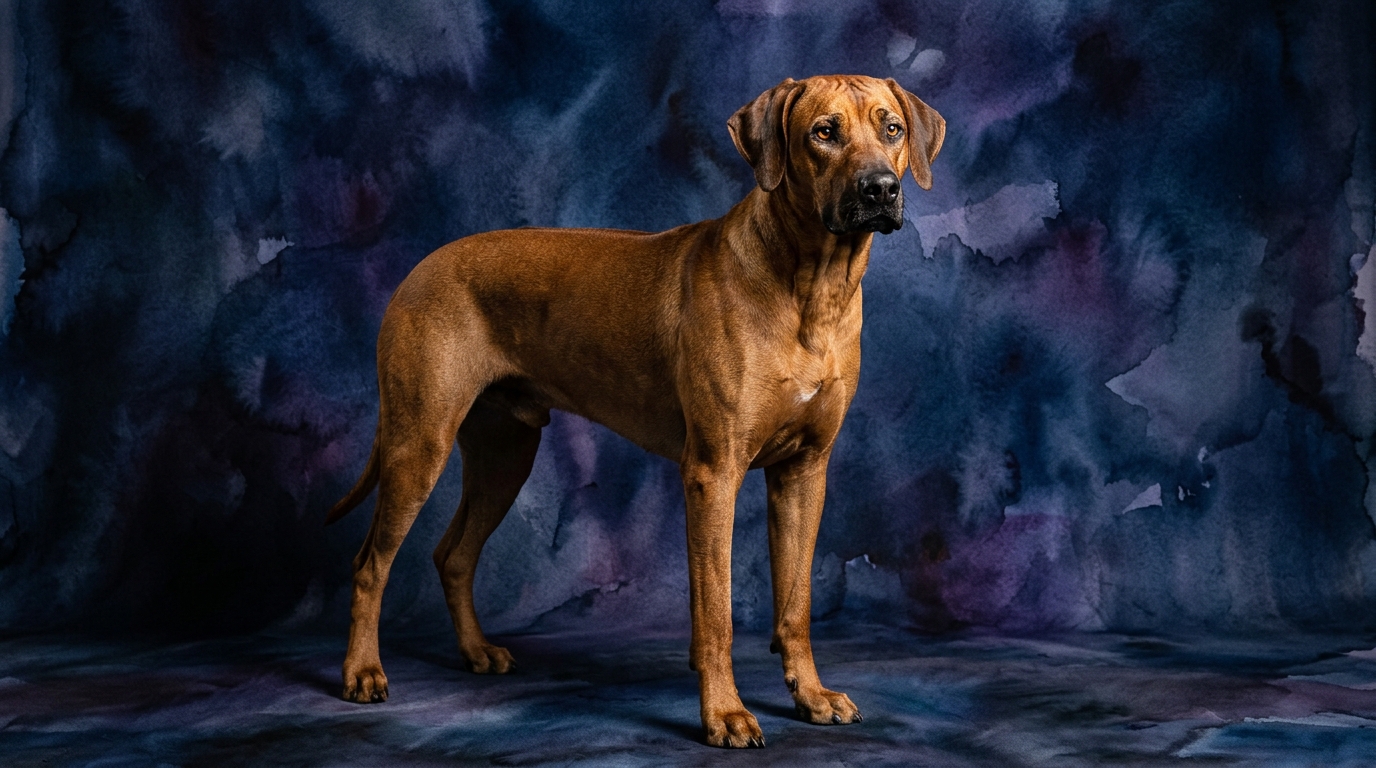
In contrast, the Rhodesian Ridgeback, a dignified and robust hound, scores 3/5 in Problem Solving, approaching new challenges methodically and learning effectively through experience, though less prone to spontaneous innovation. Their Training Speed also rates 3/5, demonstrating an average learning rate and a willingness to cooperate when properly motivated and guided. Social Intelligence is 3/5; they develop deep, discerning bonds with their immediate family and can be reserved with strangers, showcasing a balanced understanding of their social world. Their Instinctive Drive is 3/5, reflecting a moderate urge for tracking and holding quarry, a legacy from their historical role, yet less intense than the persistent drive of a working terrier. Memory for the Ridgeback is 3/5, providing a solid capacity for recalling routines, commands, and familiar individuals, which is well-suited for their roles as companions and protectors.
Where the Jack Russell Terrier Excels Cognitively
The Jack Russell Terrier's cognitive prowess shines brightest in its exceptional Problem Solving (5/5) and formidable Instinctive Drive (5/5). These terriers possess an unparalleled tenacity and a relentless drive to achieve their goals, whether it’s finding a hidden toy, navigating an agility course, or outsmarting a perceived obstacle. Their minds are constantly at work, analyzing situations and devising strategies, often surprising owners with their cleverness and resourcefulness. This high problem-solving capacity means they can independently figure out how to open gates, access forbidden areas, or retrieve items thought to be out of reach, requiring consistent mental engagement from their human companions.
Their powerful instinctive drive is not merely about chasing; it’s a deep-seated motivation that fuels their focus and determination. When a Jack Russell sets its mind to something, its cognitive energy is fully engaged. This drive, combined with a 4/5 Memory, allows them to recall past successes and failures, adapting their approach based on previous experiences. They remember which methods worked, which didn't, and which strategies yielded the best results. This combination makes them highly effective in tasks requiring persistence, independent action, and a sharp memory for details, such as complex scent work or navigating intricate environments. Their cognitive strengths are geared towards independent action and persistent pursuit.
Where the Rhodesian Ridgeback Excels Cognitively
While the Rhodesian Ridgeback's individual cognitive scores may appear less flashy than the Jack Russell's in some areas, their specific blend of intelligence is supremely effective for their intended purpose and lifestyle. The Ridgeback’s strength lies in a more measured, discerning application of their cognitive abilities. Their 3/5 Problem Solving, for instance, isn't about rapid, impulsive action but rather a thoughtful, often strategic assessment of situations. They are capable of learning complex routines and understanding subtle cues, processing information with a calm deliberation that can be highly effective in roles requiring vigilance and reliability, such as guarding or tracking, where impulsive error could be costly.
The Ridgeback’s 3/5 Social Intelligence, combined with their moderate Instinctive Drive (3/5), allows them to form incredibly strong, loyal bonds built on mutual respect and understanding. This social acumen enables them to read human intentions and household dynamics with a nuanced perception, making them deeply intuitive companions. Their memory (3/5), while not as high as the JRT's, is perfectly adequate for retaining complex command sequences, remembering specific threats, and recalling intricate tracking routes, which was essential in their historical role as a hunter and protector. This cognitive profile means they excel in situations requiring sustained focus, deliberate action, and a deep, loyal partnership, rather than quick, independent bursts of activity.
Training Dynamics: Which is Easier to Train?
Both the Jack Russell Terrier and the Rhodesian Ridgeback share a 3/5 score in Training Speed, indicating they learn new commands at an average pace. However, the ease of training each breed diverges significantly due to their differing problem-solving abilities and instinctive drives. A Jack Russell Terrier's high Problem Solving (5/5) and powerful Instinctive Drive (5/5) mean they are often too clever and independent for their own good. They can quickly figure out how to circumvent rules, become bored with repetitive tasks, or prioritize their own agenda (like chasing a squirrel) over an owner's command. This requires an owner to be consistently engaging, creative, and firm, ensuring the terrier’s mental energy is channeled positively to prevent mischief or wilfulness. Their training isn't necessarily slower, but it requires more ingenuity from the trainer to maintain focus and compliance against their strong independent streak.
The Rhodesian Ridgeback, with its 3/5 Problem Solving and 3/5 Instinctive Drive, tends to be more amenable to direction once a foundation of trust and respect is established. While they require patience and consistency due to their average training speed, they are generally less likely to actively outwit their handler or be perpetually distracted by overwhelming instincts. Their training often benefits from positive reinforcement and clear, consistent communication, as they respond well to a confident leader. Unlike the JRT, whose problem-solving might lead to finding loopholes, the Ridgeback's cognitive approach is more about understanding and complying with established rules, making them potentially more predictable and reliable once trained, provided their social intelligence and loyalty are nurtured.
Matching Breeds to Lifestyles: Active vs. Relaxed Owners
The cognitive and physical demands of these two breeds dictate very different ideal owner lifestyles. A Jack Russell Terrier is unequivocally suited for an exceptionally active owner who thrives on constant engagement and mental challenges. Their 5/5 Problem Solving and 5/5 Instinctive Drive demand an outlet for their boundless energy and sharp minds. Owners who enjoy dog sports like agility, flyball, or earthdog trials, extensive hiking, or daily, vigorous mental games will find a fulfilling partnership with a JRT. A relaxed owner will quickly find their Jack Russell inventing its own, often destructive, entertainment if not adequately stimulated, leading to a frustrated dog and owner. They require a home environment where their intelligence and drive are consistently channeled into productive activities.
The Rhodesian Ridgeback, while requiring regular exercise, caters to a different kind of active owner. Their moderate Instinctive Drive (3/5) means they need daily walks, runs, or hikes to maintain physical health and mental balance, but they are generally less frantic than a JRT. After their exercise needs are met, Ridgebacks are often content to be relaxed companions, enjoying quiet time with their family. Their 3/5 Social Intelligence and more deliberate Problem Solving (3/5) mean they appreciate routine and a strong bond with their owner, making them suitable for owners who enjoy a powerful, loyal companion for outdoor adventures but also value a calm presence at home. They are more adaptable to a 'relaxed' home life once their foundational needs for activity and companionship are fulfilled.
The Verdict: When to Choose Each Breed
The Verdict
Choose a Jack Russell Terrier if you seek an intensely clever, tenacious, and high-energy companion for dog sports, extensive outdoor adventures, and consistent mental challenges. Be prepared to match their boundless drive and independent problem-solving with engaging activities.
Opt for a Rhodesian Ridgeback if you desire a loyal, discerning, and powerful companion who thrives on routine, moderate but consistent activity, and deep family bonds. They are well-suited for owners who appreciate a thoughtful, protective presence and a strong partnership.
🧠 Find Your Pet's IQ Score
Our Pet IQ Lab assessment covers 25+ tests across 5 cognitive dimensions — personalized to your breed.
Take the Full IQ Test →Frequently Asked Questions
Are Jack Russell Terriers difficult to manage due to their high drive?
Jack Russell Terriers, with their 5/5 instinctive drive and problem-solving, require consistent mental and physical stimulation to prevent boredom and destructive behaviors. While not inherently 'difficult,' their management demands an active, engaging owner who can channel their intelligence and energy effectively.
Do Rhodesian Ridgebacks make good guard dogs with their intelligence?
Rhodesian Ridgebacks possess a discerning social intelligence (3/5) and a protective nature, making them excellent guardians for their families. Their problem-solving (3/5) supports their ability to assess threats thoughtfully, rather than reacting impulsively, providing a reliable and watchful presence.
How do their memory scores impact training and daily life?
The Jack Russell Terrier's 4/5 memory allows them to quickly recall commands and past experiences, aiding in complex learning but also remembering how to outsmart you. The Rhodesian Ridgeback's 3/5 memory is solid for routines and commands, fostering predictability and reliability in their trained behaviors and daily interactions.