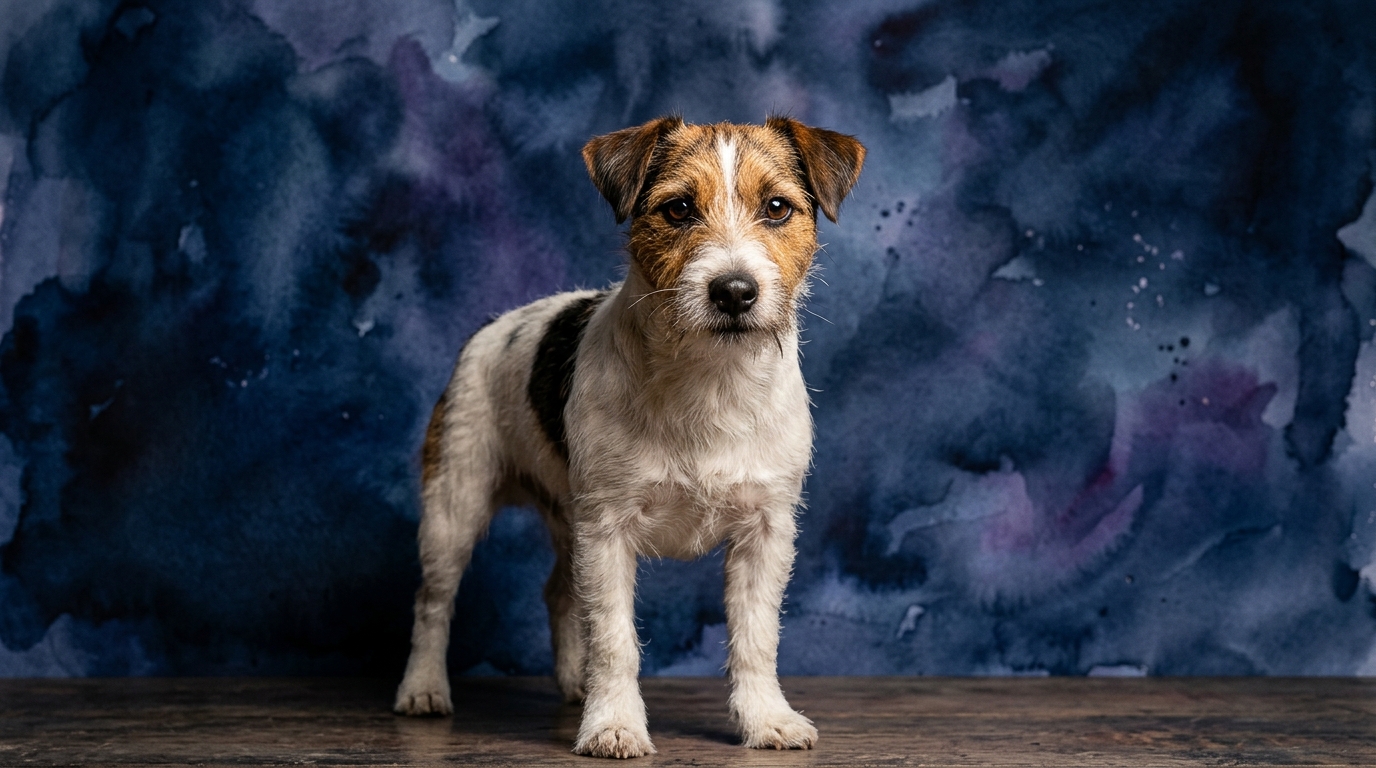

Side-by-Side Cognitive Profile
The Cosmic Pet Pet IQ Lab provides a unique lens through which to compare the Jack Russell Terrier and the Russian Toy, assessing five key cognitive dimensions. Understanding these scores illuminates the inherent differences in their mental makeup.
The Jack Russell Terrier's profile is marked by exceptional Problem Solving (5/5), indicating an innate capacity to analyze complex situations and devise solutions, coupled with a powerful Instinctive Drive (5/5) that fuels their tenacity and engagement with the environment. Their Memory is also strong (4/5), allowing them to retain learned experiences and spatial information effectively. Training Speed (3/5) and Social Intelligence (3/5) are rated as moderate, suggesting they learn at an average pace and possess a standard ability to interpret social cues.
In contrast, the Russian Toy presents a remarkably consistent cognitive profile, scoring 3/5 across all five dimensions. This means their Problem Solving (3/5) is moderate, capable of learning but less inclined to independently strategize complex solutions. Their Training Speed (3/5) is average, absorbing new commands steadily, and their Social Intelligence (3/5) allows for adaptable interactions with others. A moderate Instinctive Drive (3/5) suggests a balanced energy level without overwhelming urges, while their Memory (3/5) is sufficient for retaining routines and commands without being exceptionally retentive. This consistent moderation across the board paints a picture of a well-rounded and generally predictable canine companion.
Where Jack Russell Terrier Wins Cognitively
The Jack Russell Terrier truly shines in two pivotal cognitive areas: Problem Solving (5/5) and Instinctive Drive (5/5), complemented by a robust Memory (4/5). Their exceptional problem-solving acumen means they possess an innate capacity to analyze situations, devise strategies, and overcome physical or mental barriers. This isn't just about learning tricks; it’s about independently figuring out how to open a gate, retrieve a hidden toy, or navigate a complex scent trail. This high score indicates a mind constantly engaged with its surroundings, seeking solutions and understanding mechanisms. Their equally exceptional instinctive drive fuels this problem-solving, providing the tenacity and motivation to persist until a solution is found or a goal is achieved. Whether it’s tracking a scent, digging for perceived prey, or simply exploring a new environment, their drive is a powerful engine for engagement and learning through experience. Furthermore, their strong memory (4/5) ensures that the lessons learned from these problem-solving endeavors and instinctual pursuits are retained, building a cumulative knowledge base that makes them increasingly adept at navigating their world. This combination makes them formidable learners in contexts that leverage their natural curiosity and drive.
Where Russian Toy Wins Cognitively
While the Russian Toy doesn't boast scores exceeding the Jack Russell Terrier in any single category, its consistent 3/5 across all five dimensions—Problem Solving, Training Speed, Social Intelligence, Instinctive Drive, and Memory—represents a significant cognitive advantage for specific lifestyles: balance and adaptability. This breed’s moderate profile indicates a well-rounded and predictable cognitive makeup, making them less prone to the extremes that can sometimes challenge owners. Unlike a breed with overwhelming instinctive drives, the Russian Toy is less likely to become fixated on chasing small animals or digging destructively. Their moderate problem-solving skills mean they are unlikely to outwit their owners to the same degree, leading to fewer unexpected escapades or mischievous ploys. This balanced cognitive landscape translates into a dog that is generally more pliable and less demanding of constant intense mental stimulation to prevent boredom-induced behaviors. Their consistent scores suggest a dog that can learn effectively, interact appropriately, and adapt to a variety of home environments without the specific, intense needs that higher-scoring breeds in certain areas might present. For an owner seeking a companion whose cognitive profile promotes a harmonious, less challenging domestic life, the Russian Toy's well-measured intelligence is a distinct win.
Which is Easier to Train and Why
When assessing ease of training, both breeds share a similar Training Speed score of 3/5, suggesting they absorb new commands at an average pace. However, the overall training experience can differ significantly due to their other cognitive dimensions. The Jack Russell Terrier, despite its moderate training speed, presents a more complex training challenge primarily due to its exceptional Instinctive Drive (5/5) and Problem Solving (5/5). These traits mean that while a JRT might quickly grasp a command, its powerful instincts to chase, explore, or dig can easily override learned behaviors, especially in stimulating environments. They are also adept at problem-solving their way around rules or finding loopholes, requiring an owner who is consistently firm, engaging, and creative to maintain their attention and adherence. Their strong memory (4/5) means they remember both desired behaviors and any inconsistencies in training.
In contrast, the Russian Toy, with its moderate 3/5 scores across the board, generally offers a more straightforward training journey. While they learn at the same pace, their lower instinctive drive means they are less likely to be sidetracked by environmental stimuli or their own intense urges. Their moderate problem-solving capacity means they are less inclined to devise elaborate ways to defy commands or engage in mischievous workarounds. This makes them more amenable to consistent training methods and generally more compliant. An owner of a Russian Toy will likely find that once a command is learned, it is more consistently followed because there isn't an overwhelming internal drive competing with the instruction. Therefore, while both learn at a similar rate, the Russian Toy is likely easier to train in terms of managing behavior and achieving consistent compliance, thanks to its more balanced and less intensely driven cognitive profile.
Which Suits Active Owners vs. Relaxed Owners
The cognitive profiles of these two breeds clearly delineate their suitability for different owner lifestyles. The Jack Russell Terrier, with its outstanding Instinctive Drive (5/5) and Problem Solving (5/5), is unequivocally suited for active owners. This breed demands significant physical exercise to satisfy its potent drive, thriving on activities like long runs, agility courses, earthdog trials, or extensive play sessions that simulate hunting. Beyond physical exertion, their exceptional problem-solving mind requires constant mental engagement; puzzle toys, complex training routines, and opportunities to explore and "work" are crucial to prevent boredom and potential destructive behaviors. An inactive or relaxed owner would likely find a JRT overwhelming, as their pent-up energy and unfulfilled cognitive needs could manifest as incessant barking, digging, or destructive chewing.
Conversely, the Russian Toy, with its consistently moderate 3/5 scores across all cognitive dimensions, is an ideal companion for more relaxed owners. Their moderate instinctive drive means they are content with regular, but not necessarily intense, walks and indoor play. While they still benefit from mental stimulation, their problem-solving and drive levels do not demand the same rigorous, continuous engagement as a JRT. They are generally more content to cuddle on the couch or engage in gentle play, making them excellent companions for individuals or families who prefer a calmer pace of life. They adapt well to apartment living and do not require vast outdoor spaces, provided their moderate exercise needs are met. For owners seeking a charming companion that is less demanding in terms of physical and mental exertion, the Russian Toy's balanced cognitive profile is a perfect fit.
The Verdict
Opt for a Jack Russell Terrier if you are an active, experienced owner eager to provide consistent mental challenges and rigorous physical exercise for a dog with exceptional problem-solving abilities and powerful instinctive drives.
Select a Russian Toy if you seek a charming, balanced companion dog whose moderate cognitive needs align perfectly with a more relaxed lifestyle and who generally offers a more compliant training experience.
🧠 Find Your Pet's IQ Score
Our Pet IQ Lab assessment covers 25+ tests across 5 cognitive dimensions — personalized to your breed.
Take the Full IQ Test →Frequently Asked Questions
Are Jack Russell Terriers difficult to live with due to their high drive?
A Jack Russell Terrier's 5/5 instinctive drive can make them challenging if not properly managed, as they require substantial mental and physical outlets to prevent boredom and destructive behaviors. However, for owners who can meet these needs, their drive translates into an enthusiastic and engaging companion.
Does the Russian Toy's moderate intelligence mean it cannot learn complex tasks?
A Russian Toy's 3/5 problem-solving and memory scores indicate an average capacity for learning, meaning they are perfectly capable of learning a wide array of commands and tricks. While they might not devise complex strategies independently, consistent training will yield well-learned behaviors.
How do the social intelligence scores (3/5 for both) impact their interaction with people and other pets?
A 3/5 social intelligence score for both breeds suggests a moderate ability to understand social cues, meaning they can adapt to various social situations but might not always be the most intuitive communicators. Early socialization is crucial for both to foster positive interactions with diverse people and animals.