
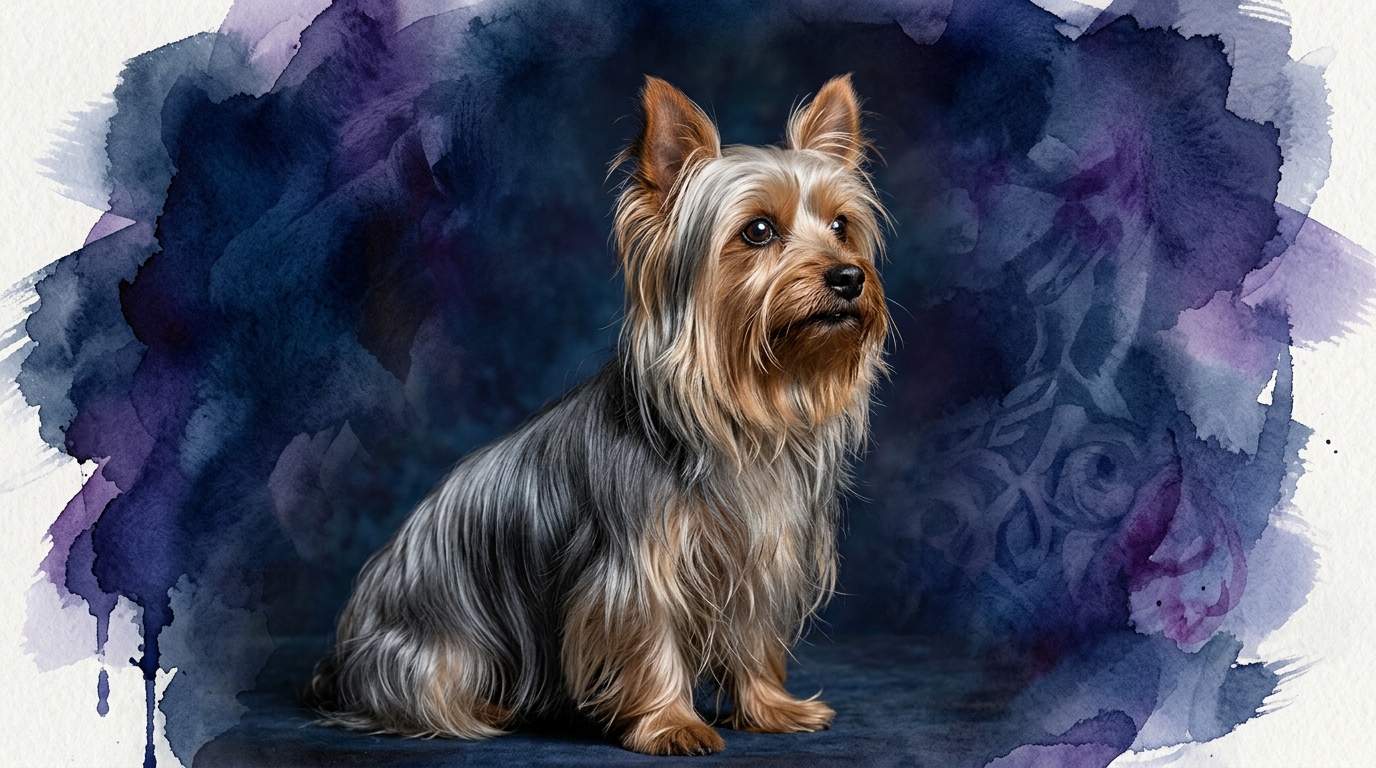
Side-by-Side IQ Profile: Jack Russell Terrier vs. Silky Terrier
The Cosmic Pet Pet IQ Lab provides a detailed breakdown of canine cognitive dimensions, offering a unique lens through which to compare these two breeds. For the Jack Russell Terrier, a working terrier at heart, their Problem Solving is rated 5/5, indicating an exceptional ability to figure things out and overcome obstacles with persistent ingenuity. Their Training Speed stands at 3/5, meaning they are capable learners but their strong will can sometimes make rapid, consistent compliance a challenge. Social Intelligence is 3/5, suggesting they understand human cues but might prioritize their own pursuits. Instinctive Drive is a robust 5/5, reflecting intense motivation for tasks like hunting or chasing, which profoundly shapes their actions. Finally, their Memory is strong at 4/5, allowing for effective retention of experiences and learned behaviors.
In contrast, the Silky Terrier, originating from the Toy group, presents a slightly different cognitive makeup. Their Problem Solving is rated 3/5, indicating competence in tackling straightforward challenges, though perhaps without the relentless inventiveness of a Jack Russell. Training Speed is also 3/5, similar to the Jack Russell, implying a moderate learning pace. Their Social Intelligence is likewise 3/5, showing an adequate understanding of social dynamics and a capacity for forming close bonds with their family. Instinctive Drive for the Silky Terrier is 3/5, a moderated version of the typical terrier's zest for chasing and exploring. Their Memory is rated 3/5, sufficient for remembering routines and familiar interactions, but perhaps not with the same vivid detail as their Jack Russell counterpart.
Where the Jack Russell Terrier Wins Cognitively
The Jack Russell Terrier clearly outperforms the Silky Terrier in raw problem-solving capabilities. Their 5/5 rating indicates an exceptional capacity to analyze situations, devise solutions, and persist until a goal is achieved, whether it's navigating a complex puzzle toy or figuring out how to access a forbidden treat. This cognitive strength is often fueled by their robust 5/5 instinctive drive, which translates into an unwavering determination to pursue objectives, be it a perceived 'prey' or a challenging task set by an owner. Their memory, rated 4/5, also gives them an edge, allowing them to recall successful strategies and past experiences more vividly, aiding in their continuous learning and adaptation to new challenges.
Where the Silky Terrier Offers Cognitive Advantages
While the Silky Terrier doesn't present higher scores in any individual cognitive dimension compared to the Jack Russell, its cognitive profile offers distinct advantages in certain contexts. A moderate 3/5 for instinctive drive, compared to the Jack Russell's intense 5/5, means the Silky's natural urges, such as chasing or digging, are typically less overwhelming and easier to manage within a home environment. Their 3/5 problem-solving ability, while not as formidable as the Jack Russell's, often translates into a dog less inclined to persistently test boundaries or devise elaborate schemes for mischief, potentially making them less demanding in terms of constant mental challenge and supervision.
Training Dynamics: Jack Russell vs. Silky Terrier
Both the Jack Russell and Silky Terriers share a 3/5 rating for training speed, indicating they learn at a competent, moderate pace. However, the *ease* of training can diverge significantly due to their other cognitive traits. The Jack Russell’s formidable 5/5 problem-solving acumen, combined with its 5/5 instinctive drive, means that while it understands commands quickly, it may also quickly assess whether obeying is in its immediate self-interest, or if a more exciting self-directed activity is available. Their independent nature and intense focus on their own objectives can make consistent compliance a greater challenge, requiring more patient, consistent, and engaging training methods to maintain their attention and motivation.
In contrast, the Silky Terrier, with its more moderate 3/5 instinctive drive and problem-solving, is generally less likely to challenge an owner's directives with the same relentless determination. While equally capable of learning, their drives are typically more aligned with pleasing their primary caregivers, potentially leading to a more cooperative and less headstrong training experience, despite the identical training speed score. Their social intelligence, also 3/5, combined with a slightly less independent nature, might make them more receptive to human guidance in training scenarios, leading to a generally smoother training journey for many owners.
Matching Canine Cognition to Lifestyle: Active vs. Relaxed Owners
For owners who embrace an active lifestyle and relish engaging with a canine partner that thrives on mental and physical challenges, the Jack Russell Terrier is often the more fitting companion. Their 5/5 instinctive drive demands outlets for chasing, exploring, and engaging in vigorous play, while their 5/5 problem-solving intellect requires constant stimulation through puzzle toys, obedience work, or agility. These dogs need structured activities to prevent boredom-induced behaviors and thrive when given a 'job' to do, making them ideal for individuals who enjoy extensive outdoor adventures and dedicated training sessions.
Conversely, the Silky Terrier tends to align better with owners seeking a more relaxed pace, though they still appreciate regular engagement. Their 3/5 instinctive drive means they enjoy walks and play but are typically content with moderate exercise rather than intense, daily adventures. Their 3/5 problem-solving ability means they appreciate mental enrichment but don't possess the same relentless need to 'outsmart' their environment, making them generally less demanding in terms of constant, high-level mental stimulation. They are often more content with cuddling and companionship after a good walk, making them suitable for individuals who enjoy a balance of activity and quiet time and value a devoted, spirited companion that integrates readily into family life.
The Verdict
Choose a Jack Russell Terrier if you are an experienced, active owner who can provide consistent mental and physical challenges for a dog with exceptional problem-solving skills and intense instinctive drives, thriving on a partner for adventure and demanding engagement.
Opt for a Silky Terrier if you desire a spirited companion with a moderate activity level, a cooperative nature in training, and a slightly less demanding need for constant mental stimulation, fitting well into a home that values companionship and a balance of activity and calm.
🧠 Find Your Pet's IQ Score
Our Pet IQ Lab assessment covers 25+ tests across 5 cognitive dimensions — personalized to your breed.
Take the Full IQ Test →Frequently Asked Questions
Do Jack Russell Terriers and Silky Terriers have similar social intelligence?
Both breeds are rated 3/5 for social intelligence, indicating they are competent at understanding human cues and social dynamics. However, the Jack Russell's strong independent streak might mean they prioritize their own goals more often, while the Silky may lean slightly more towards pleasing its family unit.
Which breed is more prone to escape attempts due to their cognitive traits?
The Jack Russell Terrier, with its 5/5 problem-solving and 5/5 instinctive drive, is significantly more prone to figuring out escape routes or persistently pursuing perceived opportunities. The Silky Terrier's more moderate 3/5 scores in these areas suggest they are less likely to exhibit such determined escape behaviors.
How do their memory capabilities impact their daily lives?
The Jack Russell's 4/5 memory means they vividly recall past experiences, routines, and successful strategies, which aids both in learning and in potentially remembering past 'mischief'. The Silky Terrier's 3/5 memory is sufficient for daily life and learning, but might not retain specific details with the same precision, making them perhaps slightly less prone to repeating complex learned behaviors, good or bad, without reinforcement.