
Side-by-Side Cognitive Profiles
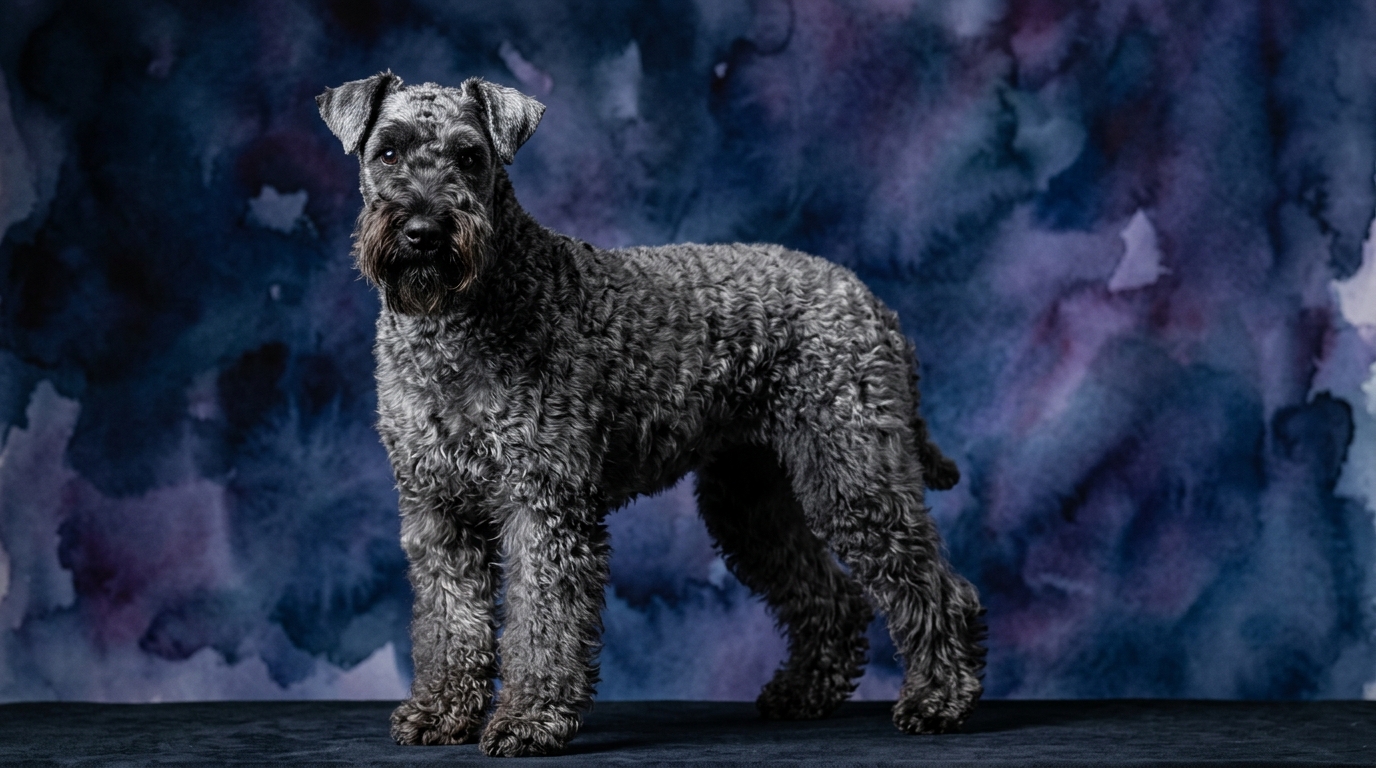
The Kerry Blue Terrier’s cognitive profile, as measured by The Cosmic Pet Pet IQ Lab, paints a picture of a capable and determined intellect. Their Problem Solving score of 3/5 reflects a practical, often independent approach to overcoming obstacles, typically manifesting in figuring out how to achieve a goal, whether it's outsmarting vermin or navigating a complex environment to reach a desired object. They are resourceful and tenacious, applying their mental energy to tasks that require a certain degree of self-reliance and strategic thinking, often with a determined, singular focus. Training Speed, also at 3/5, indicates they are capable of learning new commands and routines, though their inherent independence and occasional stubborn streak influence their pace. Engaging, varied training methods, coupled with consistent reinforcement, are key to harnessing their learning potential effectively. Their Social Intelligence (3/5) is primarily geared towards their immediate family unit, where they form deep, loyal bonds and adeptly read human moods. However, interactions with strangers or other unfamiliar dogs can be more guarded or assertive, reflecting their protective instincts. An Instinctive Drive of 3/5 signifies a robust internal motivation encompassing strong prey drive, territoriality, and a desire to 'work,' requiring proper channeling. Finally, their Memory (3/5) is solid for commands, routines, and past experiences, extending to both positive and negative associations, making early positive socialization crucial for shaping long-term behavior.
The Basset Hound, despite mirroring the Kerry Blue Terrier with 3/5 across all IQ dimensions, demonstrates a markedly different cognitive blueprint, deeply rooted in its scent-hound heritage. Their Problem Solving (3/5) largely revolves around their extraordinary olfactory abilities, signifying a refined capacity to follow and interpret intricate scent trails, piecing together complex information from the environment purely through their nose. This is less about physical manipulation and more about a sophisticated, sensory-driven form of deductive reasoning. Training Speed, also 3/5, is often perceived as slower due to their independent nature and profound focus on scent; while they absorb information, their motivation to execute commands can be heavily influenced by external distractions. Patience, positive reinforcement, and making training feel like a game are essential. Basset Hounds typically display a high degree of Social Intelligence (3/5), particularly in their amiable interactions with people and other animals. Their easygoing, tolerant nature often makes them skilled at reading human emotions, seeking comfort, and offering companionship, tending to be less confrontational and more universally friendly. An Instinctive Drive of 3/5 for the Basset is overwhelmingly dominated by their scenting ability, representing an almost singular focus on olfactory exploration that can override learned commands. Their Memory (3/5) is good, especially for scent trails and intriguing smells, and they recall routines and people. However, this memory can appear selective, with irresistible scents often taking precedence over learned commands.
Where the Kerry Blue Terrier Wins Cognitively
The Kerry Blue Terrier often demonstrates a more proactive and physically engaged form of problem-solving compared to the Basset Hound. Their cognitive strengths truly shine in scenarios requiring quick decisions and independent action, such as navigating agility courses or figuring out how to access a desired toy hidden within an interactive puzzle. This breed’s terrier heritage fosters a tenacious mental approach to overcoming physical barriers or outmaneuvering perceived 'prey,' translating into a sharper focus on manipulating their immediate environment to achieve a tangible outcome. While the Basset Hound excels in processing complex sensory data, the Kerry Blue Terrier exhibits a more overt, strategic ingenuity when faced with physical challenges, showing a directness in applying their wits to practical, hands-on tasks. Their ability to quickly assess and react to dynamic situations, coupled with a determined spirit, gives them an edge in tasks demanding adaptive thinking and a certain boldness of execution.
Where the Basset Hound Wins Cognitively
The Basset Hound's cognitive strengths are profoundly specialized, placing them ahead in domains where olfactory processing and sustained focus on a single sensory input are paramount. Their sophisticated problem-solving isn't about physical manipulation but about the intricate mental mapping of a scent trail, discerning subtle changes in odor, and piecing together a narrative purely from airborne molecules. This breed's memory excels in recalling specific scent profiles and locations, allowing them to return to a previously intriguing spot or follow a cold trail with impressive accuracy. Furthermore, their social intelligence, while scoring the same 3/5, manifests as a more universally adaptable and tolerant demeanor, making them generally more agreeable in diverse social settings. They possess a unique cognitive patience, capable of sustained, methodical work when their primary drive is engaged, a quality that is less pronounced in the more impetuous Kerry Blue Terrier.
Which is Easier to Train and Why
Determining which breed is 'easier' to train is nuanced, as both carry their own set of challenges despite identical training speed scores. The Kerry Blue Terrier, with its independent and sometimes headstrong nature, requires a firm, consistent, and engaging training approach. Their inclination to question commands or pursue their own agenda means that trainers must be creative and maintain their interest, making sessions feel less like rote learning and more like a collaborative problem-solving exercise. They respond well to varied activities and praise, but a lack of leadership can quickly lead to them taking charge. In contrast, the Basset Hound's primary training hurdle is its profound scent drive. While often eager to please and generally good-natured, once a compelling scent registers, external commands often become secondary. Their 'stubbornness' isn't willful defiance as much as it is an overwhelming sensory distraction that demands their full cognitive attention. For the Basset, training success hinges on patience, repetition, and the ability to make compliance more rewarding than the allure of an enticing smell, often requiring a highly controlled environment. So, while the Kerry Blue might challenge your authority, the Basset will challenge your ability to compete with a fascinating odor. Neither is inherently 'easier,' but the nature of the training challenge differs significantly.
Which Suits Active Owners vs. Relaxed Owners
For owners leading an active lifestyle who enjoy engaging their dog in various challenges, the Kerry Blue Terrier is often the more suitable companion. Their inherent energy, desire for interaction, and aptitude for tasks requiring agility and independent thought mean they thrive with owners who can provide consistent mental and physical stimulation. Activities like dog sports, long hikes, and structured play sessions align well with their cognitive and physical needs, preventing boredom and channeling their determined spirit constructively. They appreciate having a 'job' and an owner who can keep pace with their spirited temperament. Conversely, the Basset Hound typically appeals more to relaxed owners who appreciate a laid-back companion indoors but are prepared for their unique outdoor requirements. While they enjoy a good sniffari and a leisurely walk, their exercise needs are generally lower than a terrier's. Their calm, affectionate nature makes them excellent couch companions, content to relax by their owner's side. However, 'relaxed' does not mean 'lazy' for the Basset; owners must still be diligent about secure environments and leash protocols due to their powerful, often overriding, scent drive. They suit those who enjoy quiet companionship and are understanding of a dog whose primary 'activity' might be a deep exploration of neighborhood smells at a slow, deliberate pace.
The Verdict
Choose a Kerry Blue Terrier if you seek a spirited, engaged companion for dynamic activities and can provide consistent leadership and varied mental stimulation. This breed thrives with owners who enjoy an active partnership and appreciate a dog with strong, independent problem-solving skills.
Opt for a Basset Hound if you desire a calm, affectionate home companion and are prepared to manage their powerful scent drive during outdoor excursions. They are ideal for owners who value a relaxed presence and enjoy observing a dog's profound dedication to olfactory exploration.
🧠 Find Your Pet's IQ Score
Our Pet IQ Lab assessment covers 25+ tests across 5 cognitive dimensions — personalized to your breed.
Take the Full IQ Test →Frequently Asked Questions
Do Basset Hounds really forget commands when on a scent?
It's less about forgetting and more about an overwhelming sensory distraction. When a Basset Hound picks up a compelling scent, their brain prioritizes processing that information, making them momentarily unresponsive to external commands. Consistent training in controlled environments can help, but their instinct is incredibly powerful.
Are Kerry Blue Terriers good with children despite their independence?
Kerry Blue Terriers can be excellent family dogs, forming strong bonds with children when properly socialized from a young age. Their spirited nature means they enjoy play, but supervision is always wise, as their independent streak and occasional terrier feistiness mean they prefer respectful interactions.
How much exercise do these breeds need to stay mentally stimulated?
Kerry Blue Terriers require significant daily exercise and mental challenges, such as agility or puzzle toys, to prevent boredom and destructive behaviors. Basset Hounds need moderate exercise, primarily scent-based walks, but their mental stimulation comes more from olfactory exploration than high-intensity physical activity.