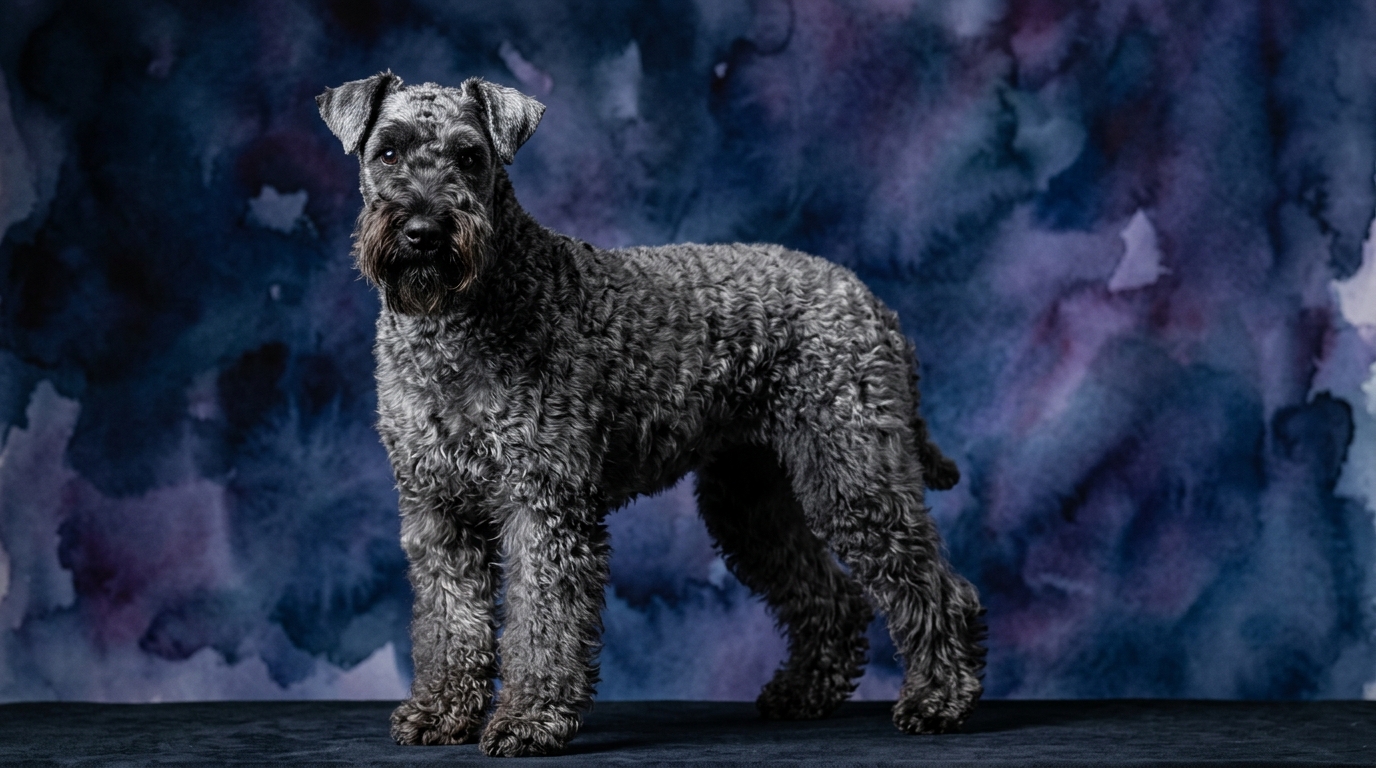

Side-by-Side Cognitive Profiles
The Cosmic Pet Pet IQ Lab provides a fascinating framework for understanding canine cognition, assessing breeds across five crucial dimensions. For both the Kerry Blue Terrier and the Lhasa Apso, these scores align perfectly at a 3 out of 5 for each category. However, these identical numbers do not imply identical minds; rather, they suggest that both breeds possess a moderate capacity in these areas, expressed through their distinct breed-specific lenses.
The Kerry Blue Terrier, originating from Ireland as an all-around farm dog, displays its Problem Solving (3/5) through a tenacious, hands-on approach. This breed's ingenuity often manifests in figuring out how to get to a desired object or overcome a physical obstacle, reflecting its working heritage. Their Training Speed (3/5) indicates a capacity to grasp new commands and routines with moderate repetition, often driven by an eagerness to engage, though their independent terrier spirit means consistency is key. Social Intelligence (3/5) for a Kerry Blue means they are generally adaptable in family settings, capable of understanding cues from their human companions, and often forming strong bonds within their immediate circle, while being more reserved with strangers. Their Instinctive Drive (3/5) is pronounced in their terrier prey drive and protective instincts, manifesting as a keen interest in chasing small animals or guarding their territory. Memory (3/5) in a Kerry Blue suggests they retain learned behaviors and recall experiences well, contributing to their ability to navigate complex routines and remember past interactions.
The Lhasa Apso, a sentinel from the Tibetan plateaus, approaches Problem Solving (3/5) with a more observational and strategic mindset. Their intellect often shines in assessing their environment for potential threats or figuring out how to maintain a comfortable vantage point, rather than a physically assertive method. Their Training Speed (3/5) reflects a capacity to learn, but often on their own terms; they may take longer to accept a command, requiring patience and positive reinforcement, yet once learned, the behavior is typically deeply ingrained. Social Intelligence (3/5) for a Lhasa Apso is characterized by a discerning nature, forming profound attachments to their family while remaining aloof or suspicious of outsiders, understanding social dynamics within their trusted circle. Their Instinctive Drive (3/5) is heavily weighted towards their protective and territorial instincts, making them alert watchdogs keenly aware of their surroundings. Memory (3/5) in a Lhasa Apso is robust, enabling them to remember specific people, routines, and past events with remarkable precision, which further aids their guardian role.
Where the Kerry Blue Terrier Wins Cognitively
Despite the shared 3/5 scores, the Kerry Blue Terrier often exhibits a more direct and physically engaged form of cognitive processing. Their Problem Solving, while rated the same, tends to be more proactive and hands-on. A Kerry Blue might more readily experiment with different physical solutions to a puzzle, using their paws and mouth to manipulate objects, reflecting their historical role in vermin control. This breed's Training Speed, also 3/5, often translates into a quicker initial uptake of novel, active commands, especially those involving agility or fetch, due to their inherent eagerness and stamina. Their energetic disposition means they are often more inclined to participate in repetitive, physically demanding training sessions, absorbing information through active engagement. Furthermore, their Instinctive Drive, specifically their prey drive, can be channeled effectively in certain dog sports, making them particularly adept at tasks requiring focus on a moving lure or object.
Where the Lhasa Apso Wins Cognitively
The Lhasa Apso's cognitive strengths lie in their nuanced observational skills and their deeply ingrained guardian mentality. Their Problem Solving, though rated 3/5, is often more about strategic assessment and subtle manipulation rather than overt physical effort. A Lhasa might observe a situation, such as a gate left ajar, and subtly exploit it, or use their keen senses to anticipate a visitor before any visual or auditory cues are apparent to humans. Their Social Intelligence, while also 3/5, is particularly refined in its discerning nature; they possess an astute ability to differentiate between welcomed family members and potential intruders, relying on subtle cues that might escape other breeds. This makes them exceptional at identifying changes in their environment or human behavior. Their Memory, rated 3/5, is often tied to their protective role, allowing them to recall specific interactions or perceived threats over long periods, reinforcing their territorial awareness and loyalty to their inner circle.
Which Is Easier to Train and Why
Determining which breed is 'easier' to train is less about raw intellectual capacity and more about temperament and motivation. The Kerry Blue Terrier, with its lively and spirited disposition, often presents as quicker to pick up new commands initially. Their terrier drive and desire for engagement can make them enthusiastic participants in training sessions, especially if the training involves active tasks and positive reinforcement they find rewarding. However, their independence (a common terrier trait) means they can also be easily distracted by their Instinctive Drive (3/5) towards scents or movement, and may choose to ignore commands if they perceive a better alternative. Consistency, clear boundaries, and making training fun are paramount to maintain their focus.
The Lhasa Apso, conversely, often requires more patience and a different approach. Their Training Speed (3/5) indicates they are capable learners, but their independent and sometimes stubborn nature means they need to be convinced that the command is worthwhile or makes sense to them. Their Social Intelligence (3/5) implies they need to trust and respect their trainer deeply before fully committing. Once a Lhasa Apso understands and accepts a command, their Memory (3/5) ensures it is remarkably solid and reliable. Therefore, while a Kerry Blue might learn basic obedience faster, a Lhasa Apso, once trained, can be exceptionally steadfast. Owners seeking rapid initial compliance might find the Kerry Blue 'easier,' while those valuing profound reliability after a more patient initial investment might prefer the Lhasa.
Which Suits Active Owners vs. Relaxed Owners
For active owners, the Kerry Blue Terrier is often an excellent match. Their energetic nature and moderate Instinctive Drive (3/5) mean they thrive on regular physical activity, including brisk walks, runs, and engaging play sessions. They enjoy having a 'job' to do, whether it's participating in dog sports like agility or earthdog trials, or simply being an active companion for outdoor adventures. Owners who enjoy interactive training, providing consistent mental stimulation through puzzle toys and new commands, will find a Kerry Blue responsive and eager to participate in their lifestyle. Their robust Problem Solving (3/5) and Memory (3/5) allow them to excel in varied activities.
The Lhasa Apso, while not a sedentary dog, is generally better suited for owners with a more relaxed lifestyle, particularly regarding physical demands. While they benefit from daily walks and playtime, their exercise needs are typically moderate. Their mental stimulation often comes from their role as a discerning companion and guardian, observing their environment and interacting with their family. Owners who appreciate a dog with a strong personality, a reserved demeanor with strangers, and deep loyalty to their inner circle will find the Lhasa Apso a rewarding companion. They thrive in a home where their keen senses and subtle Problem Solving (3/5) can be utilized to 'manage' their domain from a comfortable vantage point, enjoying quiet companionship as much as a stroll.
The Verdict
Choose the Kerry Blue Terrier if you're an active owner seeking an engaged, spirited partner for varied activities, capable of quick learning and requiring consistent, fun-based training.
Opt for the Lhasa Apso if you value a discerning, loyal companion with a strong independent streak, appreciating a dog that offers deep, quiet companionship after patient, trust-based training.
🧠 Find Your Pet's IQ Score
Our Pet IQ Lab assessment covers 25+ tests across 5 cognitive dimensions — personalized to your breed.
Take the Full IQ Test →Frequently Asked Questions
Are Kerry Blue Terriers good with children?
Kerry Blue Terriers can be excellent family dogs with proper socialization and training from a young age. Their Social Intelligence (3/5) means they can form strong bonds, but their energetic terrier nature requires supervision with very young children to ensure playful interactions remain gentle.
Do Lhasa Apsos bark a lot?
Lhasa Apsos, with their strong Instinctive Drive (3/5) for guarding, can be prone to barking as they alert their family to perceived intruders or changes in their environment. Consistent training and early socialization can help manage this natural tendency, teaching them appropriate times to vocalize.
How much exercise do these breeds need daily?
The Kerry Blue Terrier requires significant daily exercise, typically 60-90 minutes of vigorous activity to satisfy their energetic disposition. The Lhasa Apso needs moderate exercise, usually 30-60 minutes of daily walks and playtime, balancing their need for activity with their more relaxed indoor demeanor.