
Side-by-Side IQ Profile: Guardianship vs. Scent Pursuit
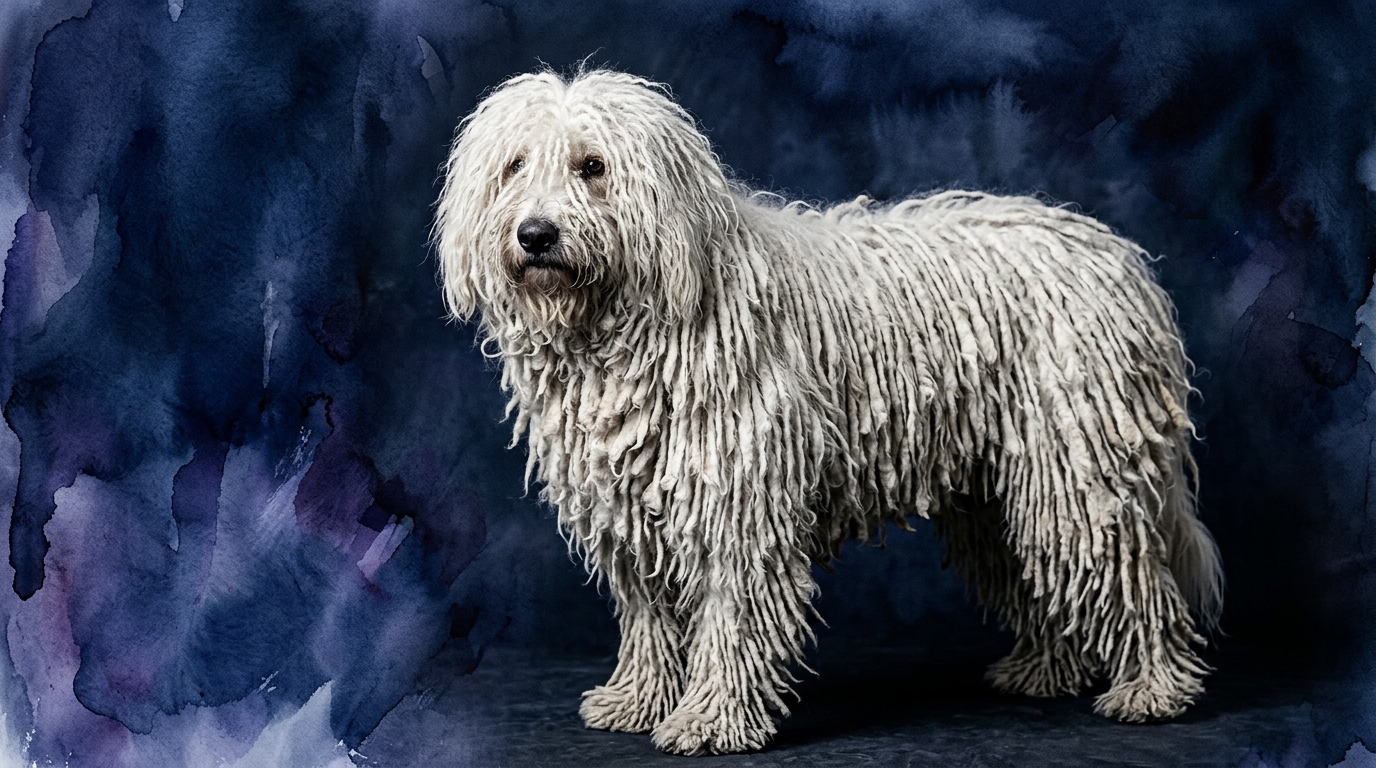
Komondor: The Thoughtful Protector
Problem Solving (3/5): The Komondor excels at independent, situational problem-solving within its territory, such as evaluating potential threats to its flock or family and deciding on the appropriate response, often without direct human instruction. Their guardian role demands a strategic assessment of environmental cues and intruder behavior, leading to self-reliant decisions on when to observe, deter, or intervene.
Training Speed (3/5): While capable of learning, the Komondor's training speed is often tempered by its inherent independence; they learn best when tasks align with their perceived purpose, and rote repetition can be met with disinterest. Commands are processed through the lens of their guarding instinct, meaning they might comply readily if they understand the command's utility in maintaining order or security.
Social Intelligence (3/5): Possessing a deep understanding of their family unit or “flock,” Komondors display nuanced social awareness within their trusted circle, recognizing roles and subtle interactions. Towards strangers, their social intelligence manifests as cautious observation and a discerning assessment of intent, prioritizing the safety of their charges above casual friendliness.
Instinctive Drive (3/5): The Komondor's cognitive framework is heavily influenced by a formidable instinctive drive for guardianship, manifesting as unwavering territoriality and a profound protective impulse towards their family or livestock. This drive dictates much of their behavior, from vigilance to decisive action when boundaries are challenged.
Memory (3/5): Their memory is robust for routines, perceived threats, and the layout of their defended space, allowing them to recall past encounters and environmental changes relevant to their protective duties. They remember who belongs and who doesn't, contributing to their consistent guarding behavior.
Bluetick Coonhound: The Scent-Driven Maverick
Problem Solving (3/5): The Bluetick Coonhound's problem-solving prowess shines in dynamic, sensory-rich environments, particularly when deciphering complex scent trails over varied and often challenging terrains. Their cognitive focus is on overcoming obstacles to follow a scent, requiring persistent mental mapping and adaptation to changing environmental conditions to locate prey.
Training Speed (3/5): Blueticks can learn commands, but their training speed is frequently challenged by their overwhelming scent drive, which can override other stimuli and commands. Effective training requires engaging their natural drives and intense consistency, as their focus can easily shift from handler to an enticing olfactory input.
Social Intelligence (3/5): As a breed historically working in packs, Blueticks exhibit social intelligence through their ability to collaborate with human hunters and other dogs, interpreting cues during a chase. They are generally amiable within their accepted social group, though their primary focus during activity is often the scent, not social niceties.
Instinctive Drive (3/5): The Bluetick's cognitive processing is dominated by an exceptionally strong instinctive drive for tracking, baying, and treeing game, making their nose their primary tool for interacting with the world. This drive is a powerful motivator, shaping their persistence and determination in pursuit.
Memory (3/5): Their memory is particularly adept at recalling complex scent patterns, successful hunting routes, and the locations where prey has been treed, demonstrating a spatial and olfactory memory crucial for their hunting tasks. They can retrace their steps or remember a specific scent signature over time.
Where the Komondor Wins Cognitively
The Komondor's cognitive strengths are particularly evident in its capacity for autonomous decision-making within a defined territory. Their ability to assess and react to threats without constant human oversight, weighing factors like perceived danger and intruder intent, sets them apart. This involves a sophisticated understanding of their environment and a proactive, strategic approach to defense, rather than merely reacting to commands. Furthermore, their nuanced social intelligence within their trusted circle allows them to discern subtle shifts in family dynamics or potential vulnerabilities, acting as a vigilant protector.
Where the Bluetick Coonhound Wins Cognitively
The Bluetick Coonhound demonstrates superior cognitive abilities in environments demanding sustained, singular focus on a sensory input amidst distractions. Their problem-solving in navigating intricate, often invisible scent trails across diverse landscapes, maintaining that path for hours, showcases a unique mental endurance and spatial reasoning tied to olfaction. This involves filtering out extraneous sensory information to prioritize the target scent, a cognitive feat requiring immense concentration and an adaptive strategy to overcome obstacles in pursuit. Their memory for these complex scent patterns and successful hunting strategies is unparalleled, making them masters of their specialized domain.
Which is Easier to Train and Why
Neither the Komondor nor the Bluetick Coonhound fits the mold of an “easy” dog to train in the traditional obedience sense, each presenting distinct challenges rooted in their core behavioral drivers. The Komondor's independent nature, a cornerstone of its guarding role, means it learns best when it perceives a command as logical or beneficial to its duties; rote drills without clear purpose often lead to disinterest or selective hearing. They are not inherently driven to please but to protect, requiring a trainer who understands how to frame requests within that context.
The Bluetick Coonhound, conversely, struggles with trainability due to an almost overpowering instinctive drive for scent. Once their nose is engaged, external commands can become secondary, making reliable recall and focus in distracting environments a significant hurdle. Their cognitive processing is so heavily geared towards olfactory information that redirecting their attention requires immense patience, high-value rewards, and consistent, engaging methods that can compete with the allure of a captivating scent. While both require dedicated, understanding owners, the Bluetick's propensity for “tuning out” due to scent might present a steeper climb for general obedience compared to the Komondor's more deliberate, independent processing.
Which Suits Active Owners vs. Relaxed Owners
The Komondor, while not requiring the intense physical exertion of a working scent hound, thrives with an owner who appreciates its watchful nature and provides opportunities for mental engagement related to its guardian instincts. They need space to patrol and observe, making them suitable for owners with larger properties or secure yards, but their exercise needs are moderate rather than extreme. They are not suited for a purely “relaxed” owner seeking a sedentary companion, as their independent spirit and protective drives require consistent management and purpose, even if that purpose is simply overseeing the household.
The Bluetick Coonhound, on the other hand, is unequivocally for the active owner. Their immense stamina and relentless scent drive demand substantial daily physical exercise, ideally including opportunities for tracking, long hikes, or vigorous play that engages their powerful nose. A “relaxed” owner who cannot meet these needs will likely find themselves with a bored, potentially destructive, and restless companion. These dogs are at their happiest and most settled when their innate drives are fulfilled through consistent, high-energy activity.
The Verdict
When you seek an independent, watchful guardian who forms a deep bond and excels at autonomous decision-making within its territory, appreciating a dog that thinks for itself, choose the Komondor.
When you are an active individual or family passionate about outdoor adventures, tracking, or scent work, ready to provide the extensive physical and mental stimulation a scent-driven companion requires, choose the Bluetick Coonhound.
🧠 Find Your Pet's IQ Score
Our Pet IQ Lab assessment covers 25+ tests across 5 cognitive dimensions — personalized to your breed.
Take the Full IQ Test →Frequently Asked Questions
Do Komondors get along with other pets?
Komondors can coexist peacefully with other pets, especially if raised with them from a young age, often viewing them as part of their “flock” to be protected. However, their strong guarding instinct means they might be wary of unfamiliar animals, requiring careful introductions and supervision.
Are Bluetick Coonhounds good family dogs?
Bluetick Coonhounds can be affectionate and loyal family dogs, generally good with children when properly socialized and exercised, but their high energy and strong prey drive mean they require supervision around very young children and smaller pets. Their boisterous nature and baying might not suit every household environment.
How do their grooming needs compare?
The Komondor's unique corded coat requires significant specialized grooming to prevent matting and maintain cleanliness, a time-consuming process. The Bluetick Coonhound's short, dense coat is much lower maintenance, needing only regular brushing to reduce shedding and maintain skin health.