Side-by-Side IQ Profile: Unpacking Identical Scores
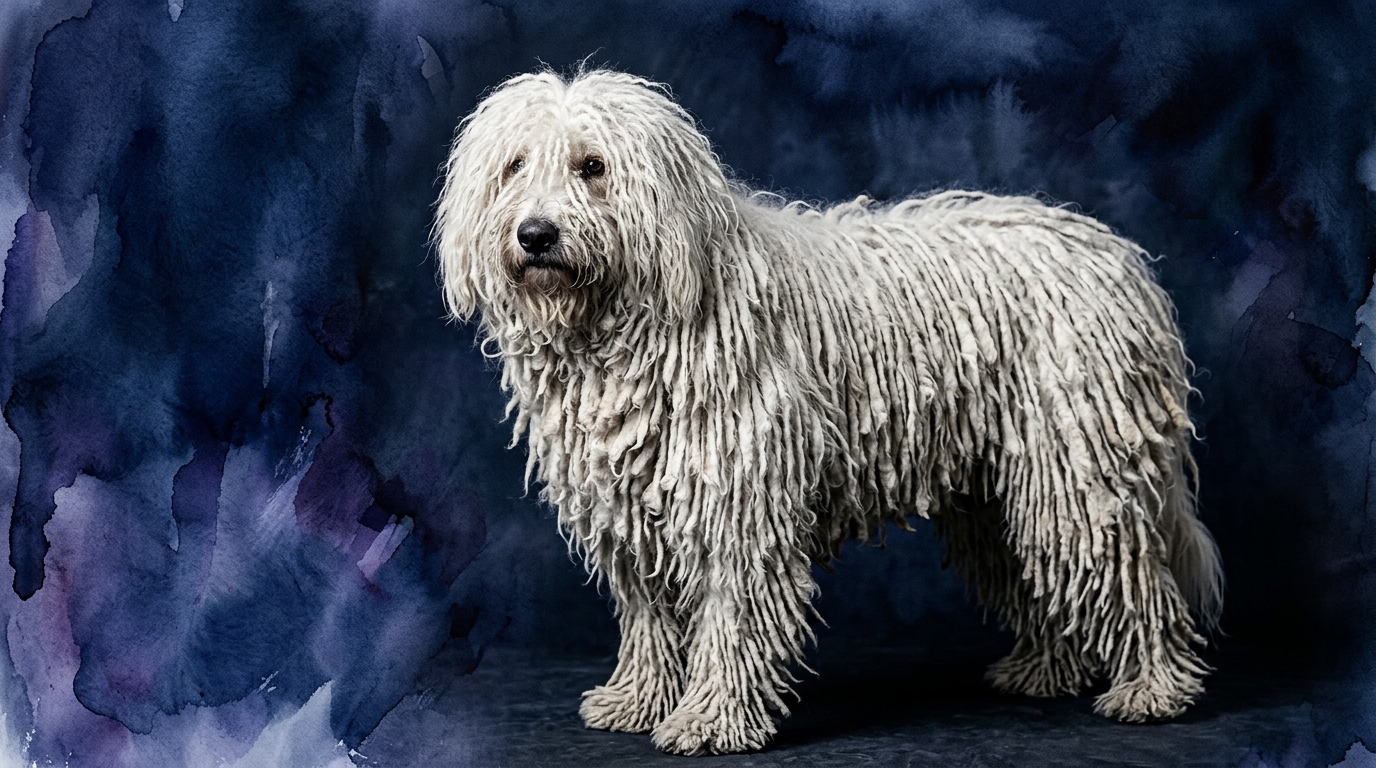
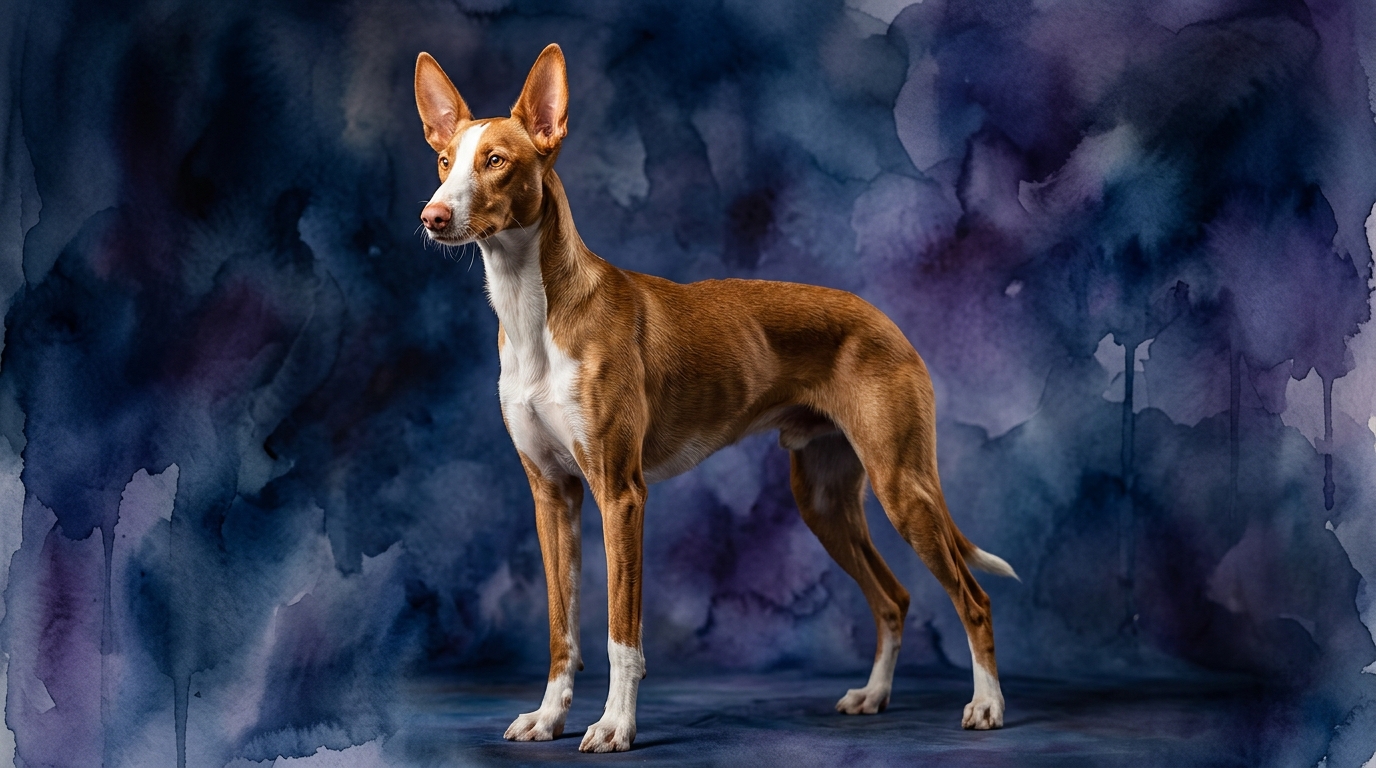
At first glance, the Komondor (Coren rank #67) and the Ibizan Hound (Coren rank #53) present an intriguing cognitive mirror image. Both breeds score 3/5 across the board in Problem Solving, Training Speed, Social Intelligence, Instinctive Drive, and Memory. However, these identical scores belie a fascinating divergence in how these capabilities are expressed, shaped by millennia of selective breeding for vastly different roles.
The Komondor's cognitive profile is intrinsically linked to its heritage as a livestock guardian. Their Problem Solving (3/5) isn't about intricate puzzles but practical, real-world challenges; a Komondor might strategize the best vantage point to observe their territory or independently figure out how to deter a perceived threat without direct confrontation. This involves assessing complex situations and making autonomous decisions about security. Their Training Speed (3/5) indicates they are capable learners, but this speed is often tempered by their independent nature; they absorb information, but their execution of commands can be deliberate, often evaluating if the command aligns with their ingrained purpose or makes logical sense to them. They learn best through consistency and respect, not rote repetition. Social Intelligence (3/5) manifests as a deep understanding of their family unit, discerning moods and intentions within their trusted circle. With strangers, their social intelligence is geared towards cautious observation, assessing potential threats rather than seeking interaction. They form profound, albeit exclusive, bonds. Their Instinctive Drive (3/5) is predominantly a guarding drive, compelling them to protect, patrol, and remain vigilant. This drive is less about chasing and more about containment and defense, creating a strong territorial boundary around their charges. Finally, their Memory (3/5) is robust, allowing them to retain detailed memories of routines, individuals, and especially past events related to security breaches or novel stimuli, contributing to their consistent protective behavior.
The Ibizan Hound's cognitive strengths are rooted in its role as an agile sighthound, pursuing prey over diverse terrains. Their Problem Solving (3/5) is intrinsically linked to their hunting heritage; an Ibizan might cleverly navigate complex terrain to cut off a rabbit's escape route or find the most efficient path through dense brush during a chase. This requires rapid assessment and adaptive strategy in dynamic, high-stakes situations. They possess a keen ability to grasp new concepts quickly, reflected in their Training Speed (3/5), especially when training is engaging and rewards-based. However, their speed is often overshadowed by their environmental sensitivity; a compelling scent or visual stimulus can instantly divert their attention, making sustained focus a challenge. Their Social Intelligence (3/5) shines within their family, where they are highly attuned to human emotions and body language, often initiating playful interactions or offering comfort. Outside their trusted circle, they can be reserved but are generally polite, demonstrating a keen awareness of social cues without being overly effusive. Their Instinctive Drive (3/5) is overwhelmingly a prey drive, fueled by sight and speed. They possess an almost insatiable urge to chase anything that moves quickly. This instinct is powerful, guiding their actions and often overriding other learned behaviors when triggered. Their Memory (3/5) is excellent for locations, specific scents, and successful hunting strategies. They also remember positive training experiences vividly, making consistent, rewarding methods highly effective. However, this memory can also extend to negative associations, requiring a positive and gentle approach.
Where the Komondor Excels Cognitively
The Komondor's cognitive strengths distinctly align with their historical purpose. Their 3/5 Problem Solving and 3/5 Instinctive Drive are finely tuned for autonomous livestock guarding. They excel at assessing environmental threats, discerning friend from foe, and making independent, often subtle, decisions to protect their flock or family. This isn't about solving abstract puzzles, but practical, real-world security challenges, such as positioning themselves to oversee a large area or understanding when to escalate a warning. Furthermore, their 3/5 Memory and 3/5 Social Intelligence contribute to an unwavering loyalty and a consistent, vigilant protective stance. They retain detailed recollections of perceived threats and maintain a steady observation of their territory, making them exceptionally reliable in their intended guardian role, often anticipating potential issues before they arise.
Where the Ibizan Hound Excels Cognitively
The Ibizan Hound's cognitive advantages are evident in their agility and precision as sighthounds. Their 3/5 Problem Solving and 3/5 Instinctive Drive manifest as superior tracking and chasing abilities, particularly in open spaces. They can independently strategize to corner fast-moving prey, navigate complex and changing terrain at high speeds, and adapt their pursuit tactics on the fly, demonstrating a distinct type of practical problem-solving focused on dynamic situations. Their 3/5 Training Speed, when channeled into activities like lure coursing or agility, showcases quick reactions and an ability to rapidly process visual stimuli, translating into immediate and effective decision-making during high-speed chases. This quick cognitive-motor link allows them to excel in activities requiring rapid, fluid responses to environmental changes.
Which is Easier to Train and Why
Despite identical 3/5 Training Speed scores, the practicalities of training these two breeds differ significantly due to their other cognitive dimensions. The Komondor's training can be more challenging because of their independent nature and strong guarding instincts. Their purpose was to make autonomous decisions, not always to obey immediate human commands without question. They may scrutinize a command if they don't perceive a clear purpose or if it conflicts with their ingrained protective duties. Consistent, patient, and respect-based training, focusing on building trust and understanding, is crucial. Early and broad socialization is also vital to shape their 3/5 Social Intelligence, helping them differentiate between perceived threats and benign stimuli.
The Ibizan Hound, conversely, learns quickly in engaging, positive reinforcement settings, but their very high 3/5 Instinctive Drive (prey drive) makes them incredibly susceptible to environmental distractions. A sudden rustle in the bushes or a distant movement can instantly override any learned command, leading to selective hearing. Their 3/5 Memory is good for recalling positive experiences, but their independent hunting nature means they might "tune out" if a more stimulating activity, like a chase, presents itself. Recall, especially off-leash in an open area, can be particularly difficult and requires extensive, proofed training due to their powerful urge to pursue.
Which Suits Active Owners vs. Relaxed Owners
The choice between a Komondor and an Ibizan Hound largely hinges on an owner's lifestyle and their capacity to meet specific breed needs. A Komondor suits owners who understand and respect their working heritage, appreciating a dog capable of making autonomous protective decisions. While calm indoors, they are not "relaxed" in the sense of being low maintenance; they need mental stimulation through vigilance and a clear "job," even if it’s just guarding the family. They require a securely fenced yard and consistent interaction, but their activity is more about patrolling and observation than high-intensity exercise.
The Ibizan Hound, however, is unequivocally suited for active owners. Their high energy and powerful 3/5 Instinctive Drive demand significant physical exertion, such as running, lure coursing, or extensive off-leash (in secure areas) adventures. A more relaxed owner would likely struggle with their profound need to run and chase, which, if unfulfilled, can lead to frustration and destructive behaviors. They thrive with owners who can provide consistent, engaging outlets for their innate hunting instincts in a safe, controlled manner, making them ideal partners for outdoor enthusiasts.
The Verdict
Choose the Komondor if you seek a steadfast, independent guardian with a calm, watchful demeanor indoors, who thrives on a clear protective role and whose subtle decision-making you can appreciate.
Choose the Ibizan Hound if you are an active individual or family capable of providing extensive opportunities for high-speed running and structured mental engagement, and you desire a playful, agile companion for outdoor adventures.
🧠 Find Your Pet's IQ Score
Our Pet IQ Lab assessment covers 25+ tests across 5 cognitive dimensions — personalized to your breed.
Take the Full IQ Test →Frequently Asked Questions
Do Komondors and Ibizan Hounds get along with other pets?
Komondors, with proper early socialization, can coexist peacefully with other animals, often extending their protective instincts to include them as part of their "flock." Ibizan Hounds, due to their strong prey drive, might view smaller, fast-moving pets as something to chase, requiring careful introductions and and constant supervision to ensure safety.
Are Komondors or Ibizan Hounds better for first-time dog owners?
Neither breed is typically recommended for first-time dog owners due to their unique needs and strong, independent instincts. Komondors require owners with experience managing guarding breeds, while Ibizan Hounds demand owners who can effectively channel their high energy and powerful prey drive.
How do their Coren ranks (Komondor #67, Ibizan Hound #53) relate to their IQ scores?
Coren's ranking primarily assesses "working and obedience intelligence," focusing on trainability and command following, which is a specific subset of cognitive abilities. The Ibizan Hound's higher rank (#53) suggests a slightly greater aptitude for understanding and obeying commands than the Komondor (#67), despite identical Pet IQ Lab scores which measure a broader range of cognitive dimensions including independent problem-solving and social intelligence, reflecting different expressions of their overall intellect.