
Side-by-side IQ profile
The Komondor's Problem Solving (3/5) is rooted in its livestock guardian heritage, where it autonomously assessed threats and strategized defense without direct human command. This manifests as a thoughtful, independent approach to challenges, prioritizing protection. Training Speed (3/5) is deliberate; while capable of learning, its primary directive isn't always human appeasement. Training demands patience and consistency, understanding its guardian mindset. Social Intelligence (3/5) is acutely tuned to its perceived "flock," discerning friend from foe and understanding group dynamics. New introductions are met with careful observation. An innate Guarding Drive (3/5) defines the Komondor, manifesting as strong territorial instincts and unwavering vigilance, involving proactive risk assessment. Its Memory (3/5) is robust, particularly for significant events, perceived threats, and territory layout, reinforcing behaviors aligned with its protective duties.
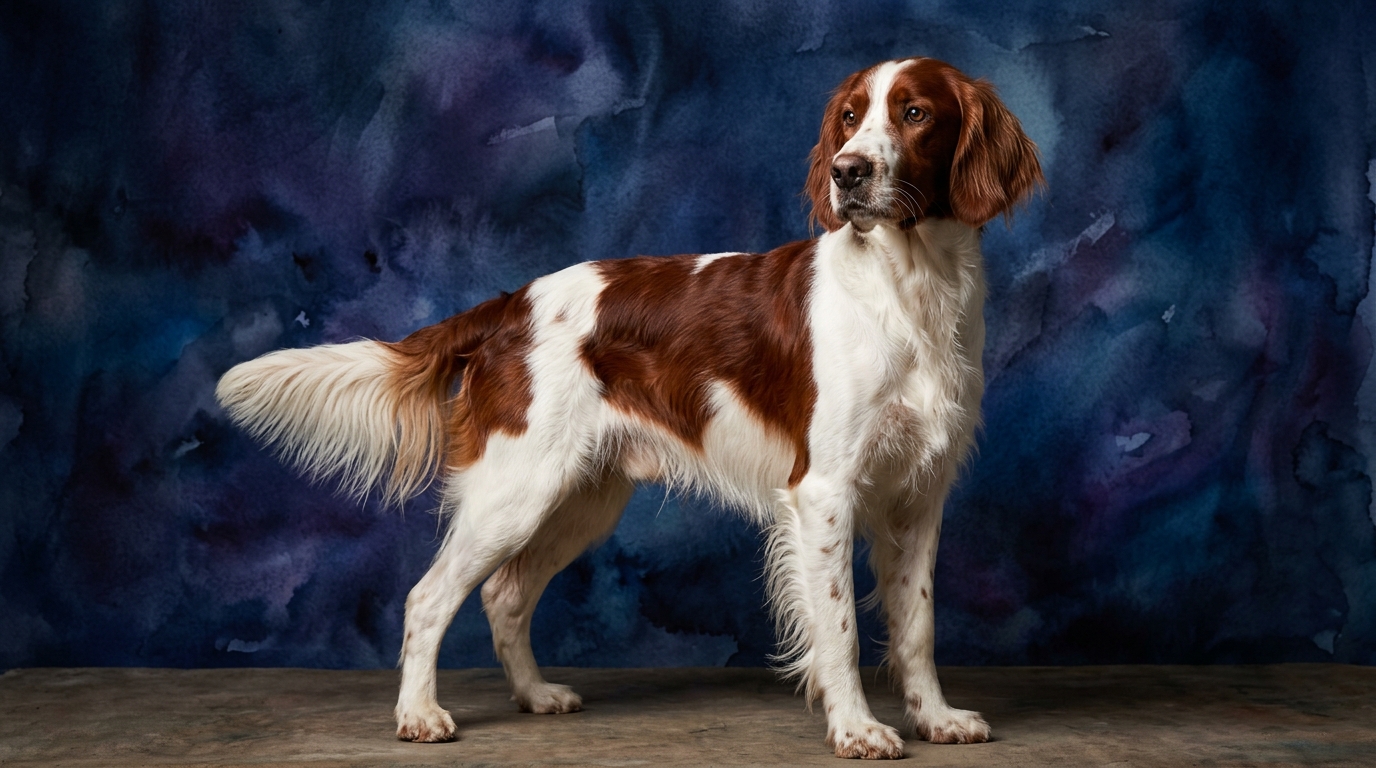
The Irish Red and White Setter's Problem Solving (3/5) is honed for cooperative hunting, excelling at navigating terrain to locate game, interpreting scent trails, and strategizing how to point effectively. Their solutions often involve coordinated effort with a human partner. Training Speed (3/5) is commendable due to an eagerness to please and desire to work alongside humans. Their responsiveness makes them generally quicker to grasp commands, especially when training is collaborative. Social Intelligence (3/5) is oriented towards harmonious interaction within its human family and hunting partners. They are adept at reading human cues, fostering strong bonds and cooperative work. A pronounced Sporting Drive (3/5) is central, including keen prey drive, exceptional scenting, and the instinct to point and retrieve. This fuels enthusiasm for outdoor activities. Memory (3/5) is strong for training sequences, learned routes, and specifics of hunting grounds, contributing to consistent performance and adaptability.
Where Komondor wins cognitively
The Komondor's cognitive strengths distinctly emerge in scenarios demanding independent judgment and unwavering protective resolve. Its problem-solving, though 3/5, is geared towards autonomous decision-making in the absence of human instruction, a trait less emphasized in breeds bred for cooperative work. For instance, a Komondor excels at identifying a subtle environmental shift indicating a threat to its charges, then strategizing an appropriate defensive response without human command. This capacity for self-directed threat assessment and defense planning is paramount. Its social intelligence, also 3/5, is singularly focused on discerning the legitimacy of new individuals or situations within its perceived territory, making it an astute judge of character from a guardian's perspective. This critical evaluation, coupled with robust memory for past encounters, allows the Komondor to build a comprehensive mental map of its protective domain.
Where Irish Red and White Setter wins cognitively
The Irish Red and White Setter's cognitive edge lies in its collaborative intelligence and refined sensory processing, particularly relevant to its sporting heritage. While also scoring 3/5 in problem-solving, its strength is in efficiently navigating complex environments to locate game, interpreting subtle scent cues, and coordinating actions seamlessly with a human handler. Its ability to "read" terrain and scent patterns, then adapt its search strategy, demonstrates practical, responsive problem-solving. The Setter's social intelligence (3/5) is characterized by exceptional attunement to human communication, interpreting handler signals with precision, facilitating a fluid partnership. This cooperative understanding fosters a willingness to engage and respond, making it highly trainable for complex tasks involving shared objectives. Its memory (3/5) is particularly adept at recalling intricate scent trails, specific game locations, and training routines, directly contributing to its effectiveness as a hunting companion.
Which is easier to train and why
When considering ease of training, the Irish Red and White Setter generally presents a more straightforward experience for the average owner. Both breeds score 3/5 in training speed, but the *nature* of their learning differs significantly. The Setter's instinctive drive includes a strong desire to work cooperatively and please its human companion, making it highly responsive to positive reinforcement and eager to engage in training sessions. Its social intelligence allows it to readily interpret human cues and intentions, fostering a fluid communication channel essential for efficient learning. They are often quick to grasp new commands and routines. In contrast, the Komondor's training speed, while capable, is influenced by its independent, guardian mindset. Its primary drive is to protect, and while it will learn, it often evaluates commands through the lens of its perceived duty, sometimes leading to a more deliberate and less immediately enthusiastic response. Training a Komondor requires immense patience, consistency, and a deep understanding of its protective instincts. Therefore, for most owners seeking a responsive and eager training partner, the Irish Red and White Setter holds an advantage due to its inherent cooperative nature and focus on human partnership.
Which suits active owners vs relaxed owners
The choice between these two breeds depends heavily on an owner's lifestyle and their capacity for providing appropriate mental and physical stimulation. The Irish Red and White Setter, with its pronounced sporting drive and cooperative intelligence, is an ideal match for active owners. Its need for regular, vigorous exercise—such as long runs, hikes, or field work—is substantial. This breed thrives on activities that engage both its body and its mind, particularly those that allow it to use its scenting and pointing instincts. Owners who enjoy outdoor adventures, participate in dog sports like agility or obedience, or are keen on hunting will find the Setter's energy and desire for partnership incredibly rewarding. Conversely, the Komondor's cognitive profile and physical needs lean towards a different kind of owner. While not a couch potato, its energy is more conserved for its protective duties rather than constant high-intensity activity. Its independent problem-solving and strong guarding instincts mean it requires a confident, experienced owner who understands and respects its unique temperament. A Komondor often prefers patrolling its territory and observing rather than participating in endless games of fetch. Therefore, a more relaxed owner, perhaps with a large, secure property for the Komondor to oversee, who appreciates a watchful, independent companion, might find the Komondor a better fit than an owner seeking a constantly engaged, high-energy exercise partner.
The Verdict
Opt for the Komondor if you seek an independent, vigilant guardian with a profound protective instinct and are prepared to manage its deliberate approach to training and socialization, especially with a large property it can oversee.
Select the Irish Red and White Setter if you desire an enthusiastic, cooperative partner for an active lifestyle, one that thrives on engagement, vigorous exercise, and shared outdoor adventures, responding eagerly to consistent, positive training.
🧠 Find Your Pet's IQ Score
Our Pet IQ Lab assessment covers 25+ tests across 5 cognitive dimensions — personalized to your breed.
Take the Full IQ Test →Frequently Asked Questions
Do Komondors get along well with other pets?
Komondors, with their inherent guarding instincts, can coexist peacefully with other pets, especially if raised with them from a young age and properly socialized. Their social intelligence allows them to integrate other animals into their perceived "flock," but new introductions require careful, supervised management.
Are Irish Red and White Setters good family dogs?
Yes, Irish Red and White Setters are generally excellent family dogs, known for their affectionate nature and patience with children, provided they receive sufficient exercise and mental stimulation. Their social intelligence makes them adaptable to family dynamics and eager to participate in household activities.
How much exercise does an Irish Red and White Setter need daily?
An Irish Red and White Setter requires a substantial amount of daily exercise, typically at least one to two hours of vigorous activity, such as running, brisk walking, or active play. Their strong instinctive drive for sporting activities means they thrive on opportunities to expend energy and engage their senses.