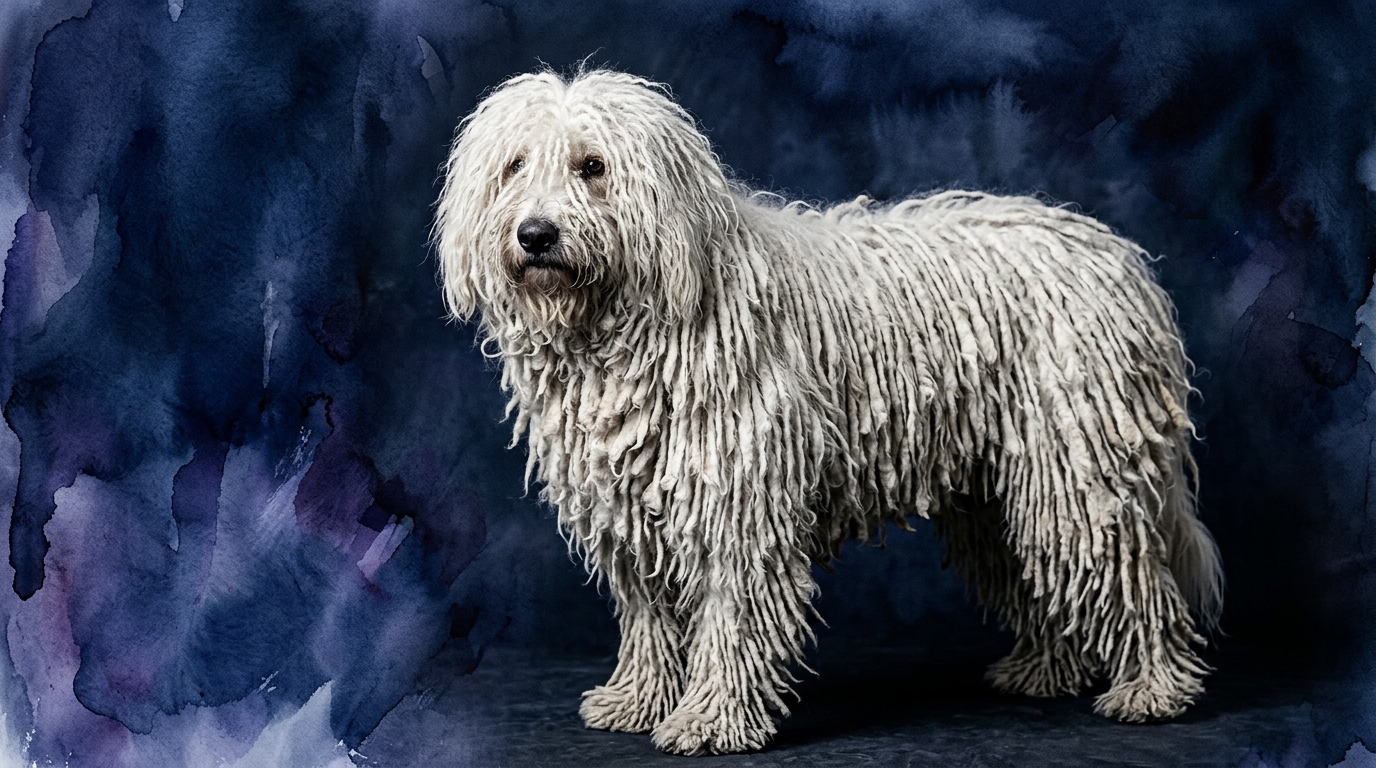
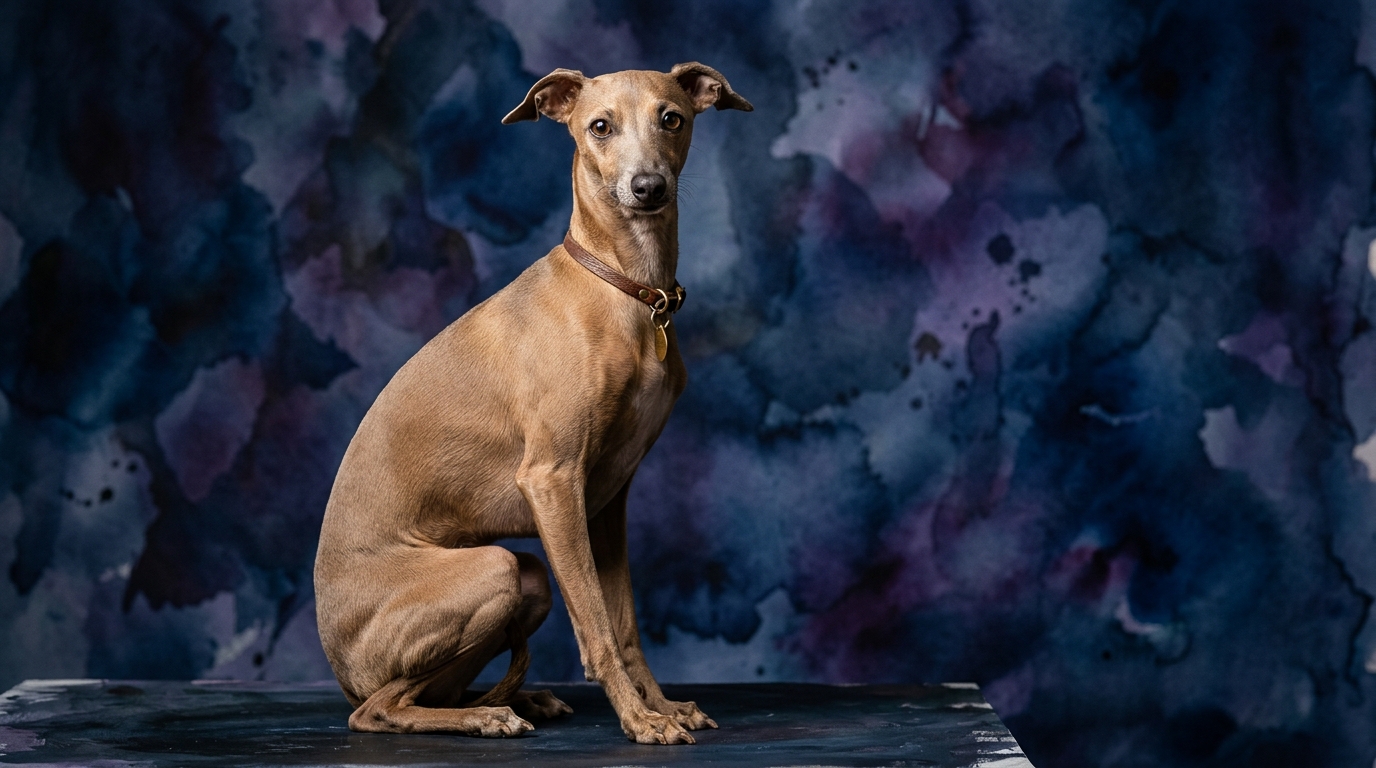
Side-by-Side IQ Profile: Komondor vs. Italian Greyhound
The Cosmic Pet Pet IQ Lab assesses canine intelligence across five key dimensions, providing a nuanced look beyond simple obedience. For both the Komondor and the Italian Greyhound, each dimension is rated at 3 out of 5, yet the application and manifestation of these cognitive abilities are profoundly shaped by their breed-specific histories and inherent drives.
Komondor:
Problem Solving (3/5): The Komondor's problem-solving is deeply tied to its guardian role, independently assessing and neutralizing threats to its flock or family. This involves dynamic environmental awareness and self-sufficient decision-making in complex, evolving situations, rather than abstract puzzles.
Training Speed (3/5): While capable of learning, Komondors often require clear purpose and strong motivation; their inherent independence means they may filter commands through their own judgment, making consistency and trust vital for effective training.
Social Intelligence (3/5): Their social acumen centers on discerning friend from foe and understanding family hierarchy, forming deep protective bonds within a small, exclusive circle. They are observant but generally reserved with strangers.
Instinctive Drive (3/5): A powerful guardianship drive defines the Komondor, fueling its unwavering commitment to protecting its charges through vigilance, territoriality, and independent action.
Memory (3/5): Komondors possess a robust memory for routines, established territories, and individuals, recalling past interactions and potential dangers crucial for their consistent protective duties.
Italian Greyhound:
Problem Solving (3/5): Italian Greyhounds apply problem-solving to optimizing personal comfort and resource access within their domestic environment, such as finding sunbeams or retrieving toys. Their challenges are typically internal to the home, focused on well-being.
Training Speed (3/5): Quick learners with positive reinforcement, Italian Greyhounds are sensitive and can be easily distracted or selectively obedient if bored. Engaging, reward-based training works best, as harsh methods are counterproductive.
Social Intelligence (3/5): Highly attuned to human emotions and body language, Italian Greyhounds form intimate bonds with their primary companions, often anticipating needs. They are reserved with strangers but deeply empathetic with trusted individuals.
Instinctive Drive (3/5): Their drive combines a sighthound's urge to chase small, fast-moving objects with a strong desire for comfort and constant companionship, dictating much of their activity and cognitive focus.
Memory (3/5): Italian Greyhounds have excellent memory for routines, favorite resting spots, and human habits, recalling training cues and past experiences to efficiently navigate their domestic world and lifestyle.
Where the Komondor Wins Cognitively
The Komondor excels in independent judgment and sustained vigilance, a cognitive strength honed over centuries of livestock guarding. Its ability to autonomously assess threats and strategize responses over long periods, without human direction, showcases a specialized problem-solving architecture. This involves dynamic risk assessment and decisive action when necessary, highlighting a unique cognitive efficiency for self-regulating protection.
Where the Italian Greyhound Wins Cognitively
The Italian Greyhound shines in nuanced social attunement and rapid adaptability to domestic environments. Exceptional visual acuity and quick processing of visual cues allow for refined, almost intuitive communication with their humans, often anticipating needs. Their ability to quickly identify and leverage opportunities for comfort or attention demonstrates a nimble, opportunistic problem-solving style centered on personal well-being.
Which is Easier to Train and Why
Determining which breed is "easier" to train depends heavily on the owner's approach and expectations, given both breeds share a 3/5 training speed rating. The Italian Greyhound, with its delicate physical structure and sensitive disposition, often responds best to positive reinforcement, gentle guidance, and making training feel like a game. They can be quick to pick up new commands when motivated by treats or praise, and their desire for human companionship can be leveraged to encourage cooperation. However, their sighthound independence means they can also be easily distracted or decide that a task isn't worth their effort, requiring an engaging and patient trainer.
The Komondor, by contrast, presents a different training challenge. Its deeply ingrained independence and self-reliant working heritage mean it is not inherently driven to please humans in the same way some other breeds are. They are capable learners, but they often require a clear, logical reason for obeying a command and a consistent, firm yet fair approach. Repetitive drill-based training might bore them, and they are more likely to question commands that seem arbitrary or conflict with their perceived duties. Training a Komondor is less about teaching tricks and more about establishing a respectful partnership, where the dog understands its role and trusts its handler's judgment. While both breeds have a moderate training speed, the Italian Greyhound is generally more amenable to conventional, reward-based methods, while the Komondor demands a trainer who respects its thoughtful autonomy and can provide compelling motivation.
Which Suits Active Owners vs. Relaxed Owners
The Komondor, despite its calm demeanor, is fundamentally a working breed that thrives with purpose and space. Owners who are active in the sense of providing a job, whether it's guarding a property or a family, and who can offer ample secure outdoor space for patrolling and independent exploration, will find a Komondor a suitable companion. They are not necessarily high-energy in the way a Border Collie is, but they require mental stimulation through their protective duties and physical activity that aligns with their historical role, rather than structured agility courses or endless fetch. A Komondor would suit an owner who appreciates a vigilant, independent companion and can provide a consistent, predictable environment where its guarding instincts can be appropriately channeled.
The Italian Greyhound, on the other hand, is a perfect match for owners who appreciate bursts of playful energy followed by extended periods of serene companionship. While they love to sprint and chase in a safe, enclosed area, their exercise needs are generally moderate, consisting of short, brisk walks or enclosed yard play. They excel as indoor companions, thriving on warmth, soft blankets, and close physical proximity to their human family. They are well-suited to relaxed owners who enjoy quiet evenings, cozy cuddles, and an affectionate, sensitive dog that is content to lounge for much of the day, punctuated by lively play sessions. Their small size and adaptability make them excellent for apartment living, provided they receive regular outdoor excursions for their zoomies.
The Verdict
When considering a Komondor, choose this breed if you seek a fiercely loyal, independent guardian for your family or property and can provide a structured environment that respects its ancient working instincts.
If you desire an elegant, affectionate companion that thrives on close human connection, enjoys bursts of playful activity, and is content with a more relaxed indoor lifestyle, the Italian Greyhound is an ideal choice.
🧠 Find Your Pet's IQ Score
Our Pet IQ Lab assessment covers 25+ tests across 5 cognitive dimensions — personalized to your breed.
Take the Full IQ Test →Frequently Asked Questions
Are Komondors good with children?
Komondors can be devoted family protectors, often forming strong bonds with children within their immediate family, whom they view as part of their flock. However, their sheer size and protective instincts mean they require early socialization and careful supervision around unfamiliar children, as they may perceive boisterous play as a threat.
Do Italian Greyhounds need a lot of exercise?
Italian Greyhounds enjoy short bursts of intense activity, like sprinting in a securely fenced yard, but they do not require extensive, long-duration exercise. Daily short walks and opportunities for off-leash play in a safe area are usually sufficient, balanced by their significant need for rest and warmth indoors.
How do their grooming needs compare?
The Komondor's unique corded coat requires specialized, intensive grooming to prevent matting and maintain its protective qualities, a process that can be time-consuming and requires dedication. The Italian Greyhound's short, smooth coat is remarkably low-maintenance, needing only occasional brushing and wiping to stay clean, making it a much simpler grooming commitment.