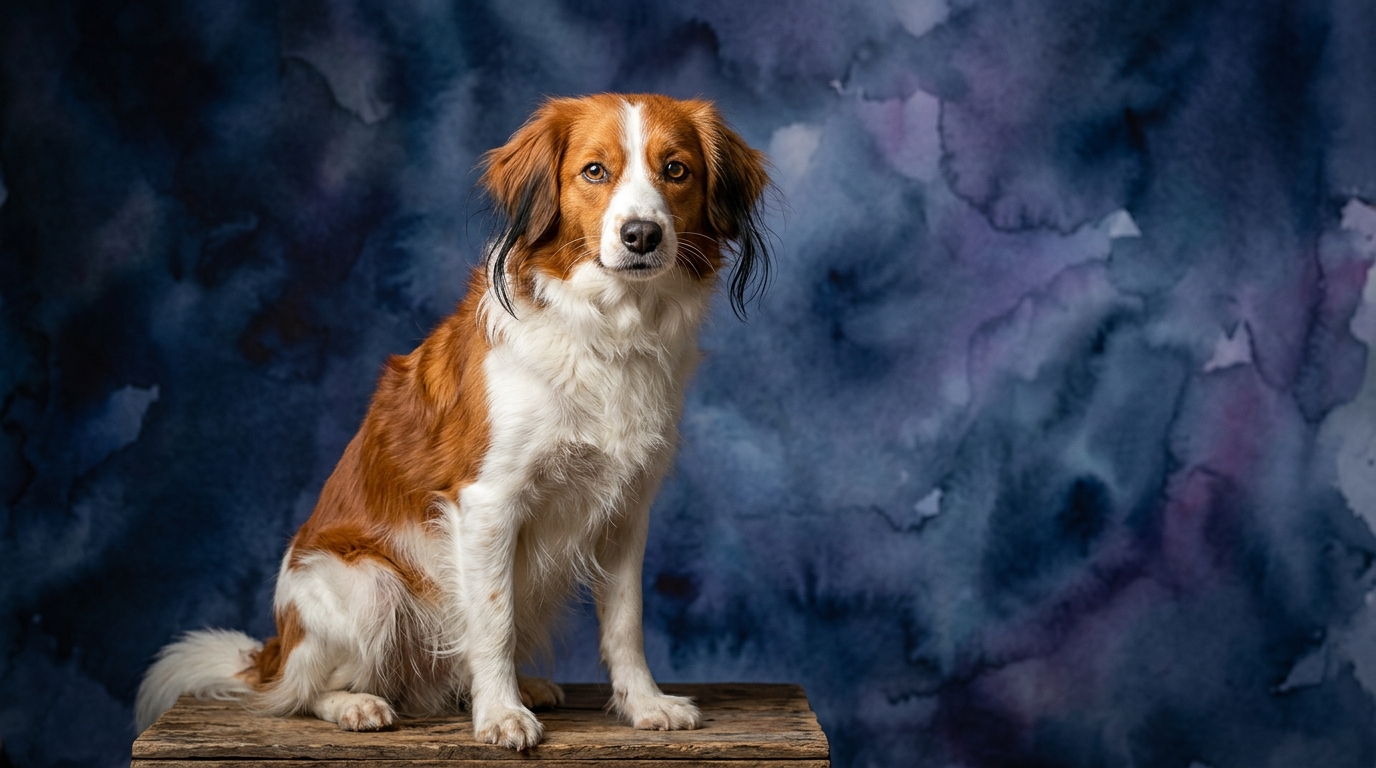
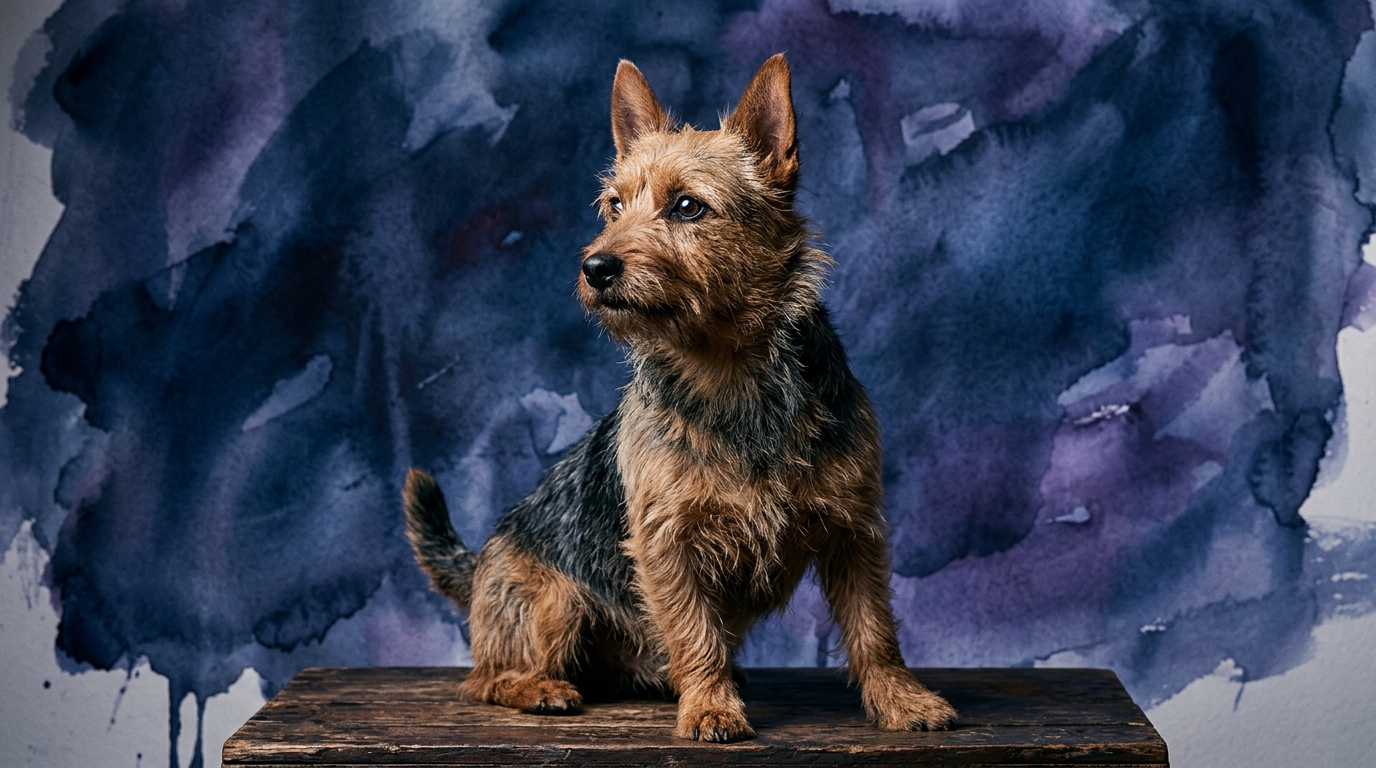
Side-by-Side IQ Profile: Kooikerhondje vs. Australian Terrier
At The Cosmic Pet Pet IQ Lab, we assess canine cognition across five crucial dimensions. For both the Kooikerhondje and the Australian Terrier, our evaluations consistently show a score of 3/5 across the board. This identical numerical outcome, however, masks distinct cognitive styles shaped by their unique breed histories and purposes.
The Kooikerhondje, a Sporting breed, exhibits a particular suite of cognitive strengths. Their **Problem Solving (3/5)** involves a measured approach to challenges, often observing a situation before acting. This strength lies in understanding sequential tasks and adapting within a structured environment, crucial for their historical role of luring ducks. They excel at figuring out how to achieve a goal that requires a series of steps. Their **Training Speed (3/5)** indicates they generally learn new commands and routines at a moderate pace. They are typically willing participants in training, responding well to clear, positive methods, and are capable of retaining complex sequences of actions. Their **Social Intelligence (3/5)** reflects a nuanced understanding of human social cues and family dynamics, forming deep bonds with their chosen people. While often reserved with strangers, they are perceptive to the emotions and intentions of their inner circle, allowing for cooperative interaction. The Kooikerhondje's **Instinctive Drive (3/5)** primarily revolves around retrieving and the specific luring behaviors associated with waterfowl hunting. This manifests as a focused, controlled pursuit rather than an indiscriminate high prey drive, often involving observation and strategic movement. Finally, their **Memory (3/5)** demonstrates good retention of learned behaviors, routines, and environmental layouts. They can recall specific cues, the sequence of tasks in a game, or the location of valued items, contributing to their consistency in performance.
The Australian Terrier, a tenacious Terrier breed, presents a different cognitive blueprint. Their **Problem Solving (3/5)** involves tackling challenges with tenacity and independent thought. Their skills are geared towards overcoming physical obstacles and finding creative solutions, particularly when pursuing a goal like locating vermin. They are adept at figuring out how to get to something they want. Regarding **Training Speed (3/5)**, these terriers can learn rapidly when motivated, but their independent streak means they may choose to prioritize their own interests over commands if not properly engaged. Consistent, varied training keeps their attention and harnesses their quick wit. Their **Social Intelligence (3/5)** often shows them to be highly engaged with their human families, displaying an awareness of moods and a desire for interaction. They can be assertive in their social communications, both with people and other animals, reflecting their self-assured nature. The Australian Terrier possesses a pronounced and robust **Instinctive Drive (3/5)** for small vermin, coupled with strong digging and hunting instincts. This drive fuels their persistence and focus when engaging with their environment. Their **Memory (3/5)** is strong for places, people, and strategies that have previously led to success, such as where a favorite toy was hidden or a specific route to a valued scent. This aids their independent problem-solving and hunting endeavors.
Where the Kooikerhondje Wins Cognitively
The Kooikerhondje's cognitive strengths lean towards cooperative problem-solving and sequential task execution, particularly evident in their historical role as duck lures. Their 3/5 score in problem-solving manifests in an ability to understand complex sequences of actions, like guiding ducks into traps through strategic movement and patience. This isn't just about simple obedience; it involves a nuanced understanding of cause and effect in an environmental context. Their 3/5 social intelligence also benefits from this, allowing them to keenly observe and respond to human handlers' subtle cues, fostering a collaborative partnership rather than just following commands. This breed excels when tasks require sustained focus on a goal, adapting their approach based on real-time observations, which aligns with their memory score of 3/5 for retaining complex routines and environmental details. They are adept at learning and repeating specific, multi-step behaviors in a predictable manner.
Where the Australian Terrier Wins Cognitively
In contrast, the Australian Terrier's cognitive prowess shines in areas demanding independent resourcefulness and tenacity. Their 3/5 problem-solving ability is geared towards overcoming physical obstacles and pursuing objectives with an unyielding determination, often involving strategic digging or navigating tight spaces. This breed thinks on its feet, adapting quickly to changing circumstances during a hunt, and isn't afraid to deviate from a learned path if it means achieving its goal. Their 3/5 instinctive drive for vermin hunting fuels this cognitive approach, making them exceptionally persistent. While their social intelligence also scores 3/5, it's often expressed through a more assertive, self-assured interaction style, where they engage with their environment and humans with a clear sense of purpose. Their memory, also 3/5, is particularly effective at recalling successful hunting strategies or locations of interest, reinforcing their independent problem-solving loop and ability to learn from past experiences in dynamic situations.
Which Is Easier to Train and Why
Despite both breeds scoring 3/5 in training speed, the *approach* to training them differs significantly, influencing perceived ease. The Kooikerhondje, with its history of cooperative work, generally exhibits a more eager-to-please disposition. They thrive on positive reinforcement and clear, consistent instruction, often viewing training as a shared activity. Their social intelligence (3/5) means they pay close attention to their handler's body language and tone, making them responsive when a strong bond is established. However, their sensitivity means harsh methods are counterproductive, potentially leading to shutdown or avoidance. Consistency and patience unlock their moderate training speed effectively.
Conversely, the Australian Terrier's independent nature, fueled by its strong instinctive drive (3/5) for hunting, means 'eager to please' is often secondary to 'eager to pursue its own agenda.' While they are quick to learn (3/5 training speed), their persistence in problem-solving can manifest as stubbornness if a task doesn't align with their immediate interests. Training an Australian Terrier requires creativity, variety, and an understanding that they need to feel engaged and challenged, rather than simply commanded. Establishing strong boundaries and early socialization are crucial to channel their independent spirit productively. Therefore, while both learn at a moderate pace, the Kooikerhondje is generally perceived as 'easier' due to its natural inclination towards cooperation, whereas the Australian Terrier demands a more experienced and adaptable trainer willing to work with, rather than against, its strong will.
Which Suits Active Owners vs. Relaxed Owners
The choice between these two breeds also hinges on an owner's lifestyle and energy levels. The Kooikerhondje, while a sporting dog, typically falls into the moderately active category. Their 3/5 instinctive drive is channeled into focused activities like retrieving or luring, requiring regular physical exercise coupled with consistent mental stimulation through training, puzzle toys, and interactive games. They suit owners who appreciate consistent, engaged companionship and enjoy structured outdoor activities such as long walks, hiking, or dog sports like agility and obedience, but are equally content with quality time indoors. They are not typically suited for a sedentary lifestyle, but they don't demand constant, high-octane action either.
The Australian Terrier, despite its smaller size, is a robust and energetic breed. Their potent 3/5 instinctive drive, coupled with their independent problem-solving skills, means they require substantial physical and mental exertion daily. They thrive with active owners who can provide outlets for their innate terrier behaviors, such as digging, chasing, and exploring. Activities like earthdog trials, extensive walks, challenging hikes, or engaging in vigorous play that mimics hunting scenarios are ideal. A relaxed owner might find the Australian Terrier's boundless energy and persistent nature challenging, as unmet needs can lead to destructive behaviors or excessive barking. For owners seeking a spirited, tenacious companion for adventures, the Australian Terrier is a fitting choice; for those desiring a more cooperative, yet still active, partner, the Kooikerhondje aligns better.
The Verdict
Choose a Kooikerhondje if you seek a sensitive, cooperative, moderately active companion who thrives on structured engagement and forms deep family bonds.
Opt for an Australian Terrier if you're an active owner desiring a tenacious, independent, and energetic partner for challenging adventures and persistent mental stimulation.
🧠 Find Your Pet's IQ Score
Our Pet IQ Lab assessment covers 25+ tests across 5 cognitive dimensions — personalized to your breed.
Take the Full IQ Test →Frequently Asked Questions
Are Kooikerhondjes good with children?
Generally, yes, especially if socialized early. Their social intelligence (3/5) allows them to form strong family bonds, but their sensitivity means they thrive in environments with respectful, gentle children.
Do Australian Terriers bark a lot?
Australian Terriers can be vocal, using barking as a communication tool or when their strong instinctive drive (3/5) is activated by perceived intruders or prey. Consistent training and mental stimulation can help manage excessive barking.
What kind of mental stimulation do these breeds need?
Kooikerhondjes benefit from puzzle toys, scent work, and structured obedience to engage their problem-solving (3/5) and memory (3/5). Australian Terriers thrive on tasks that mimic hunting, like digging boxes, earthdog sports, and varied training to satisfy their independent problem-solving (3/5) and instinctive drive (3/5).